



Ebola can survive more than half a year in a clinically healthy person and still spark a new infection chain through sex.
Walking out of an Ebola Treatment Unit (ETU) feels like the ultimate victory over death for most patients. They battled a pathogen known for causing systemic haemorrhage, organ failure, and a staggeringly high mortality rate, and won. Their blood tests are clean, their symptoms have vanished, and they are officially declared “virus-free.”
Yet for many survivors, a quiet, invisible battle continues inside their own bodies, weeks and even months later. An intimate encounter with a partner can turn tragic. Across West Africa and the Democratic Republic of the Congo (DRC), public health officials have had to deliver a deeply unsettling message to newly recovered survivors: you cannot have unprotected sex yet.
This is not caution for its own sake. It is an evidence-based directive rooted in a bizarre evolutionary loophole exploited by the virus. To understand why a pathogen thoroughly wiped from the bloodstream can still be transmitted during sex, we need to look into the microscopic “safe houses” of the human body and the real-life cases that forced modern medicine to redefine Ebola as a sexually transmitted threat.
For decades, scientists viewed Ebola strictly as a haemorrhagic fever spread via direct contact with acute bodily fluids: blood, vomit, and faeces. Early data had already shown survivors could harbour the virus in immunologically privileged sites after convalescence, but sexual transmission remained largely theoretical. Ebola virus had been isolated from semen as long as 82 days after symptom onset, and viral RNA detected up to 101 days after onset. One instance of possible sexual transmission had been reported previously.
The clinical paradigm shattered in March 2015 in Monrovia, Liberia, formally documented in “Possible Sexual Transmission of Ebola Virus, Liberia, 2015,” published in the CDC’s Morbidity and Mortality Weekly Report (MMWR).
Patient A developed a headache, weakness, joint pain, and nausea after having sex with an Ebola survivor
On March 20, 2015, about 30 days after the last confirmed Ebola patient in Liberia had been isolated, Ebola was laboratory confirmed in a 44-year-old woman in Monrovia, Patient A. On March 14, she had developed a headache, weakness, joint pain, and nausea. She went to the hospital on March 19 and was triaged as a suspected Ebola patient, with infection confirmed the next day by RT-PCR.
Epidemiologists were baffled. Genomic sequencing of the virus from her blood identified six mutations not found in 25 other genomes sequenced from Liberia, or 107 genomes from Guinea, Mali, and Sierra Leone. The investigation found no travel history, no contact with visitors from Sierra Leone or Guinea, no recent funeral attendance, and no contact with anyone symptomatic.
However, Patient A had reported unprotected vaginal intercourse on March 7, 2015, with a survivor designated Survivor A, a 46-year-old man from another Monrovia community. Survivor A had developed symptoms including fever, anorexia, and headache on September 9, 2014, and was admitted to an ETU on September 23. His first RT-PCR test on September 28 was indeterminate; a second, on October 3, was negative, and he was discharged on October 7.
Survivor A had a heavy family history of the disease. His older brother was confirmed positive on September 5, 2014, from a postmortem specimen. His younger brother and 14-year-old daughter were admitted on September 23; the brother died on September 25, the daughter between September 23 and 28. His 12-year-old son entered a holding centre on October 8, was confirmed positive on October 11, and died soon after.
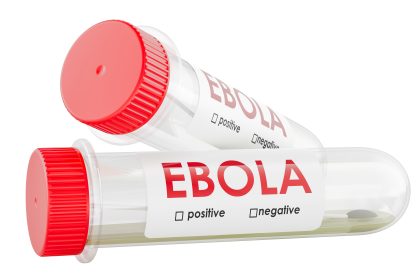
A new blood specimen from Survivor A, collected on March 23, 2015, was negative by RT-PCR. However, his ELISA tests for Ebola glycoprotein- and nucleoprotein-specific IgG antibodies were positive, confirming a previous infection, while his IgM was undetectable, ruling out a new acute infection. A rapid HIV test, run to check for another cause of prolonged shedding, was negative.
Delicate regions protected from our own immune systems include the testes, interior of the eyes, the placenta
The definitive proof came from a semen specimen collected on March 27, 2015. It tested positive by RT-PCR with a cycle threshold of 32, meaning his semen remained positive 199 days after his likely Ebola onset. Full genome sequencing was difficult given low nucleic acid levels, but the partial sequence obtained, 28 per cent of the genome, closely matched Patient A’s unique sequence.
The absence of Patient A’s genetic signature among sequenced RNA from Liberia’s last known cluster of linked cases made it highly unlikely she was infected through ongoing community transmission. This was the smoking gun: proof that Ebola could survive more than half a year in a clinically healthy person and still spark a new infection chain through sex.
How does a virus survive a fully primed immune response that has already cleared it elsewhere in the body? The answer lies in anatomy: immune privilege. The body has specific regions designed to protect delicate tissues from our own immune systems, including the testes, the interior of the eyes, the central nervous system, and the placenta or amniotic fluid in pregnant women. As the MMWR report noted, pathogens can continue to harbour in these sites well after convalescence.
In the testes, protection is structural and biochemical. The blood-testis barrier isolates developing sperm from systemic circulation, normally preventing the immune system from attacking sperm as foreign. During acute infection, however, viral load is extremely high, and the virus breaches this barrier, establishing a reservoir.
Once the immune system clears the virus elsewhere, its defensive cells cannot easily follow it through the barrier. The testes become a cellular sanctuary, where the virus quietly replicates and sheds into semen without triggering systemic inflammation. The survivor feels healthy and tests negative in blood, yet remains capable of transmitting the virus sexually.
After the Monrovia case, the international medical community realised earlier guidelines had drastically underestimated filovirus persistence. Longitudinal tracking programmes were set up across West Africa, including the Sierra Leone Virus Persistence Study, a large cohort study evaluating bodily fluids from hundreds of convalescent patients, and the Liberia Men’s Health Screening Programme, tracking semen clearance and offering behavioural counselling to male survivors.
One extreme case saw a survivor shedding Ebola genetic material in semen nearly 19 months after recovery
The data reshaped understanding of shedding timelines. Earlier studies had shown persistence in semen up to 101 days; the Liberia investigation proved RNA could persist up to 199 days. Later tracking found viral fragments could linger past a year in a small percentage of chronic shedders. One extreme case saw a survivor shedding Ebola genetic material in semen 565 days, nearly 19 months, after recovery. Tracking from later DRC outbreaks suggested fragments could linger up to three years in rare cases.

Clearance is not uniform. Age matters: men over 40 show far more prolonged persistence than younger survivors, hypothesised to be linked to age-related changes in the blood-testis barrier and local immune function. Disease severity matters too: survivors with more severe acute illness, such as profound dehydration, severe haemorrhage, or exceptionally high viral loads, tend to harbour the virus longer.
Most documented transmission involves male-to-female spread via semen, but researchers have examined female survivors too. Survivor A had also had unprotected intercourse with a second woman, Contact A, 45, on three to five occasions between late February and March 15, 2015. Her blood specimen from March 27 was negative for Ebola-specific IgG and IgM, meaning she was not infected.
Wider tracking has found female-to-male transmission exceptionally rare, though the virus can be isolated from vaginal secretions for several months after recovery. The bigger concern for female survivors lies in breast milk and the placental barrier. Shedding can continue in breast milk long after symptoms clear, risking infants, while a pregnancy surviving Ebola can leave the fetus, placenta, and amniotic fluid highly infected even after the mother’s blood clears, creating a hazardous environment during childbirth.
Waiting to have unprotected sex protects partners, families, and communities from resurgence
Because shedding risk cannot be predicted by appearance, the CDC, WHO, and national ministries of health have established rigid frameworks. Contact with semen from male survivors must be avoided until more is known. If survivors do have sex, whether oral, vaginal, or anal, a condom must be used correctly every time.

Used condoms must be disposed of carefully, and skin washed thoroughly after any contact. Survivors are guided back to normal life through sequential RT-PCR testing of semen, requiring two consecutive negative results before officials confirm it is safe to resume unprotected intercourse.
This discovery forces us to view recovery not as a single moment of triumph but as a gradual transition. Waiting to have unprotected sex protects partners, families, and communities from resurgence. At the same time, it underscores the need for robust support: behavioural counselling, testing access, and consistent condom supply, delivered in a way that does not stigmatise survivors.
Dr Madeline Iseren is a pharmacist who comments on topical health and medical issues.
We believe in the free flow of information
Republish our articles for free, online or in print, under Creative Commons licence.