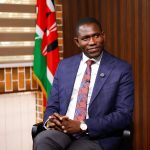

Andre Kamano survived the Guinea outbreaks. Now, inside a simulation centre outside Nairobi, he is preparing to face a deadlier, vaccine-free strain in the DRC.
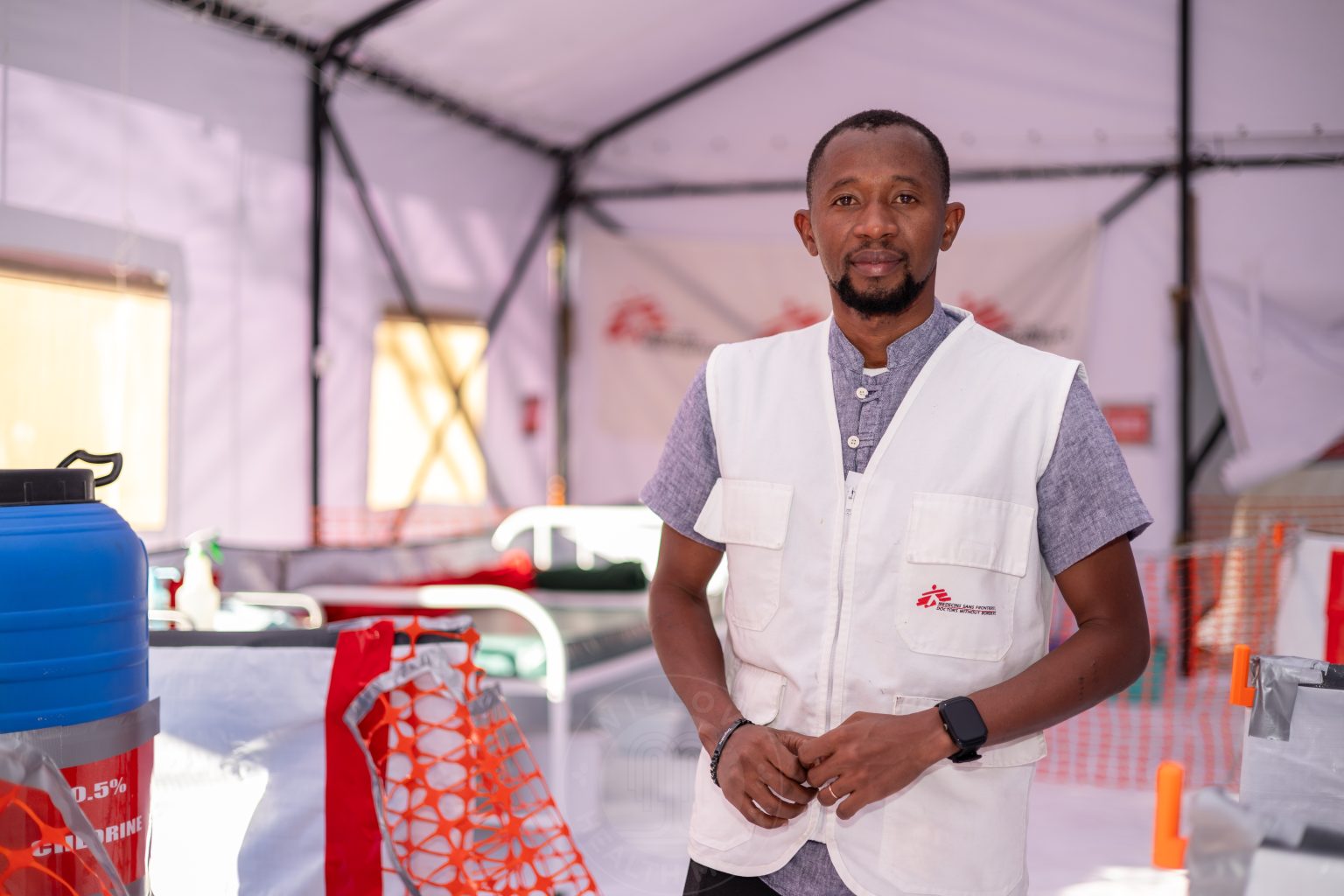
For Andre Kamano, a humanitarian worker from Guinea, the training unfolding inside a mock Ebola treatment unit on the outskirts of Nairobi is more than an exercise. It is a return to a battle he knows all too well.
Kamano is among dozens of Médecins Sans Frontières (MSF) staff undergoing intensive simulation training in Rongai, Kajiado County, before deployment to the Democratic Republic of Congo (DRC) and Uganda, where a growing outbreak of the Bundibugyo strain of Ebola virus disease continues to claim lives.
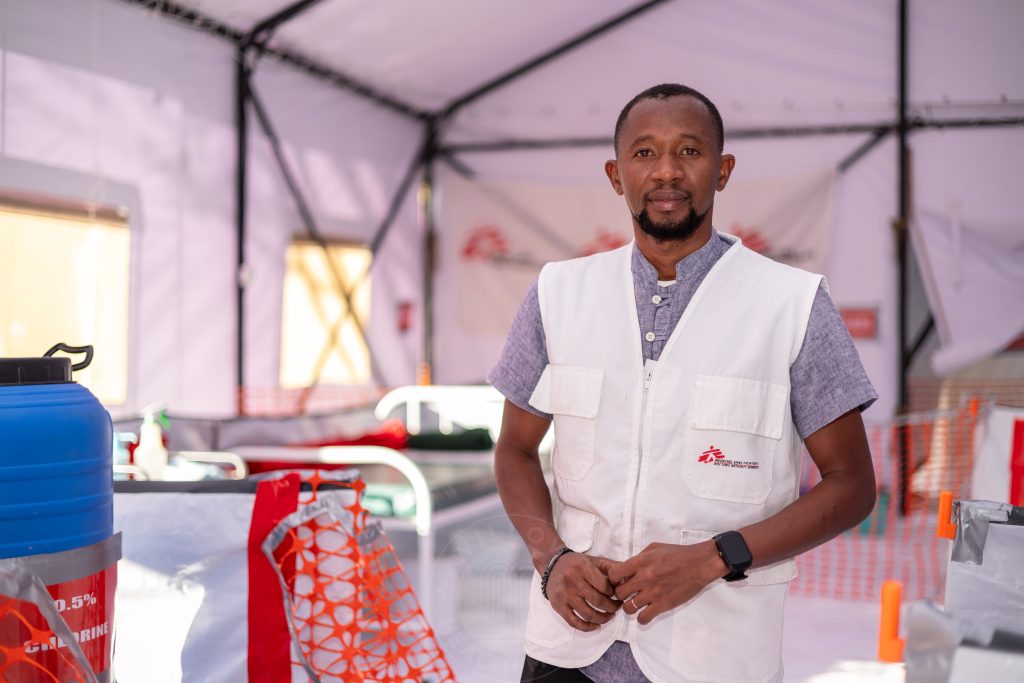
“This simulation training is an opportunity for me to update what I already understood in the past about Ebola. As we continue working with MSF, there are always updates of protocols and adaptations to the care that we provide to patients. This is an opportunity to learn and then go into the future ready,” he says.
The outbreak, caused by the rare Bundibugyo virus strain, has spread across eastern DRC and into neighbouring Uganda. Unlike the more common Zaire strain, there is currently no approved vaccine specifically targeting Bundibugyo Ebola, making preparedness and rapid response critical. As of June 14, 2026, the DRC had recorded 808 confirmed cases and 192 deaths, while Uganda had reported 19 confirmed cases and two deaths linked to cross-border transmission. Health authorities say the outbreak continues to expand geographically, particularly in the conflict-affected eastern regions of Congo.
For Kamano, the statistics evoke memories of his first encounter with Ebola during outbreaks in Guinea. “At the beginning, I didn’t understand much. I volunteered to participate and understand what was happening. I wanted to be a testimony for my community and help people understand the disease,” he recalls.
His role took him into communities where fear, misinformation and stigma spread as quickly as the virus itself. “The thing that worried me the most was the spread of the disease. How were we going to participate in containing it? How were we going to contribute to reducing cases? That was the biggest concern.”
Fear is not something that limits you, it actually increases your vigilance
Fear, he says, never fully leaves a frontline responder. “For sure, you have fear, but that fear is not something that limits you. It actually increases your vigilance. We were never expecting Ebola, but we need to stay focused and avoid overconfidence so that we remain safe.”
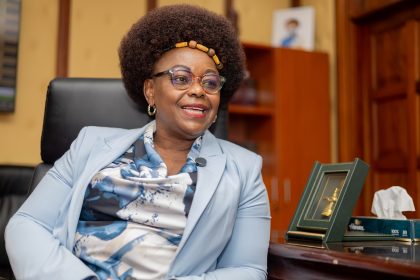
The MSF Ebola Simulation Centre in Rongai was established precisely for that purpose. According to Angela Thiong’o, Project Coordinator for the facility, it equips healthcare workers with the practical skills and confidence needed to respond safely before deployment.
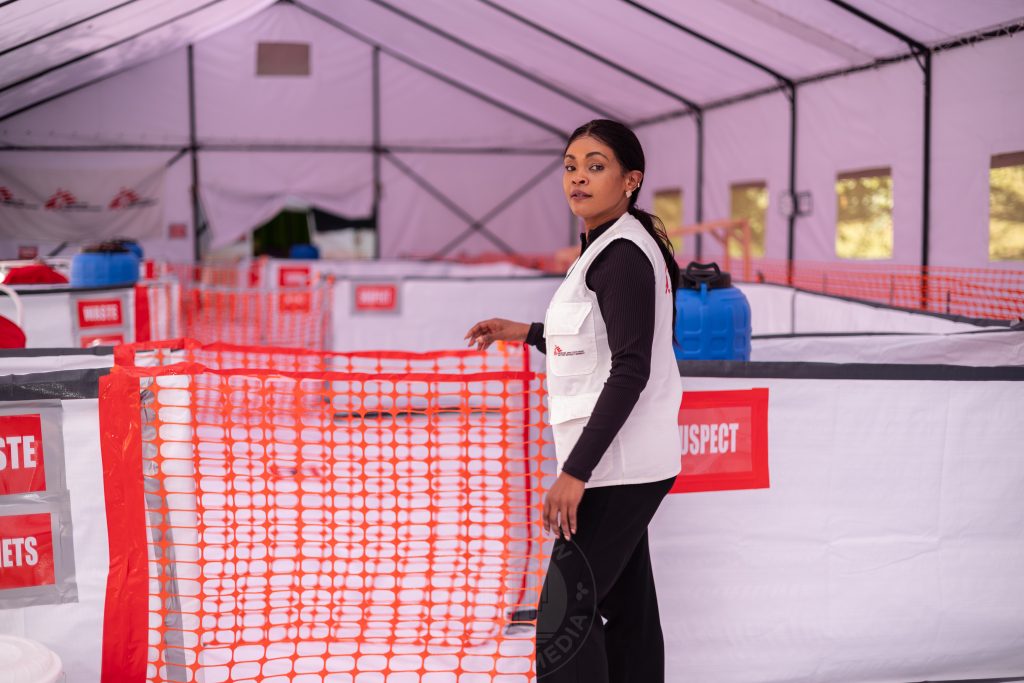
“This centre has been set up by MSF with the aim of training healthcare workers and equipping them with the necessary skills and knowledge to be able to respond effectively and safely to the epidemic,” she says.
The facility replicates real-world outbreak conditions using mannequins and simulated treatment environments. Thiong’o is clear about its scope: it is a dry training facility for healthcare workers and frontline responders preparing for deployment, not an isolation centre receiving patients.
The initial focus is on MSF staff from Kenya and other countries, with plans to later extend training to Ministry of Health (MoH) workers and other humanitarian organisations. “The priority right now is to train MSF staff first from Kenya and from all over the world so that they will be ready for deployment,” Thiong’o says. Beyond supporting the regional response, the training also serves as a preparedness measure for Kenya itself, ensuring healthcare workers are ready should an outbreak occur locally.
Ebola is a deadly virus and to assist people, I should be able to take care of myself
Among those preparing for possible deployment is Olivier Kamto, a humanitarian worker from Cameroon attending his first Ebola-specific training. “There is a lot of background information, and this training is part of the preparation that has been put in place,” he says.
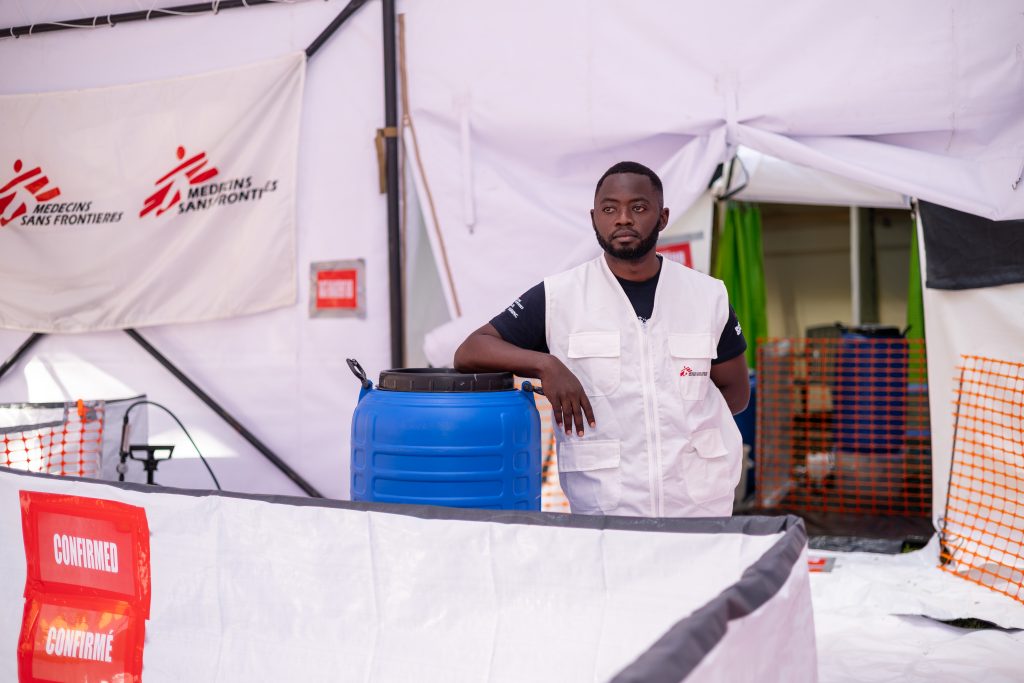
For Kamto, one of the most important lessons has been understanding Ebola transmission and what it demands of responders in the field. “I have learnt a little bit more about how to take care of myself and how to take care of my teams when I get to the field. It is a deadly virus, and to assist people, I should be able to take care of myself so that I can provide quality care.”
Unlike Kamano, Kamto has never responded to an Ebola outbreak before, but he says humanitarian commitment outweighs any anxiety. “My humanitarian principles pushed me into MSF eight years ago. If my skills are called upon in Congo in this Ebola outbreak, I am very happy to go and assist to the best of my knowledge.”
For Kamano, the training goes beyond a refresher. It is a chance to consolidate lessons from past outbreaks and strengthen coordination across response teams. “We started by seeing how to approach people in the community and help them understand better. I strengthened my knowledge on that, but also on biosafety protocols and improving the care of patients.” He adds that one of the most valuable gains has been understanding how different teams, from health promotion specialists to sanitation workers and family liaison officers, function together during an outbreak.
It is like going into a war. You know there are things that may kill you, so you have to be vigilant
Those skills will be tested in eastern DRC, where insecurity, population displacement, mistrust of authorities and misinformation continue to hamper containment. Community resistance remains one of the greatest obstacles to controlling transmission, health officials have repeatedly warned. Kamano understands that challenge firsthand. “We are going to prevent people from dying because of misunderstandings or beliefs that they have in the community,” he says.
As the simulation exercise concludes, participants remove protective equipment, review their mistakes and prepare for what could be deployment orders within days. Kamano is clear-eyed about what lies ahead. “If you are not worried about an Ebola intervention, then you are already weak. It is like going into a war. You know there are things that may kill you, so you have to be very vigilant.”
Despite the danger, his resolve is unchanged. The worry is there, he says, but it does not stop the humanitarian work he has dedicated himself to. He believes the lessons from the simulation will help save lives when the next call to the frontlines comes.