


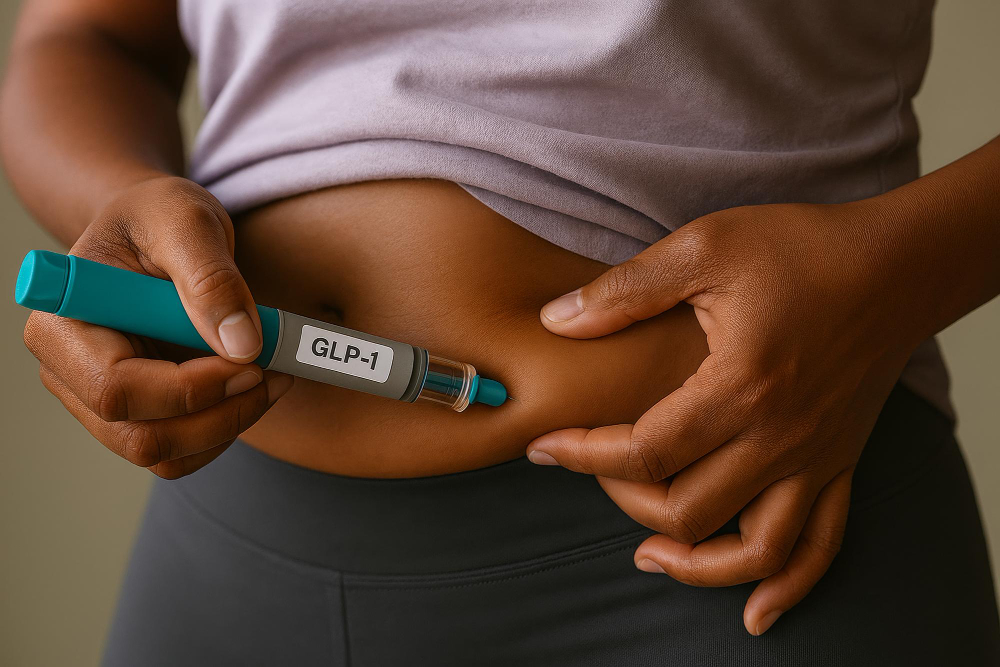

Major trials link semaglutide to fewer heart attacks and slower kidney decline. Evidence on the liver is promising but not yet conclusive.
GLP-1 medicines are best known for lowering blood sugar and helping people lose weight. But specialists say their medical importance may extend much further, with growing evidence that they may also protect the heart and kidneys, and possibly the liver.
Speaking at the scientific launch of Ozempic and Wegovy in Kenya on September 12, 2026, specialists in diabetes, endocrinology, cardiology and obesity medicine described this broader effect as part of a changing approach to cardiometabolic disease, the linked group of conditions that includes diabetes, obesity, heart disease and kidney disease.
Major trials support the shift. In the SELECT trial, semaglutide, the active ingredient in both medicines, cut serious heart events by 20 per cent in people with heart disease who were overweight or living with obesity. In the FLOW trial, it lowered the risk of serious kidney and heart outcomes, including death, by 24 per cent in people with type 2 diabetes and kidney disease. A separate trial found improvements in fatty liver disease.
The specialists cautioned, however, that important questions remain, particularly about long-term liver outcomes, and stressed the need for careful patient selection, monitoring and long-term management.
Semaglutide belongs to a class of medicines called GLP-1 receptor agonists. It mimics a natural hormone, GLP-1, that the body releases after eating. It acts on pathways involved in blood sugar regulation, appetite, and energy intake.
Semaglutide reduces appetite and food intake and thus weight management is another important area of its use
For people living with type 2 diabetes, one of its established roles is improving blood sugar control. But Dr Rilwan Adan, a physician diabetologist, said the bigger issue is what uncontrolled diabetes does to the body over time.
“We don’t look at diabetes as just a sugar entity on its own,” Dr Adan said. “We’re talking about the cardiovascular complications that come with it. We’re talking about the renal complications.”

Type 2 diabetes can damage several organs and raise the risk of heart and kidney disease. Lowering blood sugar is therefore important, but it is only one part of managing the condition.
Dr Adan said this should change how clinicians think about treatment. HbA1c is a blood test that measures average blood sugar over about three months. “The question is no longer how do we lower HbA1c? It is how early we can change the trajectory of cardiometabolic disease,” Dr Adan said.
Because semaglutide reduces appetite and food intake, weight management is another important area of its use.
Dr Wayne May, a physician endocrinologist, said obesity should be treated as a chronic disease rather than simply as a failure to eat less or exercise more. “Obesity is chronic. It’s a relapsing illness. It requires lifelong management,” he said.
This matters because excess body fat, particularly around internal organs, is linked to insulin resistance, high blood pressure, heart disease, sleep apnoea and other metabolic problems. Insulin resistance is a condition in which the body struggles to use insulin properly. Sleep apnea is a disorder in which breathing repeatedly stops during sleep.
Clinical trials have shown substantial weight loss in people with obesity taking semaglutide
For Dr May, the goal of treatment goes beyond a smaller number on the weighing scale. “Ultimately, we’re trying to improve health. So, we want to treat organs and improve organs, and we want to improve longevity and the physical functioning,” he said.
Clinical trials have shown substantial weight loss in people with obesity taking semaglutide. What has drawn growing medical attention, however, is what that weight loss means for health.

Protecting the heart
One of the most important developments has been the medicine’s effect on the heart.
Dr Yubrine Moraa, a consultant cardiologist, said obesity and metabolic disease cannot be separated from heart health. She described patients who may have high blood pressure, abnormal blood sugar, excess weight, sleep problems and heart disease all at once, conditions that require clinicians to look at the whole patient. “The reason is that we cannot treat these patients in silos and we cannot treat them in isolation,” she said.
The SELECT trial involved 17,604 adults with established heart disease who were overweight or living with obesity but did not have diabetes. Over an average follow-up of about 40 months, semaglutide reduced major adverse cardiovascular events by 20 per cent compared with placebo, a dummy treatment. These events were counted together and comprised death from heart disease, non-fatal heart attack and non-fatal stroke.
“The benefit is not just for the heart,” Dr Moraa said, describing a continuum from “the heart to the metabolism, to the kidney, all across.”
Diabetes can damage tiny blood vessels that filter blood in the kidneys, leading to chronic kidney disease
The evidence has limitations. Women made up only about 28 per cent of participants, highlighting the need for more research on how the medicine works in women.

Protecting the kidneys
The kidneys are another major concern for people with type 2 diabetes. Diabetes can damage the tiny blood vessels that filter blood in the kidneys, eventually leading to chronic kidney disease and, in severe cases, kidney failure.
Prof Zaheer Bayat, a physician endocrinologist, described the body as an interconnected system in which metabolic disease can affect several organs. “GLP doesn’t act in one part of the body. It is distributed throughout the body and has effects everywhere else,” he said.
The FLOW trial involved more than 3,500 people with type 2 diabetes and chronic kidney disease. Semaglutide reduced the combined risk of major kidney and heart outcomes, including death, by 24 per cent, and slowed the decline in kidney function.

“The kidney and the heart work together,” Dr Moraa said, describing kidney disease as closely linked to disease of the blood vessels.
The liver is an emerging area. Metabolic dysfunction-associated steatotic liver disease (MASLD), commonly known as fatty liver disease, occurs when excess fat builds up in the liver. In its more serious form, metabolic dysfunction-associated steatohepatitis (MASH), the fat causes inflammation that can lead to scarring, known as fibrosis.
Treatment should not wait until complications become advanced. Our biggest opportunity is early intervention
Dr May discussed a trial in which people with MASH had liver tissue samples examined after 72 weeks of treatment. The inflammation cleared without worsening scarring in 62.9 per cent of people receiving semaglutide, compared with 34.3 per cent receiving placebo. Scarring improved without worsening inflammation in 36.8 per cent, compared with 22.4 per cent.
Dr May stressed that questions remain. “We still need to know outcomes in terms of cirrhosis progression to end-stage liver disease,” he said. The findings are encouraging, but they do not yet prove that semaglutide prevents cirrhosis, severe permanent scarring of the liver, or liver failure.

A whole-body approach
The common thread in the experts’ presentations was that metabolic disease rarely affects just one part of the body. Prof Bayat described GLP-1 activity in the pancreas, brain, blood vessels, heart, kidneys and liver.
Some benefits are linked to weight loss, while others may come from direct or indirect effects on metabolic and heart pathways. How much of the benefit depends on weight loss is still being investigated.
This is why, according to Dr Adan, treatment should not wait until complications become advanced. “Our biggest opportunity is early intervention,” Dr Adan said.
GLP-1 medicines, the experts argued, are neither simply sugar-lowering drugs nor weight-loss treatments. For appropriately selected patients, semaglutide is being studied and used across a wider range of conditions, from diabetes and obesity to heart and kidney disease, with emerging evidence in liver disease.
The emerging picture is of a medicine whose effects reach beyond the weighing scale and the glucose meter, into several of the systems that determine long-term health.
We believe in the free flow of information
Republish our articles for free, online or in print, under Creative Commons licence.