

Baringo County says it is ready for El Niño, but residents are not so sure. Some also fear the rains could join Lake Bogoria and Lake Baringo into one, with devastating results for people and wildlife.
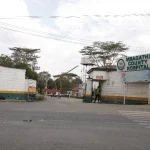
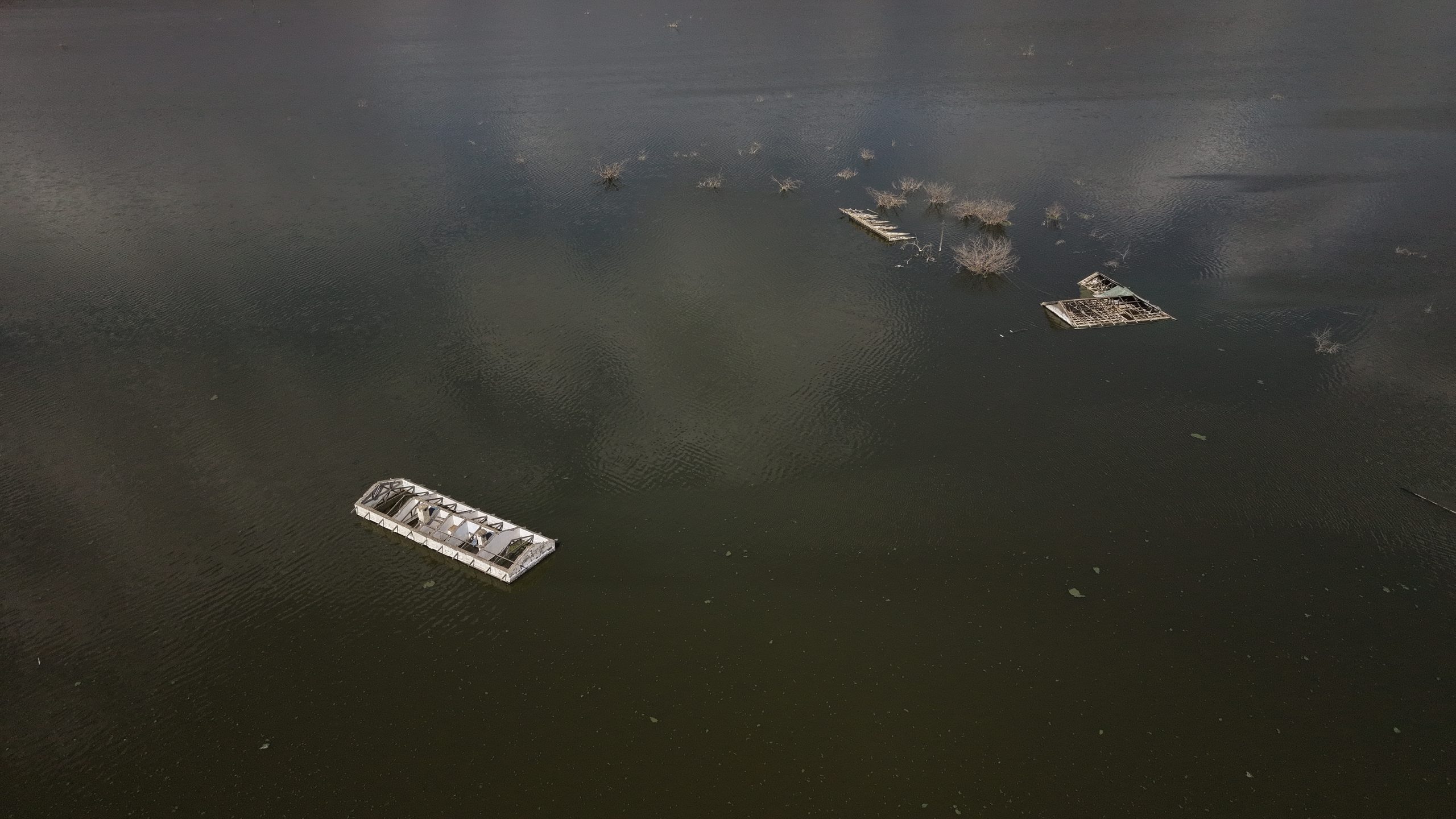
It was a sweltering mid-morning in early September in Loboi village, on the shores of Lake Bogoria. Six local tourists stood at the water’s edge, captivated less by the beauty of the lake than by the sheer might of its risen waters. The hot springs they might once have come to see have disappeared beneath the surface. Tourist resorts, park offices, villages and even the Loboi Health Centre have all been swallowed by the lake in its relentless advance, a local explained.
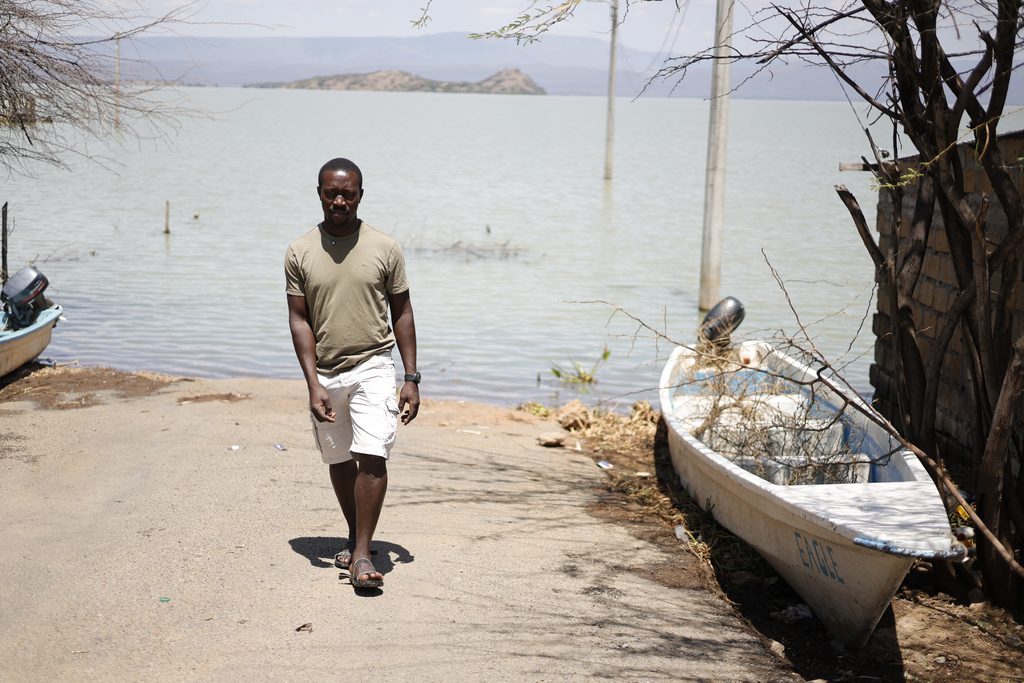
Beyond Paryat Hill, at Lake Baringo, the story is the same as Willow Health Media found out during a recent fact-finding mission there. Louis Juma, a resident of the lakeside settlement of Kampi ya Samaki, recounted how the rising water has consumed the local health centre, tourist resorts, homes and other infrastructure, including a snake park, over the past few years.
The rise has been so severe that the lake has flooded neighbouring Loruk and cut off the main road from Marigat to Chemolingot. A new dirt road has been built around the flooded section, but for locals the detour is long. They received a donated boat to cross the lake, but they must pay to use it.
Years of flooding at Lakes Baringo and Bogoria have already destroyed health centres and other infrastructure. Now the El Niño forecast from October threatens further harm to health. The county government says preparations are under way, but communities are sceptical. Opinions are also divided on whether the rains could cause the two lakes to merge, an event that could devastate both people and ecosystems.
When Lake Bogoria’s waters advanced into the health centre, staff and equipment were moved
Juniscah Sibilo, a community health promoter at Loboi, recalls the hardship the community endured when Lake Bogoria’s waters advanced into the health centre. Staff moved some equipment into a room provided by the park administration to save it from the water. The room was too small to host all services, including maternity. For a while, residents had no fully functioning facility, until the county built a new one on higher ground. Even so, the new centre has no maternity wing, unlike the old one. “It is not big enough to accommodate the maternity wing,” she said.
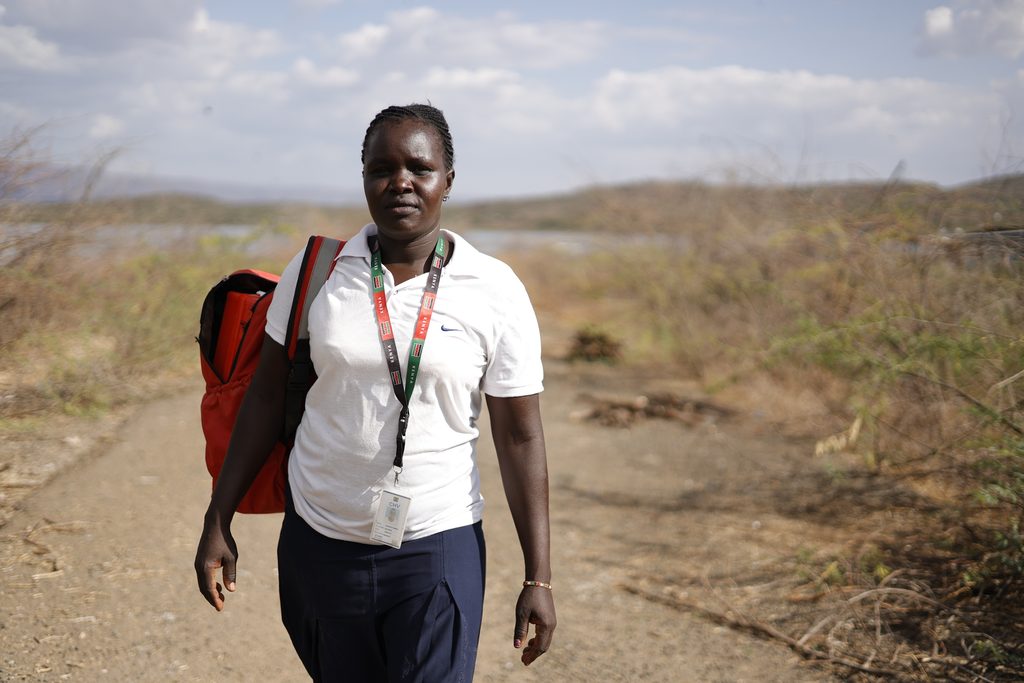
The old Loboi Health Centre served three sub-locations around the lake: Sandai, Kapkuikui and Loboi. Their villages stretch beyond Paryat Hill to Komonong in Sandai, home of farmer Koech Kiptigos. He said that when the health centre was submerged and the road flooded, his village was cut off from healthcare. “And the county did not repair this road for us until we came together as residents and pooled funds to repair this road,” he said. Residents piled rocks onto a flooded stretch of the road linking Lake Bogoria to Sandai.
With El Niño approaching, he fears his and other villages will again be cut off from Loboi, where the new health centre stands.
The floods may also block access to health facilities further north, such as around Chemolingot. Hellen Nyakundi, Programmes Manager at the African Centre of Community Health Investments (ACCHI), said floods in the area have always disrupted access to care. ACCHI runs several programmes locally, including one on kala-azar in partnership with area health centres. “Some of these health centres get cut off by floods whenever it rains heavily,” she said.
Beyond access, the floods could bring waterborne diseases such as cholera and diarrhoea. Public health experts also expect outbreaks of vector-borne diseases such as malaria.
El Niño could disrupt water, sanitation and hygiene facilities, fuelling a rise in diarrhoeal diseases
Patrick Boruet, Baringo County’s Director for Preventive and Promotive Health, said El Niño could disrupt water, sanitation and hygiene (WASH) facilities, fuelling a rise in diarrhoeal diseases and malaria. “We also expect that displacements may happen; the rains may interfere with the supply of nutrition for vulnerable populations including children under five and pregnant and lactating mothers,” he said.
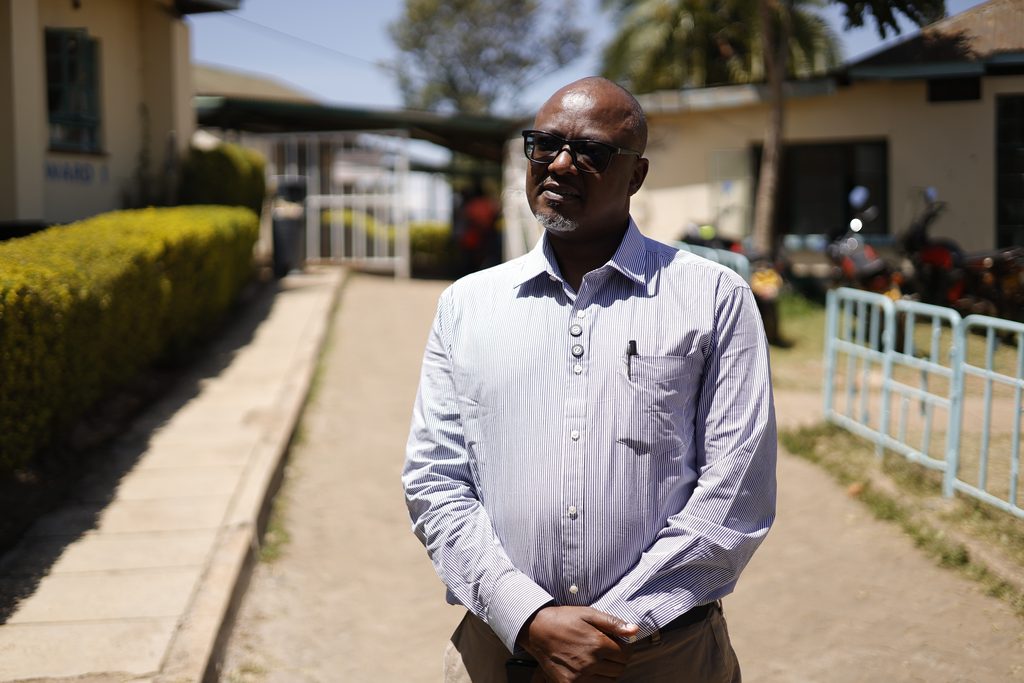
Boruet said the county is prepositioning supplies and training rapid response units to act quickly. “We are also ensuring that we have adequate reagents to do water treatment to be able to prevent water-borne diseases that are likely to occur during this period,” he said.
Beyond health, a graver threat looms: the merging of the two lakes. Lake Baringo is freshwater; Lake Bogoria is saline. A merger would be an ecological disaster and put multitudes of people and wildlife at risk.
James Kimaru, Acting Chief Warden of Baringo County and Senior Warden of Lake Bogoria National Reserve, believes the merger is, unfortunately, imminent. It could happen in one of two ways, he said: water from Lake Bogoria could empty into Lake Baringo through a river channel, or Lake Baringo could expand under the El Niño rains.
If Lake Bogoria and Baringo merges, farming would be decimated as farmers rely on the lake for irrigation
So far, Kimaru said, Lake Baringo has expanded by up to 100 square kilometres and Lake Bogoria by 9.8 square kilometres. Because Lake Bogoria sits at a higher elevation, the chance of it flowing down into Lake Baringo is high. “The clear indicator is actually that two rivers, Loboi and Wasagas, which normally used to flow into Lake Baringo before but were blocked by Prosopis juliflora, an invasive tree species,” he said.
If the lakes merge, farming around Lake Baringo would be decimated. Local farmers rely on the lake as their main source of irrigation water. “In terms of irrigation farming, we have quite a number of farms adjacent to that lake, and they are relying on the fresh water of Lake Baringo,” Kimaru said.
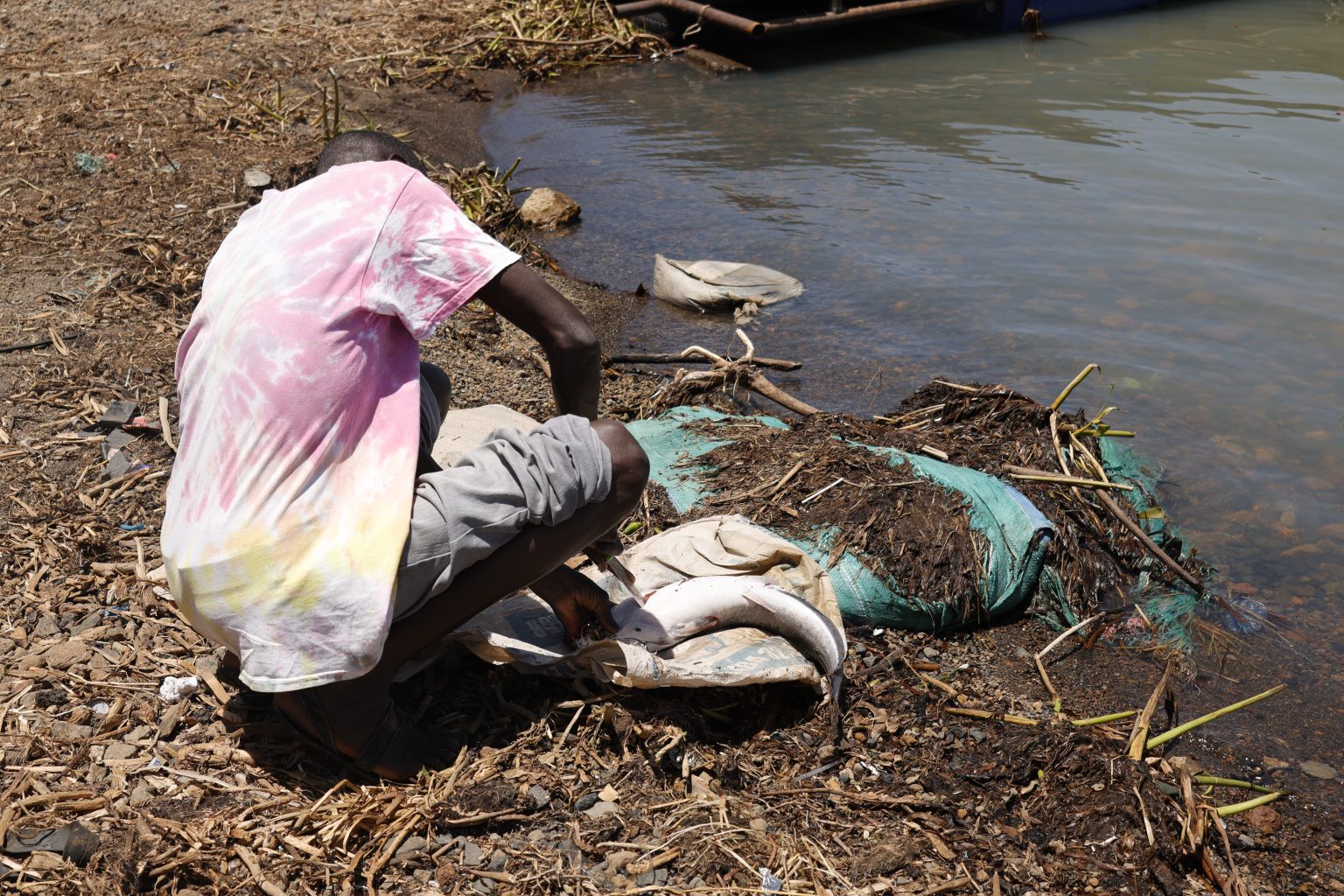
Lake Baringo is also the main source of fish sold locally and across the country. Kimaru warns that an influx of saline water would kill aquatic life, ending fishing as a livelihood and depriving many of food and income.
The possibility of a merger has been studied for years. A 2023 study warned of an ecological catastrophe should the waters of the alkaline Lake Bogoria keep rising. “The result would be an overflow and mixing with the freshwater Lake Baringo, the basis of the local community supporting drinking water provision, agriculture, tourism and fisheries,” it stated. A year later, another study found that annual rainfall had doubled since 2010 and reported that Lake Bogoria had come close to overflowing as early as 2020.
Whether the lakes merge will become clear within weeks, once the El Niño rains arrive
Fifteen years after the two lakes began rising, and with El Niño approaching, speculation is growing that this could be the event that finally joins them.
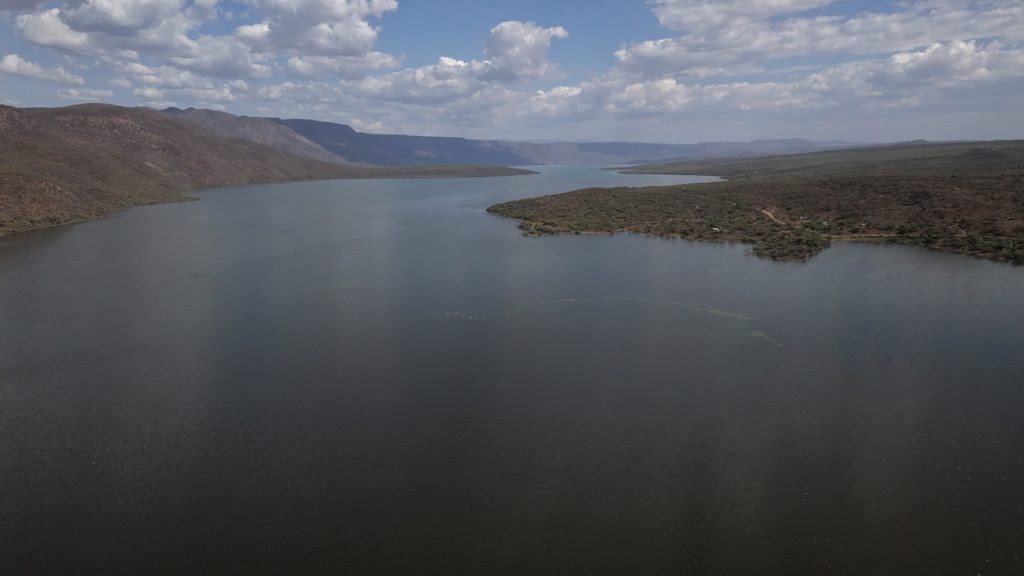
Locals, however, worry more about the water rising further than about a merger, which some do not believe will happen. When Willow Health Media visited in early September, the land between the two lakes looked expansive. Drone footage captured Paryat Hill near Lake Bogoria and the plains towards Sandai, but Lake Baringo was not in view.
Reports that only three kilometres separate the two lakes could not be verified by drone. The team drove seven kilometres from Lake Bogoria to Sandai, roughly the midpoint to Lake 94, which has since merged with Lake Baringo.
Despite the wide gap, a study by Herrnegger and other researchers suggests that “it is feasible that the sill point can be reached and that a permanent flow from Bogoria towards Baringo can be sustained, if wetter conditions – as we have observed in the last decade – persist for a longer period.” Whether that happens will become clear within weeks, once the El Niño rains arrive.
We believe in the free flow of information
Republish our articles for free, online or in print, under Creative Commons licence.