


A vaccine can be prequalified, financed and procured, but still fail to reach a woman in her third trimester because of gaps in communication, distance and trust.
On paper, Pakistan is ready. Its institutional structures, governance arrangements and immunisation policies would all comfortably accommodate a new maternal vaccine against respiratory syncytial virus (RSV).
Delegates converging at a high-level meeting in Nairobi in July described the country’s situational analysis as the strongest demonstration of national policy readiness, and even rated financing green, which is often unusual among the countries assessed.
And yet the same analysis identified an obstacle that no amount of policy alignment resolves: the services that see pregnant women and the services that deliver vaccines barely speak to one another.
That tension between national readiness and what actually happens in a clinic in a district ran through the third annual meeting of the Maternal Immunisation Readiness Network in Africa and Asia (MIRNA), which brought together researchers, Ministry of Health officials, paediatricians, obstetricians, midwives and economists from nine countries over three days.
The consortium spans Bangladesh, Burkina Faso, Ethiopia, Ghana, Kenya, Nigeria, Pakistan, South Africa and Uganda, and is collecting the evidence governments will need to decide whether and how to introduce maternal vaccines against RSV and Group B Streptococcus.
The timing is not academic. In September 2024, the World Health Organization’s Strategic Advisory Group of Experts on Immunisation recommended maternal vaccination in the third trimester as one of two approaches to protecting infants against RSV. Six months later, WHO prequalified the first maternal RSV vaccine, ABRYSVO, and Gavi, the Vaccine Alliance, opened a dedicated funding window for eligible countries.
The question is no longer whether a vaccine exists, but whether systems can get it to women. Antenatal care and the Expanded Programme on Immunisation both exist to serve pregnant women. However, in most low- and middle-income countries they operate as separate entities, financed through different donor streams and managed through parallel structures.
A future maternal RSV vaccine delivered only through the public EPI would miss a large share of the women it is meant to reach
Presenting Pakistan’s findings on behalf of the Department of Paediatrics and Child Health at Aga Khan University, Dr Shifa S. Habib framed the problem as institutional rather than technical.
“These programmes are resourced in a very vertical fashion,” she said. “Unless integration is really at the onset of a programme, it’s very hard to draw those horizontal lines later on.”
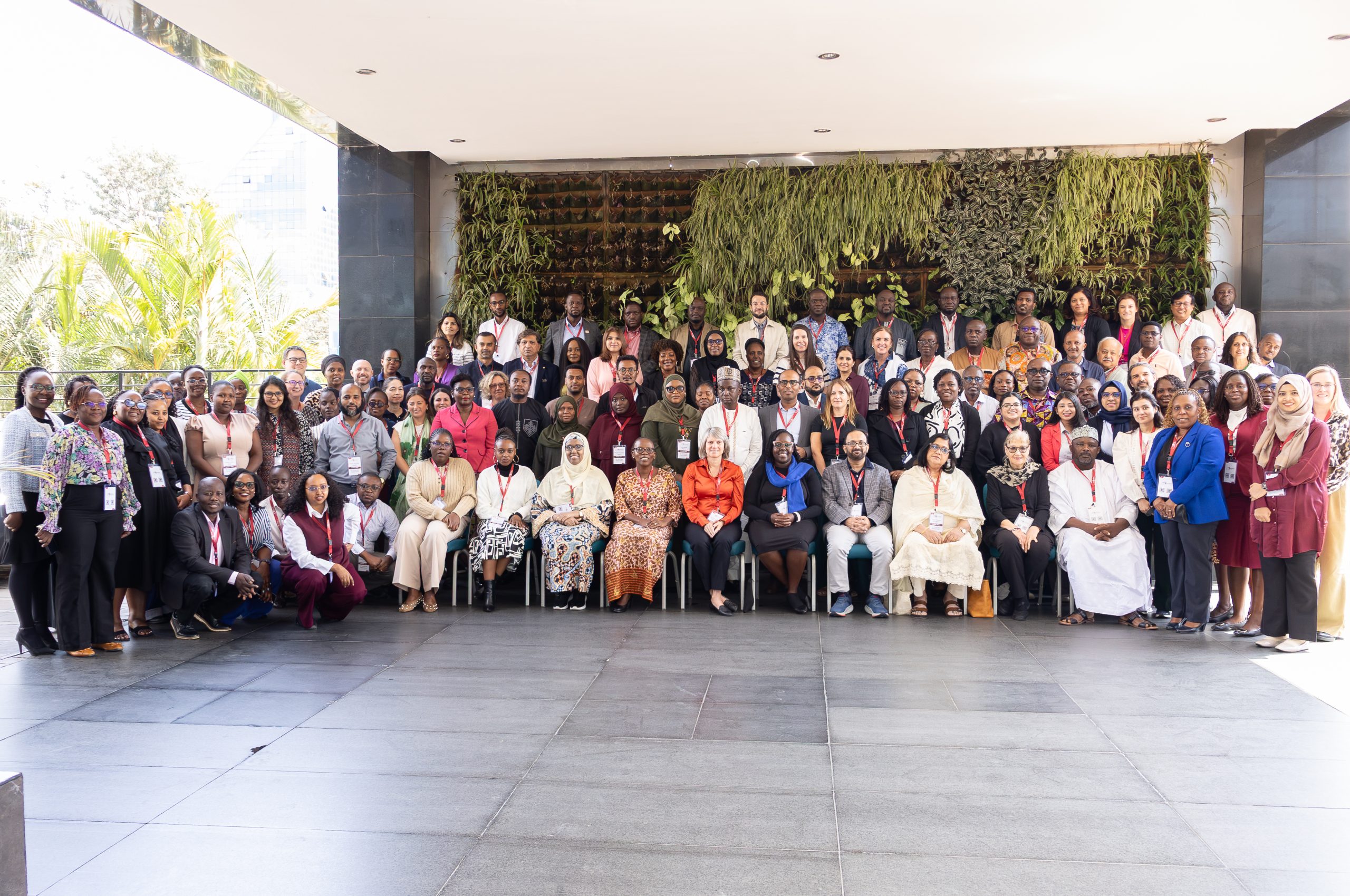
Reflecting on the comparative findings, Professor Neger of Ethiopia noted that Pakistan and Bangladesh stood apart in governmental preparedness. “The government system and the policy is literally ready,” he said, “particularly for Pakistan and Bangladesh; finance is rated as green as opposed to the other countries.”
Bangladesh illustrates why even that is not sufficient. Aniqa Tasnim Hossain, presenting for ICDDR,B, traced a national EPI launched in 1979, which she described as “not very far from the origin of EPI” that now reaches more than 80 per cent childhood coverage. She called it the most successful health programme in the country.
But TT/TD, the closest proxy for a maternal vaccine, sits at 58 per cent. And roughly two-thirds of deliveries take place in the private sector, which is poorly integrated with public immunisation services. A future maternal RSV vaccine delivered only through the public EPI would miss a large share of the women it is meant to reach.
“ANC cannot be separated out for the vaccine delivery for maternal vaccine,” Hossain argued. Her proposal was practical: rather than insisting the two services share a site, which may be unrealistic in many settings, link them through referral so that they function as a coordinated system.
Kenya’s assessment showed how quickly national strength can fragment. Public health researcher and epidemiologist Lydia Khalayi presented findings from a health facility readiness assessment across eight purposively selected counties and 21 facilities. The findings showed service delivery was robust, and vaccine supply chains were similarly strong, supported by a centralised national-to-regional distribution system.
However, everything else varied. Human resources, policy and governance, monitoring and evaluation, and community engagement all differed significantly between counties. The team linked some of that variation to the uneven footprint of programmes such as HIV funding and Universal Health Coverage (UHC) pilots, meaning a county’s readiness partly reflects which external initiatives happened to reach it.
“It’s very important to assess readiness before any rollout,” Khalayi said. “It will help you to be able to identify if you have any gap that needs to be strengthened.”
Trust shapes whether evidence, product, availability and services actually translate into real uptake
If institutions are one half of the last mile, the other is whether women accept what is offered. Presenting findings on behalf of the Nigerian team led by Professor Hadiza Galadanci, Dr Fatimah Tsiga-Ahmed argued that acceptance is a precondition for implementation rather than a consequence of it.
“Trust is readiness,” she told delegates. “It shapes whether evidence, product, availability and services actually translate into real uptake.”
The study conducted in Kano State, where the maternal mortality ratio is estimated at around 993 deaths per 100,000 live births, surveyed 420 healthcare workers and 420 women, supplemented by nine focus group discussions and 32 key informant interviews. Health workers recorded a median Vaccination Trust Indicator score of 98.3 out of 100, while women recorded 88.3.
Those are encouraging numbers with two caveats. Trust in vaccine manufacturers was consistently the weakest domain, and only about a quarter of women had ever been proactively contacted when a vaccine was due, exposing a communication gap that the health system creates itself.
The decision, moreover, is rarely made alone. One respondent told researchers she had to accept in order to protect her own health and her baby’s. Another was more conditional: “If my husband or the Imam says it’s okay, I can take it.” Across several countries, husbands, mothers-in-law, religious leaders, community elders and health workers emerged as gatekeepers of maternal vaccine acceptance.
Burkina Faso went further to add a warning about the information. Adélaïde Compaoré of the Clinical Research Unit of Nanoro reported that around 40 per cent of women had never discussed vaccination with a health professional, and that scepticism inherited from Covid-19 had resurfaced around the anticipated malaria vaccine. Some health workers lacked basic product information.
“Trust is good,” she said, “but communication also really matters when we are introducing a new vaccine.”
46 per cent of women reported discomfort receiving maternal immunisation from a male vaccinator, while 11 per cent avoided it for that reason
In Uganda, where Dr Agnes Ssali and colleagues surveyed 300 women across urban Kawempe and rural Iganga, community and religious leader endorsement ranked highly alongside health worker recommendation. Distance and overstretched clinics remained the practical barriers. One respondent said staff were “overwhelmed” and did not “give us time to speak or ask questions.”
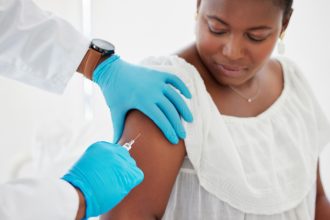
And Pakistan surfaced a barrier no other country reported. Presenting a gender and disability analysis, Dr Muhammad Asim of Aga Khan University Medical College noted that 86 per cent of the country’s vaccinators are male. Some 46 per cent of women reported discomfort receiving maternal immunisation from a male vaccinator, while 11 per cent said they had delayed or avoided it for that reason. Women who reported discomfort were roughly 50 per cent less likely to intend to vaccinate in future.
Dr Sabrina Kitaka, a Ugandan paediatrician, offered the meeting’s crispest diagnostic: “Is it convenient? Are we being complacent? Do we have confidence in this vaccine?” She also pressed delegates on an omission. “Fathers have to be part of it. We always leave out the fathers in the discussion.”
Dr Olive Tengera of the International Confederation of Midwives argued for embedding maternal immunisation in pre-service nursing and midwifery curricula because facilities may be ready and communities willing, and the system still depends on whether the person administering the vaccine has been prepared to explain it.
Across nine countries, the consortium’s findings suggest that policy decisions and procurement contracts are the easier part. The harder work is a district health office, a private maternity clinic, a male vaccinator and a conversation that never happened.