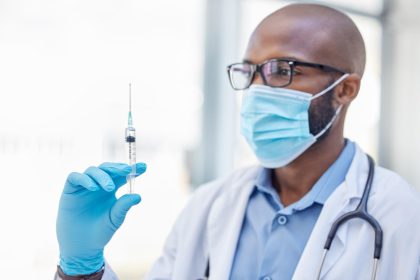
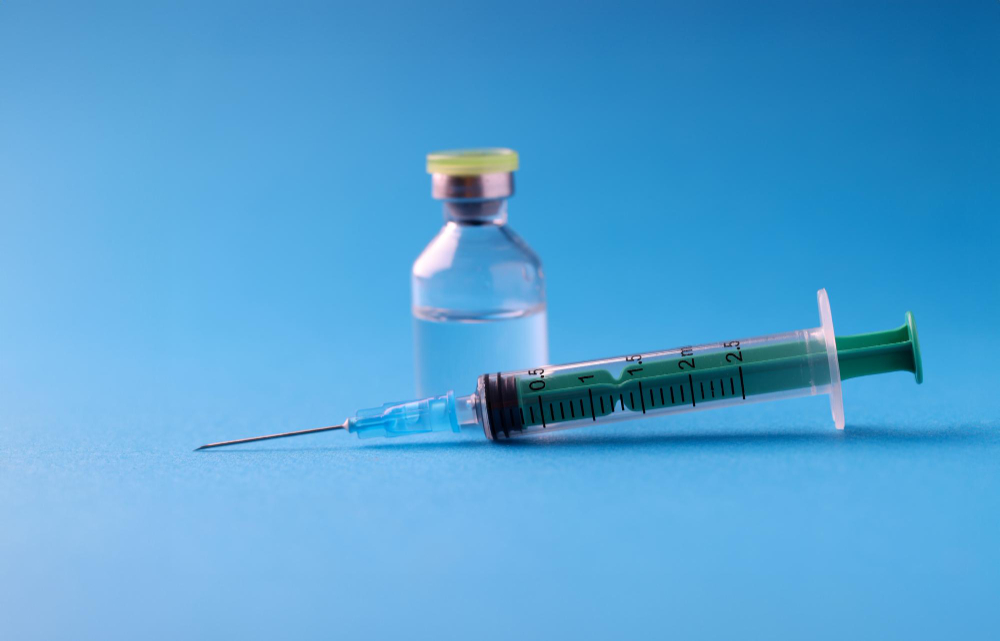
The World Health Organization-backed game-changing HIV jab costs about KSh3.6 million a year in the US. Médecins Sans Frontières (MSF wants its generic version priced at about KSh5,200 a year for everyone, not just poorer countries.
For decades, the story of HIV prevention has been the story of a pill taken every day, a routine easily broken by stigma, distance or simple forgetting. Lenacapavir offers a different story: two injections a year, near-total protection, and now, a global fight over whether the world’s poorest patients will ever get to use it.
Doctors Without Borders or Médecins Sans Frontières (MSF) is pressing Gilead Sciences to make Lenacapavir available to everyone at the same low price, arguing that the drug’s current pricing structure locks out exactly the people who need it most.
The World Health Organization (WHO) recommended the twice-yearly injectable PrEP drug in July 2025, calling it one of the most effective HIV prevention tools ever developed. Yet in the United States, it costs about Ksh3.6 million ($28,000) a year, while a generic version is expected to reach 120 low- and middle-income countries at Ksh5,200 ($40) a year from 2027, thanks to a partnership between Dr Reddy’s Laboratories, Hetero Drugs, UNITAID, the Clinton Health Access Initiative and the Gates Foundation.
MSF wants that $40 price applied everywhere, in wealthy and low-income countries alike.
Limited allocation Lenacapavir already running low in Eswatini, Kenya
MSF argues that Gilead has deliberately restricted the drug’s reach. “The company sells Lenacapavir at steep prices in a small number of wealthy markets and has tightly limited how much reaches low- and middle-income countries,” the organisation said.
MSF disclosed that Gilead had rejected its repeated requests over the past year to purchase the medicine directly for its programmes, regardless of price, and instead directed the organisation to the Global Fund to Fight AIDS, Tuberculosis and Malaria. “Our limited allocation is already running low in countries such as Eswatini and Kenya, and many communities we serve do not qualify to receive the doses through us at all,” MSF said.
Kenya and Eswatini are among nine countries rolling out Lenacapavir, alongside Lesotho, Mozambique, Nigeria, South Africa, Uganda, Zimbabwe and Zambia.
Dr Tom Ellman, director of MSF’s Southern Africa Medical Unit, likened the situation to the early years of the AIDS epidemic, when “pharmaceutical companies sold antiretroviral drugs to the highest bidders, leaving countries like South Africa without treatment while patients died and communities were devastated.” He said the world should not allow a repeat of that scenario.
Countries with rising HIV rates excluded from generic licensing deals
Melissa Barber, a global health advocacy and policy advisor for MSF USA, was equally direct, arguing that Gilead’s public commitments do not match its actions, and pointing out that countries with rising HIV rates, such as Brazil, have been excluded from generic licensing deals altogether. “The company’s refusal to sell to MSF for use in southern Africa and Central America raises further doubts about the company’s stated goals,” she said.
Gilead has reached agreements with select generic manufacturers to bring cheaper versions of Lenacapavir to market by 2027. Two such agreements, between Gilead and the Indian manufacturers Dr Reddy’s Laboratories and Hetero Drugs, were announced on 24 September 2025 at the United Nations General Assembly in New York.
Under these deals, UNITAID, CHAI and Wits Reproductive Health Initiative (Wits RHI) will support Dr Reddy’s with financing, technical assistance and regulatory work, while the Gates Foundation will back Hetero Drugs to help bring the annual cost down to $40 (Ksh5,200), plus an initial oral dose required alongside the first injection, costing $17 (Ksh2,201). This puts the total cost of the first dose at Ksh7,200.
On February 17, 2026, over 20,000 doses of Lenacapavir arrived in Kenya, a moment stakeholders described as a breakthrough in the fight against HIV.
Prof Sylvester Kimaiyo, Chief of Party at AMPATH, Moi Teaching and Referral Hospital, called it transformational. “This is going to change the world,” he said, describing Lenacapavir as an addition to existing prevention tools such as abstinence, faithfulness and condom use. “ABC is difficult for many and Lenacapavir will fill the gap and boost prevention of transmission from mother to baby,” he explained, noting that when the virus is suppressed and undetectable, it cannot be transmitted.
Uganda has consistent supplies of condoms, PrEP drugs without depending on donors
The Joint United Nations Programme on HIV/AIDS, the Global Fund and Gilead Sciences supported Kenya’s initial doses, with the US government committing to acquire 25,000 more. But Prof Kimaiyo noted that President Donald Trump’s 2025 order reducing foreign aid, along with subsequent waivers, has reshaped how PrEP funding can be used.

“In the limited waiver, focus is on preventing mother-to-child transmissions. It excluded funding PrEP for other key populations like sex workers,” he said.
Anne Saina, Executive Director of the Eldoret Sex Workers Alliance, which has over 2,800 members, welcomed the rollout but criticised the exclusion. “It’s an additional protection option for our members, some of whom are expectant mothers. Government regularly overlooks key populations’ protection; that’s why there are regular shortages of condoms and drugs.”
Pregnant women given priority for PrEP over sex workers
Saina said her benchmarking trips showed that countries like Uganda maintained consistent supplies of condoms and PrEP drugs without depending on restrictive donor funding. “For a long time, pregnant women have been given priority for PrEP over sex workers and other key populations, and this slows the journey towards zero new infections,” she added.

Kenya’s rollout covers 15 counties in its first of three phases: Kisumu, Mombasa, Nairobi, Migori, Homa Bay, Siaya, Kisii, Kajiado, Busia, Machakos, Kilifi, Nakuru, Kakamega, Kiambu and Uasin Gishu.
MSF also flagged that some countries that hosted the drug’s clinical trials, including Mexico and Peru, are not covered under the current licensing agreement.
The organisation estimates that about a quarter of new HIV infections globally occur in countries excluded from existing access agreements. MSF is urging governments to invoke flexibilities under the World Trade Organisation’s TRIPS Agreement to bypass patent barriers restricting the drug’s reach.
We believe in the free flow of information
Republish our articles for free, online or in print, under Creative Commons licence.