Despite Kenya registering 29.8 million people for free healthcare and disbursing nearly Ksh19 billion to public facilities, six in ten prescriptions go unfilled, forcing patients to buy medicine they cannot afford.
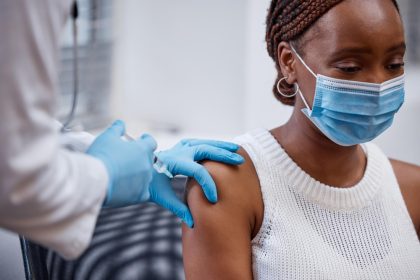
Linda Chebet left Huruma Sub-County Hospital in Eldoret with a prescription note for a respiratory condition affecting her four-year-old daughter. She had been seen by a doctor, registered under the Social Health Authority (SHA), and asked to pay nothing. It was only at the pharmacy that the promise unravelled.
“They treated me without asking me to pay because I was registered to SHA. It’s only at the pharmacy that I was told the prescribed drugs had run out, and I needed to buy them from the chemist,” she told Willow Health Media.

Her experience mirrors that of a mother who took her ailing child to Kware Dispensary in Nairobi, a facility that received Ksh19.7 million in Primary Healthcare reimbursement. She was seen by a doctor and handed a prescription, but at the pharmacy window, she was told the medicine was not available. She had already waited through a system outage. With no other option, she spent money she did not have at a private chemist in Eastlands. The free healthcare she was promised cost her something.
These are not isolated cases. They are symptoms of a structural failure at the heart of Kenya’s free primary healthcare system, one that the SHA Primary Healthcare Impact Report 2026 has now put into numbers.
The government of Kenya guarantees its citizens free outpatient services in all public and government-contracted private and faith-based hospitals across the country. The guarantee is anchored in the Social Health Insurance Act 2023, which establishes a “Walk in, Walk out free covenant” between the government and its citizens. Kenyans registered under SHA are entitled to free consultations, tests and medicines at level 1 to level 4 health facilities.
1.68 million prescriptions are incomplete, stuck in draft, pending approval or cancelled
The headline figures in the impact report are significant. Some 29.8 million Kenyans have been registered, Ksh18.97 billion disbursed to 10,708 health facilities over 17 months, and 19 million outpatient visits served.
But buried within those numbers is a figure that tells a different story: 1.68 million prescriptions are incomplete, stuck in draft, pending approval or cancelled.

The problem is sharpest at the level 2 facilities that form the backbone of Kenya’s primary healthcare system. According to the report, clinics and dispensaries attend to 44.9 per cent of the total patient load in the country, meaning more than four out of 10 Kenyans who seek primary healthcare make their first stop at these facilities. Yet level 2 county government facilities complete only 39.2 per cent of all their prescriptions. For every 10 prescriptions written in public level 2 facilities, six went unfulfilled. The national dispensing rate stands at 58.6 per cent. In contrast, 69.5 per cent of private facilities completed their prescriptions.
The drug shortage is felt beyond the pharmacy counter. An expectant mother attending an Antenatal Clinic at Turbo Dispensary said she received respectful care and underwent important tests, but the facility had run out of mosquito nets. On her second visit, nets had arrived, but the attendant told her the limited stock was reserved for first-time ANC visitors. She was relieved she had bought her own.
“Sometimes mothers are told to take folic acid supplements for two months just in case there’s a stockout during the next visit,” a clinician who sought anonymity disclosed.
Nandi Senator Kiprotich Cherargei, who joined the Senate Health Committee to audit health facilities in the county, pointed directly to drug stockouts as a barrier to completing treatment. “In Meteitei Sub-county hospital, there was a shortage of drugs. In Nandi Hills sub-county hospital, there was a shortage of pharmaceuticals and non-pharmaceuticals,” he said. He explained to Willow Health Media that “these stockouts meant that even when patients are served by the limited personnel in most facilities, they will have to buy prescribed drugs from private pharmacies.” He challenged governors to ensure the timely stocking of vital medicines so that primary healthcare gains are not lost.
Unsigned prescriptions and expired licenses of prescribers limit completion of prescriptions
Not all incomplete prescriptions, however, are the result of empty shelves. Dr Mark Kwambai, in charge of Tambach Sub-county in Elgeyo Marakwet, cited other contributing factors. “Failure to attach the right prescriptions, scribbled and unclear prescriptions, unsigned prescriptions and expired licenses of prescribers limit completion of prescriptions in both private and public facilities,” he said.

The report also exposed a stark geographic inequality in how PHC services are distributed and funded. Mombasa, Kisumu, Nyeri, Kericho and Bomet had the highest registration coverage, while Tana River, Isiolo, Marsabit, Wajir and West Pokot had the lowest. The funding gap between urban and rural facilities is wide. In Nairobi, level 2 facilities like Kware and Kayole Soweto dispensaries received Ksh19.7 million and Ksh17 million, respectively. In Isiolo, a level 3 private facility and a level 2 faith-based facility, Sprintlight and Catholic Dispensary Ngaremara, drew Ksh420,000 and Ksh612,000 in total.
The report also revealed that in Nairobi, heavily funded PHC facilities are owned by the county government, while in rural areas, private clinics received a bigger share of disbursements. This raises questions about the availability and suitability of public health facilities in rural Kenya, where private and faith-based facilities are filling the gap. Those same facilities are also among the most exposed to disbursement delays, compounding an already fragile situation.
For Linda Chebet and the mother at Kware Dispensary, the system did not fail at the registration desk or the consultation room. It failed at the pharmacy window. That is where the covenant broke.
We believe in the free flow of information
Republish our articles for free, online or in print, under Creative Commons licence.