




The drugs curb appetite and cravings, helping patients shed kilogrammes. But doctors say diet, exercise and long-term care must come first. Monthly costs of up to Ksh50,000 raise questions about who can keep up treatment. And when the injections stop, the weight can come back.
For Kalekye Mumo, a media coach at Own Your Mic Programs, losing weight has never been straightforward. The struggle began in childhood and stretched across years of trying different approaches. By the time she was approaching 40, she weighed 120 kilogrammes.
Her first major attempt involved strict portion control, cutting out carbohydrates and weighing almost everything she ate. It worked: she dropped to 80 kilogrammes, losing 40 kilogrammes. “I did lose the weight. However, the challenge was I didn’t like the way I looked. I felt a little bit emaciated,” she says.

Then came the COVID-19 pandemic. Cooped up at home, her eating habits changed. “I think everybody can agree with me, we ate our feelings,” she recalls. “Being alone, being cooped up, you can’t leave, so what do you do with most of your time? I would cook and eat whatever.” Her weight climbed back to 102 kilogrammes.
This time, her concern went beyond the scale. “I was feeling heavy, I wasn’t sleeping well, and I was also conscious of the fact that I’m getting older. There’s a way I want to feel as I get older. It’s now becoming a thing of, ” Okay, you need to be able to care for yourself.”
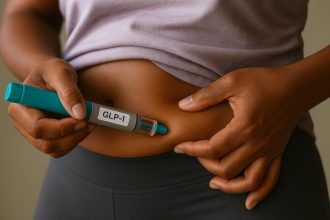
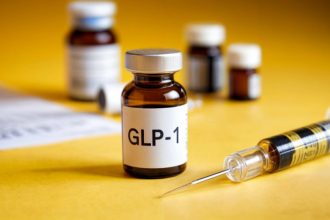
She turned to glucagon-like peptide-1 (GLP-1) medicines, the class of drugs popularised by names such as Ozempic. She started in October 2025 under the care of consultant endocrinologist Dr Caroline Mithi. When her dose was raised in the second month, she developed diarrhoea and vomiting.
GLP-1 medicines are not for everyone and can cause side effects ranging from nausea to rare but serious complications
Anne*, who has lived with diabetes for 14 years, had a gentler start. Weighing 141 kilogrammes before treatment, she estimated she had lost about five kilogrammes by her third dose. “I can see that it’s working well for me because my weight has started to come down. With time, I know it will continue to drop. I’m positive about it,” she says.
Their experiences capture both the promise and the limits of GLP-1 medicines. Doctors say the drugs can help eligible patients eat less and lose weight, but they are not for everyone, can cause side effects ranging from nausea to rare but serious complications, and cost between Ksh20,000 and Ksh50,000 or more a month. Weight often returns once treatment stops, which is why doctors insist the drugs must be prescribed and monitored by a qualified clinician, alongside lasting changes to diet, exercise and daily habits.
The rising interest in medical weight management comes against a heavy global burden. The World Health Organization (WHO) classifies obesity as a chronic, relapsing disease shaped by genetics, biology, eating behaviour, access to healthy food and the wider environment.
WHO estimates that one in eight people globally was living with obesity in 2022. That year, about 2.5 billion adults were overweight, including 890 million living with obesity.
In Kenya, the 2022 Kenya Demographic and Health Survey (KDHS) found that 45 per cent of women aged 20 to 49 were overweight or obese, compared with 19 per cent of men in the same age group. Obesity raises the risk of type 2 diabetes and cardiovascular disease, and its causes are too complex to be reduced to willpower or a single intervention.
How GLP-1 medicines work: They act on the brain, stomach and pancreas, making a person feel full sooner or for longer
Dr Riro Mwita, a physician at Kiambu Level 5 Hospital, explains that GLP-1 is a hormone the gut releases after eating. It helps regulate appetite and blood sugar by signalling fullness, stimulating insulin release and slowing the movement of food out of the stomach. “They are what we call incretins or gut hormones. They are produced upon eating,” he says. “Your body has a mechanism of telling you it’s enough. These GLP-1s are incretin mimics. That is, they mimic the action of these gut hormones.”

The medicines act on the brain, stomach and pancreas, making a person feel full sooner or for longer while supporting blood sugar control. “Basically, what they do is to make you eat less,” Dr Mwita says.
The drugs were first developed for type 2 diabetes, and their effect on weight later made them part of obesity treatment. But not all are approved for the same purpose. Dr Mwita says some medicines available in Kenya are mainly used for diabetes, so using them purely for weight loss may be off-label. Others, such as semaglutide marketed as Wegovy, have specific weight-management approval in some countries. Eligibility depends on the medicine, a person’s health and prescribing guidance, and a drug’s popularity online does not make it suitable for everyone.
Dr Mithi, a consultant endocrinologist at Kenyatta University Teaching, Referral and Research Hospital (KUTRRH), says obesity management rests on four pillars: medical nutrition therapy, physical activity, behavioural change and, where appropriate, medication or bariatric surgery. “We don’t go to medication alone. You have to go through the three pillars before you get to medication,” she says.
Nutrition means a balanced plate of protein, fibre and vegetables, with controlled intake of starches and sugars. Dr Mithi recommends at least 150 minutes of physical activity a week, including two to three days of strength training. Behavioural change addresses sleep, stress and a person’s wider circumstances.
If I took something like ugali and greens, I would eat more carbs, but now I find myself having more greens
For Kalekye, these changes are central. “There’s no way you can just have the injection and then go and exist. Things have to come together, including fitness and nutrition,” she says. She now plans meals and watches portions rather than cutting out food groups. “Unlike my first attempt at weight loss, you can’t remove the carbs. You still need the energy because your body has to function.”
Anne has noticed her appetite shrink, finding it hard to eat more than two meals a day, and draws on advice from a nutritionist she previously consulted. Her cravings have also shifted. “Previously, I was very addicted to carbs. Even if I took something like ugali and greens, I would find myself eating more of the carbs,” she says. “Now, I find myself having more greens. The cravings have gone down completely.”
Reduced appetite, however, makes good nutrition all the more important during treatment. Anne had expected nausea and vomiting after reading accounts online, but reports only mild nausea that has not kept her from work. Kalekye’s reaction was stronger. “My second month, when we increased the dosage, straight away my system reacted. My stomach reacted, and I was having diarrhoea. I was throwing up,” she says. Her treatment was paused and later reintroduced more gradually, a reminder that people respond differently.
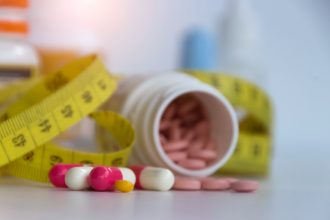
Dr Mwita says common side effects include nausea, vomiting, heartburn, acid reflux, bloating, constipation and sometimes diarrhoea. Increasing the dose gradually under clinical guidance helps patients adjust.
Dr Mithi warns of rarer but serious complications, including acute pancreatitis and gallbladder disease. Some medicines carry precautions for people with a personal or family history of certain thyroid cancers. GLP-1 medicines are not recommended during pregnancy, and patients should discuss pregnancy plans, other medicines and existing conditions with their clinician.
Kalekye Mumo, who has psoriasis, an autoimmune skin condition, was cautious from the start
“Before I start you on these drugs, I have to check your kidney, your liver and your thyroid because there are some patients who have thyroid cancers, and these drugs are not indicated,” says Dr Mwita. He also cautions against buying from unregulated sources, where products may be counterfeit or substandard.

Kalekye, who has psoriasis, an autoimmune skin condition, was cautious from the start and valued Dr Mithi’s guidance. “Dr Caroline Mithi was amazing to explain to me what it is and that if we are doing it, we should attempt it from very small dosages, just see how I respond to it,” she says. Her care included blood tests, hormone checks and regular follow-up.
“Please do not do it on your own. Please get a medical doctor who is qualified in that specific area of weight loss and wellness management. Let them walk you through. Let them tell you what your body needs,” she urges.
Dr Mwita estimates that some generic products cost around Ksh20,000 or more a month, while original products can cost Ksh45,000 to Ksh50,000 or higher, depending on the medicine, supplier and pharmacy. For long-term users, such costs can be hard to sustain, and insurance cover depends on the medicine, its purpose and the policy.
Stopping treatment carries its own risk. “Unfortunately, just like the way we give insulin for life, these drugs you have to let patients know that they’re going to use them in a sustained manner. The moment you stop, the weight rebounds. So, it’s not a magic wand,” Dr Mwita says.
Obesity needs long-term follow-up, much like diabetes or high blood pressure
Dr Mithi notes that research has documented weight regain after treatment ends, especially when lifestyle changes lapse. Decisions to continue, reduce or change medication should be made with a clinician, not through abrupt stops or self-directed dose changes.

Kalekye reached her target of 75 kilogrammes and has moved into a maintenance phase, with her medication reduced gradually under medical guidance. “There are certain things that I have learned to make it a lifestyle,” she says.
Her story, alongside Anne’s, shows that GLP-1 medicines are neither miracle injections nor treatments to dismiss outright. As Dr Mithi stresses, obesity needs long-term follow-up, much like diabetes or high blood pressure, and the decision to use these medicines should begin with a qualified health professional and extend well beyond the injection itself.
*Not her real name.
We believe in the free flow of information
Republish our articles for free, online or in print, under Creative Commons licence.