




Better coordination, local evidence and sustained public communication will determine whether health taxes deliver both public health and economic gains, researchers and health advocates say.
Kenya’s push to use taxation as a public health tool is meeting stiff resistance. Industry interference, fragmented government coordination, illicit trade and competing economic interests all stand between the country and the health and revenue gains that tobacco and alcohol taxes could deliver.
That was the central message of a two-day stakeholder meeting convened by the KEMRI-Wellcome Trust Research Programme (KWTRP) in Naivasha on October 21-22 to examine how Kenya can optimise health taxes, with a focus on tobacco and alcohol.

Willow Health Media joined KWTRP, the Ministry of Health and other stakeholders in examining how evidence-informed taxation can reduce harmful consumption, strengthen health financing and address inequalities.
Participants reviewed research on the barriers to implementing and expanding tobacco taxes, weighed the likely effects of higher excise duties and discussed how evidence can shape government policy.
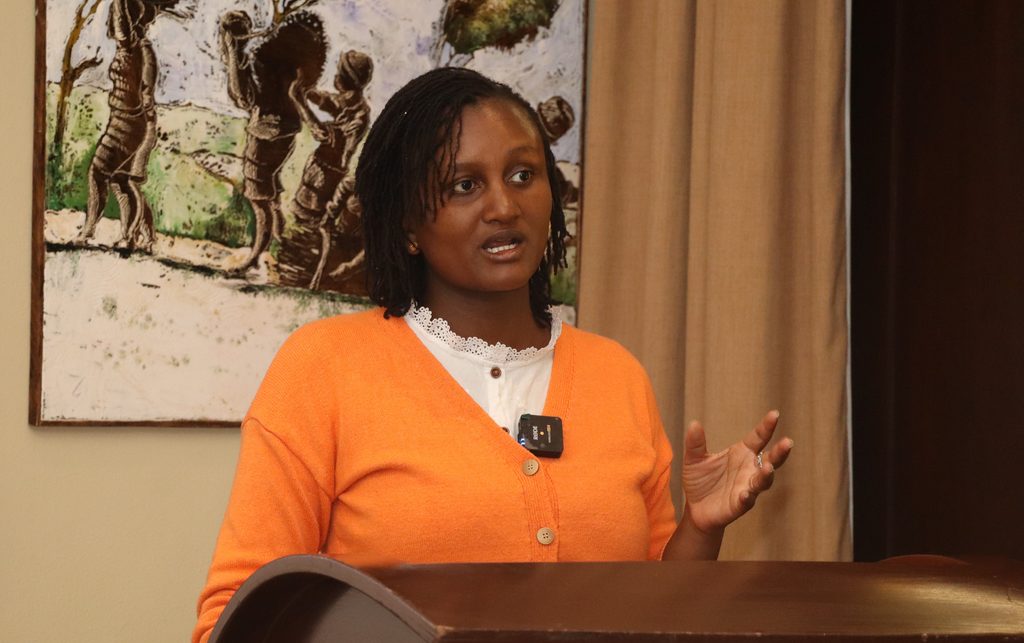
Tobacco dominated the discussion, with experts debating on how research findings influence real policy decisions only when they travel beyond academic presentations. Riziki Shaher, Chief Operations Officer at Willow Health Media, emphasised the media’s role in translating research into accessible public information and sustaining advocacy around evidence-based interventions.
“Health journalism turns complex research into compelling stories that policymakers and communities can understand and use,” Shaher said.
Accurate, accessible reporting gives policymakers and the public a counterweight to misleading claims
Research achieves its intended impact only when it reaches the people responsible for making and implementing policy, Shaher added. In her account, Willow’s contribution to advocacy on tobacco and alcohol taxation lies in keeping research findings in the public conversation and ensuring that evidence informs policy discussions.
That work predates the forum. In June, Willow reported on the Finance Bill 2026, in which the National Treasury proposed raising excise duty on other manufactured tobacco, tobacco substitutes, extracts and essences from Ksh11,382.48 to Ksh12,550 per kilo, and on cigars, cheroots and cigarillos from Ksh16,260.29 to Ksh18,000 per kilo.
The platform has also published analysis of enforcement gaps in Kenya’s tobacco laws and of industry marketing aimed at women.
Published national data show what is at stake. The 2014 Global Adult Tobacco Survey, released by the Kenya National Bureau of Statistics, found that 11.6 per cent of Kenyan adults, about 2.5 million people, were current tobacco users. About 1.7 million adults smoked tobacco. Use was four times higher among men, at 19.1 per cent, than among women, at 4.5 per cent. The bureau also reported that tobacco use causes five per cent of all deaths from non-communicable diseases in Kenya.
The human toll is heavy. A 2024 study led by Kenyan researchers, published in the journal Tobacco Induced Diseases, found that smoking caused 9,943 of the 60,228 deaths recorded from five major tobacco-related disease groups among adults aged 35 and above between 2012 and 2021.
Respiratory diseases and cancers accounted for more than seven in ten of those smoking-attributable deaths.
Dr Anita Musiega of KWTRP presented a scoping review of the obstacles facing tobacco taxation. Industry interference in policy discussions featured prominently, alongside poor coordination between government institutions, competing institutional interests, illicit trade, and weak tax compliance and enforcement. The World Bank reported in 2025 that the effectiveness of Kenya’s tobacco taxes had fallen by 39 per cent over the previous decade.
“The tobacco and alcohol industries often push narratives that challenge proposed tax increases, sometimes using inaccurate evidence or taking government agencies to court,” Musiega said.

Her warning underlines the case Shaher made for health journalism. Accurate, accessible reporting gives policymakers and the public a counterweight to misleading claims, and keeps the evidence visible long after a meeting ends.
Effective health taxation, she said, depends on closer alignment between the Ministry of Health, the National Treasury, trade and industry departments, county governments and Parliament. Without that alignment, competing priorities can erode both the health and revenue benefits. She identified illicit trade and enforcement gaps as major administrative challenges.
“Government agencies must work together to make sure products entering the market comply with tax requirements,” she said, noting that some industry claims gain traction in policy debates even when evidence from other countries points the other way.
On the argument that higher tobacco taxes would cost farmers their jobs, she cited experience from countries including Tanzania, which suggests that price increases do not necessarily lead to major job losses. Economic assessments in some settings have put the effect on farmers’ livelihoods at below one per cent.
Governments should tackle border security and illicit trade as separate problems from taxes that protect public health
On the claim that higher taxes fuel smuggling, she pointed to evidence from Ethiopia linking smuggling to porous borders and weak enforcement as well as to tax rises. Governments, she argued, should tackle border security and illicit trade as separate problems while keeping the taxes that protect public health.
“Kenya needs to generate its own evidence to challenge these narratives, so that decisions reflect our economic realities,” she said.

Robinson Oyando, a health economist at KWTRP, presented modelling of several tax increase scenarios. The work estimated their effect on tobacco consumption, premature deaths, government revenue and tobacco-related healthcare costs.
The analysis also tested how the burden of higher taxes would fall across wealth quintiles, to establish whether lower-income households would be disproportionately affected. It further assessed the health gains if higher prices led smokers to quit or cut down.
“The aim was to establish how much additional revenue households in each income group would contribute, and what health gains they could expect,” Oyando said.
That equity lens reframes the debate. Fewer smoking-related illnesses could mean longer lives and lower treatment costs, and households could save twice, first on tobacco purchases and then on healthcare for tobacco-related conditions. The potential savings are large. A 2025 report, Economic Toll of Tobacco-Related Diseases in Kenya, puts the annual healthcare cost of tobacco use at about Ksh53.4 billion. Viewed this way, tobacco taxation becomes a health intervention as much as a revenue measure.
KWTRP is also conducting a regional desk review of health tax implementation across East Africa. Drawing on policy documents and empirical studies, it aims to identify bottlenecks and approaches that have worked elsewhere in the region. Kenya is searching for ways to strengthen domestic health financing while confronting a growing burden of non-communicable diseases. Health taxes offer a chance to pursue both goals at once.
The mechanism the experts described is simple. When higher prices on tobacco and alcohol lead people to quit or cut down, preventable illness falls, treatment costs drop and households keep more of their income. At the same time, the revenue raised strengthens domestic health financing, giving the health system more room to treat those who still fall ill.
Realising that promise will take coordinated government action, stronger enforcement, locally generated evidence and sustained public communication to counter misleading claims. Each element reinforces the others. Joint enforcement protects revenue, Kenyan data answers industry narratives, and clear reporting keeps citizens and lawmakers informed.