




Dementia can drain incomes, derail careers and consume family savings. The families of a former Provincial Commissioner, Attorney-General and MP are locked in court battles over wills and fading memories. Yet Kenya lacks a national dementia plan, dedicated legislation and a clear pathway to care for over 258,000 people living with the condition.
Three powerful men. Three fortunes worth billions of shillings. And in each case, the same question ended up before a judge: was the man still capable of deciding what happened to his own wealth?
Former Provincial Commissioner Charles Karuga Koinange left a nine-page will handing most of his Ksh5 billion estate to his eldest son. A judge threw it out, ruling that Alzheimer’s disease had robbed him of the capacity to make it, and after 13 years in court, his Sh5 billion estate would be distributed based on family agreement.
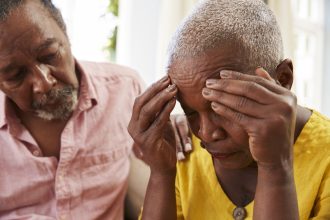
Former Attorney General James Karugu, diagnosed with progressive dementia in 2015, according to his children, spent his final years at the centre of a legal tug-of-war as they sought to manage his affairs and stop two women who claimed to be his wives.
Since his death in 2022, prosecutors have sought to charge six people, including one of his sons, two lawyers and a pastor, over an allegedly forged will.
Then there is the case of former Starehe MP Gerishon Kirima, who watched his own son go to court in 2009, alleging that he is not mentally sound, including allegations of dementia. Kirima, also a wealthy businessman, fought back; the medical reports conflicted, and after his death the High Court invalidated two Wills, leaving an estate worth more than Ksh2 billion in dispute.
Wealth, it turned out, was no protection against a fading mind.

Most families never make headlines, though. Elizabeth Mutunga’s, for instance, did not. But when dementia struck her father, the family’s breadwinner, it followed the same path. As his condition worsened, she gave up things other teenagers took for granted to help care for him.
Her mother eventually stopped working too, and as she recalls: “One person became sick, but the burden affected the whole family.”
His death did not end the struggle. “My father had not arranged for us to access his accounts. After his death, we spent another decade trying to gain access to the money,” she says.
The mother lost her freedom and social connections, the daughter became trapped at home providing care
Elsewhere, a woman living with dementia wandered from her home and took fruit from a vendor without paying. People believed she was possessed and beat her, leaving her injured, recalls Prof Zul Merali, founding director of the Brain and Mind Institute at Aga Khan University Hospital. Her daughter, afraid the community would harm her mother again, locked her inside the house. The mother lost her freedom and social connections, while the daughter became trapped at home providing care.
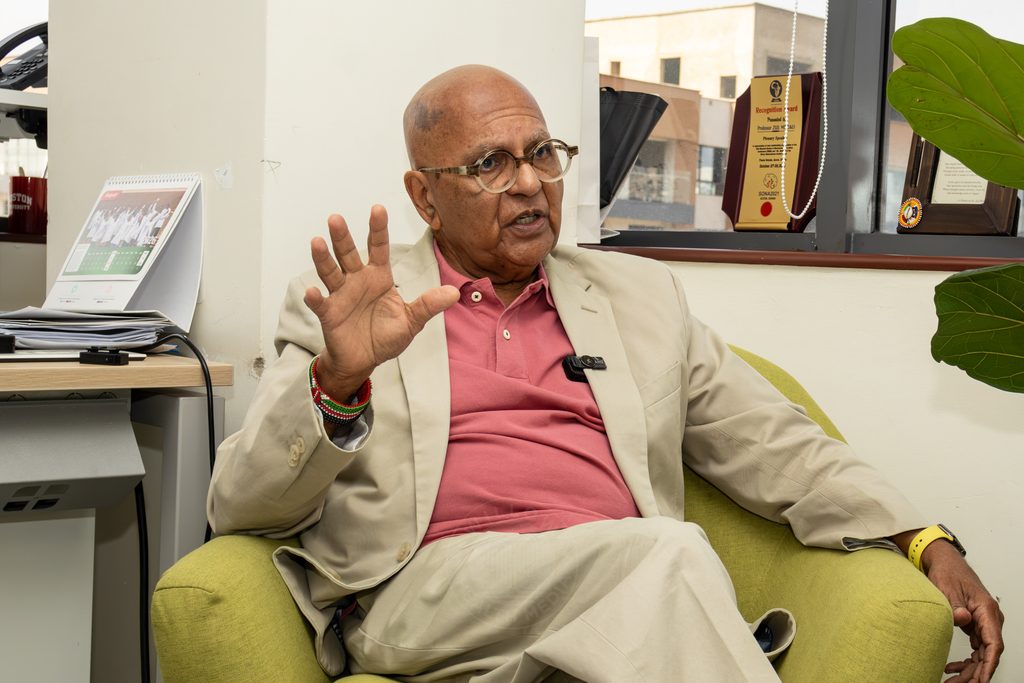
These stories capture a truth Kenya’s health system still struggles to confront. Dementia does not affect only the person whose memory is fading. It can rearrange an entire family, taking away incomes, straining marriages, isolating caregivers and forcing legal decisions just when families are least prepared. Potentially 258,000, according to a 2024 study, older Kenyans live with dementia, yet the country has no national dementia plan, no clear referral pathway and no dedicated dementia law, while stigma keeps many cases hidden.
Elizabeth, who later trained in psychology and specialised in dementia studies, is now founder and CEO of the Alzheimer’s and Dementia Organization Kenya (ADOK), which supports caregivers, raises awareness and brings families together. Her advice is simple: settle legal and financial affairs while a loved one can still make decisions.

“Dementia is an umbrella term for conditions affecting memory, thinking, behaviour and daily functioning,” Elizabeth explains. According to the World Health Organization (WHO), Alzheimer’s disease is the most common form, accounting for an estimated 60 to 70 per cent of cases globally. It is not a normal part of ageing, though age remains its strongest known risk factor.
That matters as Kenya ages. The number of Kenyans aged 60 and above was projected at 2.9 million in 2024, according to the Kenya National Bureau of Statistics (KNBS), and is expected to reach 6.4 million by 2045.
Her family discussed their father’s diabetes and blood pressure but rarely his forgetfulness or changes in behaviour
A 2024 study, “Dementia screening in rural Kenya: The prevalence and impact of screening positive for dementia,” by Christine W Musyimi, Prof David Ndetei and other researchers, found a prevalence of roughly 9.4 per cent among rural adults aged 60 and above who took part. That suggests potentially 258,000 older Kenyans live with the condition.

The global picture is stark. WHO estimates that about 57 million people were living with dementia in 2021, more than 60 per cent of them in low- and middle-income countries such as Kenya. Nearly 10 million new cases occur every year, and dementia is now the seventh leading cause of death worldwide. In 2019, it cost the global economy about $1.3 trillion (Ksh169 trillion), half of it in unpaid care by family and friends, who give an average of five hours a day. Women provide roughly 70 per cent of those hours.
When Elizabeth’s father was in hospital, the family discussed his diabetes and blood pressure but rarely mentioned his forgetfulness or changes in behaviour.
Prof Merali says dementia often begins so subtly that families dismiss it: forgotten keys, a repeated story, a familiar route home that suddenly looks strange. “Typically, it expresses itself slowly. With Alzheimer’s disease, the underlying process can begin 10 to 15 years before symptoms become obvious. That makes early recognition critical, yet many Kenyan families interpret those early changes as ageing,” he says.
The cases of Koinange, Karugu and Kirima show how a slow, easily missed decline turns dementia into a legal problem. As capacity fades, decisions over bank accounts, property and inheritance become complicated, sometimes irreversibly.
A person with dementia can only sign two documents: an agreement to appoint a supporter, and a will
Dr Mercy Deche, an Advocate of the High Court, says Section 3I of the Mental Health Act (Cap. 248) offers a window, though few families know it exists. “The kind of documents that a person with dementia is at liberty to prepare before they have full cognitive decline are mainly two. One is an agreement to appoint a supporter, and the other one is a will,” she says.
The person must understand what they are signing. “It must be proven that at the time of the preparation of this document, and at the time this person with dementia is signing the documents, they are mentally fit,” she explains. Yet it is rare, she says, for patients to recognise the problem and “put my house in order by preparing these documents”.

Once capacity is lost, families can apply under sections 26 and 27 of the Act to appoint a representative, such as a spouse, adult child, parent, relative or caregiver. “This has to be filed by way of a petition to the High Court, not just any other court,” Dr Deche says. “That speaks to access.” An uncontested case could take “maybe between three and six months”, though disputes take longer.
A diagnosis alone does not remove legal capacity. “It is not enough for someone to just say this person has dementia,” she says. Courts must establish both diagnosis and functional incapacity, and representatives can be required to account for property under oversight by the court and the Public Trustee.
Kenya has no dedicated dementia law. “There is no such a law,” Dr Deche says. Reform, she argues, must also address violence, family disputes and the vulnerability of women. “We need to look at this issue of dementia in a holistic way, not just about property.”
Thyroid problems, vitamin B12 deficiency and depression can mimic dementia and must be ruled out
Diagnosis should not rest on age or a single conversation. Elizabeth says assessment can involve cognitive questions, physical examination, blood tests and, where appropriate, MRI or PET scans. Thyroid problems, vitamin B12 deficiency and depression can mimic dementia and must be ruled out.
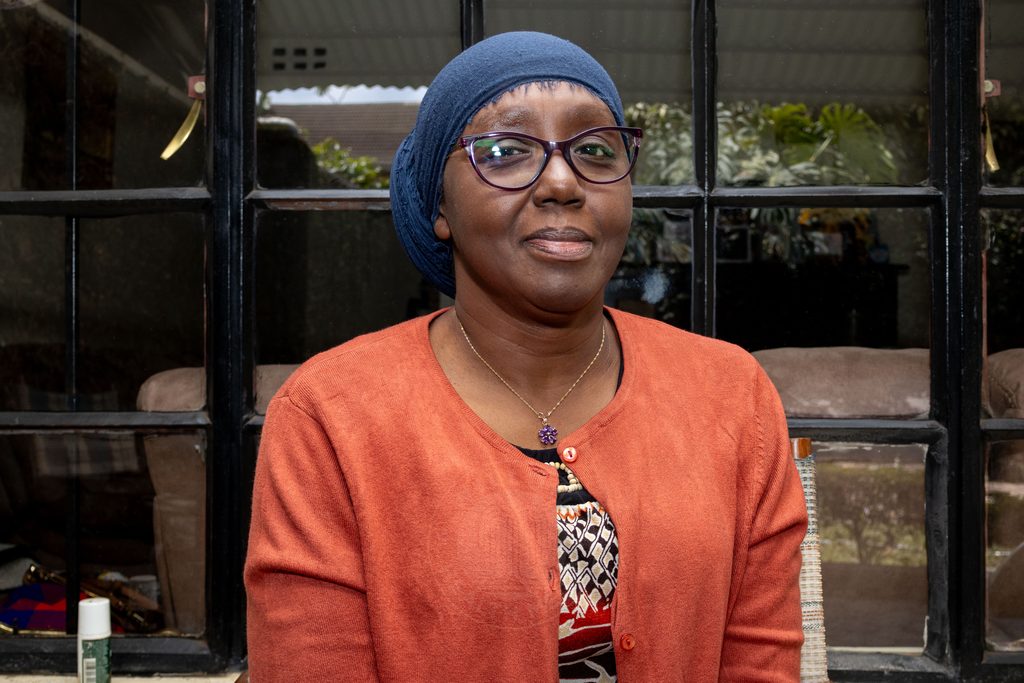
Neurologists and neuropsychologists are scarce. Kenya has about 20 neurologists for a population of about 55 million, according to a 2025 University of Alabama at Birmingham programme in Kijabe, Kiambu County. That is about one neurologist for every 2.75 million Kenyans. There is no official count of neuropsychologists, estimated in single digits.
Prof Merali says standard tests may not suit people with little formal education. Asking someone to draw an analogue clock means little to a person who has never used one. His institute is developing “simpler community-based tools that can identify possible cognitive decline without relying heavily on educational background.”
Costs mount quickly: consultations, tests, medicines, nappies and eventually extra caregivers. “A PET scan can cost between Ksh80,000 and Ksh100,000. Some costs may be covered by health insurance, but families can still face substantial out-of-pocket expenses,” Elizabeth says. Under the 2026 Social Health Authority (SHA) tariffs, MRI scans are covered at Ksh11,000 and CT scans at Ksh6,900 to Ksh9,600, capped at two major scans per household per year.

The highest cost is often invisible. Someone must stay home to supervise a person who may wander, become incontinent, or lose the ability to eat, bathe, or use the toilet alone. That is why Elizabeth’s mother stopped working.
A national mapping report found that care happens mostly at home, provided by spouses, children or other relatives, often women, while paid domestic carers remain largely informal and unregulated. Prof Merali calls caregivers a strength of Kenya’s social system that can become a burden without support. “Caregivers lose jobs, social connections and normal lives. Some become isolated alongside the person they are caring for,” he says.
In some communities, dementia symptoms are read as bewitchment, a curse or possession
Women carry a heavier load in another way too. The 2026 Kenyan Global Burden of Disease analysis found substantially higher prevalence among women, partly, Elizabeth says, because women live longer.
In some communities, symptoms are read as bewitchment, a curse or possession. Elizabeth remembers people telling her family they were being punished as “secret sinners”. Such beliefs can lead families to hide relatives or confine them to stop them wandering.

Most reported cases come from the Mount Kenya region, including Murang’a, Nyeri and Kiambu, but Elizabeth says that reflects reporting, not reality. “Other regions too have this condition, but they are not ready to report because of the stigmatisation that comes with it,” she says. ADOK’s new centre in Kakamega is already receiving reports of suspected cases.
Prof Merali lists hypertension, obesity, poor nutrition, inadequate sleep, inactivity, social isolation and hearing loss among risk factors.
WHO’s updated 2026 guidance says up to 45 per cent of dementia risk is linked to factors people can change, including tobacco and alcohol use, air pollution, hypertension and diabetes. The urgency is growing as more Kenyans survive into old age with diabetes, HIV and other chronic diseases. A situation report by the STRiDE dementia project projected a 316 per cent increase in Kenyans living with dementia between 2020 and 2050.
Dementia may take memories, but not dignity, a home or savings if the paperwork and conversations start early
Yet families still move from a neurologist to ADOK or other support groups without a formal referral route. Elizabeth says reform should start with a national dementia plan, followed by reliable data, early diagnosis, trained health workers, affordable care and caregiver support, alongside the legal reform Dr Deche wants.
“Kenya needs to take dementia closer to communities,” Elizabeth says. Primary healthcare workers should be able to spot early changes, screen and refer patients. Prof Merali wants dementia understood as a medical condition, not a punishment or an inevitable part of ageing.
Caregivers, Elizabeth adds, need recognition as part of the health system, with information, respite and psychosocial support. “Most importantly, families need to know that they are not alone.”
Dementia may take memories, but it need not take dignity, a home or savings if the paperwork and conversations happen early. “Enjoy them even the way they are,” she tells caregivers. “Enjoy every moment.”
We believe in the free flow of information
Republish our articles for free, online or in print, under Creative Commons licence.