


Kenya is preparing for an unusually wet season as experts warn that changing weather, animal movement and environmental pressures are creating new opportunities for diseases to spread across borders.
Kenya’s next major health threat may not begin in a hospital. It could begin in a flooded settlement, a mosquito breeding ground, a pastoralist migration route, a contaminated water source or an animal health facility that misses an infection early.
That is the concern driving the East Africa One Health Conference, scheduled for November 2026 in Nairobi. Convened by the Kenya Medical Association (KMA) and the Kenya Veterinary Association (KVA) under the theme, “One Health, One Future: Advancing Human, Animal and Environmental Well-being,” the meeting will bring together health, veterinary, environmental and policy experts to examine threats that increasingly cut across sectors and borders.
The urgency has two sources, and they feed each other. The first is antimicrobial resistance, which experts say does not respect the line between a hospital ward and a cattle pen. Dr Cynthia Chemonges, a pathologist and convener of KMA’s Public Health Committee, calls it one of One Health’s most serious challenges because resistant organisms ignore the boundaries between human health, animal health, food and the environment.
“When you have an infection which is resistant to medicine, it becomes very expensive and difficult to treat, with increased complications and even possible mortalities,” she said during a stakeholders meeting on Tuesday. The KMA reports that 60 per cent of emerging infectious diseases in people are zoonotic, while 75 per cent of new emerging human pathogens in recent decades have had an animal origin, alongside a growing burden of bacterial resistance.
The Ministry of Health is preparing for flooding tied to El Niño conditions expected between October and February
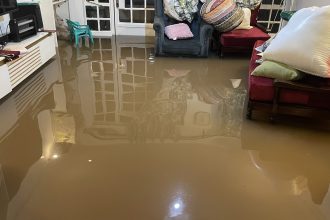
The second source of urgency is the weather. The Kenya Meteorological Department has forecast above average rainfall across roughly 80 per cent of the country in the coming months, raising the prospect of flooding, displacement, contaminated water and disease vectors.
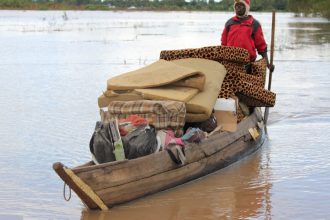
Dr Daniel Langat, who heads the Division of Disease Surveillance and Response at the Kenya National Public Health Institute, said the Ministry of Health is preparing for flooding tied to El Niño conditions expected between October and February.
“One of the diseases that we are planning for in terms of preparedness, surveillance and response measures to mitigate the negative impact of such an outbreak is Rift Valley Fever,” he said. “Previous El Niño events have been followed by outbreaks of the disease, particularly in northern Kenya, with Garissa, Wajir, Narok and Baringo among areas that have experienced outbreaks.”
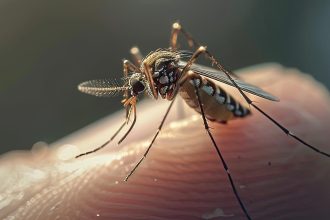
The mechanism connecting the two threats is direct. Heavy rainfall creates stagnant water where mosquitoes breed, flooding overwhelms sanitation and contaminates water supplies in a familiar route to cholera, and livestock exposed to disease-carrying vectors put the people who work closest with them at greater risk.
Resistant genes, meanwhile, move between humans, livestock and the wider environment continuously, so a single environmental shock can ripple across every sector at once.
“Antibiotics are also used in animals, and these resistant abilities and genes are transferred between people, animals, the food that we consume and also the environment in general,” Chemonges said. Her conclusion is blunt. “It’s not just a human health problem. We have to integrate all of these fields.”
What One Health proposes is to stop waiting for the ripple to reach a hospital bed. Dr Amina Guleid, KMA’s Treasurer General, wants the conference to build a platform where information moves across sectors in real time, “quickly identifying emerging issues that are coming from the animal side or from the environmental side that are affecting humans.”
Brucellosis presents enough like malaria that it frequently gets treated as malaria instead, allowing the real disease to go untouched
She pointed to cholera vaccination to illustrate the difference between prevention and reaction. “When cholera is coming, we don’t want to start looking for medication for cholera,” she said. “If we need to have people vaccinated, let them get the vaccines now before the onset of the rains.”

The same logic applies to Rift Valley Fever, and the payoff, Guleid said, depends on getting past talk. “We don’t want these to be boardroom discussions. We want to bring such information to the people on the ground.”
None of this starts from zero. Kenya laid the groundwork in 2012, when the Ministry of Health and the Ministry of Livestock and Agriculture signed a memorandum of understanding creating the Zoonotic Disease Unit, housed within the Ministry of Health but drawing expertise from both. Langat said the unit is now working to bring the Ministry of Environment into the same framework, and that counties already have their own County One Health Units.
The more difficult task, he admitted, is cascading a national system down to where an early warning has to turn into someone showing up with a vaccine or a public health message. “We need to translate this and cascade it all the way to the community, because that is where action is supposed to be taking place,” he said.
Much of the current gap is not a medical failure but a speed problem, hardest felt in Kenya’s arid and semi-arid counties, where veterinary services are thin, and pastoralist communities are constantly moving.
Rabies is close to a death sentence once symptoms appear, yet Samantha Opere, a veterinary surgeon and Treasurer at the KVA, said people still arrive too late, often at clinics where staff have not been trained to recognise it, while Brucellosis presents enough like malaria that it frequently gets treated as malaria instead, allowing the real disease to go untouched.
“If they are not able to do the right tests, then there occurs an issue whereby an illness might be wrongfully diagnosed,” Opere said. Communities exposed to raw milk risk brucellosis; those eating meat from animals that died unexplained risk anthrax, exposures Opere links less to ignorance than to a shortage of accessible alternatives.
Transboundary animal diseases remain a major regional threat, driven by pastoralists and livestock moving constantly across borders for pasture, water and markets
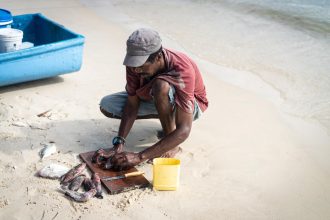
That shortage has a geography. “We tend to find the vet practitioners mostly in urban areas,” Opere said, and cost compounds the distance problem for farmers. Mobility makes it worse still. “Farmers are always in motion, especially for pastoralist communities, so the sick animals will be left behind,” she said, and even where a vet is willing, “getting someone to cover that distance and to offer the service is usually a challenge as well.”
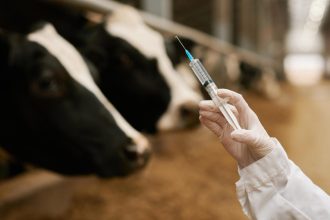
For the poorest households, animal health can lose out. “Sometimes you can’t ask a farmer to prioritise animal management if they cannot manage to feed themselves,” Opere said. The consequence is a surveillance blind spot, since sick animals are often slaughtered or buried rather than reported. “At times also, some farmers weigh the cost of calling a vet and decide to just slaughter the animal,” closing off the one moment a disease might have been caught early.
Disease does not check passports, which is why the conference is framed regionally rather than nationally. Christine Cheptoo, of the IGAD Centre for Pastoral Areas and Livestock Development, said transboundary animal diseases remain a major regional threat, driven by pastoralists and livestock moving constantly across borders for pasture, water and markets.
IGAD has responded with Cross-Border Cluster Committees since 2023 across corridors including Karamoja, Moyale and Mandera, running joint surveillance and coordinating vaccination drives across borders. Two frameworks are meant to back that work, an IGAD Transhumance Protocol using health certificates to document animal numbers and vaccination status as herds cross borders, and a Regional Health Data Sharing and Protection Policy Framework meant to standardise data sharing among member states.
The conference is structured around seven thematic areas including zoonotic diseases and emerging infectious threats
Cheptoo is candid that both remain unfinished business. The transhumance protocol has been signed by ministers but implementation has not begun; diagnostic facilities near border zones are still thin on the ground, and member states are at different stages of adopting a One Health approach. “Governments that are still lagging behind due to political reasons need to strengthen their embrace of the One Health approach,” she said.
The conference is structured around seven thematic areas, including zoonotic diseases and emerging infectious threats, antimicrobial use, resistance and stewardship, environmental health, ecosystems and climate change. Others are sustainable food systems and food safety, One Health in policy, governance and financing, gender and community engagement, and digital innovations and artificial intelligence in One Health.
Chemonges, who helped design them, points to two as pointing furthest ahead: digital innovation and AI, and the intersection of environment, climate and health systems, the pairing that turns a weather forecast into a public health plan.
Whether that plan survives contact with a budget is the open question, and the KVA is not shy about naming it. Opere wants the conference to produce concrete commitments rather than another round of recommendations, starting with money. “If it’s not in government budget, it’s not likely to be done,” she said.
Additional reporting by Shawn Mwaniki