


The launch of Africa’s first three-in-one small ruminant vaccine is more than a scientific milestone. It is an economic and public health lifeline.
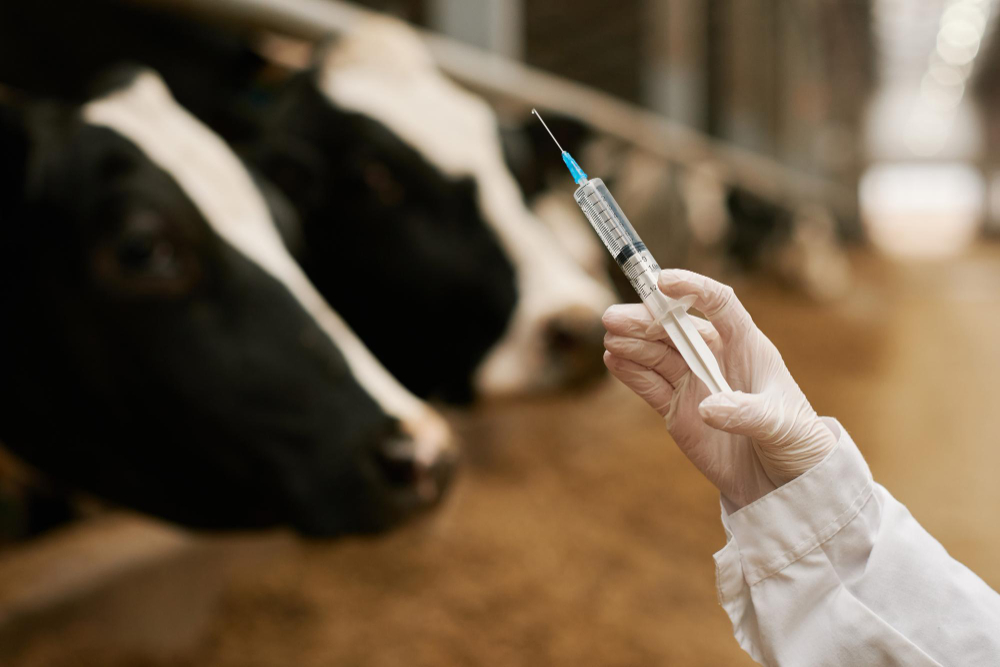
Kenya has launched a first-of-its-kind three-in-one vaccine for sheep and goats, offering protection against three of the most devastating livestock diseases in a single shot. The breakthrough promises to save farmers millions, slash economic losses running into billions, and reduce the human health risks that come with sick animals.
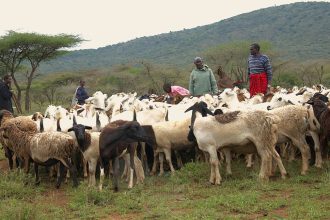
The vaccine protects small ruminants against Contagious Caprine Pleuropneumonia (CCPP), Sheep and Goat Pox (SGP) and Peste des Petits Ruminants (PPR). It is the first vaccine to offer protection against CCPP, which costs the average farmer Ksh260,000 a year in losses. SGP severely affects 80 per cent of flocks, while PPR kills 70 per cent of infected animals and has been globally targeted for eradication since 2015.
Developed by Jordan Bio-Industries Centre (JOVAC) and led by the Global Alliance for Livestock Veterinary Medicines (GALVmed), the vaccine was unveiled at the 60th Kenya Veterinary Association Congress in Diani, Kwale County, between 21 and 24 April, and first administered to livestock on World Veterinary Day on 25 April.
Dr Lois Muraguri, CEO of GALVmed, called the launch the result of years of science, partnership and regulatory work. “It is the dawn of a new era for animal disease prevention. Combination vaccines are the veterinarian’s multitool, providing protection against multiple diseases in one shot to save time, money and resources,” she said.
The vaccine uses newer technology, including a special stabiliser and a live version
Most livestock farmers are financially strained, she added, and combination vaccines make the decision to immunise more viable. “This increases the possible levels of protection against costly diseases,” she explained.
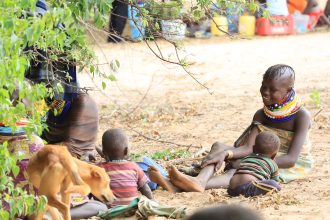
For pastoral communities where mobility makes disease control difficult, the vaccine arrives at a critical time. Dr Benson Etelej Long’or, Turkana County Director of Veterinary Services, told Willow Health Media the combined vaccine was timely. “In a pastoral set up where mobility is rampant, it is worth noting that a combined vaccine that sorts notifiable diseases at ago is the way to go, especially so in a cross-border set up where mobilising pastoral households is a challenge. Turkana county that therefore borders three international borders, could be a suitable place to embrace such innovations,” he said.
The vaccine uses the latest technology, including a novel stabiliser and a live vaccine for CCPP, which is more efficient than older inactivated antigen-based vaccines.
The stakes go beyond farming. Zoonotic diseases, those that spread between animals and humans, pose a serious and often overlooked public health threat. The Food and Agriculture Organisation (FAO) has urged countries to adopt a one health approach covering livestock, human health and the environment together.
Experts agree vaccinating livestock reduces need for antimicrobials, lowers AMR risk
Dr Jane Lwoyero, Programme Officer for Antimicrobial Resistance and Food Safety at the World Organisation for Animal Health (WOAH), told Willow Health Media that 60 per cent of disease-causing organisms responsible for human illness originate from domestic animals or wildlife. She warned that the inappropriate use of antimicrobials in animals could drive up antimicrobial resistance (AMR) in both animals and humans. Experts agree that vaccinating livestock reduces the need for antimicrobials and lowers AMR risk.
Brucellosis makes the human cost plain. It has no cure in livestock but is treatable in humans, and affects at least 100,000 Kenyans annually, according to the International Livestock Research Institute (ILRI). ILRI’s veterinary epidemiologist Bernard Bett explained the cycle bluntly. “To cure humans, you must first cure their herds because if their livestock remains infected, the humans will be treated, get back home and be reinfected and return to the hospital,” he said.
A 2023 study in Isiolo found that 40.2 per cent of 378 surveyed slaughterhouse workers had been exposed to the Brucella bacterium. FAO data shows brucellosis costs Kenya’s cattle sector an estimated Ksh30.7 billion annually in Purchasing Power Parity terms.
The three-in-one vaccine is part of a broader pipeline under the Veterinary Innovations Transforming Animal Health and Livelihoods (VITAL) project, now in its second phase. Four additional combination vaccines are currently undergoing regulatory review.
Many of the most common livestock diseases in Kenya are preventable with the right tools
These include a combined SGP and PPR vaccine, and a Contagious Bovine Pleuropneumonia (CBPP) and Lumpy Skin Disease (LSD) vaccine with an option for synchronised Rift Valley Fever (RVF) vaccination. The CBPP and LSD vaccine is currently under registration in Kenya and is expected to launch later in 2026. GALVmed estimates that RVF costs the economy Ksh4.1 billion annually, while CBPP costs Ksh982 million.

Dr Samson Muchelule, CEO of KVA, said the VITAL project proved that public and private sector partnerships can make disease prevention more accessible. “Many of the most common livestock diseases in Kenya are preventable with the right tools, but developing and deploying them to Kenyan farmers has proven challenging until now,” he said.
The launch comes as Kenya shifts its vaccination policy. In October 2025, the government ended fully subsidised livestock vaccination, introducing fees of Ksh3 per animal for PPR vaccines and Ksh50 per animal for Foot and Mouth Disease (FMD) vaccines. Dr Allan Azegele, Director of Veterinary Services, said free vaccinations would only be offered during emergencies.
With diseases costing the economy billions each year and animal illnesses threatening human health, the arrival of more efficient combination vaccines offers Kenya a timely opportunity to strengthen its livestock and public health systems together.
We believe in the free flow of information
Republish our articles for free, online or in print, under Creative Commons licence.