

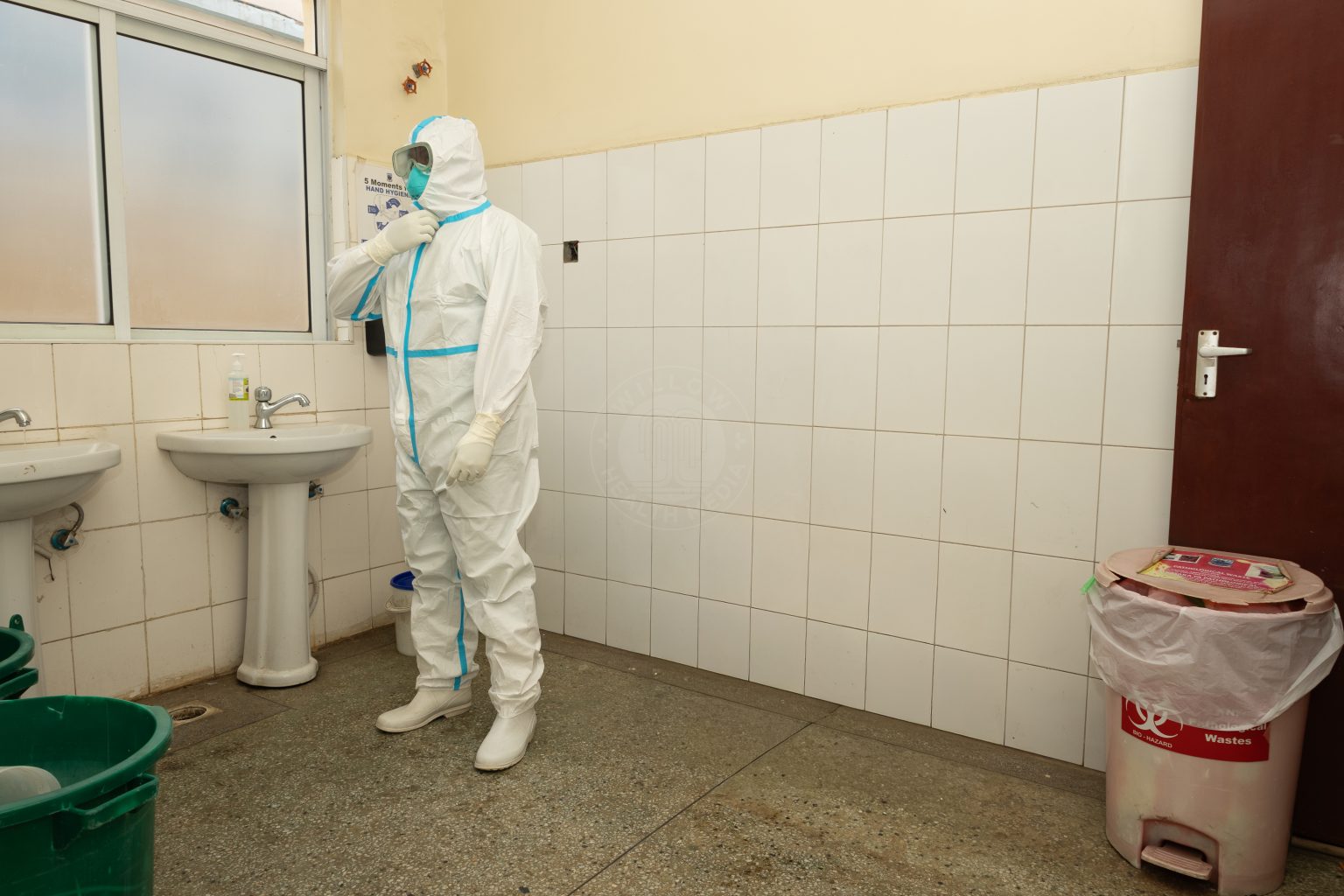

Over 80 health workers infected with Ebola so far, exposing safety failures on the frontline where threats of security, armed conflict and abductions are a growing danger.
The Ebola outbreak in the Democratic Republic of Congo (DRC) is no longer just a local health crisis. Frontline health workers are among those infected, and a humanitarian worker diagnosed in France shows how quickly the virus can cross borders.
Speaking at a World Health Organization (WHO) briefing on June 24, Director-General Dr Tedros Adhanom Ghebreyesus said the outbreak continues to outpace response efforts despite progress in treatment, testing and surveillance. “There are now 1,094 confirmed cases with 277 deaths. The outbreak is continuing to move fast,” he said.
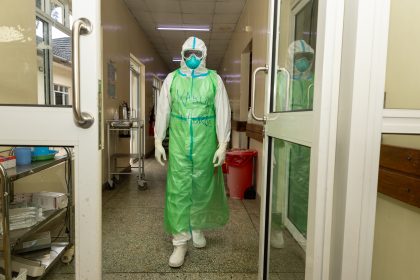
Ebola has spread across multiple provinces in eastern DRC and into neighbouring Uganda, where authorities have confirmed 20 cases and two deaths linked to transmission from DRC.
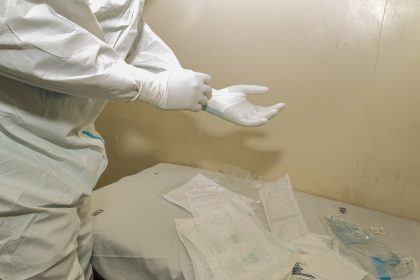
On June 24, France reported an imported positive case involving a humanitarian worker who had cared for Ebola patients in DRC. Dr Tedros said the case shows the risks carried daily by doctors, nurses, lab teams and humanitarian responders, as “Almost 80 health workers have been infected, highlighting the risks they face and the importance of strengthening infection prevention and control.”
The French aid worker – who was admitted after experiencing mild symptoms -has since recovered and was discharged on July 4, France Health Minister Stéphanie Rist confirmed. France’s experience shows how Ebola can be contained when preparedness measures are in place before a case arrives.
Responders experienced seven separate security incidents targeting healthcare workers
Most infections occurred inside DRC, with additional cases among responders in Uganda, Dr Abdi Mahmood, WHO Director for Health Emergency Alert and Response Operations, said, adding that “WHO continues to assess the risk to the global population, and France remains low.” Dr Mahmood also reckons that although Ebola is one of the biggest threats, “The threat of security, armed conflict, abduction threats, crimes, and being in the wrong place at the wrong time is becoming a major challenge.”
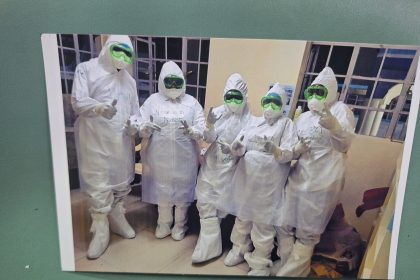
Responders have already experienced seven separate security incidents targeting healthcare workers during the response.
WHO says important gains have been made over the past five weeks. Treatment capacity has grown from fewer than 10 beds at the outbreak’s start to more than 500 beds across 19 health centres, while testing has expanded from 30 daily tests at a single Kinshasa laboratory to more than 2,000 tests a day across nine laboratories in three provinces. More than 100 patients have now recovered following early diagnosis and supportive treatment. “We could save many more lives with therapeutics,” Dr Tedros said, announcing trials of two antiviral treatments, tested individually and in combination, expected to begin within days.
Better clinical care alone will not end the outbreak, WHO acknowledges. The greatest challenge remains finding infected people before they unknowingly spread the virus. Contact tracing, one of Ebola control’s most effective tools, continues to fall well below target: more than 8,270 contacts are currently monitored, but only about 72 per cent receive daily follow-up, against a 95 per cent target considered necessary to interrupt transmission.
The difficulties stem from the outbreak’s unique nature. WHO Representative to DRC Dr Anne Ancia said many infections occur among young men working in informal gold mines around Mongbwalu, who travel long distances, often without families, and return home once ill. “They come alone, and they sometimes don’t have a lot of contact with the population,” she said. “When they get sick, sometimes people don’t know, and they try to return home.” That mobility has made tracing difficult, with some infected miners dying in communities where nobody knows them.
Displaced persons’ camps add another layer of complexity. Several have reported confirmed cases, including one settlement housing about 25,000 people. “They don’t have latrines, they don’t have access to water, they don’t have where to sleep and what to eat,” officials said, warning that such conditions are ideal for transmission. Border closures have hindered movement of supplies and personnel, while armed groups restrict access to some communities.
For many daily wage earners, isolation means losing income needed to feed their families
Dr Tedros said technical fixes alone will not solve the crisis, pointing to public mistrust. Earlier outbreaks offered vaccines as an incentive to cooperate, but this outbreak is caused by the Bundibugyo species, for which no vaccine exists.
“Now you ask someone if they’re a contact and there is nothing to offer,” he said. For many daily wage earners, isolation means losing income needed to feed their families: “People make a choice. Better I do my manual labour and get my daily bread.” He also pointed to frustration in affected communities, who question why substantial funding arrives during Ebola outbreaks while malaria and malnutrition receive far less attention. “There was no money for malnutrition when we were hungry, and there was no money to treat malaria and other illnesses that are killing us,” he said.
WHO stressed that the recovered French case is no reason for countries outside Africa to panic, as “Risk to the rest of the world is low. I repeat, the risk is low,” Dr Tedros said, noting that since Ebola was first identified in 1976, fewer than 30 cases have been detected outside Africa despite numerous outbreaks on the continent.
WHO, with Africa CDC and partners, has appealed for $518 million (Ksh67 billion) to finance the continental Ebola preparedness and response plan. “The response is scaling. We’re in a much better place than we were four weeks ago. We’re nowhere near where we need to be,” said Dr Chikwe Ihekweazu, Executive Director of WHO’s Health Emergencies Programme, warning that Ebola demands near perfection: “Even 99.9 per cent is not good enough. We have to keep pushing to the very end until we get all new cases emerging from known contact lists.”
For now, the virus continues to spread faster than responders can contain it. Every infected health worker is a reminder that the people standing between Ebola and wider transmission remain among its most vulnerable victims.