A boda boda rider’s earnings shift daily, while a farmer waits months between harvests. But SHA’s means testing scores their phones, motorcycle, land, utilities, and mobile money as fixed wealth – missing that the bike might still be on credit, or not even his, and that a farmer’s cow and dry season are not a salary.
Like many doctors, I watched the National Hospital Insurance Fund (NHIF) become the Social Health Authority (SHA) with fatigue and quiet optimism. The early numbers forced my attention.
Dr Mercy Mwangangi, SHA’s CEO, said in mid-August that 32.3 million Kenyans have registered, nearly twice NHIF’s peak of 16.9 million. Health CS Aden Duale, at the WHO Regional Committee for Africa in Addis Ababa, gave the same figure and said over 20 million primary care visits have reached 15 million people. When that many register and walk into clinics, something is working.

Registration opened the door to a promise: that clinic visits and catastrophic bills, such as cancer or kidney transplants, would be backed by state safety nets funded through national taxes and levies such as the sugar tax, an excise charge on sugar-sweetened products meant to curb disease and raise ring-fenced revenue for healthcare. There are no waiting periods, cover is mandatory, and the cancer and renal package, including transplant, is smarter than NHIF’s old caps, a genuine piece of social solidarity.
A health system cannot survive on open doors alone. The architecture rests on three funds: government for primary healthcare (PHC), citizen contributions into the Social Health Insurance Fund (SHIF) for hospital care, and a non-contributory fund, the Emergency, Chronic and Critical Illness Fund (ECCIF), covering bills that used to wipe families out, like dialysis and transplants once other limits are exhausted.
What decides whether SHA lasts is whether money comes in every month, especially into SHIF
These pots should be ring-fenced, which has not been done. When contributions fail to materialise, the temptation to dip into state reserves will be overwhelming. Registration is not revenue, and a fund that borrows from its own safety nets is a promise with an expiry date, though that risk is smaller than SHIF failing to collect.
What decides whether SHA lasts is whether money comes in every month, especially into SHIF.
Means testing assesses household income to determine what it should contribute or receive as a subsidy. It is not inherently wrong; paying by ability makes sense in theory. Used this way in Kenya for the first time, it is sound in principle and hard in practice, too complex to be accurate, understood and fair all at once.

The formula is set in law: the Social Health Insurance Act 2023, with regulations 17 and 18 of the 2024 Regulations, sets the contribution at 2.75 per cent of household income, with a minimum of Sh300 a month. For formal employees, the deduction leaves the payslip directly; for others, the same 2.75 per cent applies to income determined by the means-testing instrument under regulation 21, using the formula in the Fifth Schedule. SHA restated the rate and floor on May 6, 2026.
In plain terms: everyone pays the same income share, with a small minimum even for the very poor. Without a salary, your contribution is worked out from your household’s circumstances, not guesswork.
The SHA platform tells the public that means testing looks at housing, basic services, household composition, mobile phone use, banking activity, credit data, business income, utility bills, and any other information that could determine income. The result is an “income estimation score”, which sets the premium.
To the mean testing score, a phone looks like disposable wealth; in reality, many Kenyans buy on credit at twice the shop price
On May 6, 2026, SHA said the instrument was developed with the Ministry of Health, universities, research institutions and development partners. It already groups informal households into bands: 45 per cent at Sh300 to Sh500, 47 per cent at Sh501 to Sh850, 7.1 per cent at Sh1,001 to Sh3,499, and 0.4 per cent above Sh3,500. Indigent households, identified through the State Department for Social Protection, are supposed to have contributions paid by the government, and an appeals option exists.
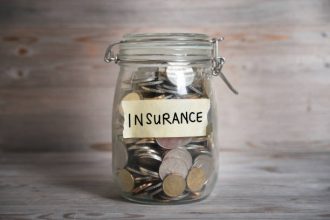
This is not a method an average grandmother can check. The rate is not the mystery; the income figure is. She cannot trace how her small house, dry farm or an M-Pesa message became the figure on her phone. To the score, a phone looks like disposable wealth; in reality, many buy handsets on credit at twice the shop price, and data draws from the same limited cash. The phone looks like an asset, but is often a debt. If a calculation cannot be understood, it will never feel fair, and it will not collect.
Picture the people this scheme was built to protect. A boda boda rider’s income rises and falls daily. SHA’s system examines his phone and mobile money, while the National Transport and Safety Authority (NTSA) knows he owns a motorcycle, missing the loan on the bike and the debt on the phone. He cannot say: this is my land, this is why the bike put me here, this is what I owe, and this is how I challenge it if the bike belongs to the stage owner, not him.
A rural farmer waits months between harvests. SHA’s list includes land, utilities and mobile money, but a cow and a dry season are not a salary. Most informal households sit at Sh850 or less. She needs a plain monthly figure before selling her maize, and a way to pay from her phone when cash is available. SHA has launched Lipa SHA Pole Pole for this, but a clear path from her circumstances to her income number is missing.
SHA payments at 2.75 per cent of salary feel like forced charity, a penalty for being employed
When a bill feels like a black box, people close their wallets. If the informal sector does not pay, the three funds thin out, and the 15 million people reached so far become a statistic, a gap that lands on the formal sector.
For formal employment, the rate remains 2.75 per cent of salary, with no NHIF-style cap at Sh1,700 as before. Up to about Sh5,000 a month, this can still feel like paying for cover one might use; above that, it starts to feel like forced charity, a penalty for being employed. Pooling only stays fair if the rest of the country is also in it. If informal collection stays weak, the 2.75 per cent stops being solidarity and becomes a tax on the employed, carrying a scheme most have registered for but not funded.
Kenya is not alone in this, and comparisons will arise. Most European countries either cover everyone through general taxation, as with the UK’s NHS, or collect from registered self-employed workers on declared income using published brackets. Spain’s autónomos uses 15 income bands, and France’s URSSAF draws on declared professional income, per the OECD’s Health at a Glance 2025. Neither approach scores a trader in a way her grandmother could not follow. The ILO has long shown that undeclared workers fall outside contribution systems, a labour problem, not a reason to obscure the health bill.
Closer to home, Rwanda’s community health insurance (Mutuelle de santé), run by the Rwanda Social Security Board, publishes five bands effective July 1, 2026. The poorest pay nothing, with the state covering RWF 4,000 (Ksh354); others pay RWF 3,000 (Ksh265), 5,000 (Ksh442), 8,000 (Ksh707) or 20,000 (Ksh1,768), per the RSSB 2026/27 schedule. Anyone can check their category on a basic phone, and coverage sits above 88 per cent. The struggle is not cost; it is classification.
Ghana settled on one affordable flat rate for the informal sector, payable from a phone, alongside subsidy
Ghana’s National Health Insurance Scheme wanted an income-related premium in law but could not measure informal income accurately, so it settled on a low flat fee, around GHS 23 a year (Ksh255), a figure the NHIA last stated in 2022, with waivers for the poorest. Proxy means testing there only identifies indigents; it does not price the informal premium at the counter.
Indonesia’s JKN scheme, run by BPJS Kesehatan, gives informal workers three monthly rates under Presidential Regulation 64 of 2020: Rp 35,000 (Ksh263), 100,000 (Ksh750) or 150,000 (Ksh1,125). The poor on the national list pay nothing. Cards are nearly universal, but collection is not: BPJS reports tens of millions in arrears.
None of these systems asks a grandmother to reverse-engineer an income score before trusting the bill. They publish a small number of cash amounts a household can see, zero-rate the poorest, and let people pay from a phone. That is the evidence behind the two paths I am asking SHA to consider.
Sugar taxes and health levies should stay locked for primary and chronic care
SHA must trade impossible precision for workable simplicity: keep Kenya’s calculation but put a simple, public face on it through USSD bands, so every household can say: this is my band, this is what it costs, this is my subsidy if I cannot pay, and this is how I challenge it. Or do what Ghana settled on: one affordable flat rate for the informal sector, payable from a phone, alongside the subsidy the law already provides.
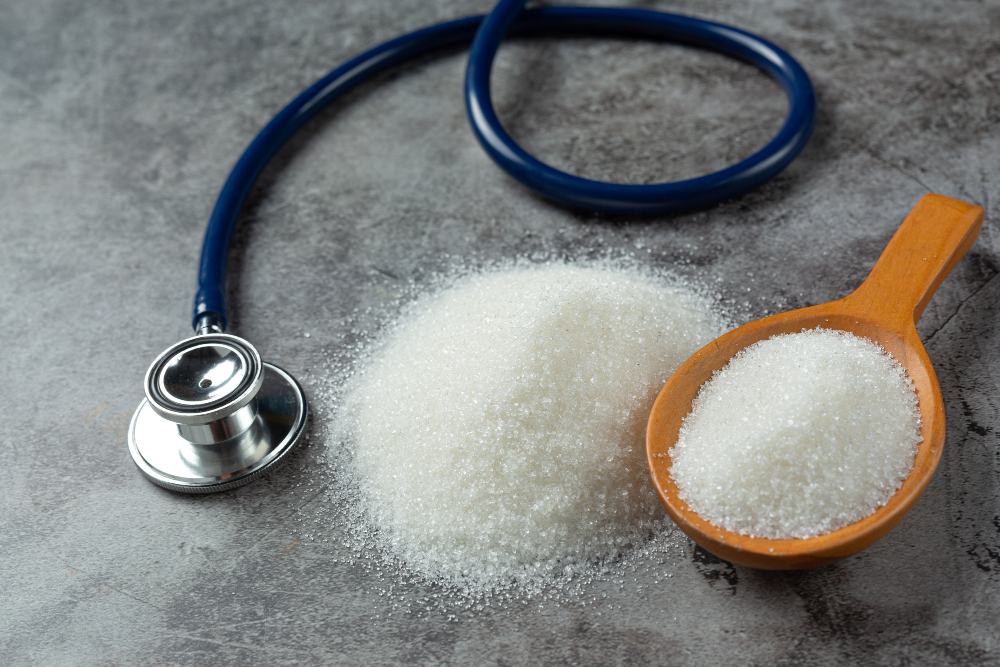
Above all, Parliament must legally safeguard dedicated revenue streams, so sugar taxes and health levies stay locked for primary and chronic care rather than plugging collection shortfalls, and write a check into the law at year two or three: how many are actually paying, whether money in covers care out, and what happens on appeal.
SHA has built a remarkable vessel for Kenyan healthcare. The numbers are why the optimism was not naïve. I will not come around on collection: unless we make paying for it simple, clear and fair, it will not stay afloat.
Sources: SHA CEO, Dr Mercy Mwangangi, The Star (18 Aug 2026); Health CS Aden Duale, WHO AFRO (Aug 2026); SHI Act, 2023; SHI Regulations, LN 49/2024; SHA MTI statement (6 May 2026); SHA platform T&Cs; OECD, Health at a Glance 2025; Spain, RDL 13/2022; Rwanda RSSB, CBHI Schedule 2026/27; Indonesia, Perpres 64/2020 and BPJS Kesehatan (2026); Ghana NHIA (2022); ILO.
Dr Amina Guleid is a medical doctor and Honorary Treasurer General of the Kenya Medical Association (KMA). She works on health systems and health financing.
We believe in the free flow of information
Republish our articles for free, online or in print, under Creative Commons licence.






I like the observation “Or do what Ghana settled on: one affordable flat rate for the informal sector, payable from a phone…”
That is what NHIF was doing. Simply. And I was personally supporting several related households pay the 6,000/- a month.
Con Lipa SHA Pole Pole servirebbe anche una conferma per ogni versamento, con il periodo coperto e il saldo ancora dovuto. Per chi paga dopo il raccolto, distinguere una rata dal contributo completo aiuterebbe a capire la propria posizione.