



Health CS Aden Duale is cracking down on fake and illegal medicines, warning that prescription drugs should never be sold like ordinary online deliveries.
The government’s decision to ban boda boda (motorbike) riders from delivering antibiotics marks one of Kenya’s boldest attempts to tighten control over the country’s pharmaceutical supply chain, following alarming findings that illegal and unregulated medicines have become deeply embedded in the retail market.

The ban is the latest step in a wider campaign against fake and illegally imported drugs, one that touches nearly every layer of Kenya’s medicine supply system, from how antibiotics reach patients to how pharmacies are stocked and inspected.
It brings together regulators, county governments and criminal investigators to close gaps in the unchecked circulation of counterfeit and unauthorised medicines, while also confronting a hidden, dangerous threat: antimicrobial resistance, which experts warn could undo years of progress in treating common infections.
Health Cabinet Secretary Aden Duale announced the move at the launch of a national initiative against counterfeit medical products, warning that prescription drugs can no longer be treated like ordinary consumer goods ordered online and delivered to doorsteps.
Duale said the habit of ordering antibiotics online for boda boda home deliveries “Will be history in Kenya” as antibiotics are prescription-only medicines that must be dispensed through licensed pharmacies under the supervision of qualified healthcare professionals. The move, he said, is not meant to inconvenience Kenyans but to close loopholes against counterfeit medicines, inappropriate antibiotic use and illegal online drug sales.
Prescription medicines are sold without proper patient assessment or professional oversight
For years, boda boda riders have become central to Kenya’s fast-growing delivery economy, ferrying food, groceries and medicines alike. While this convenience has been widely celebrated by consumers, health regulators argue that it has unintentionally created an unregulated channel through which prescription medicines are sold without proper patient assessment or professional oversight, often bypassing the checks that would normally accompany a pharmacy visit.

The government’s concerns are backed by a Mount Kenya University study by consultants Valérie Faillat and Epaphrodite Twahirwa, which found that 90 per cent of surveyed pharmacies in Nairobi stocked unauthorised parallel-imported medicines, exposing serious weaknesses in medicine regulation.
Duale noted that unlike legally authorised medicines, whose quality, storage and supply chains are monitored by regulators, unauthorised parallel imports are difficult to trace, making it hard to verify their quality, authenticity and safety.
According to the report, such products increase the risk of patients receiving medicines with incorrect ingredients, inadequate active pharmaceutical content or compromised quality due to poor transport and storage conditions along the supply chain.

Duale said counterfeit medicines have become a sophisticated criminal enterprise requiring an equally coordinated response.
“The criminal networks involved in the manufacture, importation, distribution and sale of falsified medical products do not recognise institutional mandates or jurisdictional boundaries. Our response cannot operate in silos and must be coordinated at all levels of government,” he said.
Beyond the boda boda ban, authorities have halted parallel importation of medicines and health technologies, strengthened surveillance of online pharmacies, intensified pharmacy inspections and expanded collaboration between national and county governments to dismantle criminal pharmaceutical supply chains operating across the country.
PPB is urging Kenyans to buy drugs from licensed pharmacies, avoid social media, online sellers
The Pharmacy and Poisons Board (PPB) says it is already rolling out measures to restore confidence in Kenya’s medicine supply system. Between 2021 and 2025, the Board handled 1,413 product quality complaints, coordinated 99 product recalls, received 32,833 adverse drug reaction reports and issued 18 public alerts about suspected falsified medicines.

These figures point to both the scale of the problem and the regulator’s growing surveillance activity in recent years. PPB says it is strengthening post-market surveillance, increasing routine inspections, enhancing traceability systems, working with customs authorities to stop illegal imports at entry points and collaborating with investigative agencies to prosecute offenders. It is also urging Kenyans to buy medicines from licensed pharmacies and to avoid purchasing prescription drugs through social media platforms or informal online sellers.
Beyond the immediate concern of fake medicines lies a growing public health crisis in antimicrobial resistance (AMR). Experts warn that inappropriate access to antibiotics, self-medication and the circulation of poor-quality medicines are accelerating the emergence of drug-resistant bacteria that no longer respond to standard treatment.
Dr Loice Ombajo, Co-director at the Centre for Epidemiological Modelling and Analysis (CEMA), has repeatedly warned that AMR is silently becoming one of Kenya’s biggest public health threats as antibiotics remain among the most commonly misused medicines in Kenya, with many people buying them without prescriptions or failing to complete treatment doses as directed. “Every unnecessary or inappropriate antibiotic use gives bacteria another opportunity to evolve resistance, making future infections increasingly difficult and sometimes impossible to treat,” she says.
The ban is part of broader effort to ensure antibiotics are prescribed based on clinical need
Globally, AMR is directly responsible for an estimated 1.27 million deaths each year, contributing to nearly five million deaths annually, with Africa bearing among the highest burdens as drug-resistant infections prolong hospital stays, raise treatment costs and increase mortality. Kenya’s National Action Plan on Antimicrobial Resistance identifies irrational antibiotic use in both human and animal health as a major driver of resistance, and experts have repeatedly cautioned that unchecked online sales of antibiotics and weak regulation of medicine distribution threaten years of progress in antibiotic stewardship.
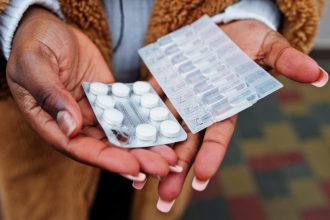
For public health experts, the ban represents more than a restriction on convenience; it is part of a broader effort to ensure antibiotics are prescribed based on clinical need rather than consumer demand. Duale cautioned that while digital health innovations and medicine delivery services have improved access to healthcare, they must operate within strict regulatory frameworks that protect patients from misuse and counterfeit products.
Globally, countries that have managed medicine delivery well tend to combine convenience with accountability rather than banning it outright. In parts of Europe and North America, licensed pharmacies run their own verified courier or click-and-collect services, with a pharmacist reviewing every prescription before dispatch and digital systems tracking each package from dispensary to doorstep.
In Africa, Ghana, Rwanda and Zimbabwe offer useful models, from centralised e-pharmacy platforms to mobile traceability tools that let patients verify a medicine before use. Kenya could adapt these approaches rather than eliminating delivery altogether, pairing stronger pharmacy oversight with public education so convenience and safety work together.
We believe in the free flow of information
Republish our articles for free, online or in print, under Creative Commons licence.