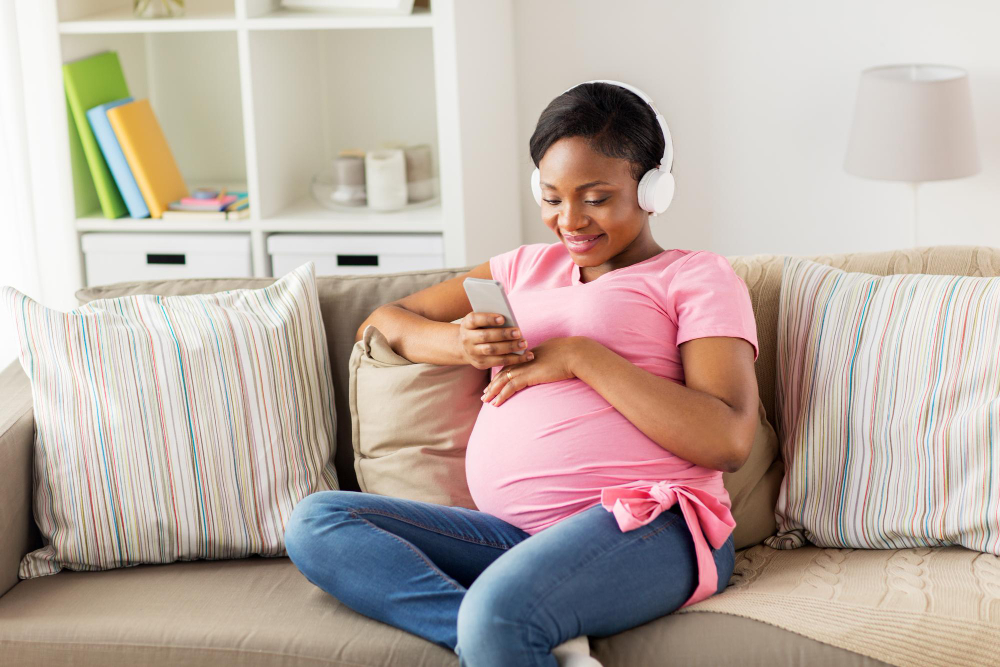

Pregnancy myths rarely spread through lies. They travel through a video your sister sends with love, a tip shared in the group chat, or advice from a trusted friend who has been through it all. Yet maternal health misinformation shapes where a woman gives birth, when she seeks care, and whether she and her baby survive.
Pregnancy is often described as the most beautiful and natural experience, one in which humanity sustains itself across generations. As a first-time mother, I find myself navigating pregnancy and everything it comes with firsthand. It is an exciting journey, a new life in the making. But for many mothers like me, it is also a time of uncertainty and confusion. As a result, the desire to seek information becomes instinctive, a way to maintain a sense of control.
But in today’s information landscape, this desire to seek info can be a blessing and also a point of vulnerability, drawing women into a flood of content where myth, fear, and misinformation are difficult to distinguish from truth.
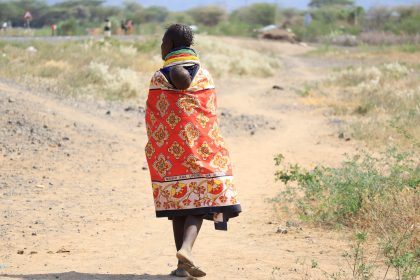
In my experience, this search rarely happens in isolation as close female friends, family and acquaintances also offer advice in a truckload of stories, some positive, but many shaped by unresolved trauma or difficult birth experiences.
And then there is the overwhelming stream of content online. It hardly comes labelled as fact or opinion. Should I or should I not eat pineapples during pregnancy? Much of the available info is rooted in fear, making it difficult to tell what is true and what is not. In fact, it reflects a broader information ecosystem where the volume, speed and emotional weight of content make it increasingly difficult to separate fact from misinformation.
Today, misinformation is increasingly recognised as a major threat to both society and public health, with social media playing a significant role in accelerating its spread. In the health space, this has real consequences, shaping individual decision-making and contributing to the erosion of trust in authoritative institutions. The World Economic Forum Global Risks Perception Survey 2023–2024 ranks misinformation and disinformation as the most severe global risk anticipated over the next two years.
The digital landscape of maternal advice
Across the Sahel, West Africa and the Horn of Africa, internet access is growing, albeit unevenly. Across Sub-Saharan Africa, only about 27 per cent of the population was connected to mobile internet by 2023, with the majority still offline. In Ethiopia and Somalia, millions are coming online for the first time through smartphones, with 2024 estimates from DataReportal/Kepios surveys pegging internet penetration in Ethiopia at 19.4 per cent and historically lower in Somalia at 15.4 per cent as per World Bank data for 2024.
For many women, this gateway does not first lead to official health platforms or even clinics, but to social media. Platforms like TikTok, WhatsApp, and Facebook are not just supplementary sources, but primary ones. Advice on pregnancy, childbirth, and infant care circulates through short videos, forwarded messages, and personal testimonies, often reaching women faster than formal healthcare guidance.
This reliance exists alongside growing concern about the credibility of these platforms. Across Afrobarometer surveys, a majority of Africans say social media contributes to the spread of false information, with 61 per cent of respondents attributing misinformation to social media users.
While continent-wide data does not break this down by platform, global comparisons from the Reuters Institute for the Study of Journalism Report 2025, which surveyed over 97,000 online news consumers across 48 countries, offer the clearest picture of which platforms people consider the biggest misinformation threats. As the chart below shows, Facebook and TikTok lead globally, with African markets reflecting this concern acutely. South Africa is among the highest for Facebook, and Kenya is among the highest for TikTok. Notably, WhatsApp registers comparatively low concern despite its dominance as a health information channel across the region, a gap that likely reflects its closed, private architecture rather than any absence of misinformation within it.
In contexts where access to formal healthcare is uneven, and trust in institutions can be low, platforms like WhatsApp and Facebook often function as both information sources and community spaces, allowing advice to circulate quickly, but not always accurately.
Trust plays a critical role in how pregnant women interpret health information, especially where confidence in formal healthcare is low. In these settings, women often rely on familiar sources such as family, friends, online communities, and influencers. Research from Bamako, Mali and published in the Journal of Demographic Economics in 2022, shows that personal social networks significantly shape prenatal care decisions, with husbands, neighbours, and friends influencing whether women access and complete formal maternal health services.
Across sub-Saharan Africa, reproductive health decisions are similarly shaped by close social ties, including spouses, relatives, and peers. Evidence from Uganda, published in PubMed Central in 2022, shows that advice from mothers and other trusted contacts strongly influences when women seek antenatal care, even when the guidance is inconsistent or medically inaccurate.
Even so, such information is often acted on because it is grounded in trust, familiarity, and shared social norms rather than clinical accuracy. Broader studies across sub-Saharan Africa published in PubMed Central in 2024 show that social capital and community beliefs around pregnancy continue to shape maternal health behaviour in ways formal health systems frequently underestimate.
Even in more connected environments like Kenya, increased connectivity has not reduced exposure to misinformation; it has amplified the scale at which it spreads. As of January 2025, Kenya had 27.4 million internet users, representing 48 per cent of the population. As the chart below shows, the platforms that dominate Kenya’s digital landscape are precisely those that research identifies as the leading vectors of misinformation globally, with Facebook and WhatsApp commanding the widest reach and TikTok growing fastest among younger users.
In such an environment, misinformation does not spread in isolation; it moves across platforms with massive reach, allowing both accurate and misleading information to circulate rapidly within highly connected and trusted networks.
How misinformation shows up in maternal health content
Maternal health misinformation rarely takes the form of outright falsehoods. More often, it circulates through stories and posts shared by well‑meaning friends or family.
Fear‑based and sensational content
The most visible content online often highlights the extreme or traumatic outcomes of pregnancy and childbirth. While complications are a real and important part of maternal health, the way they are represented in digital spaces can skew perception.
Evidence from West Africa shows how emotionally charged narratives shape these conversations. In Ghana, analysis of over 3,000 posts from a pregnancy-focused Facebook community found that nearly half reflected distress, complications, or negative experiences, with many women expressing fear, uncertainty, or confusion about what is normal during pregnancy. These discussions often centre on difficult labour, fears around caesarean sections, or concerns about medication and safety, highlighting how emotionally intense experiences can dominate peer-to-peer information exchange.
This pattern extends beyond online spaces. In Nigeria, qualitative research in Imo State found that women who were recommended a caesarean section would leave facilities for traditional birth attendants, driven by the belief that one caesarean meant all future deliveries would also be surgical, a fear compounded by religious convictions that the procedure represented a lack of faith.
In Burkina Faso, the same belief circulated widely through communities, worsened by the fact that women were frequently not informed about the imminence of the procedure in the delivery room. These narratives predate social media entirely, travelling for generations through families, birth attendants, and religious communities. But as the Ghanaian evidence shows, digital platforms inherit these fears rather than create them. In contexts where health education is inconsistent, and misinformation fills the gap, they risk spreading it faster and further than community networks ever could.
Incomplete or misleading medical advice
A second, quieter form of misinformation arises from oversimplified medical guidance. On platforms like TikTok, Instagram Reels, and YouTube Shorts, complex health information is compressed into 30‑second clips. Advice about what to eat, what to avoid, or how to manage labour is presented as universal, yet rarely accounts for a woman’s individual health conditions, access to skilled care, or medical history. The goal is accessibility, but that brevity often strips away vital nuance.
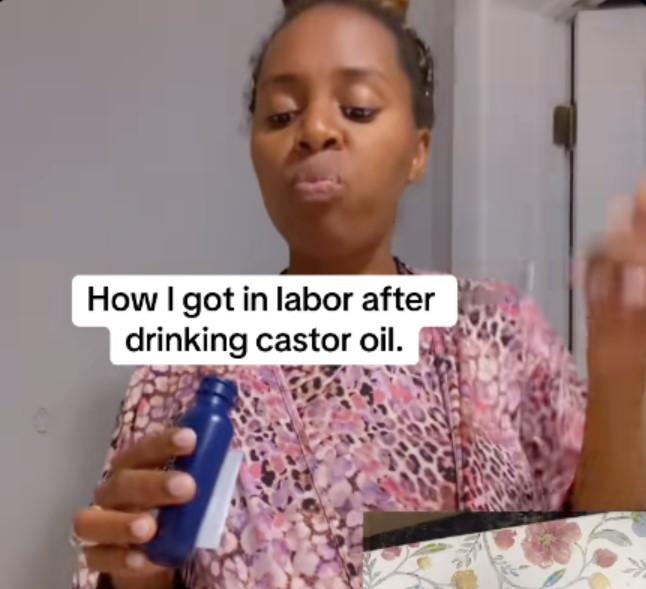
The clearest examples of this dynamic involve labour, nutrition, and medication. Castor oil, long promoted in short-form videos as a natural way to induce labour, illustrates the problem well.
Clinical and obstetric reviews associate castor oil use during pregnancy with notable adverse effects, including severe gastrointestinal distress, nausea, diarrhoea, and dehydration. They also highlight concerns about possible fetal distress, particularly in cases involving meconium-stained amniotic fluid, especially when induction is not clinically indicated.
According to WHO maternal health guidance, its effectiveness is highly dependent on cervical and gestational readiness, meaning outcomes vary significantly depending on whether the body is already prepared for labour. These clinical caveats are often lost in simplified social media content, where complex risk information is condensed into brief, persuasive clips.

Vaccine guidance during pregnancy has been equally vulnerable: during the COVID-19 pandemic in 2020, widespread social media content linked maternal vaccination to infertility and miscarriage, claims unsupported by clinical evidence, yet amplified by the fact that pregnant women had been excluded from early vaccine trials and authoritative voices were largely absent from these platforms.
Even well-established nutritional advice has not been immune. Folic acid, whose role in preventing neural tube defects is among the most robustly evidenced interventions in prenatal care, has become the subject of online warnings that CDC scientists, folate researchers, and public health agencies describe as misinformation spreading faster than it can be corrected.
Across all of these examples, the issue is rarely outright fabrication. It is the removal of context, the omission of individual health history, gestational stage, or access to skilled care, that transforms a partial truth into misleading guidance.
Personal experience as universal truth
A third and increasingly influential form of misinformation comes from the elevation of personal experience into universal authority. Birth stories, whether exchanged within families, shared on WhatsApp, or broadcast by influencers, hold immense emotional power.
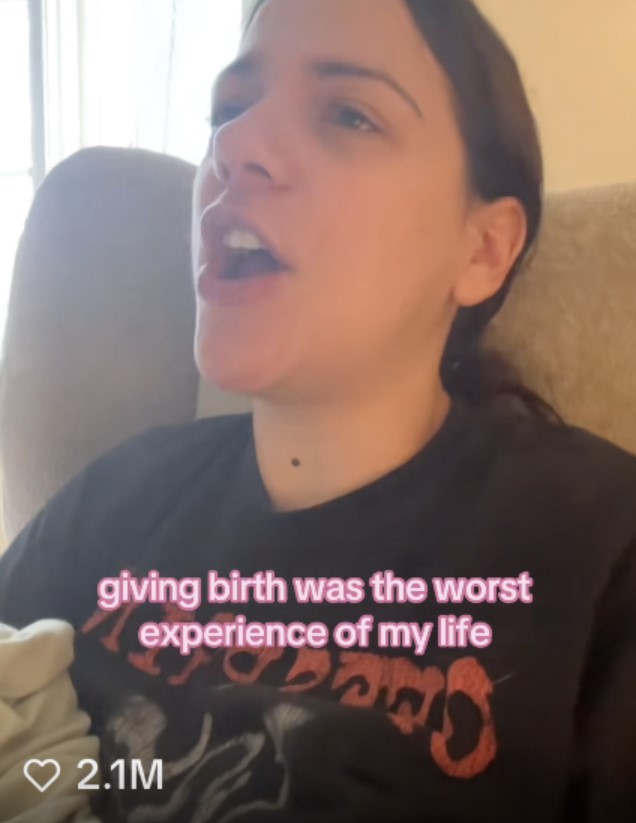
They provide connection and reassurance, but when stripped of medical or contextual detail, these narratives can blur the line between testimony and guidance. What worked for one woman under one set of conditions is rarely applicable to all, yet on social media, it is often framed as definitive proof.
This is not incidental to how these platforms function. It is a direct consequence of their design. Content that is personal, emotionally immediate, and easily shareable travels further than content that is qualified, clinical or contextually nuanced.
A birth story told in the first person: raw, vivid, and unmediated, will consistently outperform a midwife’s measured explanation.
In the Sahel and broader West Africa, this dynamic is sharpened by a structural reality: fears around reproductive health, including fears of infertility and physical harm, are exacerbated by misinformation and limited access to trusted information sources, meaning that the personal testimony of a woman in a group chat frequently fills the space that health education has failed to occupy.
Where do we go from here?
But the deeper I have gone, the more I have realised that the challenge is not simply access to information. Access to medical care has significantly reduced infant and maternal death over the decades.
Women have always shared birth stories and will continue to. What has changed is the speed, scale, and reach of those stories in digital spaces. Here, fear moves faster than context, and relatability can outweigh accuracy. The burden of sorting truth from myth has shifted quietly onto the individual woman, often at the most vulnerable moment of her life.
This makes maternal health misinformation more than a digital nuisance; it is a public‑health determinant. It influences where a woman gives birth, when she seeks care, and ultimately, whether she and her baby survive.
Addressing pregnancy misinformation in Africa will require more than deleting false posts or warning women against social media. Studies in Frontiers in Digital Health and NCBI/PMC show digital platforms have become major spaces where pregnant women seek maternal health information, emotional support, and community. The challenge is urgent, with UNFPA reporting that sub-Saharan Africa accounts for 70 per cent of global maternal deaths.
Women’s trust in providers influence care-seeking more than the actual quality of facilities
Research also shows health professionals, especially midwives, are increasingly using social media to debunk myths and guide expectant mothers online. But according to World Medical & Health Policy, weak local content and poor-quality maternal health information continue to fuel misinformation, leaving many women vulnerable to misleading advice.

Evidence from BMC Women’s Health suggests social media can complement formal healthcare by giving women access to information and resources unavailable through traditional systems. However, studies from the Democratic Republic of Congo (DRC) published in medRxiv show distrust in healthcare providers remains a major barrier to maternal care, with women’s trust in providers influencing care-seeking more than the actual quality of facilities.
Experts further warn that low digital literacy increases vulnerability to misinformation and reduces uptake of life-saving interventions. Studies in PLOS Digital Health show that even short digital literacy programmes can improve confidence in credible health tools, while better internet access, lower data costs, and culturally relevant content will be critical to expanding access to reliable maternal health information across Africa.
As I approach my own delivery, I am learning to filter with both caution and listening to stories for solidarity, but returning to facts for safety. The internet can offer community, but it can never replace care. Wish me luck.
This story was supported by Code for Africa’s WanaData initiative and the Digital Democracy Initiative as part of the Digitalise Youth project, funded by the European Partnership for Democracy (EPD)Code for Africa’s WanaData initiative. The article was edited by Felix Kiprono.













well researched and very informative article