

Voluntary blood donation globally went up but not so in Kenya, where health experts say donors give in good faith, but when their families later need blood, the system cannot deliver. That cycle of disappointment is quietly dismantling Kenya’s voluntary donor base.
Health experts are celebrating a global milestone in voluntary blood donation, even as they warn that millions of people, particularly across Africa, still face life-threatening shortages of safe blood. The alert comes as the world marks World Blood Donor Day under the theme “One Drop of Humanity. Give Blood. Save Lives.”
A new World Health Organization (WHO) global report on blood safety and availability shows that more than 85 per cent of blood donations worldwide now come from voluntary, unpaid donors, a major milestone in efforts to ensure safer and more sustainable blood supplies.
Based on data from 168 countries covering 97 per cent of the world’s population, the report offers the most comprehensive assessment of global blood systems to date. Yet behind this progress lies a harsh reality: in many African countries, including Kenya, chronic blood shortages continue to threaten lives daily.
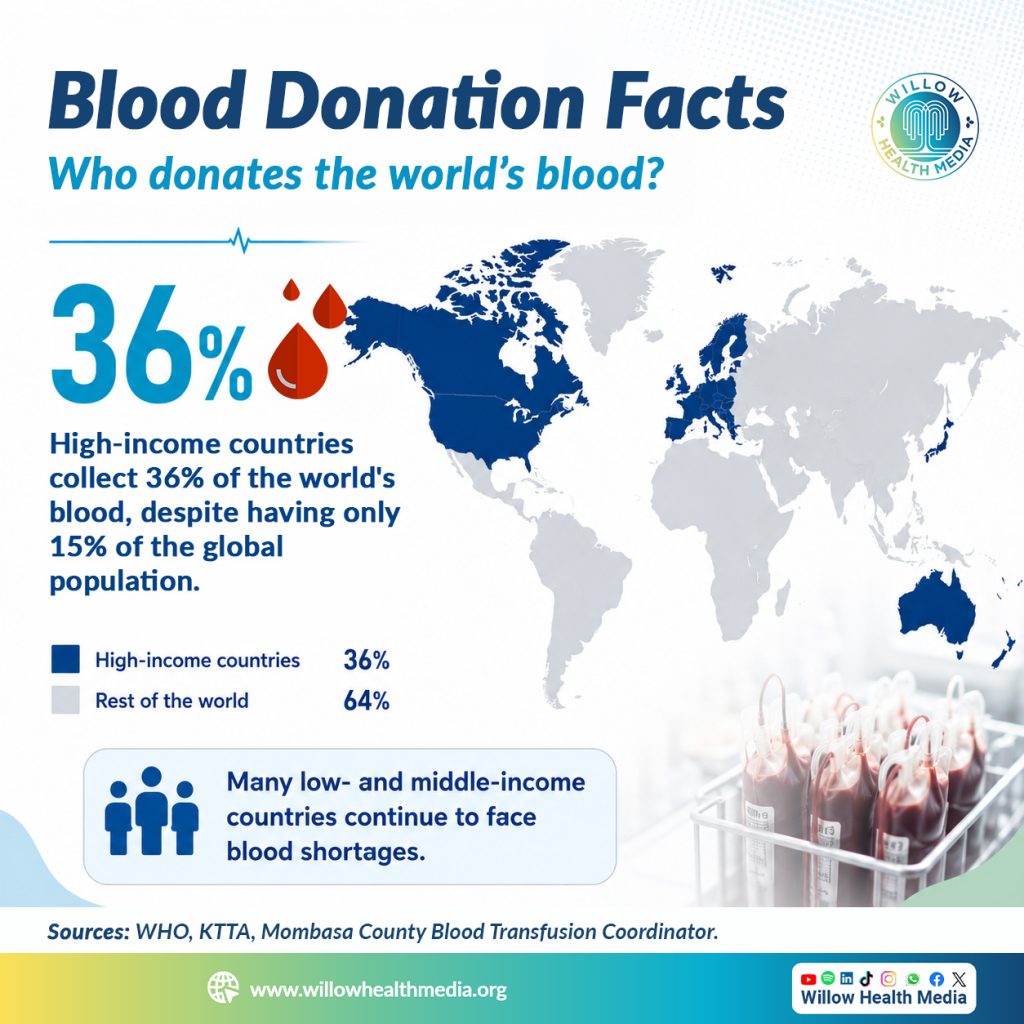
Of the 120.4 million blood donations collected globally, 36 per cent are collected in high-income countries, which account for only 15 per cent of the world’s eight billion people. The implication is stark: the vast majority of the global population, living in low- and middle-income countries, still struggles with inadequate blood supply.
A further gap exists in the production of plasma-derived medicinal products (PDMPs). Only 49 of the 168 reporting countries produce these products domestically. The remaining 119 countries reported that all PDMPs are imported, or that none were used during the reporting period.
Thousands rely on blood transfusions daily: a woman facing childbirth complications, victims of traffic accidents
Safe blood is essential for millions of patients every year, says WHO, noting that transfusions remain critical for patients experiencing complications during childbirth, severe anaemia, trauma, cancer treatment, surgery and chronic blood disorders.
WHO Regional Director for Africa, Dr Mohamed Janabi, says access to safe blood is a cornerstone of resilient health systems and universal health coverage.
“Across our region, thousands of patients rely on blood transfusions every single day: a woman facing complications during childbirth, a child suffering from severe malaria or anaemia, a victim of trauma or road traffic accidents, or a person living with a chronic illness requiring ongoing care,” Dr Janabi says. “For each of them, safe blood is not optional; it is essential to survival.”
The African region has made notable gains over the past two decades. Blood donations have increased from approximately 2.2 million in the early 2000s to nearly seven million in 2023. The proportion of voluntary, unpaid donors has also risen significantly, with nearly seven in every ten blood donations now coming from people who give without compensation. Many African countries have also established national blood policies, strategic plans and dedicated blood service units within their ministries of health.
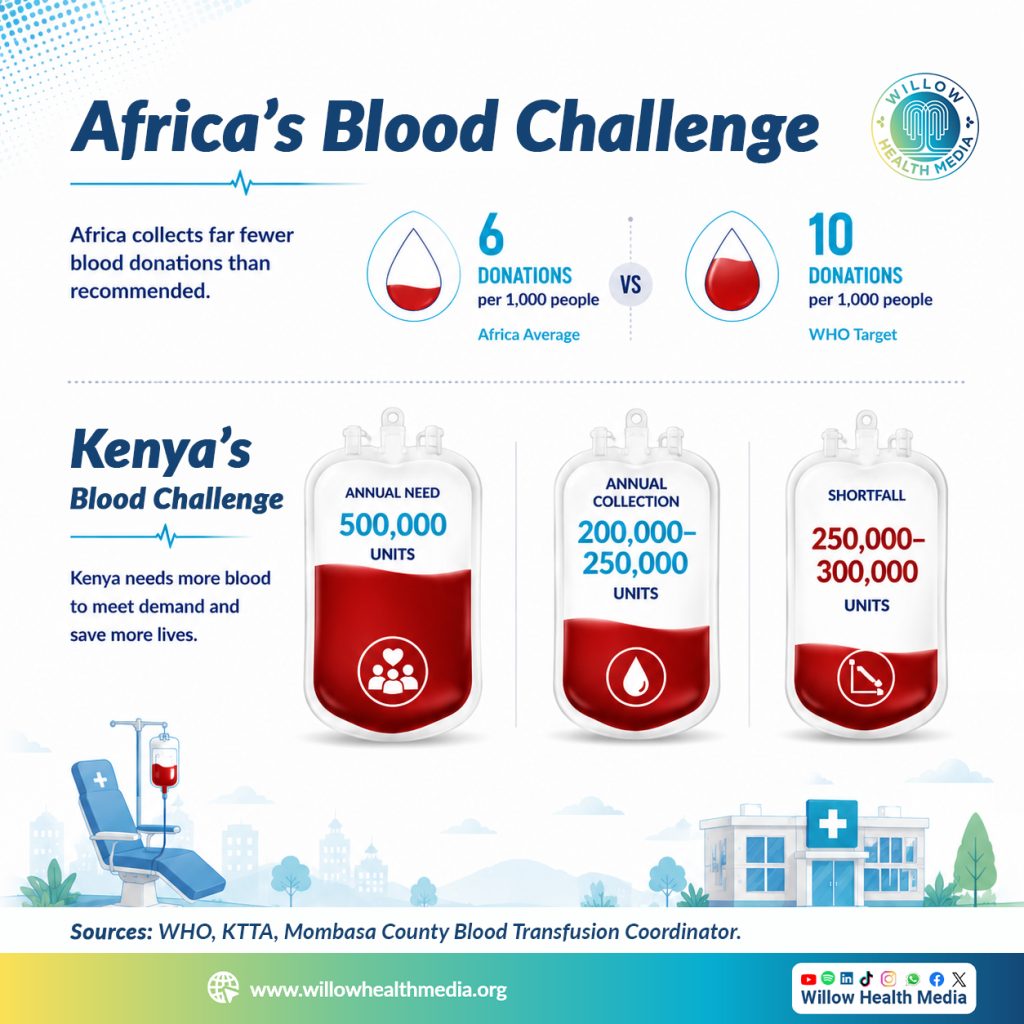
Despite this progress, the WHO estimates that African countries collect an average of only six blood donations per 1,000 people, well below the recommended benchmark of at least ten donations per 1,000 people needed to meet basic health needs. The shortfalls are felt most acutely in emergency settings, where blood is needed daily for surgical patients, accident victims, women experiencing postpartum haemorrhage and children with severe anaemia caused by diseases such as malaria.
Kenya requires about 500,000 units of blood annually but collects only 200,000 – 250,000 units
“While this progress is encouraging, significant disparities remain between countries, and many health systems continue to face shortages and uneven access to safe blood supplies,” Dr Janabi says.
In Kenya, the situation mirrors the challenges outlined in the WHO report. According to the Kenya Tissue and Transplant Authority (KTTA), the country requires about 500,000 units of blood annually but collects only between 200,000 and 250,000 units, leaving a substantial deficit each year.
At the county level, the picture is equally concerning. In Mombasa, County Blood Transfusion Coordinator Keith Ziro says the county requires approximately 2,000 units of blood every month but currently collects around 1,300 units, creating a monthly shortfall of roughly 700 units.
Ziro says the challenge extends beyond recruiting more donors. One of the most significant threats to the blood donation system is a steady decline in public confidence. Many people volunteer to donate blood with the expectation that if they or a family member ever needs a transfusion, the system will support them. When shortages persist, and families are later asked to find replacement donors, some feel the system has failed them despite their earlier contribution.
“Volunteers donate blood, but when shortages persist, and they later need blood for a relative, they are sometimes required to look for replacement donors. This creates the perception that the system did not support them despite their earlier contribution,” Ziro explains. The result, he says, is not simply donor apathy but a gradual erosion of public trust.
Strengthening repeat donor databases, expanding blood drives in universities, workplaces, communities
To address this, Mombasa County is working to strengthen its blood collection infrastructure. The county’s satellite blood bank has been relocated from Tudor Sub-County Hospital to Mvita Health Centre, where it now operates from a more suitable space.
“As for the satellite county blood bank, we shifted to Mvita Health Centre, where we got space that is convenient, though there is still need for additional county commitment,” Ziro says.
Once fully equipped, the facility is expected to improve blood collection and processing capacity. The county is seeking support to acquire blood donor couches from four sub-county hospitals, along with essential equipment, including refrigerators and blood component preparation machines.
Ziro believes that rebuilding public confidence will require greater transparency and stronger engagement with donors. He advocates for a donor recognition programme that acknowledges regular contributors through appreciation events, certificates and dedicated assistance when navigating the blood system. He also proposes strengthening repeat donor databases, expanding blood drives in universities, workplaces and communities, and establishing donor clubs involving youth groups, religious organisations and corporate institutions.
“The solution is not replacement donation versus voluntary donation,” he says. “The solution is achieving a sufficiently large pool of regular voluntary donors so that every patient who needs blood can access it without having to search for replacement donors.”
Misinformation and cultural beliefs remain significant barriers to voluntary blood donation
Until that goal is achieved, he says, replacement donations will continue to help fill gaps, but the long-term focus must remain on building a trusted and sustainable voluntary donor base.
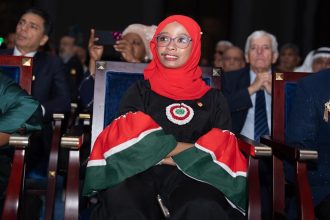
These concerns are echoed by Nisma Hussein, a communications official at Red Splash, a youth-led organisation that operates a mobile application and donor database linking patients with compatible blood donors while organising blood drives across the Coast region. Hussein says misinformation and cultural beliefs remain significant barriers to voluntary donation, a finding consistent with WHO’s own assessment.
She also points to a need to shift public messaging, moving away from the expectation that donating blood once guarantees a transfusion in return.
“There is a need to create more awareness among people that blood donation is more of a community responsibility, more like self-CSR, so that people can give blood for the sake of that,” she says, while adding that recognition for donors remains important.
Strengthening blood systems requires robust safety protocols, quality assurance and equitable access
Health experts note that a single blood donation can benefit multiple patients, since donated blood is routinely separated into components such as red blood cells, plasma and platelets.

This approach maximises the impact of every donation and allows healthcare providers to administer only the specific component a patient requires.
WHO says strengthening blood systems requires more than increasing donation volumes. It also demands robust safety protocols, quality assurance and equitable access. While most countries now screen donated blood for infections including HIV, hepatitis and syphilis, gaps in universal screening coverage and quality systems remain.
“When we give blood, we give more than a medical resource,” Dr Janabi says. “We give hope, dignity and the promise of a healthier future for all.”