


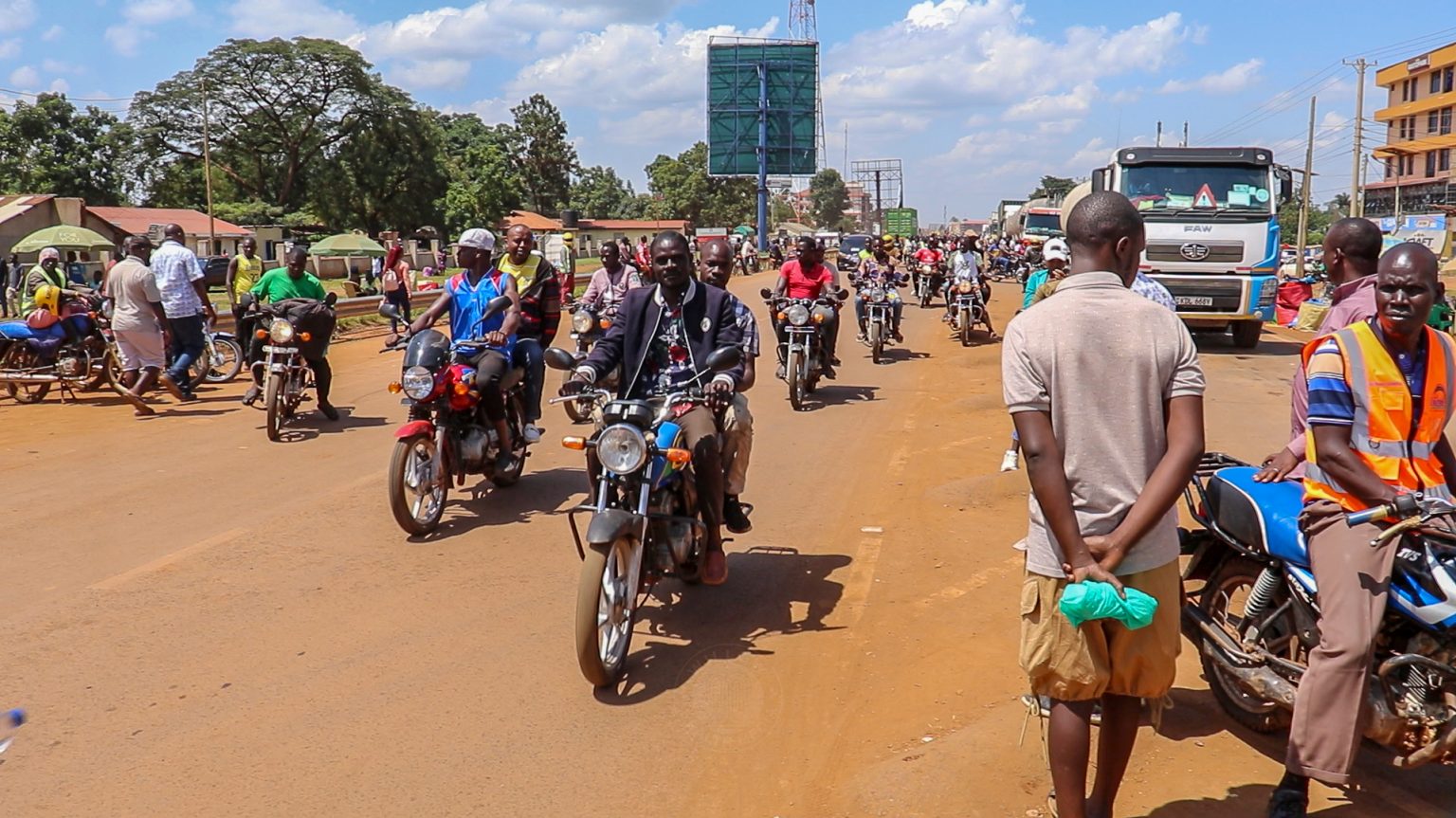

Every day, thousands of pregnant women climb onto boda bodas because they have no better option. Until Kenya fixes the transport gaps that force that choice, each ride will remain a deadly gamble with two lives.
The emergency room bell rang at 6:47 pm, just as my 12-hour shift was ending. A young man stumbled in first, covered in dust and blood, panic written across his face.
Behind him came a stretcher carrying a young woman, barely 20, limp and bruised, her breathing shallow. One hand rested on her belly. She was visibly pregnant.
“She’s pregnant,” he kept saying. “Please save her. Please save my wife.”
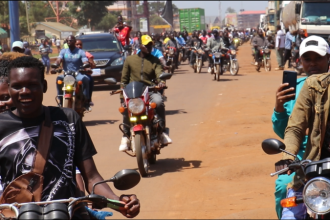
Minutes earlier, they had been riding home on a boda boda, squeezed onto the narrow motorcycle seat, weaving through traffic like millions of Kenyans do every day. Then a car hit them. In seconds, a normal journey home became a trauma scene.
As an Accident and Emergency doctor, I have seen many tragedies. But trauma involving pregnancy carries a different kind of weight. It is never one life at risk. It is two. That case was not unusual. It reflected a growing and deeply normalised crisis on Kenyan roads.
In Kenya, boda bodas are more than transport. They are an economic engine, a lifeline and, for many families, the only realistic way to move. They navigate traffic faster than cars, reach villages matatus cannot, and remain cheaper than taxis. In rural and marginalised areas, they often bridge the last mile between home and hospital.
For pregnant women, that access can mean the difference between attending antenatal care or missing it altogether. And that is the contradiction: Boda bodas are indispensable, but they are also dangerous.
Kenya’s roads are becoming increasingly deadly, and motorcycles are carrying a growing share of that burden. In 2025 alone, 1,148 motorcyclists and 432 pillion passengers died in road crashes, according to National Transport and Safety Authority (NTSA) data. That is more than 1,500 deaths linked directly to motorcycles in one year.
A sudden jolt, abrupt braking, or impact to the abdomen can cause placental abruption, where the placenta separates from the uterus
In the first quarter of 2025 alone, 301 riders and 130 passengers had already lost their lives. These are not abstract figures. They represent thousands of broken bodies and families altered forever. Emergency departments across Kenya are seeing it in real time, and among the injured are pregnant women.
Pregnancy fundamentally changes the body. As it progresses, a woman’s centre of gravity shifts forward. Balance becomes less stable; the abdominal wall stretches and offers less protection. Reaction time may slow, and the pelvis carries increasing weight.
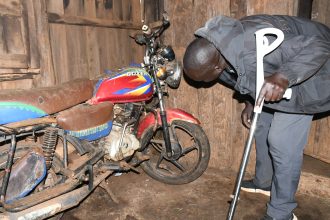
Now place that body on the back of a speeding motorcycle. No seatbelt. No enclosed protection. Often no helmet. Sometimes seated sideways. Sometimes carrying shopping bags or another child. Then add potholes, poor road lighting, reckless overtaking and speeding vehicles. It is a dangerous equation.
The risks are not just theoretical. For pregnant women, even minor trauma can trigger catastrophic outcomes. A sudden jolt, abrupt braking, or impact to the abdomen can cause placental abruption, where the placenta separates from the uterus. This can lead to severe bleeding, foetal distress, premature delivery or death.
Fractures are common, particularly of the limbs, ribs and pelvis. Pelvic injuries are especially concerning because they can complicate future delivery and prolong recovery.
Head injuries remain a major risk, particularly because many pillion passengers are not offered helmets. Even when helmets are available, they are rarely designed or fitted for pregnant passengers.
If reaching antenatal care means taking a boda boda or staying home, many will take the ride
Spinal injuries can result in chronic pain, long-term disability, or paralysis. Then there is preterm labour. Trauma can trigger uterine contractions, premature birth, miscarriage or stillbirth.
Sometimes the body survives the crash, but the pregnancy does not. That is the part many people do not see. What troubles me most is how ordinary this has become.

Across Kenya, it is common to see heavily pregnant women on boda bodas, balancing themselves on rough roads for kilometres at a time. Some sit sideways because it feels more comfortable. Others hold toddlers while riding. Some are travelling to clinics. Others are heading home from markets.
It is easy to call this risky. But for many women, it is not a choice. It is a necessity. In many parts of Kenya and East Africa, especially rural regions, there are no ambulances, no subsidised maternal transport systems, and no reliable public transport. Health facilities are often far apart. Roads are poor. Poverty narrows options.
If reaching antenatal care means taking a boda boda or staying home, many will take the ride. This is not just an individual risk. It is a systems failure.
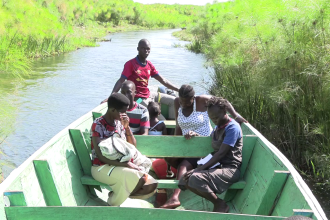
The boda boda sector itself has expanded rapidly over the last decade, driven by unemployment, urban growth and weak public transport systems. Kenya now registers thousands of motorcycles every year, underscoring how central they have become to transport and informal employment.
But infrastructure and regulation have not kept pace. Many riders operate without adequate training. Licensing enforcement remains inconsistent. Helmet compliance is poor. Overloading is common. Speeding is normalised. Risky overtaking has become routine.
A 2025 study in Busia County found that alcohol use, lack of helmets, poor rider training and carrying multiple passengers significantly increased accident risk. For pregnant women, these risks are magnified.
Healthcare workers should openly discuss travel risks with expectant mothers and help families plan safer routes
Yet Kenya has little publicly available data specifically tracking road traffic injuries among pregnant women. That gap matters. If we do not count them, we cannot design policies around them.
And the solutions cannot begin and end with “avoid boda bodas” because that advice ignores reality. The answer must start with safer maternal transport.

County governments can invest in community-based maternal transport systems: dedicated motorcycles fitted for safer pregnancy transport, subsidised transport vouchers, and rapid-response ambulance networks for labour and emergencies. This is not impossible. Some counties have piloted community ambulance systems with promising results.
Second, antenatal care must include transport counselling. Healthcare workers should openly discuss travel risks with expectant mothers and help families plan safer routes, especially in late pregnancy.
Third, boda boda riders themselves should be part of the solution. Targeted training on transporting pregnant passengers, speed management, and emergency response could reduce avoidable harm.
Fourth, road safety enforcement must become real. Helmet laws, rider licensing, and passenger limits cannot remain optional. Finally, road design matters. Better roads, clearer markings, street lighting and motorcycle lanes would improve safety for everyone.

That young woman I treated survived, so did her baby. But not every story ends that way. I still remember the look in her partner’s eyes as he waited outside the emergency room, helpless and terrified. He had done what countless Kenyan men do every day: chosen the fastest, cheapest way home.
He did not know it could almost cost him everything. Kenya’s boda boda industry is here to stay. It is too deeply embedded in our economy and transport system to disappear. Nor should it.
The goal is not to demonise boda bodas. It is to make them safer, especially for those carrying the highest stakes. Because when a pregnant woman gets onto a boda boda, she is not just making a journey. She is carrying life. And no woman should have to gamble with two lives simply to get home.
Dr Cheyenne Mugo Chianda is a Medical Doctor and Podcaster with particular interests in Mental Health and Sexual and Reproductive Health.
We believe in the free flow of information
Republish our articles for free, online or in print, under Creative Commons licence.