

Countries that report outbreaks and share samples must get timely access to vaccines and tests, Kenya said. The deal that would guarantee this is still stuck in draft. The US declined to support it.
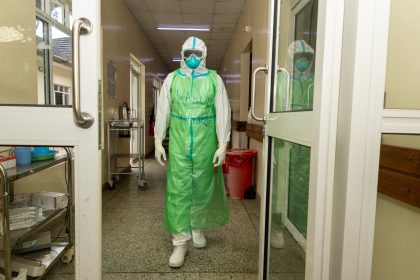
As the Ebola outbreak in the Democratic Republic of Congo (DRC) continues to strain health systems across the region, world leaders gathered at the 81st United Nations General Assembly in New York to assess the tools meant to prevent the next pandemic.
Delegate after delegate welcomed the World Health Organization (WHO) Pandemic Agreement, cited lessons from Covid-19 and pledged renewed commitment to equity and solidarity. Beneath the shared language, however, statements diverged sharply on what still needs fixing and who should pay for it.
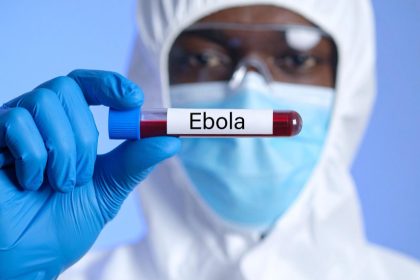
The biggest unresolved issue is the Pathogen Access and Benefit-Sharing System (PABS), which would guarantee countries that share virus samples fair access to the vaccines, tests and treatments developed from them. Until its annex is finalised, the agreement cannot open for signature.
The United States of America broke ranks, declining to support the meeting’s declaration in full and objecting to references to unfinished pathogen-sharing talks.
Kenya set out the gap more precisely than most, calling for the political declaration to “move beyond aspiration to measurable, adequately financed and accountable implementation.”
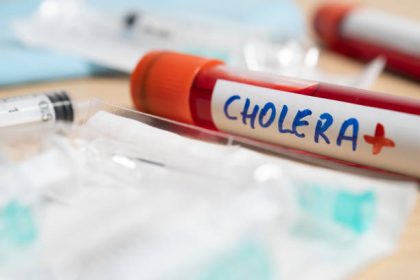
Speaking from “hard-won frontline experience” with cholera, mpox, Ebola and Marburg, Kenya’s delegate said: “Although the global architecture has improved since Covid-19, critical gaps in equity, financing and health system resilience still remain.”
Africa must be able to ‘research, develop, manufacture, regulate and procure essential medical countermeasures’
Kenya made four specific demands. On access and benefit sharing, it said the system “must ensure that countries sharing pathogens and sequence information receive timely and predictable access to vaccines, therapeutics and diagnostics.” It backed rapid WHO access to at least 20 per cent of real-time production and enforceable arrangements that deliver benefits “when they are most needed.” Nations that report outbreaks promptly, it warned, “must not face disproportionate, non-evidence-based measures that harm their people and economies,” a nod to penalties African countries have faced for transparent reporting.
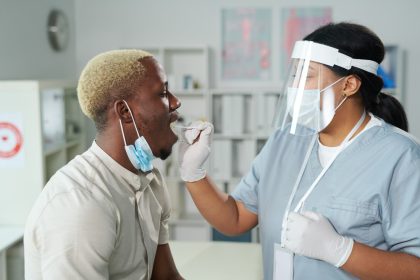
On regional capability, Kenya called for Africa to be able to “research, develop, manufacture, regulate and procure essential medical countermeasures,” backed by technology transfer, pooled procurement and reliable markets.
On financing, it pressed for predictable funding before a crisis and rapid disbursement during one, insisting international financing “must complement domestic investment without diverting resources from universal health coverage or essential services.” It also called for the Pandemic Fund to be “adequately capitalised, accessible and responsive.”
On health systems, Kenya linked global health security to strong primary care, laboratories, immunisation, sanitation, One Health coordination and a well-supported workforce, recruited ethically.
Why PABS matters: Kenya lack large manufacturing bases or stockpiles
Article 12 of the agreement sets out the legal framework for PABS, but the annex that will make it work is still being negotiated in Geneva by an Intergovernmental Working Group.
This matters for countries like Kenya, which lack large manufacturing bases or stockpiles. Under Article 12.6, once a pandemic emergency is declared, each participating manufacturer must give WHO rapid access to 20 per cent of its real-time production of vaccines, therapeutics and diagnostics for the pathogen involved. At least 10 per cent must be donated outright, with the rest reserved at affordable prices for WHO to distribute according to public health risk and need.

WHO Director-General Dr Tedros Adhanom Ghebreyesus urged action. “So today I leave you with just one request. Just one. Get PABS done as soon as possible,” he said. “Further delays are not just delays in procedure or process; they are delays that cost all countries dearly.”
He also countered a common objection: “The pandemic agreement and the IHR do not, I repeat, do not infringe on national sovereignty in any way,” he said, referring to the International Health Regulations (IHR).
Helen Clark, former Prime Minister of New Zealand and co-chair of the Independent Panel for Pandemic Prevention, Preparedness and Response, cited the Bundibugyo outbreak as proof of the cost of delay. WHO declared it a public health emergency of international concern within two days of confirmation, and Africa CDC followed a day later, yet the virus had been circulating for some time before detection.
“It is so vital that surveillance and detection is supported in the most fragile contexts,” she said, questioning why countermeasures for “a known and very deadly risk” had not been prioritised sooner. “We are still far short of the 15 billion dollars needed every year in international financing to fill the preparedness gap.”
East Africa: Partners should deploy contingency funds ‘based on countries’ need, not what the partners need’
Rwanda, which has faced Covid-19, mpox, Marburg and now the DRC Ebola spillover in quick succession, said preparedness must be built between crises, not during them. It called for predictable multi-year financing, connected digital surveillance and equitable access to countermeasures, even for pathogens with no licensed products yet.
Uganda, which contained an Ebola spillover from DRC before DRC itself had announced the outbreak, credited political will, genomic sequencing that characterised the outbreak within 24 hours, and deep community trust. It asked partners to deploy contingency funds “based on the countries’ need, not what the partners need.”
Africa: Seven million lives lost to Covid-19 ‘a permanent reminder pandemic preparedness is not a discretionary expense’
The African Group, speaking through Burundi, called for the $1.5 billion financing gap in the DRC Ebola response to be closed, reaffirmed the Abuja Declaration target of at least 15 per cent of national budgets for health, and urged debt-for-health swaps for indebted countries. It argued that new tools “must be equitably accessible and affordable, particularly during the first 100 days of an outbreak.”
South Africa went further, describing the more than seven million lives lost to Covid-19 as “a permanent reminder that pandemic preparedness is not a discretionary expense, but a foundation of sustainable development and global health security.” The agreement and the amended IHR, it warned, “will be judged not by their text, but by collective will to implement them,” and without binding commitments risk “remaining aspirations on paper.”
Its priorities were finishing the PABS annex without delay, with access to pathogens “matched in practice, and not only in principle, by fair and timely access to vaccines, diagnostics and therapeutics developed from them”; expanding local production through technology transfer and full use of intellectual property flexibilities under the Doha Declaration; and securing predictable financing alongside the One Health approach.
Nigeria, which set out five priorities including African manufacturing, will host the fifth Global High-Level Ministerial Conference on Antimicrobial Resistance in December.
Egypt captured the common thread: “Preparedness does not begin when an outbreak is declared. It begins with strong health systems every day.”
Reading a message from the UN Secretary-General António Guterres, Deputy Secretary-General Amina J. Mohammed from Nigeria warned: “The next pandemic is not a question of if. It is a question of when.” She described the cycle the meeting sought to break: “When a virus first hits, money flows, and promises are made. But when infections slow, commitments start to wane.”
The US objected to ‘the inclusion of divisive ideologies that lack definitional consensus’
Ghana put it simply: “the cost of preparedness is smaller than the price of panic.” Jamaica warned that “pandemic preparedness cannot become an unfunded mandate” for small island states carrying heavy debt, while Indonesia said: “Covid-19 crossed borders faster than life-saving tools did.”

Barbados proposed a Pandemic Preparedness Development Compact, arguing that “the country that raises the alarm must never be those that are left waiting for protection.”
Although it described itself as “the largest donor to the ongoing Ebola response,” Washington objected to “the inclusion of divisive ideologies that lack definitional consensus” and to references to “an unfinished negotiation on pathogen access and benefit sharing in an agreement that failed to achieve international consensus.”
It focused instead on domestic biosecurity, including a new restriction on federal funding for gain-of-function research, but said it “stands ready to work directly with responsible partners to strengthen preparedness.”
Mechanism meant to guarantee African countries share of vaccines, tests and treatments exists only in draft
The New York declaration cannot complete the PABS annex by itself. That work rests with the Geneva working group set up by the World Health Assembly in May 2025.

For Kenya, the stakes are immediate. The Bundibugyo outbreak in DRC remains active. The $1.5 gap has not closed. And the mechanism meant to guarantee African countries a share of vaccines, tests and treatments exists only in draft, awaiting an annex that has already missed one World Health Assembly deadline and now faces open opposition from Washington.
Kenya’s demand that access and benefit sharing be treated as “inseparable” will be tested by whether Geneva can deliver an annex with enforceable teeth, and whether the United States can be brought on board at all.