

African scientists argue that empowering communities, not waiting for donor rescue, is the only path to ending malaria.
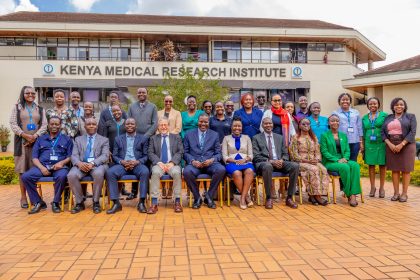
Kenya stands at a crossroads in its fight against malaria. Decades of progress that saved millions of lives are at risk of unravelling unless the country closes a yawning funding gap, responds to rising drug resistance, and places communities at the centre of its response. That was the urgent message from African scientists, policymakers and health advocates during a high-level virtual forum convened by the Outreach Network for Gene Drive Research, Malaria No More, Impact Santé Afrique, and the Kenya Medical Research Institute (KEMRI) ahead of World Malaria Day.
Their warning was direct: without urgent action, hard-won gains could be reversed. Their optimism was equally clear: with locally led action, malaria elimination remains possible.
Africa still accounts for roughly 95 per cent of the world’s 260 million annual malaria cases and 96 per cent of deaths. Since 2000, global efforts have prevented an estimated 2.2 to 2.3 billion cases and up to 14 million deaths. Yet in recent years, case numbers have stagnated, suggesting progress is no longer advancing.
At the heart of this deadlock is money. Global malaria financing reached only about US$4 billion (Ksh516 billion) in 2023, far below the US$8.3 billion (Ksh1.07 trillion) target under the Global Technical Strategy, leaving a shortfall of roughly US$4.3 billion (Ksh555 billion). In Kenya, a 2025 analysis by the Elimination Malaria Council found a roughly 50 per cent funding gap for malaria programmes, undermining coverage of insecticide-treated nets, diagnostics and frontline medicines in high-burden counties.
A second and growing threat is treatment resistance. Research shows that Plasmodium falciparum, the deadliest malaria parasite, is becoming resistant to Artemisinin-based Combination Therapies (ACTs), the most widely used malaria drugs in Kenya and across Africa. In some hotspot areas, treatment failure rates are approaching 40 per cent.
Kenya’s malaria behaves differently in lake-endemic zones, the highlands, arid regions and urban areas
Resistance markers are also spreading across East and Central Africa, including regions linked to Kenya’s malaria zones. This combination of stalled progress, underfunding and treatment failure threatens Kenya’s 2023 to 2027 Malaria Strategy, which aims to cut cases by 80 per cent and eliminate transmission in selected counties by 2028.
For Dr Damaris Matoke, Deputy Director of the Biotechnology Research Programme at KEMRI, the answer begins with shifting decision-making closer to affected communities. “Local leadership means the ability to make decisions that affect the communities you are living in,” she said. “It means identifying the real gaps, generating the right evidence and deciding which interventions are practical, acceptable and sustainable.”
Kenya’s malaria burden is not uniform. The disease behaves differently in lake-endemic zones, highland epidemic areas, arid regions and urban settlements. As a result, a one-size-fits-all approach no longer works. Counties need the authority and data to tailor responses, whether through seasonal spraying, targeted net campaigns, school health programmes, cross-border surveillance or intensified community testing.
Kenya’s lake zone counties of Kisumu, Siaya and Homa Bay feel this daily. Some 22,870 Community Health Promoters serve about 11.4 million people in the region, according to AMREF data, yet the 50 per cent funding gap limits scale-up. “Local leadership sits where malaria is fought every day,” Dr Matoke said.
KEMRI has been central to generating that evidence. Its researchers played key roles in evaluating the RTSS and R21 malaria vaccines and have supported trials of next-generation insecticidal nets, spatial repellents and improved surveillance methods.
Countries that rely solely on external financing are exposed when global priorities shift
Dr Derric Nimmo, Director of Technical Development at the Innovative Vector Control Consortium (IVCC), argued that global partnerships are vital but must be redesigned. “Empowerment does not happen by accident,” he said. “It must be deliberately built into partnership design.”

Too many historical health partnerships, Dr Nimmo said, treated African countries merely as trial sites or delivery points. The more sustainable model leaves behind stronger laboratories, trained scientists, regulatory systems and local manufacturing capacity. “Partnerships should transfer capability, not just products.”
That principle matters especially as traditional donor funding becomes less certain. Countries that rely solely on external financing are exposed when global priorities shift.
Dr Dickson Wilson of Tanzania’s Ifakara Health Institute raised a related concern: many promising African scientists are trained through short-term project grants, only to lose their positions when funding cycles end. “Most research has very short-term funding,” he said. “For local leadership driving solutions, you need funding committed to the end point.”
A child with repeated malaria misses school, a farmer weakened by illness loses workdays
Even the most effective tools fail if communities do not trust them. Dr Matoke said KEMRI’s engagement model begins long before any new intervention rolls out. When testing spatial repellents, researchers first consulted regulators, civil society groups, biosafety authorities, county officials and residents. “Our entry point is not ‘this tool works for you,’ but ‘how can this work for our community?'” she said. “Acceptance means ownership, and ownership means long-term impact.”

Civil society leaders on the second panel argued that malaria must no longer be treated as a health ministry issue alone. Olivia Ngou, Founder and Executive Director of Impact Santé Afrique, noted that malaria touches nearly every development sector. A child with repeated malaria misses school. A pregnant mother with malaria faces greater health risks. A farmer weakened by illness loses workdays. “Nothing about us without us,” she said, urging governments to involve communities in programme design, monitoring and accountability.
Krystal Birungi of Target Malaria, Uganda Virus Research Institute, called malaria “one of the most cross-cutting issues,” affecting gender, education and economies. “Cross-sectoral collaboration is vital. If we leave any of them behind, we are basically failing elimination.”
Tanzania raised Ksh7.7 billion) in 2025 to 2026 for malaria, HIV and tuberculosis programmes
Tanzania offers a blueprint. The country’s Prime Minister’s Office mandates that multiple ministries include malaria activities in their planning and budgets. Public-private coalitions have mobilised additional resources. Tanzania raised US$60 million (Ksh7.7 billion) in 2025 to 2026 for malaria, HIV and tuberculosis programmes.

Across the continent, ALMA’s End Malaria Councils have raised US$219 million (Ksh28.2 billion) domestically, including contributions from the private sector and faith leaders, with accountability tracked through Malaria Scorecards.
Kenya has significant assets to draw on: one of Africa’s strongest biomedical research ecosystems, an expanding Community Health Promoter cadre, devolved county health systems and growing digital health infrastructure. Its western counties carry decades of malaria programme experience. Its universities are producing new generations of scientists and public health specialists.
What is needed now, experts say, is political urgency matched with sustained financing. That means protecting malaria budgets under fiscal pressure, fast-tracking approval of new vector control tools, strengthening county surveillance, improving cross-border coordination with Uganda and Tanzania, and ensuring local data drives decision-making.
Kenya’s next malaria fight may not be in distant capitals or donor boardrooms, but county clinics, research labs, village meetings
Malaria spending should be seen not as a cost but as an economic investment. Every prevented case saves treatment costs, keeps children in school, protects worker productivity and eases pressure on hospitals.
History shows malaria can rebound quickly when vigilance drops. But if Kenya backs science, empowers counties, mobilises communities and finances the fight seriously, elimination in targeted regions could become realistic within the coming decade.
As Dr Matoke put it: “Local leadership turns interventions into solutions communities trust and adopt. Acceptance is paramount.”
The next chapter in Kenya’s malaria fight may not be written in distant capitals or donor boardrooms. It may be written in county clinics, research labs, village meetings and Treasury decisions made at home.