
More than 883,000 Kenyan children under five could need treatment for acute malnutrition by March 2027, as Operation End Starvation (OES) unveiled at UNGA81, races to turn global pledges into food, treatment and survival.
For a child weakened by hunger, the difference between life and death can be measured in something as simple as a sachet of therapeutic food. For a mother carrying a pregnancy, it can begin with a tablet containing nutrients her body and unborn child need to grow.
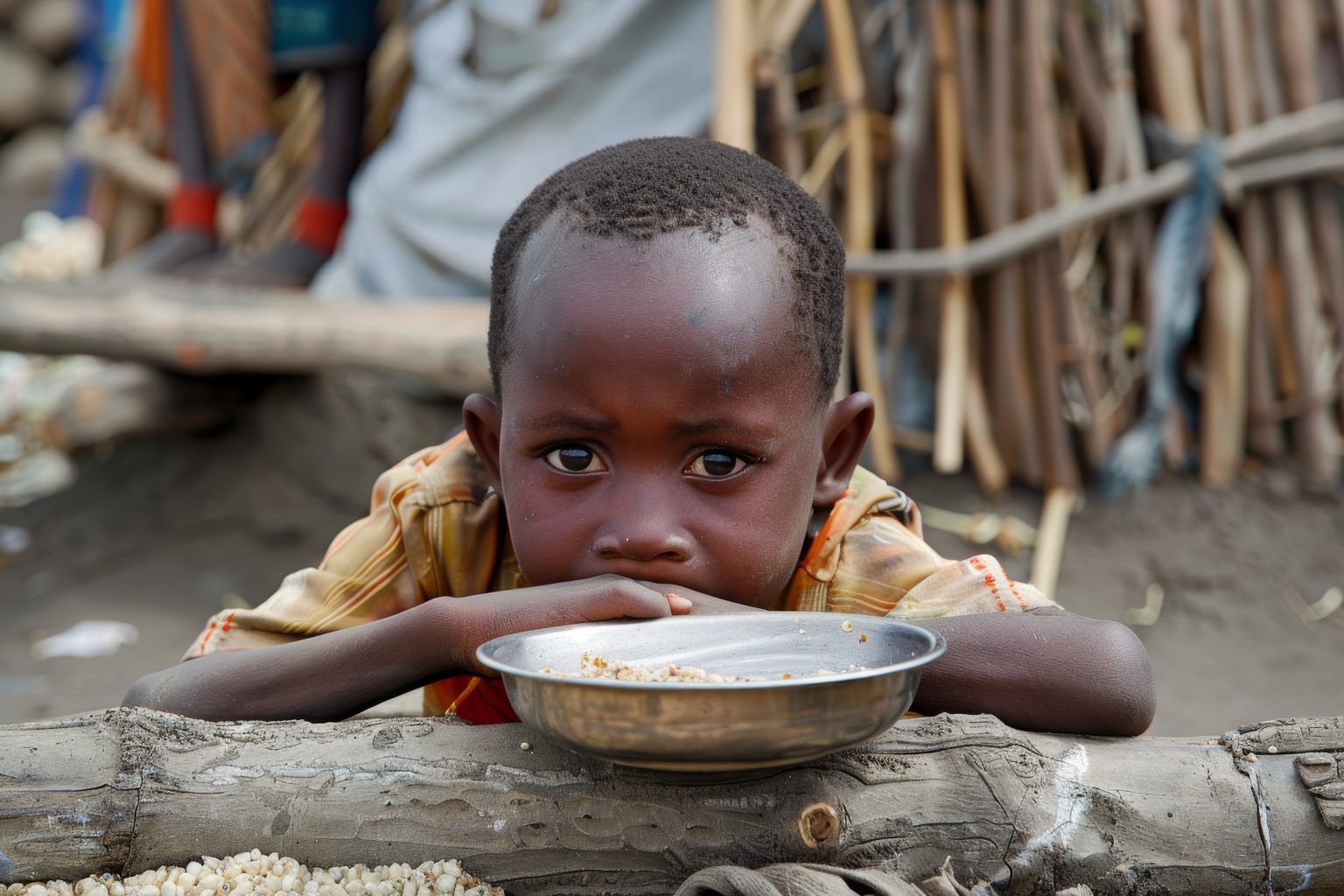
Then comes the weakness. The child may become too tired to play, too frail to walk to the health centre and, eventually, too weak even to cry. For thousands of Kenyan families, severe malnutrition is not an abstract statistic. It is a mother holding a shrinking child, wondering whether the next meal will come or whether help will arrive in time.
More than 883,000 children under five in Kenya are projected to require treatment for acute malnutrition between April 2026 and March 2027, according to the latest Integrated Food Security Phase Classification (IPC) analysis.
About 221,000 of them are expected to face severe acute malnutrition, the most dangerous form of wasting.
For such children, a sachet of Ready-to-Use Therapeutic Food (RUTF) can be the beginning of recovery. But having a lifesaving intervention is one thing. Getting it to a hungry child, in time, is another.
It is against this backdrop that a new global initiative, backed by $100 million (Ksh12.945 billion) from the United States government, is seeking to close one of the world’s most persistent nutrition gaps.
Drought, food insecurity, disease, and limited access to health services affects household nutrition
Operation End Starvation (OES), which began operations in June 2026 and was launched on the sidelines of the 81st United Nations General Assembly (UNGA81) in New York, wants to expand access to RUTF for severely malnourished children and multiple micronutrient supplements (MMS) for pregnant women.
Its launch, under the auspices of UNICEF, comes at a difficult moment for Kenya. According to the IPC analysis, the caseload has risen by 19 per cent from the previous year, and an estimated 117,000 pregnant and breastfeeding women are also expected to need treatment.
The burden is particularly severe in Kenya’s arid and semi-arid lands (ASALs), where drought, erratic rainfall, food insecurity, disease and limited access to health services continue to affect household nutrition.
Between April and July 2026, 14 areas were classified in the critical IPC Phase 4 for acute malnutrition, including parts of Garissa, Tana River, Wajir, Mandera, Turkana, Isiolo, Samburu and Baringo.
The crisis is not simply about whether families have enough food. “Disease, poor diets, inadequate sanitation, rising food prices, limited access to healthcare and climate shocks can combine to push vulnerable children into malnutrition,” the IPC analysis states.
“High disease burdens, depleted household food stocks, seasonal price increases and reduced humanitarian assistance are worsening conditions,” it adds, warning that El Niño-related flooding could also disrupt access to services and further worsen water, sanitation and hygiene conditions.
UNICEF says climate change is increasingly disrupting food systems and nutrition services in Kenya, while undermining household feeding practices. Its 2025-2030 climate-responsive nutrition agenda calls for programmes that can keep functioning during climate and environmental shocks.
Ready-to-Use Therapeutic Food is a peanut-based, energy-dense medical food to treat severe wasting
Against this backdrop, OES is proposing a model focused on commodities already widely used in nutrition programmes.

RUTF is a peanut-based, energy-dense medical food containing the nutrients required to treat severe wasting. Unlike conventional food aid, it is formulated specifically for children with severe acute malnutrition and needs no preparation or refrigeration. OES says it can help severely malnourished children recover within weeks when used appropriately as part of treatment.
The World Health Organization (WHO) 2023 guideline on wasting and nutritional oedema recognises RUTF as part of the evidence-informed management of severe wasting in children under five.
Kenya already uses RUTF in its national nutrition response. UNICEF reported that in 2024 it supported treatment for more than 134,000 children aged six to 59 months with severe acute malnutrition, achieving an 80.5 per cent cure rate. UNICEF and its partners also supported government procurement and distribution of RUTF and therapeutic milk.
The challenge, therefore, is not whether RUTF exists. It is getting enough of it to children in need, maintaining supplies, identifying malnourished children early and ensuring families can reach treatment services. This is where OES says its model differs.
Operation End Starvation aims to deliver 3.2 billion packages of Ready-to-Use Therapeutic Food by 2032
“By 2032, we aim to deliver 3.2 billion packages of Ready-to-Use Therapeutic Food and 14 billion multiple micronutrient supplement tablets,” OES says. “Our goal is to treat 22.5 million children, reach 82 million pregnant women and ultimately save 1.8 million children’s lives.”
Those are ambitious targets. The organisation is entering a field in which supply chains, health systems and community-level delivery determine whether a nutrition commodity sitting in a warehouse reaches a child before it is too late.
The second part of the OES strategy focuses on prevention. The organisation proposes wider use of MMS during pregnancy, arguing that better maternal nutrition can improve outcomes for mothers and babies. The supplements typically combine several vitamins and minerals, including iron and folic acid. This matters because nutritional vulnerability can begin before a child is born.
“Micronutrient deficiencies during pregnancy can adversely affect maternal, pregnancy and newborn health,” WHO says, recommending daily iron and folic acid supplementation to prevent maternal anaemia and reduce the risk of low birth weight and preterm birth.
However, the evidence on MMS is more nuanced than OES’s broad messaging suggests. Research reviewed by WHO has found that MMS can reduce the risk of low birth weight and small-for-gestational-age births compared with iron and folic acid alone in some settings. But WHO’s current guidance recommends antenatal MMS in the context of rigorous research. Its 2025 maternal health guidance notes potential additional benefits alongside important evidence gaps, and it has stopped short of recommending universal replacement of standard iron and folic acid supplementation.
A bag of therapeutic food cannot by itself solve the problem. A malnourished child may also have malaria, diarrhoea, pneumonia
This distinction matters as governments and donors consider whether to replace or supplement existing programmes. For Kenya, where maternal and child nutrition is delivered through the public health system, questions of evidence, affordability, procurement, adherence and integration will be central.
A bag of therapeutic food, however effective, cannot by itself solve the problem. A malnourished child may also have malaria, diarrhoea, pneumonia or another infection. A mother may know her child needs treatment but live many kilometres from a health facility.

A health centre may identify malnutrition but struggle with commodity shortages. And a family may complete treatment only to return to the same food insecurity that contributed to the child’s condition. That is why nutrition experts increasingly frame malnutrition as both a medical and a systems problem.
OES is betting that a more competitive global procurement and financing model can ease some of those constraints. It says private philanthropic funding will cover its operating costs so that public money goes towards buying and delivering nutrition commodities.
According to its media kit, OES began operations on 26 June 2026 with an initial $100 million (Ksh12.945 billion), a two-year commitment from the US Department of State, and $33 million (Ksh4.272 billion) in founding philanthropic support. Its chief executive is Will Moore.
The organisation ultimately wants to mobilise $4 billion (Ksh517.8 billion) in multi-year funding, with $3 billion (Ksh388.35 billion) from public sources and $1 billion (Ksh129.45 billion) from private funding. It also aims to cut the average cost of buying, shipping and administering RUTF by at least 25 per cent. If achieved, this could allow governments and donors to reach more children without proportionally increasing spending.
For Kenya, the technology to treat severe malnutrition already exists. Geography, poverty should not determine which children gets it
But the test will be implementation, and Kenya has already shown that large-scale nutrition interventions can work. Alongside treatment, community-based approaches such as family Mid-Upper Arm Circumference (MUAC) screening have expanded. The approach allows caregivers to spot early signs of malnutrition using a simple coloured measuring tape.
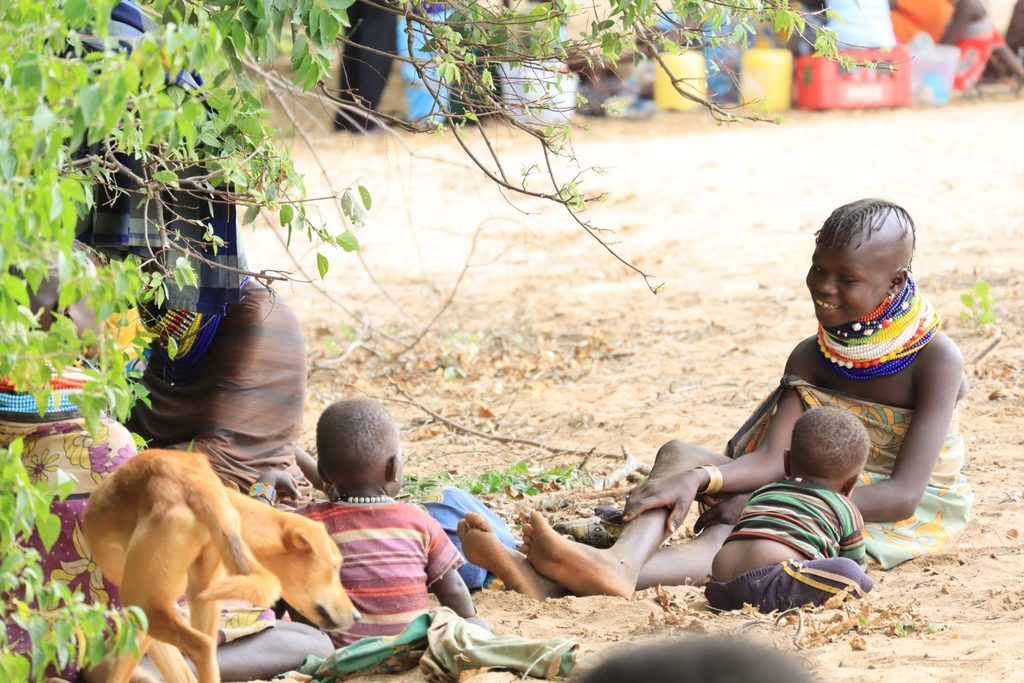
In Turkana, UNICEF recently documented how a mother used the tool to identify nutritional deterioration in her four-year-old son and seek help from a health facility. Such approaches show that the frontline of the nutrition crisis is often the household. The earlier a child is identified, the greater the chance to intervene before severe wasting develops.
OES therefore arrives as the global malnutrition debate shifts from whether effective interventions exist to whether they can be delivered at sufficient scale. It is attempting to close part of that gap by putting two established nutrition commodities at the centre of a new global financing and procurement model.
Its success, however, will be measured not by the number of packages manufactured or tablets purchased, but by whether they reach the mothers and children who need them. The real test is whether those interventions mean fewer children becoming severely malnourished and fewer dying from a condition that is largely preventable and treatable.
For Kenya, the technology to treat severe malnutrition already exists. The harder task is ensuring that geography, poverty, climate shocks, supply chains and gaps in health services do not determine which children get access to it.
We believe in the free flow of information
Republish our articles for free, online or in print, under Creative Commons licence.