
The World Health Organization (WHO) backs mifepristone as emergency contraception. But Kenya must first clear regulatory, clinical, and public education hurdles.
Mifepristone, long associated with medical abortion, has a new reproductive health role: preventing pregnancy after unprotected sex. In guidelines released on September 23, 2026, the World Health Organization (WHO) recommends it as an additional emergency contraceptive.
For Kenya, however, the recommendation is not an immediate green light. Adopting it would require review within the country’s regulatory, policy, and clinical systems, and experts say it must come with provider training, public education, and safeguards against misuse. Here is what you need to know.
What is mifepristone?
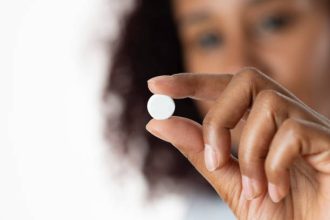
Mifepristone is a medicine best known for its use in medical abortion. It works by blocking progesterone, a hormone the body needs for pregnancy. As an emergency contraceptive, this action stops pregnancy from occurring.
What exactly has WHO recommended?
WHO’s new guidelines, aimed at expanding contraceptive choices for women and girls, recommend mifepristone as an emergency contraceptive taken as soon as possible and within five days of unprotected sex. WHO says the recommended dose of 10 to 50mg is likely to be as safe and effective as other emergency contraceptive methods.

How is this different from its use in abortion?
The dose and treatment regimen are different. “When it comes to medical abortion, it is given as 200mg orally,” said Dr John Jack Omondi, Head of Technical Service at MSI Reproductive Choices Kenya.
He said this difference must be clearly understood if the drug is introduced for emergency contraception. Because of mifepristone’s link to medical abortion, its new role could cause widespread misunderstanding if poorly communicated. Both healthcare providers and the public, he said, must understand how the drug will be given and at what dose.
Where does emergency contraception fit today?
Emergency contraception already has a defined place in Kenya’s family planning services. It is used after unprotected sex, when a contraceptive fails, such as when a condom breaks or slips, and as part of first-line care for survivors of sexual violence to prevent unintended pregnancy.
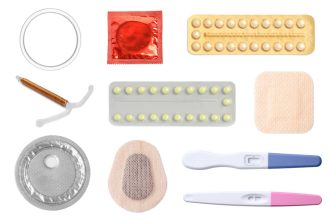
WHO currently recommends levonorgestrel and ulipristal acetate emergency contraceptive pills, taken ideally as soon as possible and within 120 hours of unprotected sex, as well as the copper-bearing intrauterine device. Mifepristone will add to these options, not replace them.

Who uses emergency contraception?
Dr Omondi said women across the reproductive age range use emergency contraception, with the highest numbers aged 20 to 45, based on clients served by MSI Reproductive Choices Kenya.
He cautioned against using emergency contraceptive pills as though they were daily contraceptive pills. “That is not the best way of taking emergency contraceptive,” he said, noting that their dosing and side effects differ from regular pills.
Is there a limit to how often it can be used?
A persistent misconception in Kenya holds that women should use emergency contraception only two or three times a year. Dr Omondi said Kenya’s family planning guidelines set no such limit.
“When you look at the Kenya 2025 Family Planning Guidelines, it does not limit you to how many times you should use the pill,” he said. “Those are some of the misconceptions that have hindered contraception uptake over the years.”
The clinical concern, he said, is not simply counting uses but understanding why a woman needs repeated emergency contraception and making sure she has accurate information on methods that suit her.
Why does this matter for Kenya?
The potential addition comes as modern contraceptive use in Kenya continues to grow, while many women still have unmet need for family planning.
According to the 2022 Kenya Demographic and Health Survey (KDHS), 63 per cent of currently married women aged 15 to 49 were using some form of contraception: 57 per cent a modern method and six per cent traditional methods. Modern contraceptive use among married women rose from 18 per cent in 1989 to 57 per cent in 2022.

Still, 14 per cent of married women had unmet need for family planning, eight per cent for spacing births and six per cent for limiting them. Overall, 76 per cent of married women had a demand for family planning, and 75 per cent of that demand was met by modern methods.
The national figures mask wide county gaps. Demand met by modern methods ranged from four per cent in Mandera County to 89 per cent in Embu County.
Among sexually active unmarried women, 70 per cent were using a contraceptive method and 59 per cent a modern one. The male condom was the most common modern method in this group at 20 per cent, followed by injectables at 16 per cent and implants at 11 per cent.
Will a new pill close the gap?
Not on its own, according to Dr Omondi. “There is no silver bullet,” he said. “If you bring in the stock, whether mifepristone or any other, without capacity building, you have not broken the barriers down at the community level and hence no one will take up these methods.”
He cited myths about infertility and cancer, poor information, commodity shortages, gaps in provider skills, and cultural and religious barriers. In some rural and arid and semi-arid areas, he said, access to information is especially limited.
What questions remain?
The recommendation raises questions for Kenyan fertility specialists, particularly on repeated use, menstrual changes, side effects and any effect on future fertility. While WHO provides the international evidence base, local clinicians will need to explain what it means for Kenyan women.
Will mifepristone be available in Kenya soon?
Not automatically. WHO guidelines can guide national family planning programmes, but they do not lead directly to national approval or availability. Kenya has its own regulatory and policy processes.
What needs to happen first?
If mifepristone is introduced for emergency contraception, Dr Omondi said, safeguards would be needed, including provider training, clear prescribing and dispensing guidance, public education and coordination among health authorities.
“Mifepristone and misoprostol are controlled drugs,” he said, warning that unrestricted access could open the door to abuse and unsafe use. He said the Pharmacy and Poisons Board, the Kenya Medical Practitioners and Dentists Council and the Ministry of Health would all have key roles.
“We really need to put safeguarding measures,” he said. “As we expand access, we should also ensure that we are protecting our people.”
Kenya’s Family Planning Guidelines would also need updating if mifepristone is formally endorsed, he added, to harmonise practice across the country.
The bottom line
For now, mifepristone’s future as an emergency contraceptive in Kenya remains an open question. WHO has provided the evidence, but regulatory review, provider training, public education and updated national guidelines still lie ahead.
Any new option will only matter if it comes with the basics: steady commodity supply, accurate information, and a health system women can reach. Until then, the mifepristone conversation is as much about closing Kenya’s existing contraceptive gaps as opening a new option.
We believe in the free flow of information
Republish our articles for free, online or in print, under Creative Commons licence.