


For RSV, the science has largely done its part, and the remaining obstacle is a price. For GBS, the harder possibility is that the evidence needed to justify a vaccine may only arrive once one exists.
When a Ugandan research team took its respiratory syncytial virus (RSV) modelling to the Ministry of Health, the response reframed the conversation. The burden, the minister indicated, was no longer in dispute. What the government needed was the economic case.
That exchange, recounted at a meeting of researchers in Nairobi in July, captures where the evidence for maternal RSV vaccination has arrived. Across nine countries in Africa and Asia, the epidemiological argument is largely made, but the financing argument is not; and for Group B Streptococcus (GBS), the second vaccine on the horizon, even the burden remains stubbornly hard to measure.
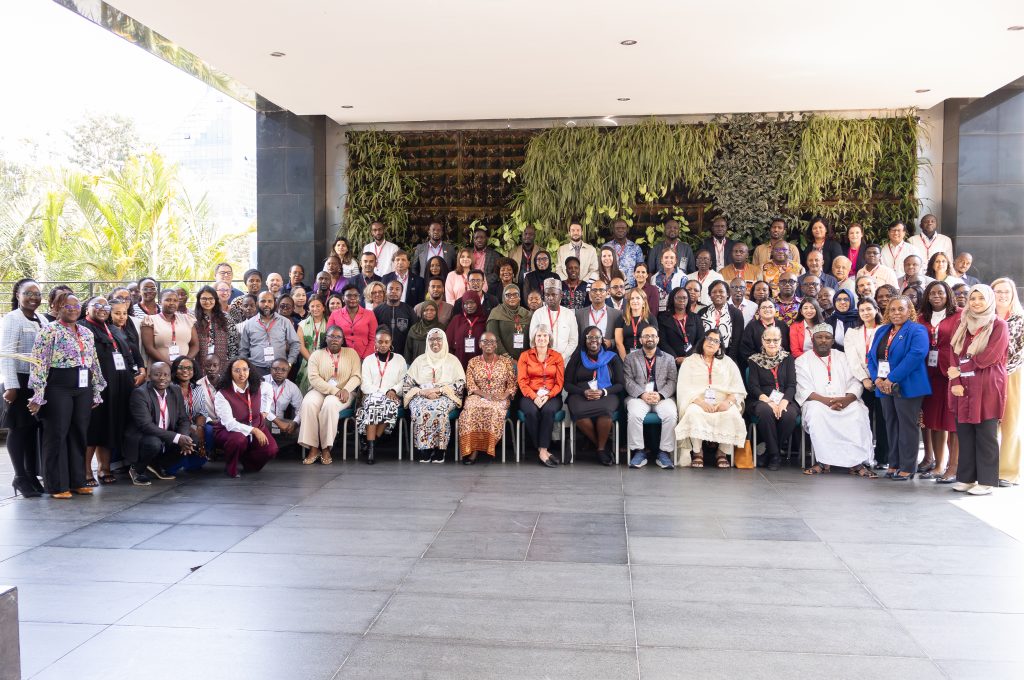
The findings came from the third annual meeting of the Maternal Immunisation Readiness Network in Africa and Asia (MIRNA), a consortium spanning Bangladesh, Burkina Faso, Ethiopia, Ghana, Kenya, Nigeria, Pakistan, South Africa and Uganda. Its mandate covers disease burden, health economics, health system readiness, vaccine demand and policy synthesis, which is the evidence base that governments will draw on in deciding whether to introduce maternal vaccines.
The policy window is already open. In September 2024, the World Health Organization’s Strategic Advisory Group of Experts on Immunisation recommended two complementary approaches to protecting infants against RSV: maternal vaccination in the third trimester, and long-acting monoclonal antibodies given directly to infants.
In March 2025, WHO prequalified the first maternal RSV vaccine, ABRYSVO, and Gavi, the Vaccine Alliance, subsequently opened a dedicated funding window for eligible countries introducing maternal RSV programmes.
Kenya, South Africa, Bangladesh and Pakistan contributed much of the available data
A cross-country synthesis presented by Bilal Usmani pooled 135 studies and found a pattern consistent with global evidence: RSV positivity peaks in the first year of life, with in-hospital case fatality generally low overall but rising sharply among children who require paediatric intensive care. Kenya, South Africa, Bangladesh and Pakistan contributed much of the available data.
Country-level work sharpened that into numbers governments can use. Uganda’s modelling estimated RSV hospitalisation incidence at 237 per 100,000 children under five, translating to roughly 16,000 hospitalisations a year. Bangladesh’s national review found that approximately one in four children under five tested RSV-positive, reinforcing the virus’s contribution to pneumonia and under-five illness.

Those figures matter less as revelations than as instruments. A hospitalisation count is the input an economic model needs. Once burden is quantified in a form that can be costed, the conversation moves, as it did in Kampala, from epidemiology to finance.
A systematic review of 112 studies presented to the meeting exposed an awkward mismatch. Most cost-effectiveness evidence for maternal immunisation comes from high- and upper-middle-income settings. The primary costing studies that Gavi-eligible countries actually need are concentrated in low- and lower-middle-income settings, including several MIRNA countries, which is precisely why the consortium’s own costing work carries weight.
That work produced a reassuring headline that delivering a maternal vaccine, in itself, is not expensive. Uganda estimated its incremental delivery cost at US$1.67 financial and US$2.42 economic per dose, excluding procurement.
Ethiopia’s financial cost came in at US$2.70 per dose, rising to US$7.27 once commodities were included. Nigeria’s ranged from US$1.92 to US$2.19 per dose excluding the vaccine, increasing to between US$2.32 and US$6.05 with procurement added. Across all seven costing studies, unit delivery costs excluding commodities fell between US$0.45 and US$3.42.
In every country studied, procurement was the single largest cost driver
The pattern inside those numbers is the finding. In every country studied, procurement was the single largest cost driver, meaning the gap between the figure excluding commodities and the figure including them is, in several cases, the difference between a marginal addition and a substantial one.
If RSV is approaching a decision point, GBS is somewhere further back. Ethiopia’s team reported maternal colonisation of around 15 per cent and a vertical transmission rate of 53 per cent, meaning more than half of colonised mothers passed the bacteria to their newborns.

On its face, that suggests a substantial problem. But invasive disease data told a different story: four years of hospital surveillance identified only five invasive GBS cases among more than 5,200 blood specimens.
The Ethiopian team’s conclusion was carefully drawn. The country has sufficient evidence to recognise GBS as a public health problem, but not yet enough to guide the introduction of maternal vaccines with confidence.
Nigeria’s review found maternal colonisation in roughly one in ten women, with serotypes V and Ia predominating, but invasive disease and mortality data again remained limited.
In the expert discussion that followed, Professor Shabir Madhi identified why this gap may not close through better surveillance alone. Culture-based methods systematically under-detect fastidious organisms like GBS, he warned, and post-mortem sampling compounds the problem.
His conclusion was that quantifying GBS’s contribution to neonatal sepsis may require a highly efficacious vaccine, with the vaccine probe becoming the most powerful tool available.
The decisions required are largely political and fiscal rather than scientific
Madhi also offered a lesson from pneumococcal vaccine introduction that bears on both: it was not sold as a pneumococcus vaccine, but as a pneumonia vaccine. Several panellists suggested the same reframing may be needed for RSV, an acronym that means little to most families. That is a communication point, but it has a financing dimension too, as ministries fund what constituencies recognise.

The picture across the nine countries is neither uniform nor discouraging. For RSV, the burden data is sufficient, the delivery costs are modest, the procurement cost is the binding constraint, and the financing architecture exists. The decisions required are largely political and fiscal rather than scientific.
For GBS, the epidemiological groundwork is genuinely incomplete, and Ethiopia and Nigeria’s findings show how much remains before that vaccine can follow RSV to market, with a real possibility that some of the missing evidence will only arrive after a vaccine does.
What the consortium’s economics establish, above all, is that cost need not be the reason a country declines. Delivering these vaccines is cheap, but buying them is not. That distinction determines where the advocacy should now point.