



When a mother starts bleeding before birth, her survival and that of her baby rarely depend on heroics; they depend on early recognition, ultrasound before touch, blood on standby, and teams already working as one before the emergency begins.
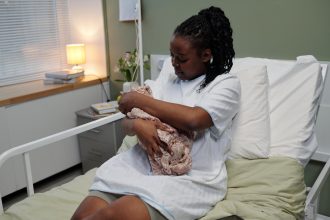
A 32-year-old woman arrived at a county referral hospital in western Kenya, 34 weeks pregnant, bleeding with no pain or warning. Within moments, a routine pregnancy had become a life-threatening emergency.
Midwives assessed her immediately; doctors ordered urgent blood tests and an ultrasound, the blood bank was alerted, and specialists in obstetrics, neonatology, anaesthesia and transfusion medicine mobilised within minutes. Mother and baby survived.
Her story, shared at a national obstetric emergency forum, shows what is possible when health systems respond fast enough, but for many women across Kenya, that outcome is far from guaranteed.

“Managing obstetric emergencies begins with recognising danger signs early and ensuring timely referral,” said Dr Michael Oduor, Consultant Obstetrician and Gynaecologist at Siaya County Referral Hospital. “Every minute counts when a woman is bleeding.”
Postpartum haemorrhage, bleeding after delivery, draws most global attention. However, Antepartum haemorrhage (APH), bleeding before birth, is just as dangerous, and remains a leading cause of maternal and newborn death in low- and middle-income countries, including Kenya.
The issue anchored a KNH-UoN Obstetric Emergencies Webinar on 2nd July 2026, organised by Kenyatta National Hospital (KNH), the University of Nairobi (UoN), the Ministry of Health and the Division of Reproductive and Maternal, Newborn, Child and Adolescent Health, under the theme “Antepartum Haemorrhage: A Team-Based Approach to Maternal and Neonatal Survival.”
Obstetricians, neonatologists, radiologists, anaesthesiologists, psychiatrists, transfusion specialists and midwives at the forum agreed that survival depends less on individual skill than coordinated teamwork.
Antepartum haemorrhage drives maternal deaths, stillbirths and preterm births through delayed diagnosis and limited specialist access
Globally, an estimated 260,000 women died from pregnancy and childbirth complications in 2023, according to the World Health Organization (WHO), with roughly 70 per cent of deaths in sub-Saharan Africa. Haemorrhage is the leading direct cause of maternal death worldwide, causing nearly 27 per cent of maternal deaths. Postpartum bleeding accounts for most, but antepartum haemorrhage also drives maternal deaths, stillbirths and preterm births through delayed diagnosis and limited specialist access.
Kenya’s maternal mortality ratio stands at roughly 530 deaths per 100,000 live births, far above the SDG target of under 70 by 2030. The Ministry of Health lists obstetric haemorrhage among the leading causes of maternal death, alongside hypertensive disorders and sepsis.
APH is bleeding after foetal viability, from around 24 weeks until birth, affecting two to five per cent of pregnancies worldwide. Its two main causes, placenta previa (placenta covering the cervix) and placental abruption (placenta separating early from the uterine wall), can threaten both within minutes if missed.
“Antepartum haemorrhage is an obstetric emergency until proven otherwise,” said Dr Grace Wanjiku, Consultant Obstetrician and Gynaecologist at Murang’a County Referral Hospital, who presented the clinical overview. Every woman bleeding in late pregnancy should be treated as high-risk until the cause is confirmed.
Stabilising the mother comes first. “The mother’s condition takes priority. Once the mother is stable, the baby has a better chance of survival,” Dr Wanjiku said. Delays in recognising shock, securing IV access, replacing fluids and preparing blood products often determine survival.
Continuous monitoring of the mother’s vital signs and the baby’s wellbeing is essential throughout
She warned against complacency when bleeding looks minor: “The amount of visible bleeding may not reflect the severity of blood loss, especially in placental abruption where significant bleeding can remain concealed.” Continuous monitoring of the mother’s vital signs and the baby’s wellbeing is essential throughout.
A case study from Hellen Odeny, an Advanced Nurse Midwife Practitioner in Kakamega County, showed systematic assessment in practice: history review, foetal heart monitoring, laboratory tests, imaging and preparation for emergency delivery, with blood and neonatal support lined up in advance.

This works only when disciplines communicate constantly. “Managing antepartum haemorrhage is multidisciplinary. You cannot manage these patients alone. Every member of the team has a role, and the timing of each intervention is critical,” Dr Wanjiku said.
Treatment depends on the cause of bleeding, so accurate diagnosis is critical. Dr Mutindi Kakuti, a Maternal Foetal Medicine specialist at the Moi Teaching and Referral Hospital, described ultrasound as indispensable for evaluating APH, locating the placenta, assessing foetal wellbeing and identifying complications without added risk to the mother.
“Ultrasound is the cornerstone of evaluating antepartum haemorrhage,” Dr Kakuti said. “Before any vaginal examination is performed, placenta previa must first be excluded because digital examination can trigger catastrophic bleeding.”
Imaging findings guide the choice between observation and immediate delivery, cutting unnecessary interventions while flagging women needing urgent surgery.
Effective communication between the clinical team and the blood bank can save valuable time during an obstetric emergency
Access to safe blood remains a major obstacle, since severe haemorrhage can cost a woman large volumes within minutes. Kenya needs about 500,000 units of blood a year, according to the Kenya National Blood Transfusion and Transplant Service (KNBTS), yet collections fall short, straining obstetric, trauma and paediatric care in county referral hospitals.

“Blood should be requested early. Effective communication between the clinical team and the blood bank can save valuable time during an obstetric emergency,” said KNBTS Director Dr Martin Sirengo, while urging clinicians to anticipate transfusion needs rather than wait for a patient to deteriorate.
Severe maternal bleeding often means a baby arrives too early, oxygen-starved, or in need of immediate intensive care.
“Every baby born following antepartum haemorrhage should be anticipated as a potentially compromised newborn,” said Dr Mary Waiyego, Consultant Neonatologist at Kenyatta National Hospital. “The neonatal team must be informed early so that resuscitation equipment, medication and personnel are ready before the baby is delivered.”
The WHO ranks prematurity as the leading cause of death among children under five worldwide; babies born after placental abruption or placenta previa face heightened risk of respiratory distress, birth asphyxia and anaemia.
“Good communication between the obstetric and neonatal teams improves outcomes because we are able to prepare before the baby arrives,” Dr Waiyego said.
Women who experience severe obstetric emergencies may develop anxiety, depression or post-traumatic stress symptoms
Yet, the psychological toll of surviving an obstetric emergency often goes unaddressed.
“Women who experience severe obstetric emergencies may develop anxiety, depression or post-traumatic stress symptoms. The emergency may be over medically, but psychologically the recovery is only beginning,” said Dr Gerald Ng’ang’a, Consultant Psychiatrist in Kiambu County, who called for mental health screening in routine postnatal follow-up. “We should not only ask whether the mother is physically recovering,” he said. “We should also ask how she is coping emotionally because mental well-being is part of recovery.”

Survival is decided long before a woman starts bleeding. Dr Loise Nyanjau, head of the maternal health program at the Ministry of Health, cited investment in stronger referral systems, skilled health workers and national perinatal care guidelines, alongside closer collaboration between national and county governments, health facilities and development partners.
The message was consistent: functioning referral networks, skilled birth attendants, reliable laboratories, dependable blood, clear protocols and regular simulation training, so teams rehearse the minutes that matter most. None of it rests on one specialist alone.
As Dr Wanjiku put it, “No one person manages antepartum haemorrhage. It is teamwork, communication and preparedness that save mothers and babies.”
Kenya has made real gains in birth attendance and emergency obstetric care, yet preventable maternal deaths remain unacceptably common. Closing that gap and meeting the 2030 target of under 70 deaths per 100,000 births depends on treating readiness as seriously as response, so that when a woman like her begins to bleed, survival is no longer left to chance.