


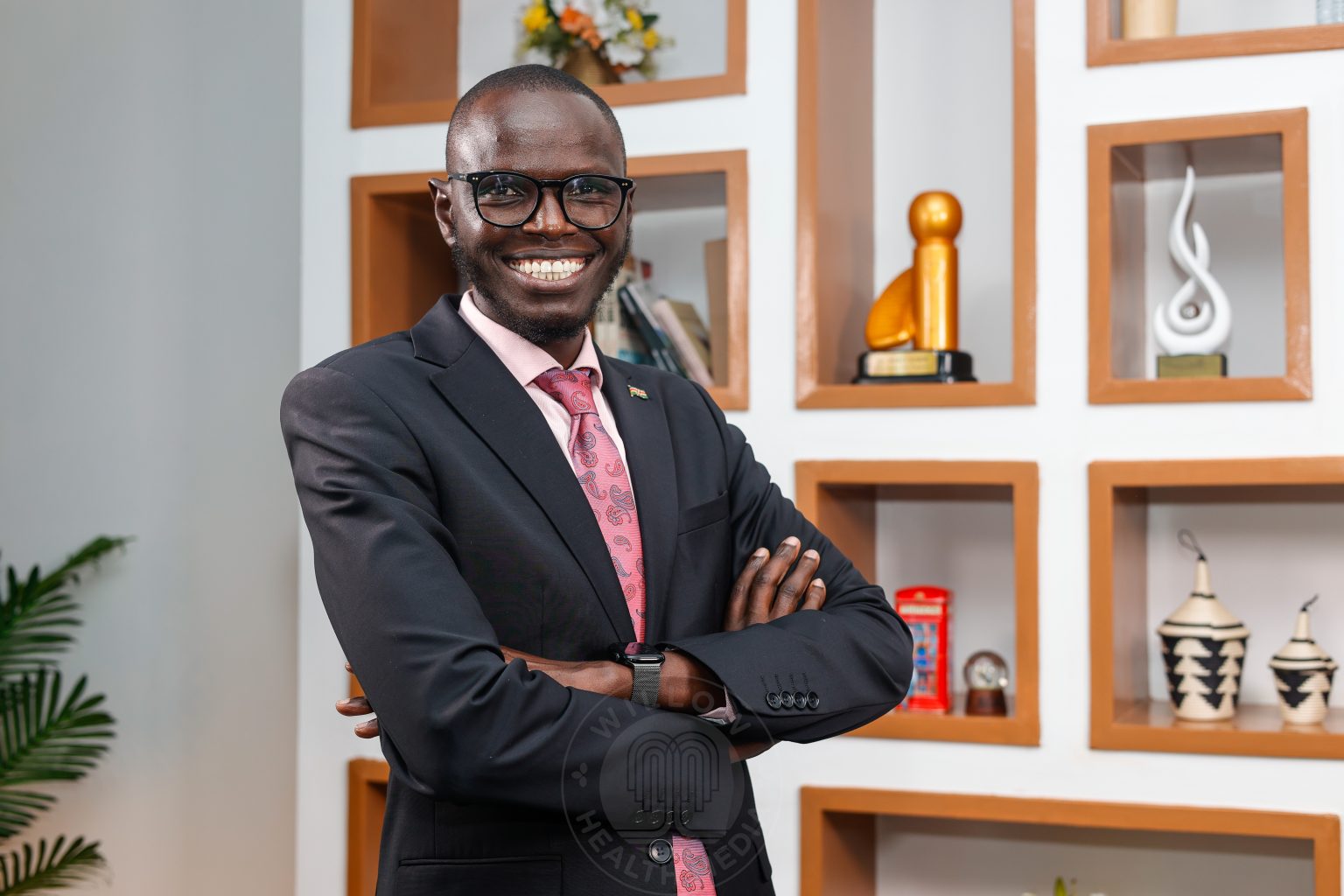

His father’s plan was polytechnic, a spanner, cars to repair. It took a goat epidemic and a stubborn teacher to produce the first surgeon from his village.
In the rolling hills of Tigania East in Meru County, where survival overshadowed ambition and school was often a luxury, a young boy named Stanley Mwenda Aruyaru was expected to follow a familiar path. He would attend the local village polytechnic at Ngangari, learn mechanical skills, become a driver and mechanic, and build a modest life close to home.
The plan had already been decided. For a family struggling to make ends meet, it was practical. Stanley had not grown up dreaming of medicine. Before he ever wore a white coat, he spent his childhood herding goats, walking barefoot across hot earth, and helping his family navigate the realities of rural life. His parents had little formal education, opportunities were limited, and survival came first. “I don’t remember those days when I was conscious that this is my plan of life. I didn’t have those plans,” he recalls.
Today, Dr Mwenda is a general surgeon, author, health systems advocate and Secretary General of the Surgical Society of Kenya, one of the country’s most respected voices in surgery. Yet when he looks back, he still sees the boy who almost never made it to high school. “I only went to school because the goats I was herding that particular season were all decimated by an outbreak of a livestock disease. That’s how I have dragged along as a little bloomer,” he remembers.
His journey into medicine began not with ambition, but with circumstance. He performed well in primary school and earned admission to secondary school, but that alone did not guarantee attendance. His father had already settled on another future. “He told his family: ‘I am taking him to the village polytechnic.’ So, I was going to become a driver and mechanic.”
One teacher made a declaration that echoed throughout his life: ‘Don’t deny this village its first doctor’
Teachers and the wider community refused to let that happen. Seeing potential in the quiet village boy, they fundraised, contributed what they could, and convinced his father to give education a chance. One teacher made a declaration that would echo throughout Dr Mwenda’s life: “Don’t deny this village its first doctor.” At the time, it sounded almost impossible. Years later, he would become exactly that.
The journey was not straightforward. School fees remained a constant challenge. There were periods when he was repeatedly sent home over growing arrears. Determined not to abandon his studies, he would quietly return on weekends after being sent away, sneak into classes, tend to his agricultural projects, and leave before teachers discovered he was back without having settled his fees.
Eventually, the principal found out. “He looked at me up down, up down, and told me, ‘When intelligent people start behaving stupidly, we have a problem.'” Beneath the reprimand was recognition. Teachers continued to support him, connecting him to bursaries, and slowly, doors began to open.
When he finally graduated from medical school, Dr Mwenda carried more than a degree. He carried the hopes of a village. Of all the paths medicine offered, surgery captured his imagination. It represented the perfect union between knowledge and action. “I love surgery because, on top of me utilising my medical knowledge and expertise like any other doctor would do in any other discipline, surgery grants me the opportunity to use my hands to expertly fix what is physically broken.”
Patients do not see the losses that remain with doctors long after hospital corridors fall silent
The discipline connected unexpectedly with the future his father had once envisioned. Returning home after graduating, Dr Mwenda explained it in a language his family understood: “I have just become a mechanic, only that now I repair people and I fix them when the engine is still running.”
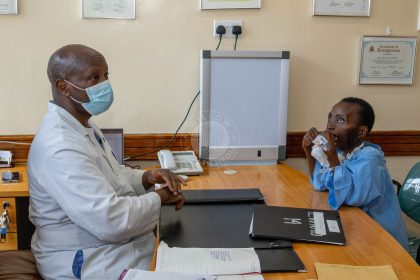
Yet surgery would teach him something deeper than technical skill. Patients encounter surgeons during the most vulnerable moments of their lives. They see confidence, precision and expertise. What they do not see are the losses that remain with doctors long after the hospital corridors fall silent.
Dr Mwenda often reflects on a quote attributed to the French surgeon René Leriche: “Every surgeon carries within himself a cemetery where from time to time he goes to pray.” Every surgeon remembers patients who could not be saved, complications that unfolded despite their best efforts, and moments they wish had ended differently.
“Everyone sees the final product. No one sees the failed attempts, the moments we had complications, the patients we lost,” he says. Those experiences shaped not only his understanding of medicine but also his understanding of leadership.
Successful surgery could be undermined by delayed referrals, shortages of trained staff, weak health systems
One memory still follows him. As an intern, he assessed a woman in labour and believed she would deliver naturally within a few hours. Delays within the hospital system meant intervention came too late, and the baby suffered complications. Years later, the case remains a reminder. “The main challenge is actually the delays that occur in the hospital.”
Over time, Dr Mwenda came to recognise that the challenges facing patients extended far beyond the operating theatre. Successful surgery could still be undermined by delayed referrals, inadequate infrastructure, shortages of trained personnel, or weak health systems. And for decades, surgery had remained largely invisible within public health conversations.
Global health priorities have long focused on infectious diseases, maternal health, vaccinations, HIV, tuberculosis and malaria. While those priorities have saved millions of lives, surgery has frequently occupied the margins of policy discussions, despite being essential for trauma care, cancer treatment, obstetric emergencies, congenital conditions and countless other health needs. As a result, millions of people across low- and middle-income countries continue to lack access to safe, timely and affordable surgical care.
This reality transformed him from surgeon into advocate.
As Secretary General of the Surgical Society of Kenya, he is helping lead efforts to reposition surgery as a core component of the health system rather than an optional specialty. For Dr Mwenda, advocacy is not separate from clinical care; it is an extension of it.
The determination that carried a schoolboy back after being sent home for unpaid fees now fuels a national campaign to strengthen surgical systems
“Clinical care is the brick and mortar of healthcare,” he says. But brick and mortar alone are not enough. “When we fail to advocate, noise comes in.” Healthcare professionals, he argues, have a responsibility to participate in public conversations about health. “If we keep silent, then we leave a vacuum. The public will take it as gospel truth because they don’t know another option. They don’t know another narrative.”
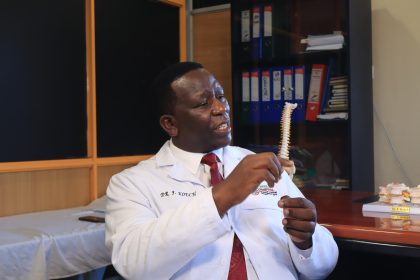
Under his leadership, the Surgical Society of Kenya has intensified efforts across three fronts: strengthening education, training, mentorship and capacity building among surgeons across the country; ensuring surgical voices contribute meaningfully to policy discussions and health reforms; and supporting the development of national surgical strategies to systematically improve access to safe care throughout Kenya.
His vision extends beyond the operating room. Surgery, he argues, must be recognised as an indispensable part of universal health coverage. The same determination that once carried a schoolboy back through school gates after being sent home for unpaid fees now fuels a national campaign to strengthen surgical systems.
Dr Mwenda describes the qualities of a good surgeon through what he calls the four A’s: ability, availability, affability and advocacy. Skill matters, he says, but skill alone cannot save lives if a doctor is absent when patients need them most. Equally important is the willingness to listen, communicate and speak up for those whose voices are rarely heard.
His journey remains rooted in values that first carried him forward: determination, humility, desire to make a difference
That commitment has also found expression through writing. Through his books, The Chronicles of a Village Surgeon and Blade Wisdom, he has opened a window into the triumphs, failures and lessons that define a life in medicine. “Mine is storytelling through the scalpel and the tip of the pen,” he says.
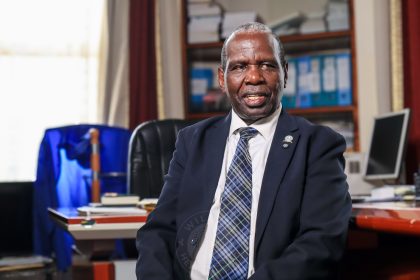
From the barefoot boy who almost became a mechanic to a surgeon, author and national advocate, his journey remains rooted in the values that first carried him forward: determination, humility and a desire to make a difference.
When patients look at his white coat, he hopes, “It represents a solution to whatever brought them to the doctor. If what they have is difficult for me to address, then they find a companion, someone who is there for them at the hour of need.”










“Nature is indifferent. It does not owe us fairness. It simply is.”
This was my anchor statement from daktari. Powerful perspective shift…
It really is a powerful perspective shift. What struck me is that for Dr Stanley, it does not lead to resignation, but to action and responsibility. His own resilience is a big part of that. We may not control what happens, but we can choose to keep showing up and keep going.