


A suspected Ebola case in Wajir County has tested negative, but Kenya’s bigger test lies in Nairobi, where dozens of contacts of its first confirmed Bundibugyo patient face 21 days of monitoring as contact-tracing gaps persist amid a DRC outbreak that has caused 4,205 confirmed deaths.
A cargo truck worker’s journey from the Democratic Republic of Congo (DRC) set off Kenya’s latest Ebola alarm, but on Thursday, October 8, it ended in relief when he tested negative.
The 20-year-old travelled through the DRC, Uganda and parts of Kenya before reaching home in Wajir on 20 September. His travel history prompted officials at Habaswein Sub-County Hospital in Wajir South Sub-County to test him. Preliminary results were negative.
“These results are reassuring,” said Wajir Governor Ahmed Abdullahi. He praised health workers at Habaswein, the County Department of Health and the Ministry of Health, which he said will keep monitoring the man, and urged residents “to avoid sharing unverified information, which can cause unnecessary fear and panic”.
It was Kenya’s second suspected case to test negative. But the all-clear does not shorten the 21 days that matter most. In Nairobi, health teams are watching dozens of people exposed to Kenya’s first confirmed Ebola patient, who died on October 5. And the outbreak behind it keeps growing.
That outbreak, caused by the Bundibugyo species of Ebola, had by October 7 produced 8,809 confirmed cases and 4,245 confirmed deaths, according to the United States Centers for Disease Control and Prevention (US CDC).
Almost all are in the DRC, where the World Health Organization (WHO) reports cases in 64 health zones across seven provinces and a fatality rate of 48.2 per cent. Uganda and France have also recorded cases, and WHO counts Kenya as the fourth country to confirm Bundibugyo.
The starkest warning came on October 6 from the Africa Centres for Disease Control and Prevention (Africa CDC). More than 70 per cent of new DRC cases, it said, are emerging among people never listed as contacts, a sign that transmission chains are escaping the response.
The patient went by road through Beni to Kampala, stayed overnight in Uganda, and then flew to Nairobi
In Kenya, the patient was a Kenyan citizen living in the DRC who fell ill there and visited several health facilities. Health Cabinet Secretary Aden Duale traced the journey through Kisangani, Beni, Kinshasa and Kampala. WHO says the patient went by road through Beni to Kampala on October 2, stayed overnight in Uganda, according to Africa CDC, and flew to Nairobi on October 3, where Nairobi Hospital quickly isolated the patient.
Duale credited the level six hospital’s health workers with spotting the case, which took 48 hours to confirm as samples passed through several laboratories. Both the National Virology Reference Laboratory and the Kenya Medical Research Institute found Bundibugyo virus, and Kenya notified WHO on October 6, within the 24 hours the International Health Regulations (2005) allow.
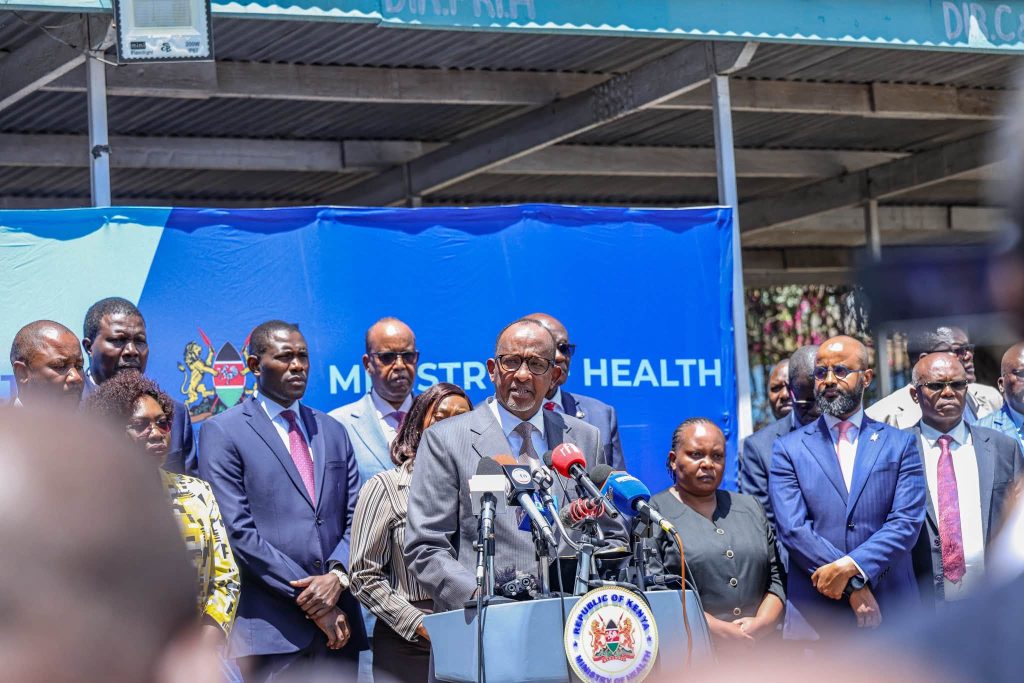
“Unfortunately, we lost the patient,” Duale said. The Ministry and the Kenya Red Cross conducted a safe and dignified burial. “I will emphasise there’s no Ebola outbreak in Kenya,” he said. “What we have is an isolated incident.”
That distinction rests on the contacts. Duale said the list had grown from 55 to 57, with ten quarantined at the National Police Service Hospital in Nairobi under daily symptom monitoring and about 17 more reached. He pledged to trace all 57 “by the end of the day”.
By October 8, he put the quarantined total at 66. Africa CDC counted 28 contacts, including relatives and health workers, plus 23 passengers and crew. Jambojet airline has listed 23 passengers and four crew.
WHO puts Ebola’s incubation period at two to 21 days, so contacts are watched for 21 days from their last exposure. Anyone who falls ill is isolated, tested and treated, and their contacts traced. One study of the DRC’s 1995 Kikwit outbreak found an average incubation of 12.7 days, though roughly 4 per cent of patients may exceed 21.
Someone exposed on October 3 would reach day 21 on October 21, and someone exposed at the burial on October 27. The Ministry has not published its own schedule. An outbreak ends only after 42 days, double the maximum incubation period, without a new case.
Five laboratories return results within six to 12 hours, and five designated facilities hold 241 beds
Kenya’s national Incident Management System has run since May, when the DRC and Uganda declared outbreaks. WHO says Kenya had screened more than 652,000 travellers by October 6, tested 267 suspected samples, trained about 5,000 health workers and assessed isolation units in 27 high-risk counties, lifting its readiness score from 66 per cent in May to 82 per cent in July. Five laboratories return results within six to 12 hours, and five designated facilities hold 241 beds.
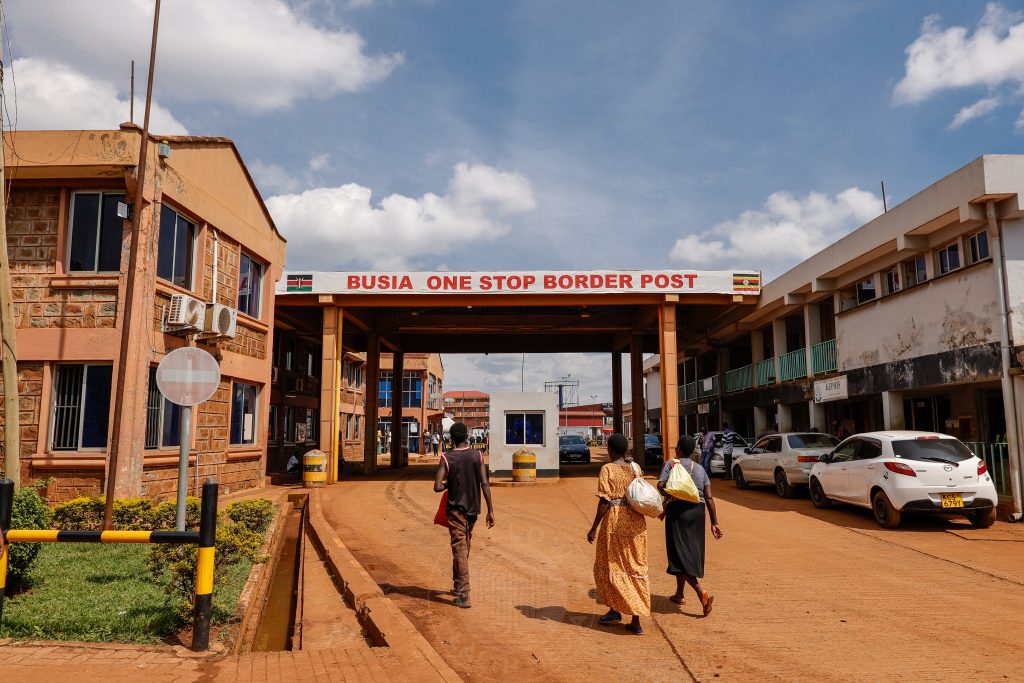
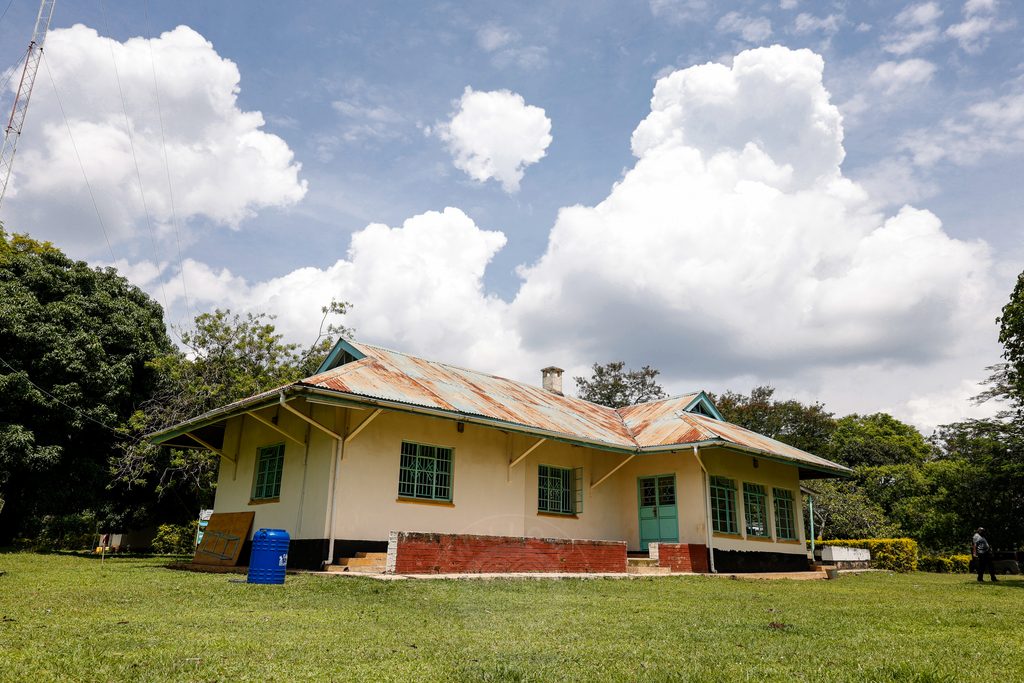
Temporary isolation centres at Malaba Health Centre, Busia border and Kocholia, near Uganda, will open “in the next 10 to 14 days”, Duale said. Alupe sub-district hospital in Busia County is being renovated as a first point of care.
At Jomo Kenyatta International Airport, Gate 16 receives all arrivals from ten countries that Duale called epicentres.
“If you falsify that document, in line with the Kenya Public Health Act, you’re committing a crime,” he told travellers filling in declaration forms. Public Health Principal Secretary Mary Muthoni, whose Ministry gave Port Health teams tablets and hand sanitisers, called the airport “the main gateway to our country” on X.
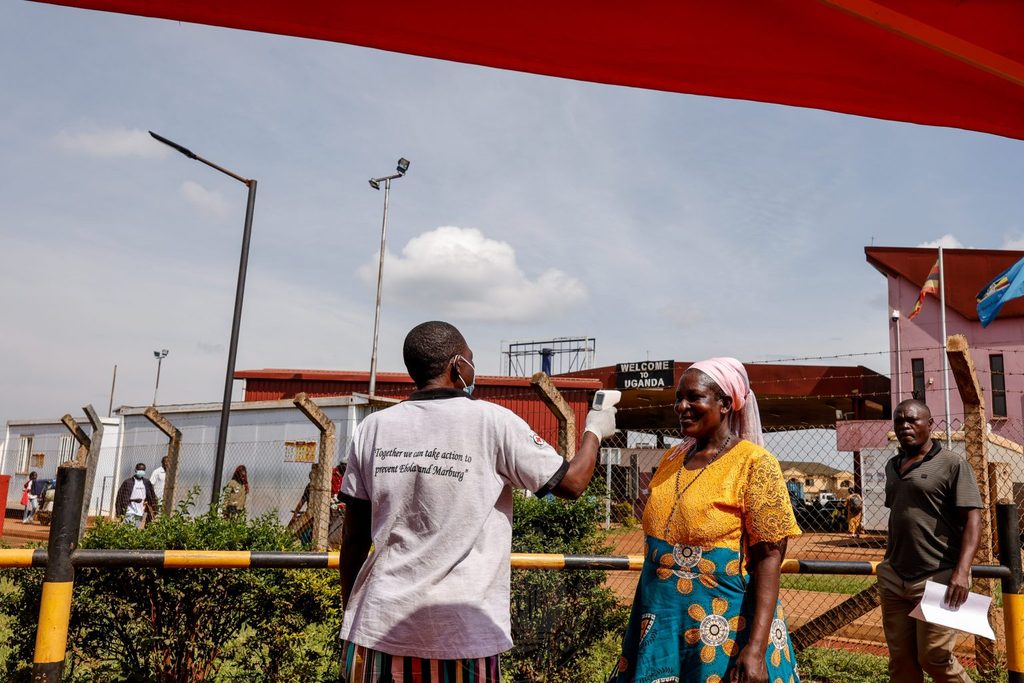
Duale urged Kenyans to avoid the DRC “unless it is very necessary”, but added, “We are not closing borders.” Crossings in Busia, Bungoma and Trans Nzoia will screen everyone while keeping “free flow of goods and services”. Briefing ambassadors, he cautioned against disproportionate travel and trade restrictions. “Kenya remains open. Kenya remains vigilant.”
Muthoni, who chaired the National Ebola Virus Disease Taskforce at Afya House, echoed him. “Let us remain calm, stay informed and continue following guidance from the Ministry of Health,” she said. Calls have swamped the toll-free 719 line, which the Digital Health Agency is upgrading with Safaricom. Officials’ decision to go without masks at the briefing was “deliberate”, Duale said, leaving Director-General for Health Dr Patrick Amoth to explain how Ebola differs from Covid-19.
Some Nairobi Hospital health workers are protesting their mandatory quarantine
The Ministry has not said how many contacts are relatives, health workers or fellow travellers, nor where the untraced ones live. Any contact who cannot be reached could fall ill unobserved, as in the DRC.
Duale named the Ministry’s own shortfalls, seeking partner help with field operations, logistics, surge capacity, community engagement, patient referral and dedicated transport. Support includes about 1,000 tests and 1,000 protective equipment sets from WHO, 6,000 sets from India, and help from the US Government, IGAD and Africa CDC.
Africa CDC is sending a multidisciplinary team, and Director General Dr Jean Kaseya, who praised Kenya’s rapid identification, isolation and testing, plans to visit within days, and says Ugandan authorities are moving fast on contacts there.
Africa CDC has urged member states to strengthen surveillance and cross-border information sharing, keep laboratories ready, reinforce rapid response teams and maintain strict infection prevention.
To interrupt the outbreak, Kaseya said, “we must know where every contact is.” With about US$2.9 billion (Ksh376 billion) mobilised, he added, “Every dollar mobilised for this outbreak must be traceable to the results it produces on the ground.”
Gavi, the Vaccine Alliance, has welcomed a WHO advisory group’s call to prioritise Ervebo, approved for the Zaire species, for a Phase 3 trial, drawing on the 500,000-dose stockpile Gavi funds, and is investing US$40 million (about Ksh5.2 billion) in Bundibugyo-specific candidates.
Duale’s formula is to “detect early, isolate safely, test rapidly, trace comprehensively and respond decisively”. If 21 days pass without a new case, Kenya will have handled its first Ebola case well. At 42 days, it could declare itself clear.
We believe in the free flow of information
Republish our articles for free, online or in print, under Creative Commons licence.