Kenya is one of the world’s top performers in a landmark vaccine campaign, despite 300,000 children slipping through the cracks annually.
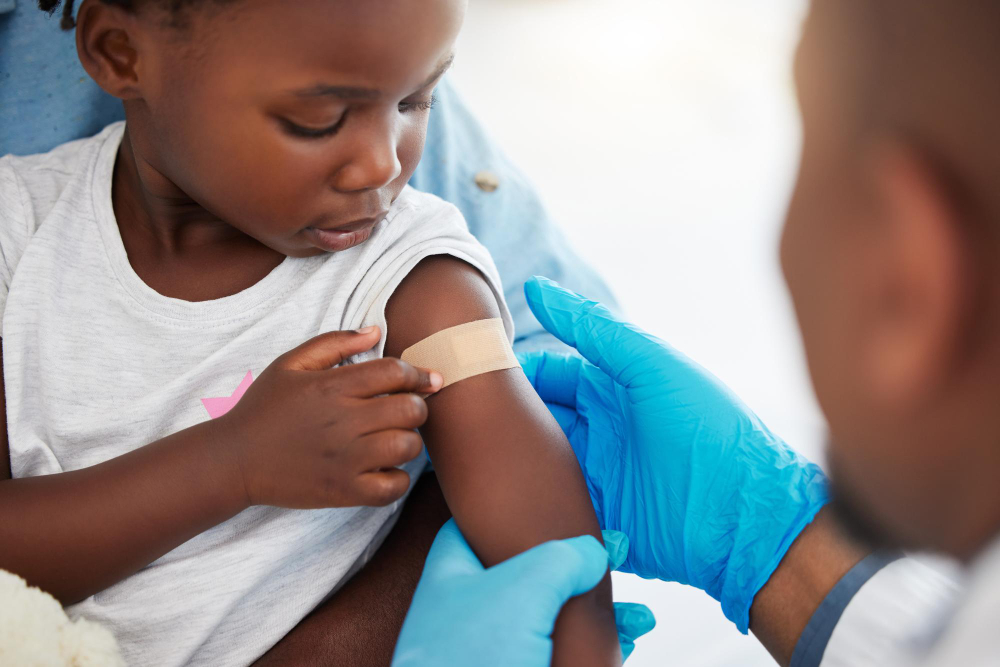
A landmark global campaign has successfully vaccinated millions of children who missed life-saving vaccines due to disruptions caused by the Covid-19 pandemic, with Kenya among the top-performing countries.
The Big Catch-Up (BCU) campaign, backed by the world’s leading health agencies, reached children across 36 countries in Africa and Asia over three years, delivering vaccines against some of the most dangerous childhood diseases. But health officials warn that despite the progress, millions of infants continue to miss critical vaccines every year through routine immunisation programmes.
Launched during World Immunisation Week in April 2023, the BCU targeted children under five years who had missed all or some important vaccines, with a focus on “zero-dose children” – those who have never received any vaccine in their lives.
Gavi, The Vaccine Alliance, the World Health Organisation (WHO) and UNICEF said the campaign, which ended in March 2026, had achieved remarkable milestones. “Vaccinations save lives. This initiative shows what is possible when countries have the resources, tools, and political will to reach children with life-saving vaccines,” UNICEF Executive Director Catherine Russell said.
At least 18.3 million children were reached across the 36 participating countries, which account for 60 per cent of all zero-dose children globally. The BCU was also the first-ever international effort to reach more than 12.3 million zero-dose children in a single campaign. Of those reached, 15 million had never received a measles vaccine and were inoculated for the first time. The campaign also delivered 23 million doses of Inactivated Polio Vaccine (IPV) to children who were either unvaccinated or under-vaccinated.
Kenya reached over 60 per cent of all zero-dose children below five who had missed their first DTP1 vaccine
“This is the largest ever international effort to reach missed children with life-saving vaccines. The BCU shows what is possible when government, partners and communities work together to protect the most vulnerable,” said Dr Sania Nishtar, Chief Executive Officer of Gavi.
WHO Director-General Dr Tedros Ghebreyesus described the campaign’s success as a testament to health workers and national immunisation programmes, saying they are “now better equipped to find and vaccinate children missed by routine services.”
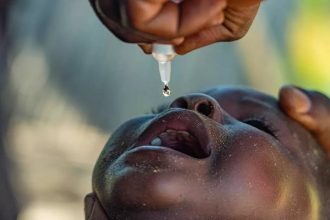
Kenya was among 12 high-performing countries that reported reaching over 60 per cent of all zero-dose children below five years who had missed their first Diphtheria, Tetanus and Pertussis (DTP1) vaccine. Somalia, Ethiopia, Tanzania and Zambia were also in this group.
While UNICEF cited Kenya as a high performer, it acknowledged gaps that need to be filled for the country to align with the Immunisation Agenda 2030, a global strategy endorsed by the WHO Health Assembly that aims to reduce zero-dose children by 50 per cent and achieve 90 per cent coverage for essential vaccines by 2030.
Kenya’s national immunisation coverage stands at 80 per cent, according to the Kenya Demographic and Health Survey (KDHS 2022) and the Ministry of Health. That figure means approximately 300,000 infants miss critical vaccines each year, against a government target of vaccinating at least 1.5 million children annually. KDHS data shows that 97 per cent of Kenyan children aged 12 to 23 months received the BCG vaccine, the first dose of the pentavalent vaccine and the first dose of oral polio vaccine.
Healthcare workers trained to identify and vaccinate missed children as part of routine care
Beyond the catch-up campaign, BCU accelerated the formation of lasting systems to identify, screen, vaccinate and monitor coverage rates among older children aged one to five years, including policy updates on age eligibility. Healthcare workers were also trained to identify and vaccinate missed children as part of routine care – gains that Kenya and other high performers are expected to build on.
Despite the milestones, the three organisations warned that many infants continue to miss life-saving vaccines through routine immunisation schedules.
“We have caught up with some of the children who missed routine vaccinations during the pandemic, but many more remain out of reach,” Russell said.
Globally, 14.3 million infants under the age of one failed to receive a single vaccine through routine immunisation programmes in 2024. Most missed out because they live in fragile, conflict-affected or underserved communities, with no catch-up programmes available as they grow older. These chronic gaps have contributed to surging disease outbreaks. Measles cases reached 11 million in 2024, roughly triple the number recorded in 2021.
Ethiopia’s results illustrate the scale of what was achieved and what remains to be done. The country covered 2.5 million zero-dose children and delivered nearly five million doses of IPV and over four million doses of measles vaccines. Nigeria, outside the high-performing group, reached two million previously zero-dose children with DTP1 vaccines and administered 3.4 million doses of IPV.
Kenya’s challenge is primarily financial and access while grappling with declining confidence in vaccines
The WHO, Gavi and UNICEF called for sustained investment to reach the hardest communities and cautioned that large-scale catch-up efforts like BCU are expensive and should serve only as gap-filling measures to complement, not replace, routine immunisation. The agencies also called on civil society and communities to support catch-up efforts.
Kenya’s challenge is primarily financial and access-related. However, an emerging concern across sub-Saharan Africa and beyond is declining confidence in vaccines in communities that had previously embraced them.
Reduced vaccine confidence, cultural and religious beliefs, and gaps in routine programmes have all been cited as contributing factors to the measles surge. The experience of the United States offers a cautionary tale.
According to the Centres for Disease Control and Prevention (CDC), the country achieved measles elimination status in 2000 but reversed those gains by recording outbreaks and two fatalities in 2025, the first deaths recorded since 2015. The CDC linked the increased outbreaks to declining vaccine coverage among kindergarten-age children. Coverage for Measles, Mumps and Rubella (MMR) vaccines fell from 93 per cent in 2022 to 92.7 per cent in 2023.
The Immunisation Agenda 2030 targets are a reminder that for Kenya and its peers, the BCU’s success is not a finish line but a foundation.
We believe in the free flow of information
Republish our articles for free, online or in print, under Creative Commons licence.