

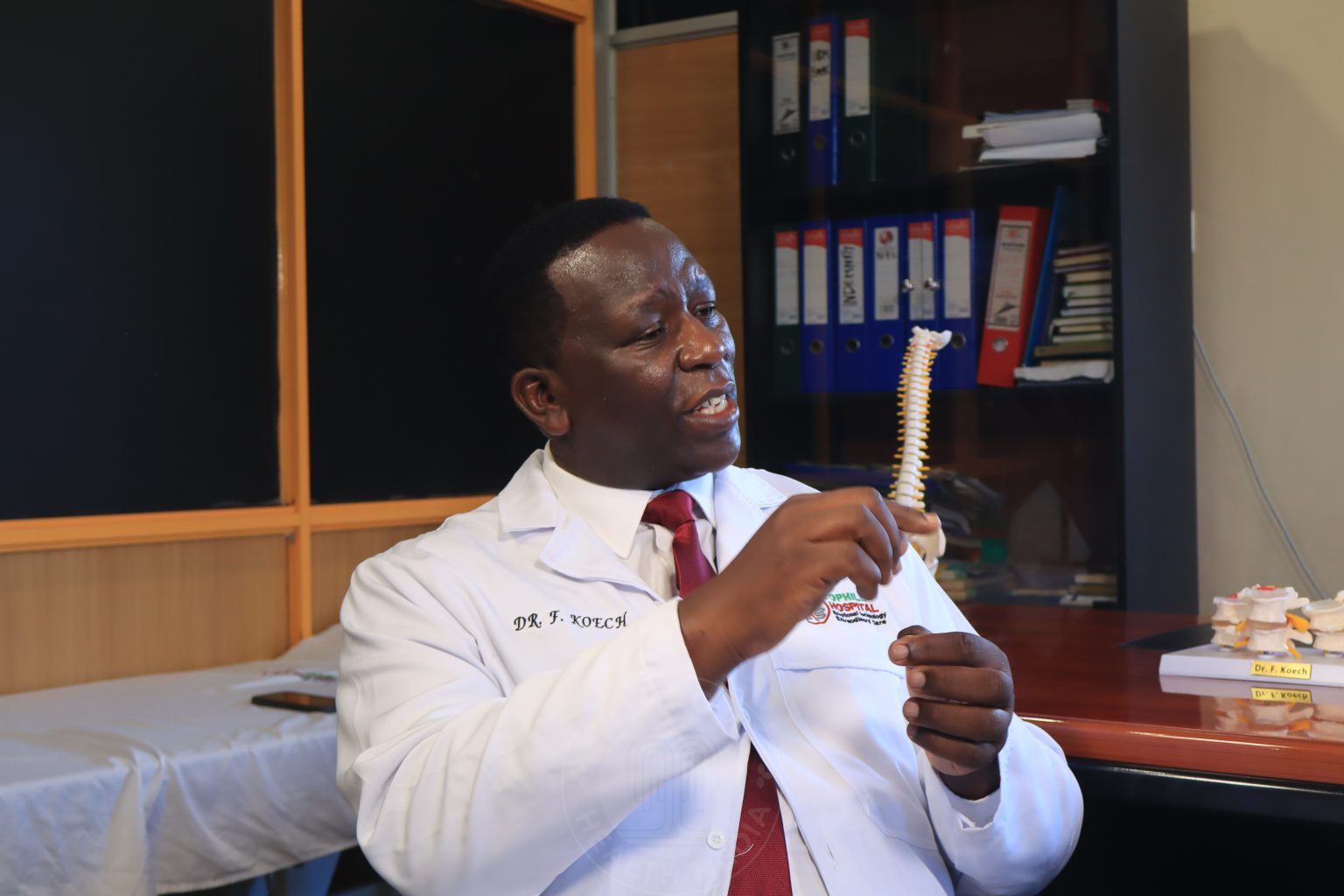
As Dr Koech recovered from tetanus caught from a thorn prick while tending his father’s goats, he learned his doctor was a neurosurgeon. That was enough. His path was chosen.
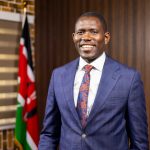
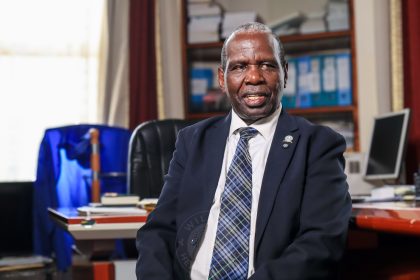
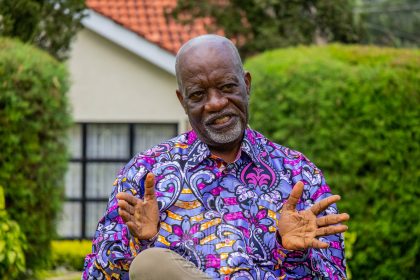
Dr Florentius Koech is a name that commands attention in any room where the brain, spine and nervous system are subjects of discussion. As one of Kenya’s most respected neurosurgeons, he has spent decades restoring the ability to walk, move and function to patients who arrived at his door having lost hope. He understands that experience intimately. He was once that patient himself.
At the age of 10, Dr Koech was admitted to a cottage hospital alongside three other children. The three died. He nearly joined them. “I was left there, nearly resigning to fate that I would also die,” he recalled. What saved him was an American doctor who arrived with a single imported prescription that turned his condition around.
As Dr Koech recovered from tetanus, contracted from a thorn prick while tending his father’s goats, he asked about the doctor who had treated him using imported drugs. The doctor was a neurosurgeon. That was enough. “I was told he was a neurosurgeon, and instantly I vowed I would do my best to become a neurosurgeon and save lives like he had saved mine,” he said.
He read widely in pursuit of that dream and found further inspiration in the memoirs of celebrated American neurosurgeon Dr Ben Carson, Gifted Hands, a book that reinforced his belief that the path was possible.
After completing his six-year Bachelor of Medicine and Bachelor of Surgery at the University of Nairobi, Dr Koech encountered his first significant obstacle. Neurosurgery was not yet a standalone course in Kenya, and the pathway to specialisation was far from straightforward. “I had to work as a registrar at the department of neurosurgery for four years as I sought fellowships in external countries,” he said.
Dr Ben Carson whom he had only known through Gifted Hands came to Melbourne to deliver lectures
The wait tested his patience but did not break his resolve. Not even the offer of a well-paying job could pull him off course. His persistence eventually paid off when he was awarded a three-and-a-half-year fellowship to study neurosurgery at Alfred Hospital in Melbourne, Australia.
“The exposure was fantastic owing to skills and equipment,” he said. The experience also delivered an unexpected bonus. Dr Ben Carson, whom Dr Koech had only ever known through the pages of Gifted Hands, came to Melbourne to deliver lectures. “It even got better when I met Carson, whom I had only read in his books,” he said. His performance in Australia drew significant attention. Lucrative job offers followed, including offers of Australian citizenship.
In 2007, Dr Koech made a decision that surprised many. He turned down the opportunities in Australia and returned to Kenya. His reasoning was straightforward. “In Melbourne, there were 42 neurosurgeons, while in the entire country of Kenya, there were only seven. I chose to be the small light in a big room rather than be among many big lights in a small room,” he said.
He was appointed to Kenyatta National Hospital (KNH) but was quickly seconded to establish a neurosurgery department at Moi Teaching and Referral Hospital in Eldoret. The conditions he met were stark. There was little equipment and not enough personnel. “I used to work 24/7, and this pointed to the urgent need to train more neurosurgeons,” he said. Gradually, equipment was acquired, and others came through donations.
His arrival at MTRH coincided with the post-election violence of 2007 and 2008, which produced a wave of severe and unusual injuries. “We conducted countless surgeries to remove arrows from the heads and bellies of violence casualties,” he recalled. With many doctors having travelled upcountry for the December holidays, the burden fell heavily on those who remained. “We literally stayed in the operating theatre. We ate and slept there.”
It is not about finishing the operation and moving on. Sometimes it takes prayers to prepare
That period sharpened his understanding of what neurosurgery truly demands. “A successful brain or spinal surgery is delicate; it takes a lot of skills, patience, diligence and equipment,” he said. “Knowing that a small spot in the brain could cause paralysis or blindness reminds us that it’s not about finishing the operation and moving on. Sometimes it takes prayers to prepare.”
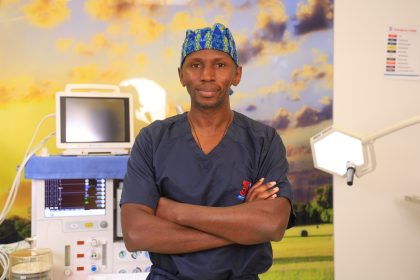
Brain tumours, spine tumours and trauma from accidents, particularly motorbike incidents, form the bulk of Dr Koech’s caseload. The reward, he says, never gets old. “Seeing paralysed patients who can’t walk to the toilet, pick a pen, have lost their sight or can’t be in control of their urine to walk back home healed after surgeries is my greatest professional satisfaction,” he said.
Among the cases he holds closest is that of a patient with arteriovenous malformation, a condition involving a tangle of abnormal blood vessels that disrupts normal blood flow and can cause seizures, severe headaches and neurological deficits. The patient had made five trips to India for treatment, each costing approximately Ksh5 million, without success. She eventually fell into a coma in Nairobi and was evacuated to Eldoret. “I reassessed her and we conducted an operation for over eight hours, and she came out healed,” Dr Koech recalled.
He has also performed a 21-hour brain surgery, the longest of his career, which he likened to walking the roughly 800 kilometres from Eldoret to Mombasa.
These cases form the basis of Dr Koech’s broader argument: that Kenya has the capacity to treat many conditions locally that are routinely referred abroad. “We need more policies and marketing to inform Kenyans what we offer locally. Foreign hospitals attract more Kenyan patients due to their visibility strategies. We need to only refer the complex cases which we don’t have the equipment to treat,” he said.
Travel, accommodation, recovery and caregiver costs often make foreign treatment more expensive
He also challenged the assumption that treatment abroad is cheaper, noting that travel, accommodation, recovery and caregiver costs often make foreign treatment more expensive overall. He has called on the government to zero-rate specialist equipment so that local facilities can treat more patients at home, pointing to Egypt as a model worth learning from. “Buying a Sh40 million operating microscope is not easy for individuals, but government support can ensure public facilities have them,” he said.
He also pointed to devolution as a contributing factor to healthcare gaps. “Most county governments lack personnel and claim they don’t have money for training. Focus on training specialists shifted after the health function was devolved,” he observed.
Dr Koech left MTRH and founded Top Hill Spine and Brain Centre in Eldoret in 2017. The facility now receives up to 250 patient visits daily, with demand sometimes reaching 60 patients wanting to see Dr Koech alone in a single day. Despite running a private facility, he continues to offer free services to patients who cannot afford treatment and often accepts tokens such as chicken or honey in lieu of payment.
The facility runs partly on solar power, cutting electricity bills from Ksh1.5 million to between Ksh400,000 and Ksh500,000 per month. Its oxygen plant, also solar-powered, has reduced costs from Ksh800,000 to Ksh100,000. His farm in Kapseret, which is fully solar-powered, supplies the hospital with eggs, meat, vegetables, chicken and fruits.
His name, Florentius came from his father’s Italian friend and ‘I’ve learnt it means flourishing’
On the role of technology, Dr Koech is clear-eyed but firm. “Shortcuts cannot replace procedures. MRI scans and laboratory results don’t talk to patients. Doctors talking to patients and getting their history is a 70 per cent diagnosis,” he said. “We must treat patients, not just diseases.”
When the weight of loss becomes heavy, he retreats to the farm. “It’s difficult when patients die. During such times, I retreat to the farm to debrief. Family is also an important support system,” he said.
As for his name, Florentius came from his father’s Italian friend. “I’ve learnt lately that it means flourishing and is associated with light, which is good,” said Dr Koech, who partly owes his success to Prof Nimrod Mwang’ombe, former academic and clinical head of neurosurgery at the University of Nairobi, for urging him to apply for fellowships and other career growth.