

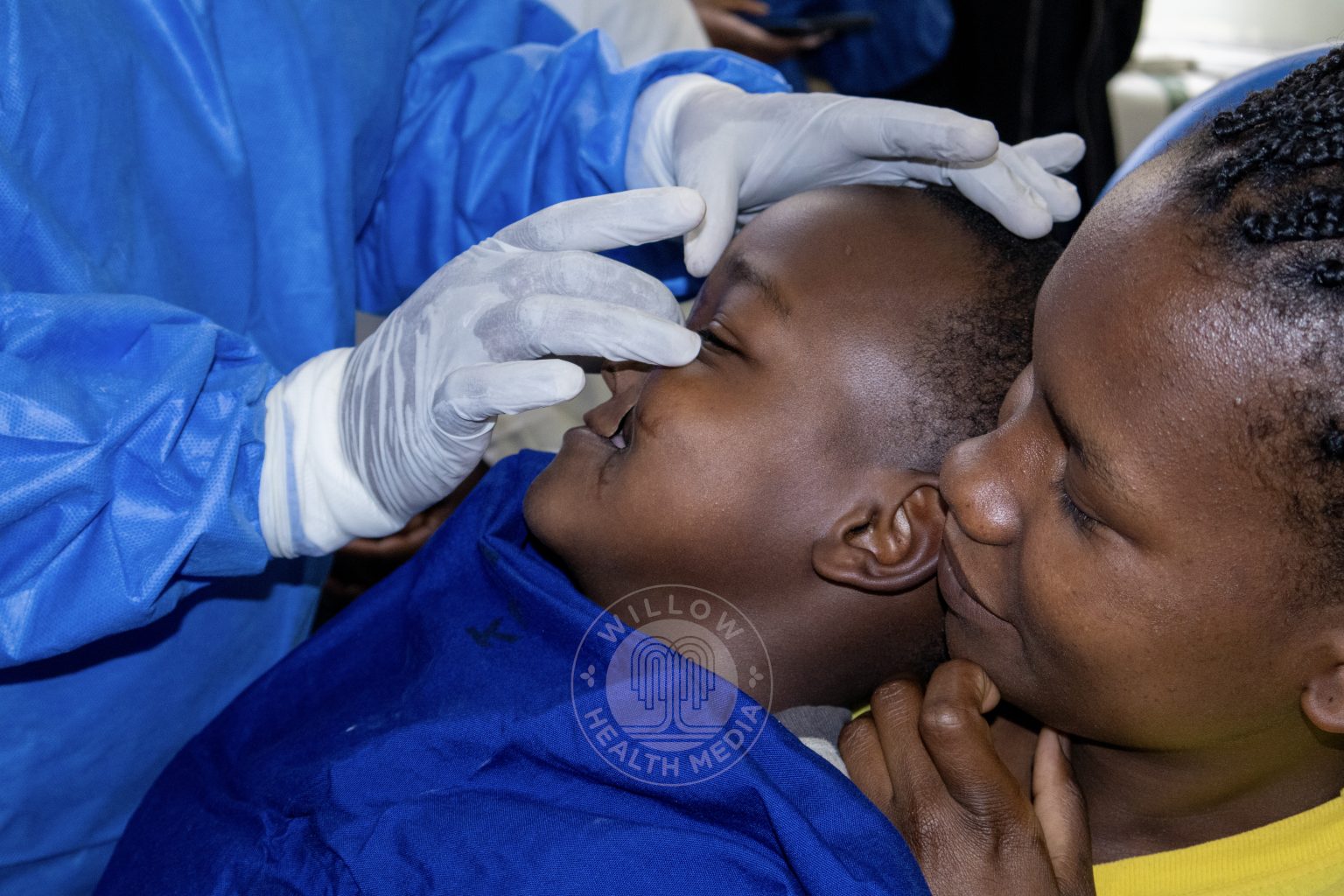
The seven-year-old was shot by cattle rustlers, presenting surgeons with a medical dilemma: How do you reconstruct a child’s face while the skull, jaw and facial structure were still expanding, maturing?
The air at home was pregnant with silent grief when Bessy Kinya returned home from the market in Isiolo on December 23, 2023.
Her seven-year-old son, Ian Baraka, was missing. So was his grandmother. And the family members who remained refused to meet her eyes. “They wouldn’t tell me what happened,” Bessy recalls, her voice steady but weighted by the memory. “I stayed quiet.” It is a phrase she repeats often, like a mantra learned through trauma. I stayed quiet.
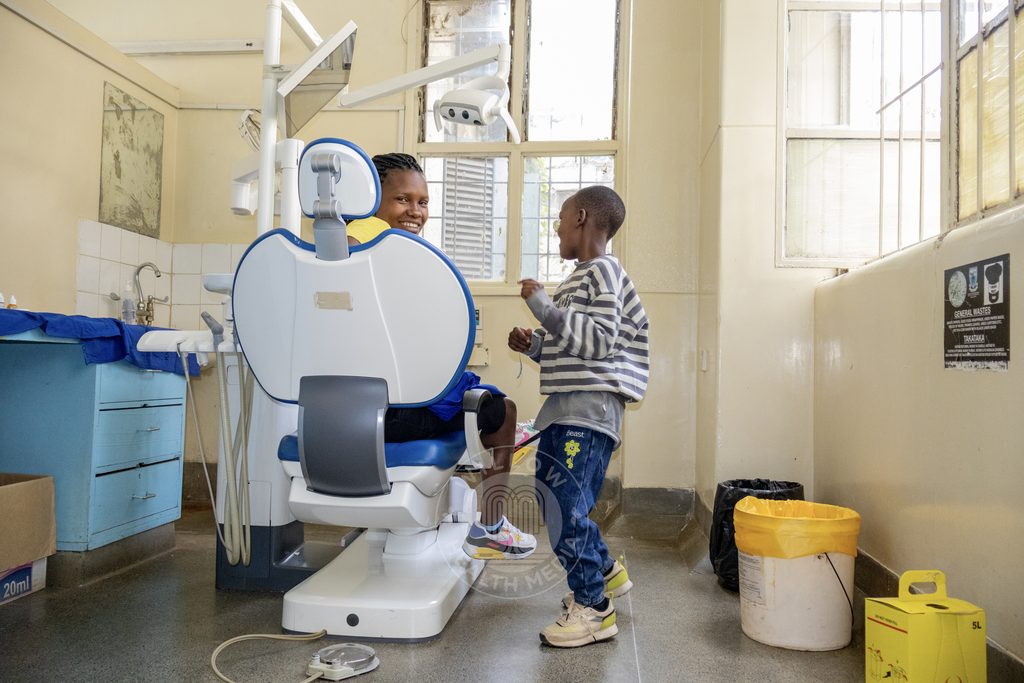
The truth finally arrived in fragments. Baraka had been shot in the face. Bullets had torn through the grandmother’s stomach and out her back.
Cattle rustlers had come, and little Baraka was caught in the gunfire while playing outside.
“God forgive them. I forgive them.” Bessy said, resigning to fate.
Grandma and grandchild were rushed to a hospital in Maua town, then transferred to Meru General Hospital at 11pm.
A single bullet had taken half of Baraka’s face. He was in the ICU for two weeks, his small body fighting to survive.
Significant injuries to the lower and upper jaws
Surgeons at Meru General Hospital confronted a case that tested the limits of their training.
Dr Andrew Okiriamu, an oral and maxillofacial surgeon, says Baraka had suffered “Significant injuries to the lower jaw and the upper jaw and significant open wounds.”
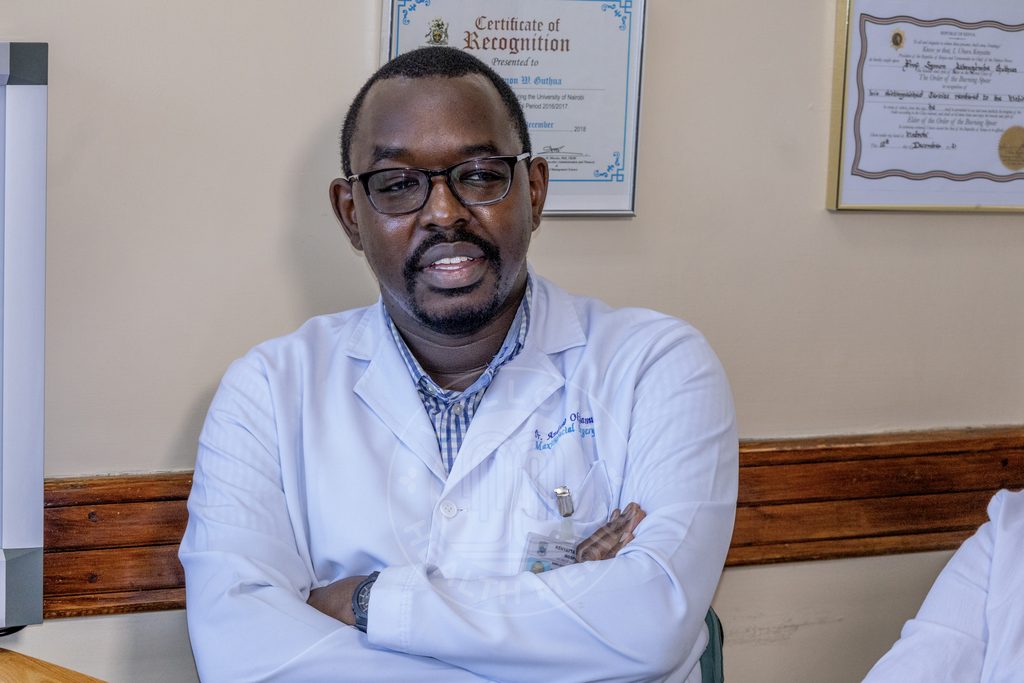
When you look at Baraka now, Dr Okiriamu notes, “you may not appreciate where he came from.” The surgeons performed emergency soft tissue closure, buying time, buying life. For two weeks, Baraka’s fate remained uncertain.
In January 2024, he was transferred to Kenyatta National Hospital (KNH), a breathing tube running from his mouth to his chest. The priority was stability. Then came the second surgery: wiring his lower jaw, reconstructing soft tissue, managing infections that threatened to undo everything.
“He did make a remarkable recovery,” Dr Okiriamu says, though “remarkable” feels insufficient for a child who lost his face and somehow kept living.
But while surgeons were rebuilding Baraka’s face, Bessy’s life was collapsing: Her husband walked away, arguing, “He didn’t want to be involved in hospital matters,” Bessy told Willow Health Media a day before her son’s reconstructive surgery.
“He didn’t want anything to do with it.” She moved back to her mother’s home, without a husband, no income, a child who needed everything and a community that offered mostly pity.
Meanwhile, Baraka couldn’t eat on his own, as every meal went through a tube
“We lived with shame, relying on God,” she says. She farmed. She ground flour and sold porridge by the roadside.
Even now, Baraka’s father keeps his distance and “Only calls to ask how we are. That is all. He doesn’t help with anything.”
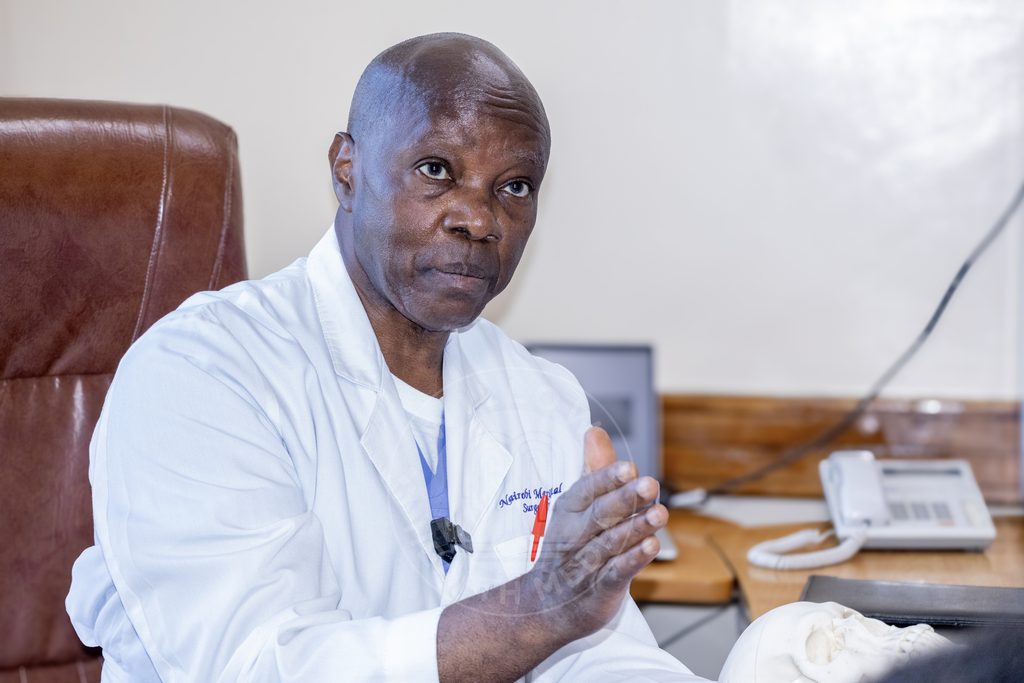
Meanwhile, Baraka couldn’t eat on his own as every meal went through a tube. He was later transferred to Kenyatta National Hospital (KNH), where three specialists- Prof Symon W. Guthua, a leading Oral and Maxillofacial Surgeon; Dr Okiriamu; and Dr Margaret Njeri Mwasha, a Prosthodontist assembled around a problem that had never been solved before: How do you rebuild a child’s face when that child still needs to grow?
According to Prof Guthua, adults can receive reconstructive surgery with fixed implants because their facial bones have stopped developing.
But Baraka was seven. His skull, his jaw, his entire facial structure were still expanding, still maturing. Any reconstruction that didn’t account for growth would create new deformities as Baraka aged, leaving him with a face that didn’t fit, bones that couldn’t develop properly.
“The problem with children is you cannot just repair them,” Prof Guthua explains. “Because they are growing. And you must give provision for the growth.”
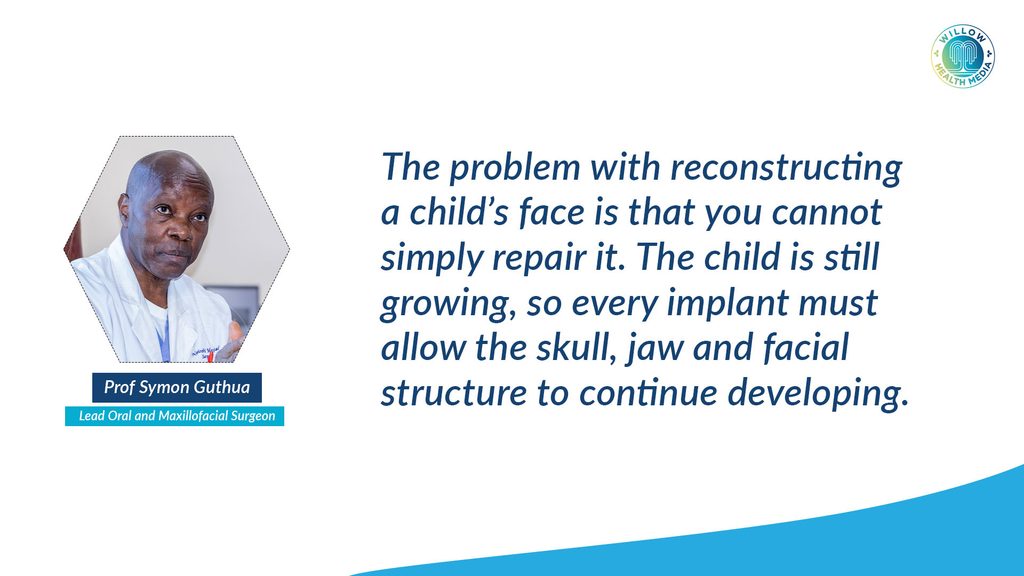
Surgeons couldn’t rebuild what was lost; they had to design something that would allow what remained to continue growing
The human skull grows through structures called sutures, natural expansion joints that allow bones to develop. The nose, the cheekbones, the jaw all depend on these sutures to reach adult size and shape. In Baraka’s case, many of these structures had been destroyed. But the surgeons couldn’t simply rebuild what was lost. They had to design something that would allow what remained to continue growing.
“We designed a plate, something that allows this to grow,” Prof Guthua says. “There is a midline split so that it can grow either way, based on the science we know about the skeleton.”
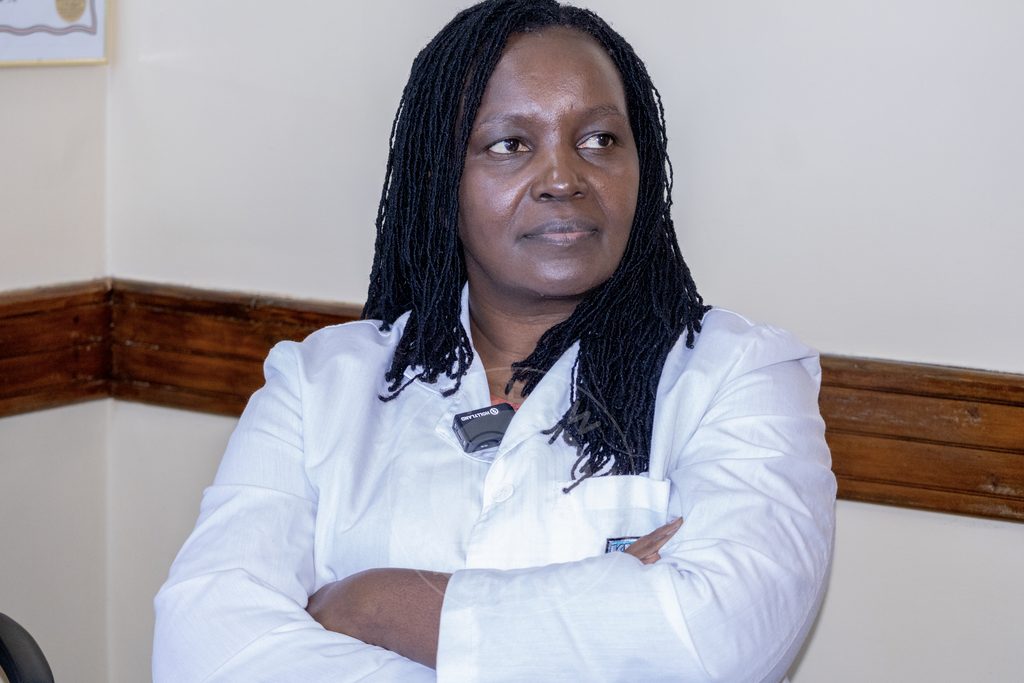
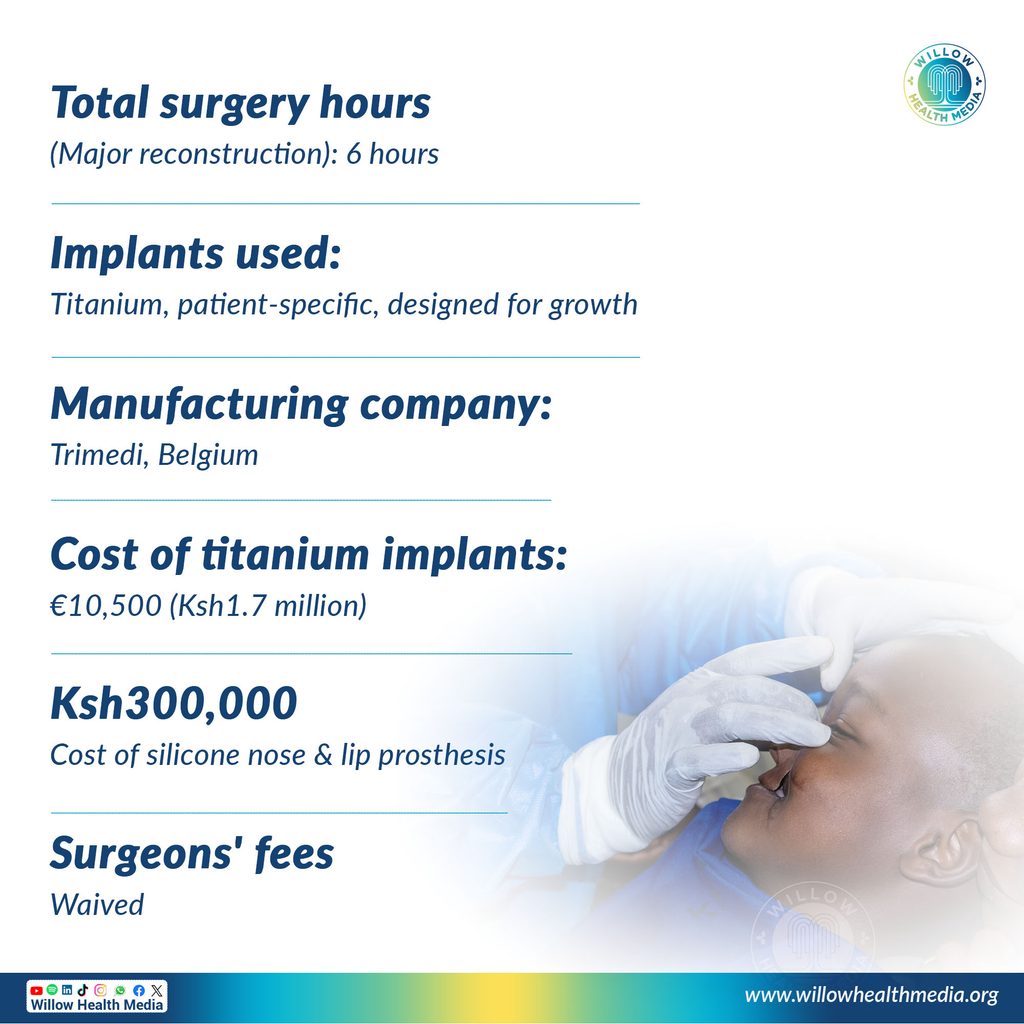
Dr Mwasha, a prosthodontist, took the lead on the most revolutionary aspect of Baraka’s treatment. Working with Trimedi, a Belgian company, she designed patient-specific implants made from a titanium alloy, custom-fabricated to fit Baraka’s unique anatomy and, crucially, to accommodate the forces his face would endure for the next 20 years.
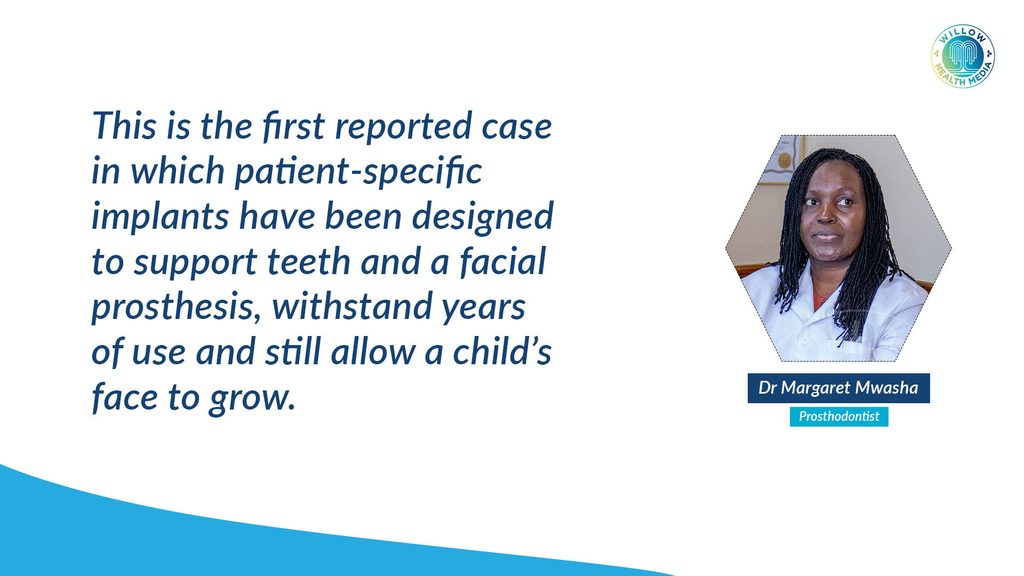
“This is really a first case in the world,” Dr Mwasha explains, “where we are using patient-specific implants that have been designed looking at the forces, to ensure that these implants will be able to be in the mouth for the next 20 years if need be.”
Every aspect was calculated: the forces from chewing, from clenching, from the nasal prosthesis that would eventually be attached. The thickness of every millimetre of titanium was determined not by guesswork but by simulation. The team used finite element analysis, a computational technique that models how materials respond to stress, to ensure the implants could withstand years of use without failing.
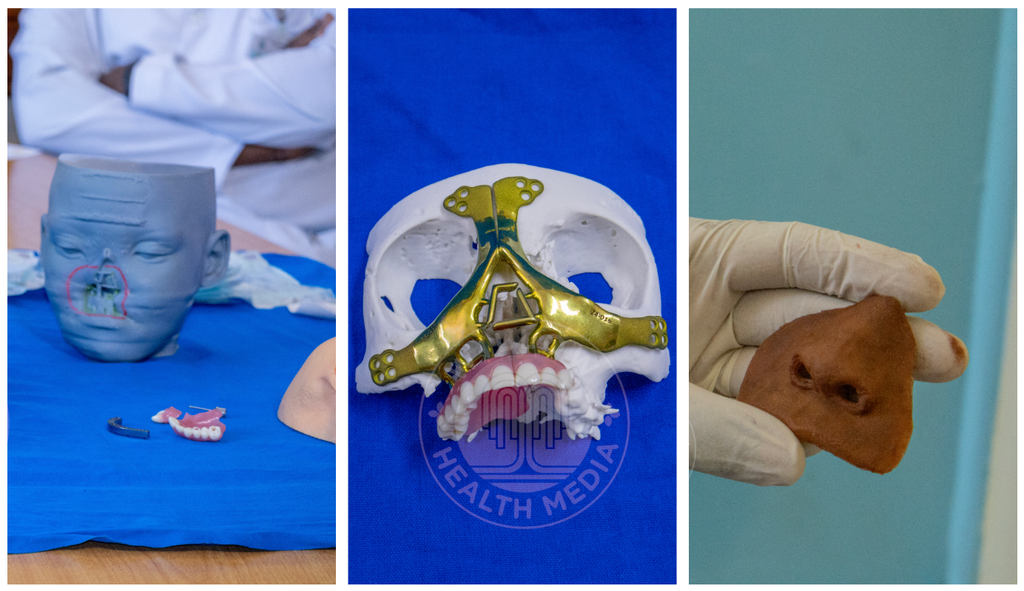
The design included an attachment to support a removable silicone nose and upper lip
The implants were made in two pieces to allow for growth in the transverse direction, meaning Baraka’s face could widen naturally as he matured. The design included attachment points for teeth and bars that would support a removable silicone nose and upper lip. Everything had to work together, a system of parts that would function as a whole while adapting to a body that was still changing.
“There’s no other described case where you have patient-specific implants that accommodate teeth, that accommodate this nose, and allow for growth to happen,” Dr Mwasha says.
The innovation came at a high cost. The patient-specific implants, manufactured in Belgium, cost €10,500 (Ksh1.7 million) alone. The silicone material for the nasal and lip prosthesis cost about Ksh300,000, with additional costs needed as Baraka grows and the prosthetics require replacement. The surgeons did not charge for their services.
“We must thank Prof Guthua for coming all the way from the University of Nairobi Dental School and being the lead surgeon,” Dr Mwasha acknowledges, though her gratitude extends to the entire team who donated their skills to give one boy his future back.
“It means that we can lay a foundation of how to do these cases now,” Prof Guthua explains. “We will have a program of how it can be done.” The photographs, the documentation, the techniques developed for Ian would serve as a template for future patients facing similar trauma.
To create Baraka’s new upper lip, surgeons harvested skin from a body part untouched by the bullet
On the day of surgery, more than ten specialists filled the room, including maxillofacial trainees watching history unfold. The surgery would take six hours. Every incision, every graft, every titanium plate secured into bone was a step toward giving Ian back the face he lost and one he could grow into.
To create Baraka’s new upper lip, surgeons harvested skin from his thigh, a part of his body untouched by the bullet. They shaped it, grafted it, integrated it into the reconstruction. The titanium plates were fitted precisely into place, anchored to bone, designed to move with him as he grew.
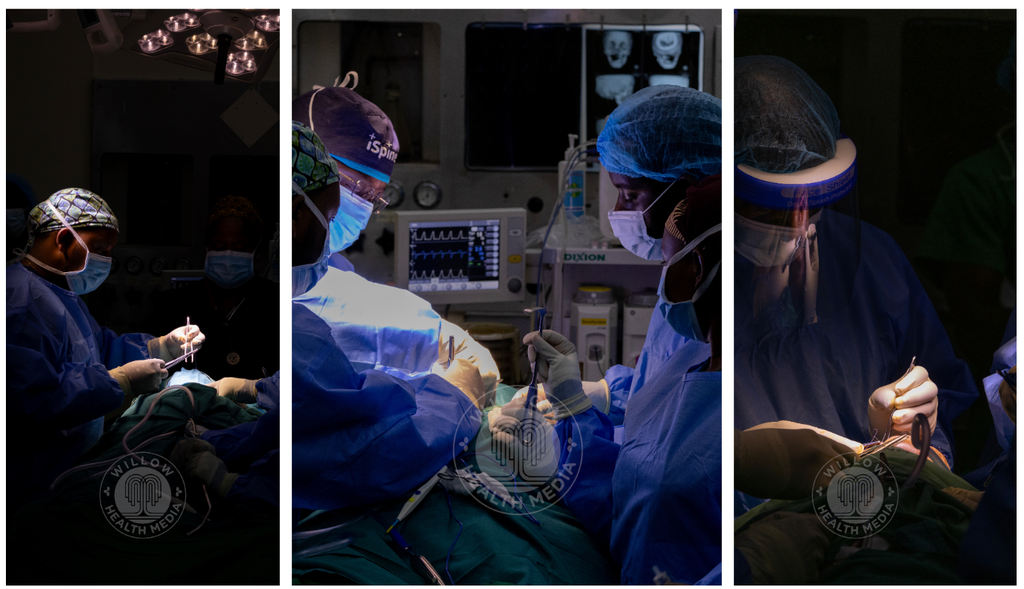
Through it all, Baraka’s vitals held steady. His small body keeping up with the science working to save him.
When the last stitch was placed and Baraka wheeled to recovery, the surgical team had rebuilt a child’s face in a way that would allow him to live, to grow, to become who he was meant to be.
The first time Baraka was unveiled after surgery was during a press briefing at KNH, playing with a toy car. Baraka’s mother was beside herself with joy.
Baraka can eat without fear of aspiration. He has teeth; his upper jaw is reconstructed; he can speak
Prof Guthua recounts the transformation: “He had no upper lip, no nose; eating was a problem, speech was an issue, and Baraka could not even face the school that he had to go to. Now, Baraka can eat without fear of aspiration. He has teeth. His upper jaw is reconstructed. He can speak.”
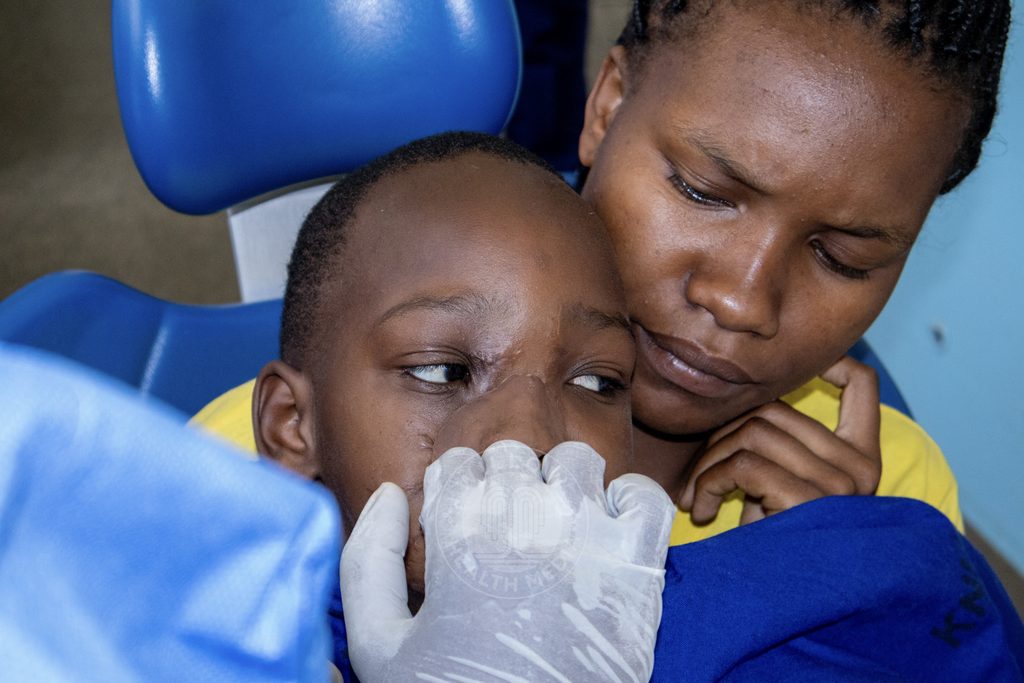
Dr Mwasha adds detail to the victory: “His tongue has a place where it stops and is able to articulate his words very well.” The silicone prosthesis that forms Baraka’s nose and lip can be removed for cleaning, attached securely through the bar system embedded in his titanium implants. It is practical, functional and innovative.
And then there’s the most important detail, delivered with obvious delight: Baraka couldn’t eat solid foods for over a year but can now chew chicken. Just what the hours of surgery, months of planning and medical innovation were all for.
But even as Baraka heals, fear remains, and the family had to move to a safer place, considering Baraka refused to return to his father’s home, fearing, “If he goes back, they will kill him. But… I forgive them. I do… God forgive them. I forgive them…”
Read Also: 18-Hour Miracle: Inside Kenya’s historic surgery that built a new face
After living for 17 years with tumours that distorted her face and affected her breathing, eating and speech, Lucy Gathoni underwent an 18-and-a-half-hour operation to remove them and rebuild both jaws. More than 20 specialists donated their expertise for the historic surgery, using custom-made titanium implants to give the 29-year-old a new face and a second chance at life.
We believe in the free flow of information
Republish our articles for free, online or in print, under Creative Commons licence.