


From a Nigerian ICU consulting São Paulo to a new laboratory in Moshi, speakers at the HPA Global Forum showed how structured partnerships and telemedicine can narrow specialist gaps, cut costly medical travel and keep care local.
When Cedarcrest Hospital in Nigeria admitted a 74-year-old woman to its intensive care unit (ICU) in October 2026, her clinicians had few good options.
She had a history of hypertension and diabetes. “The 74-year-old patient hadn’t been properly looked after and had developed diabetic gangrene with infection in one foot,” said Dr Felix Ogedegbe, a consultant orthopaedic surgeon and Chief Executive Officer of Cedarcrest Hospitals. “To save such patients, you need to amputate, and this means they remain sick and in the ICU for long.”
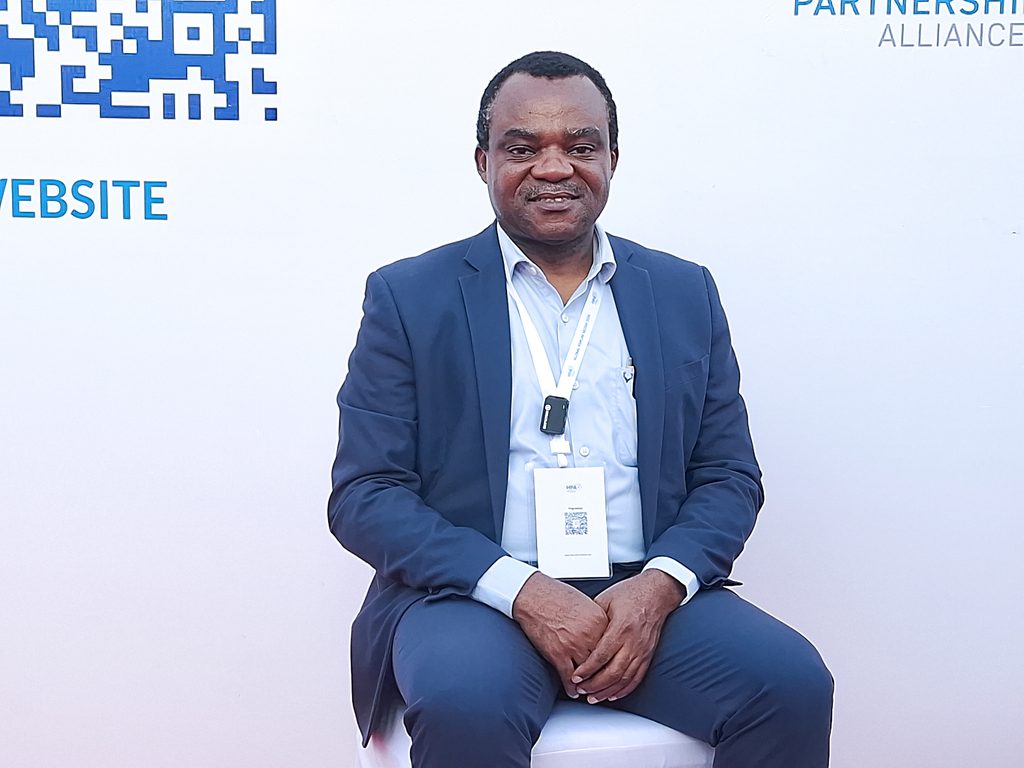
The team amputated. It was not the intervention clinicians would have preferred, Ogedegbe said, but it had to be done to save her life. Yet he and his colleagues believed they could do more to speed her recovery, so they turned to a team of clinicians in Brazil.
Through a telemedicine partnership under the Pioneer Network of Telemedicine and Artificial Intelligence (PINTAI), a flagship program by the Hospital Partnerships Alliance (HPA), Cedarcrest consulted specialists at Hospital das Clínicas, part of the University of São Paulo’s Medical School.
“We discussed with a team from São Paulo, and though we were aligned in some areas of care, we adopted their unique protocols and changed our practice a bit based on their advice,” Ogedegbe said on November 9 at the HPA Global Forum in Moshi, Tanzania. “After optimising antibiotic therapy, the patient left ICU quickly and transitioned to rehabilitative care.”
Years of hospital partnerships had shown that doctors not only trained one another but also consulted each other on diagnosis and treatment plans
The benefits did not end there. The expertise gained has helped Cedarcrest offer better care to others with similar conditions, improving outcomes and growing its client base, he said.
Cases like this sit at the heart of HPA, a global community of hospitals, medical faculties and health professionals directly engaged in the delivery, training and stewardship of healthcare worldwide. Dr Floria Graz, a medical doctor and adviser at HPA, said years of hospital partnerships had shown that doctors not only trained one another but also consulted each other on diagnosis and treatment plans, though in an unstructured way.
“They used WhatsApp and other media but lacked solid structures and research backing,” Graz said. HPA builds on Germany’s Hospital Partnerships program, which has supported hundreds of hospital partnerships in more than 70 countries. With that foundation, Graz said, “we could leverage technology to make them work together in addressing present and future challenges like inequality in access to healthcare services, especially in Africa.”
PINTAI’s Meridian Health platform is one answer. It links clinicians, healthcare leaders and hospitals in a structured way to share knowledge, helping address the unequal distribution of specialists between wealthy and poorer regions. Rather than relying on phones, social media apps and a short list of familiar specialists who may be unavailable in an emergency, clinicians draw on a database of credible specialists who request and offer consultations promptly.
The model is paid. Requesting hospitals or clinicians pay consultancy fees to the consulting facility, and its specialists are paid for their expertise.
“It was the first time we used PINTAI’s Meridian Health platform, and it was a pleasant surprise,” Ogedegbe said.
Innovators like PINTAI are alert to shrinking healthcare aid and funding and so prioritise practical, cheaper solutions
He compares the exchange to the flying hours pilot’s log. Consulting experts and mentors, he explained, is a faster way to learn effective treatments that would otherwise take years to master. “It is a new cost-effective way of solving old problems. Instead of flying out patients or flying in specialists, which is costly, you integrate technology and improve results.”
For Clarice Savastano, Assistant Director at Hospital das Clínicas, the platform offers more than second opinions on diagnosis and treatment. It also creates opportunities to develop new protocols in areas such as ICU care and diagnosis.

“This shows that you do not need a lot to start partnerships,” she said. “Start where you are to build expertise, and as relationships grow, the partnerships can grow into other areas. The trust gained is key in managing cases.”
Innovators like PINTAI are alert to shrinking healthcare aid and funding, Graz said, and so prioritise practical, cheaper solutions. Nigeria shows what is at stake.
“Based on indicators, in countries like Nigeria, citizens spent over $500 million in 2025 to seek treatment abroad, yet there are approaches that could reduce that expenditure.” “With innovations in telemedicine, we can keep patients in their country to be treated by local physicians.”
Central Bank of Nigeria (CBN) statistical bulletins put the figure at US$549.29 million (Ksh71.4 billion) for the first nine months of 2025 alone.
“With such an approach, it’s cheaper for patients, cheaper for hospitals, and healthcare access increases,” Graz added.
At the Kilimanjaro Christian Medical Centre, partnerships have paid off in better healthcare delivery
PINTAI now has more than 30 partnerships, and conversations on further collaboration in telemedicine and AI are underway.
Even so, Graz insisted that clinicians and patients must remain at the centre of AI-driven advances. “AI can give you knowledge, but someone who has trained and practised for 20-30 years has expertise I cannot achieve unless I learn from them, so you need both.”
Graz urged clinicians and health professionals to join HPA, describing it as a reliable incubator and facilitator of collaboration that adds value to clinical practice and patients’ lives. Ogedegbe is a case in point. He learnt about PINTAI from friends in HPA, and with support from the German Agency for International Cooperation (GIZ) he travelled to Brazil and hosted the Brazilian team in Nigeria.

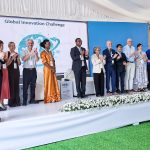
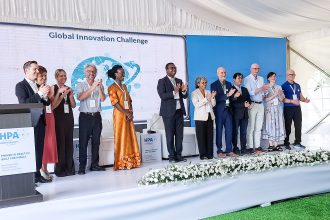
The forum’s host offered its own evidence. At Kilimanjaro Christian Medical Centre (KCMC), where HPA unveiled its new Global Centre, partnerships have paid off in better healthcare delivery.
“The healthcare system faces growing pressure from infectious and non-infectious diseases, a changing climate and limited resources, which limit access to quality care,” said Professor Gileard Masenga, Executive Director of KCMC. “No institution can address these challenges alone. Yet every institution, including those working with scarce resources, has experience and practical solutions worth sharing.”
KCMC will host HPA’s third Global Centre, after those in Lisbon and Rio de Janeiro. In his keynote, Masenga called for a shared inventory of partner institutions, their competencies, facilities and training resources, and each institution’s needs.
“This will help us match our expertise to needs and build complementary teams for training, research and innovation,” he said. “It would also provide a practical foundation for sustainability.”
The aim was a centre of excellence in diagnostic services, patient care and research, and a place to train laboratory technology students and scientists
He thanked Germany for supporting HPA and urged governments, the private sector, development partners and other funders to mobilise the financial and institutional support needed to sustain and expand the work.
For KCMC, which runs a hospital, the Kilimanjaro Clinical Research Institute and a university, the forum helped set priorities. These include strengthening teams through reciprocal clinical exchange, mentorship and practical training in diagnostics and patient safety.

Masenga pointed to KCMC’s own model. Working with Philipps-Universität Marburg in Germany, Roche Diagnostics, the Good Samaritan Foundation (GSF), the German investment and development company DEG and the German Federal Ministry for Economic Cooperation and Development, KCMC has established a centre of excellence laboratory for training, research and diagnostics for the population of Northern Tanzania.
“While Philipps provided academic, technical and leadership support, Roche supplied diagnostic infrastructure and other partners co-financed, KCMC, under the stewardship of GSF, had to build the structure to host the laboratory,” Masenga said. “This was an uphill task, but we managed, and we enjoy ownership and sustainability.”
The aim, he explained, was a centre of excellence in diagnostic services, patient care and research, and a place to train laboratory technology students and scientists pursuing PhDs in laboratory medicine. “Without such collaboration, we would not achieve this objective.”
Partnerships should start where institutions are and allow trust to grow over time
The laboratory began operating two months before the forum and has already improved patient care, Masenga said.
“We are not there yet, but besides the basic diagnostic investigations, we have added 25 more specialised tests, courtesy of knowledge shared by specialists from Philipps University of Marburg and equipment from Roche.”
Some of the team leading the laboratory also benchmarked and trained in Germany.

The future of Tanzanian diagnostics, he said, is bright. “We now have a centre where patients are not referred to distant places for lab tests because we do them here. Our goal is to have all the tests currently sent to South Africa and other countries done here.”
HPA Council Chairperson Professor Diavolana Andrianarimanana, a citizen of Madagascar, said in her keynote that the Moshi centre would strengthen collaboration among practitioners across Africa.
“It will offer an opportunity for practitioners in the region to discuss regional and global agendas, generate solutions for local problems and ably sustain the growth of partnerships within and outside the continent,” she said.
The forum’s speakers outlined a practical way forward, which will include replacing ad hoc phone consultations with structured, paid platforms that connect clinicians to credible specialists, mapping what each institution can offer and where it needs support to ensure expertise meets demand, and sharing costs, as KCMC’s laboratory partners have done, while allowing the host institution to retain ownership. As Savastano put it, partnerships should start where institutions are and allow trust to grow over time.
More than 130 participants from over 30 countries left Moshi committed to advancing collaboration and to integrating practitioner- and patient-centred technology and innovation as their contribution to tackling current and emerging global health challenges.
We believe in the free flow of information
Republish our articles for free, online or in print, under Creative Commons licence.