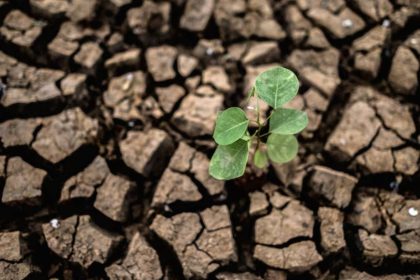




The fungi do not need an invitation. A warming climate, a poorly dried cob of maize and a hungry child are all they need, and Kenya’s scientists are now racing to answer how long and how many children have silently paid the price.
Scientists have gathered in Kilifi County to investigate a troubling question: could climate change be making the food on Kenyan families’ tables quietly toxic to their children? Researchers believe that prolonged droughts, rising temperatures and erratic rainfall are creating conditions that allow aflatoxins, toxic compounds produced by fungi, to thrive in staple crops such as maize and groundnuts.
Chronic exposure, they say, may be stunting children’s growth, weakening their immunity, and even undermining the vaccines meant to protect them. The concern is especially acute in Kilifi, where 37 per cent of children under five have stunted growth, more than double the national average of 18 per cent, and where a new three-year research project is now racing to find answers.

According to the 2022 Kenya Demographic and Health Survey (KDHS), Kilifi County has one of the highest child stunting rates in the country. Nationally, stunting among children under five declined from 26 per cent in 2014 to 18 per cent in 2022, but health officials say progress is now slowing.
Across Africa, stunted growth affects about 30.7 per cent of children under five, exceeding the global average of 22 per cent, with over 62 million children affected in Sub-Saharan Africa. The major drivers include malnutrition, poverty and poor sanitation, and the condition leads to irreversible physical and cognitive impairment.
The concern brought together paediatricians, climate scientists, agriculture experts and policymakers in Kilifi under the Tackling the Risks of Aflatoxins and Climate Effects on Child Health in Africa project or TRACE. The three-year Wellcome-funded study is led by the KEMRI-Wellcome Trust Research Programme and will investigate how climate variability may be increasing children’s exposure to aflatoxins in Kenya and The Gambia.
For decades, aflatoxins were largely associated with liver cancer, deadly food poisoning outbreaks
Aflatoxins are toxic compounds produced by fungi that commonly contaminate crops such as maize and groundnuts, foods eaten daily in many Kenyan homes through ugali, porridge and githeri. For decades, aflatoxins were largely associated with liver cancer and deadly food poisoning outbreaks.

Scientists now say chronic low-level exposure among children may be affecting health in ways that have long gone unnoticed. “In medical school, aflatoxins were mainly presented as a cause of liver failure during outbreaks. It’s only recently that we learned about their impact on child health and immunity,” said lead investigator Prof Ambrose Agweyu, a paediatrician and epidemiologist.
Scientists say chronic exposure may weaken immune responses, interfere with nutrient absorption and potentially reduce the effectiveness of vaccines, leaving children more vulnerable to infections and poor growth. A 2021 review on environmental changes and aflatoxins found that rising temperatures, drought and humidity directly influence fungal growth and toxin production in staple crops.
A separate study published in Scientific Reports linked aflatoxin exposure among African children to stunting and impaired growth, strengthening concerns that food toxins may be contributing to the continent’s chronic child health burden.
Researchers say the urgency comes at a time when progress in reducing child mortality has slowed despite years of investment in vaccines, nutrition and maternal and child health programmes. “We need to ask ourselves whether there is something we are missing,” Prof Agweyu said. “It feels like aflatoxins might be one of these missing pieces in this complex puzzle around child survival.”
Changing climate patterns have impacted the amount of aflatoxin in children’s blood
The TRACE project will use archived blood samples collected through previous studies to compare exposure trends against historical climate records, helping determine whether changing environmental conditions are increasing risks to children. “We are specifically looking at understanding over the past 20 years how changing climate patterns have impacted the amount of aflatoxin in children’s blood,” Prof Agweyu said.
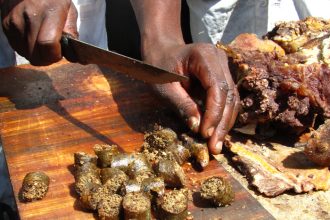
Climate scientists say the biological link is increasingly difficult to ignore. “If you’re drying maize in the sun and you have erratic rainfall patterns, incomplete drying of grain has been shown to be associated with increased levels of aflatoxin,” one researcher noted.
Dr Neven Fuckar, a climate and data scientist from the University of Oxford working on the project, said TRACE would combine environmental models, climate records and health data to better predict health outcomes and guide future policy. “This project represents a fantastic opportunity to establish connections between environmental conditions and health outcomes,” he said.
Researchers also warned that exposure may begin even before a child is born. Dr David Githanga, a paediatrician, said aflatoxins consumed by pregnant mothers may already be affecting children during pregnancy. “Exposure to aflatoxins may even begin long before the child is born,” he said. Studies have shown that aflatoxin exposure can begin in the womb and may even be detected in breast milk, raising concerns about early-life exposure among infants.
Despite repeated aflatoxin outbreaks in Kenya, the issue has remained confined to agricultural discussions
According to Dr Juliet Omwoha, a paediatrician and Head of Newborn and Child Health at the Ministry of Health (MoH), Kenya risks missing Sustainable Development Goal 3.2 on reducing newborn and child mortality unless additional hidden drivers of poor health are identified and addressed. “If we can actually prevent deaths in this cohort, then it’s a win not only for the Ministry of Health but for Kenya as a whole,” she said.

Despite repeated aflatoxin outbreaks in Kenya over the years, experts acknowledged that the issue has remained largely confined to agricultural discussions and has rarely been integrated into child health or climate adaptation policies. “The Ministry of Health has its plans for child health. Agriculture recognises aflatoxin as a problem, but it stops there. Environment recognises climate as a threat but works within its own silo,” Prof Agweyu said.
Experts also raised concerns that efforts to tackle aflatoxins may fail without involving trade and market regulators responsible for monitoring food movement and safety standards. Contaminated grains often continue circulating through informal markets, making enforcement and surveillance difficult.
Kilifi County Director of Health and Sanitation Services, Dr Hassan Leli, said the issue was already deeply concerning. “The data is out there, and for us it has been a serious point of concern,” he said. “We are the leading county in stunted growth.” He said the county was strengthening collaboration between health, agriculture and environmental departments under a One Health approach focused on prevention.
Researchers said the problem stretches across the entire food chain, from farms and grain storage facilities to household kitchens and relief food supplies distributed during food insecurity. Prof Salome Bukachi said the project would examine food safety and ensure communities understand why the situation is urgent, emphasising the need for better storage practices, food handling and community awareness.
Animals consume contaminated feed, exposing people to aflatoxin through milk, meat, eggs
Researchers and county officials also warned against the common practice of redirecting spoiled grain to livestock feed rather than safely disposing of it. Aflatoxins can move through the food chain when animals consume contaminated feed, potentially exposing people through milk, meat and eggs.

Dr Nancy Njeru, Assistant Director of Crop Health Research at the Kenya Agricultural and Livestock Research Organisation, said surveillance was being conducted in cereal storage facilities and food outlets to monitor contamination risks. She warned that poverty and food insecurity often force vulnerable households to consume unsafe grain, and that many families cannot easily recognise contaminated food.
The greatest danger, experts say, is that aflatoxins are largely invisible. Contaminated food may not look, smell or taste spoiled. “There has been awareness creation, but people still do not understand aflatoxins well,” said Kilifi County’s head of the Preventive and Promotive Unit, Cathrine Munywoki. She advised households to pay closer attention to grain drying and storage, warning that changing climate conditions are making contamination risks harder to predict.
For the scientists involved in TRACE, the concern goes beyond food safety. The question they are asking is whether climate change is quietly eroding decades of hard-won progress in child health through the very staples that families across Kenya rely on every day.