



Mothers turned away must pay another fare and lose another day’s work to return to health facility while some nurses fund vaccine collection themselves to keep clinics stocked.
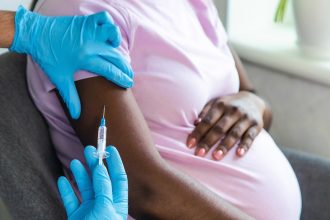
A pregnant woman takes a morning off work and pays her fare to a clinic for her antenatal vaccine. The stock is short, and once a vial is opened, it must be used within six hours. With only one mother waiting, the nurse hesitates to open it. The woman is sent home and must find another fare and another morning to come back.
Some nurses, researchers found, have used their own money to collect vaccines from depots so that mothers like her are not turned away.

Such moments, specialists told a Nairobi congress, show that the next gains in women’s health will depend as much on records, training and supply as on new products.
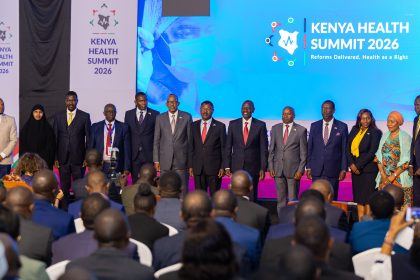
At the inaugural Annual Scientific Congress of the Association of Progressive Obstetricians and Gynaecologists – Kenya (APOG-K), themed “New Frontiers: Technology, Innovation and Collaboration for Reproductive Health”, speakers argued that innovation should be judged by whether a mother in Kitale or Kilifi can walk into a clinic, find the right product on the shelf, and have her visit recorded so the health system can learn from it.
By that measure, Kenya has promising science on the horizon and some unglamorous gaps to close first. New maternal vaccines are coming, but many specialists do not know which ones are already in use, private clinics are invisible in national data, no facility studied had a system for tracking maternal immunisation, and testing for respiratory syncytial virus (RSV) remains out of reach for many hospitals.
The tetanus toxoid (TT) vaccine entered antenatal care in 1980 and ‘Almost everybody in this room is a beneficiary’
Dr Nelly Bosire, an obstetrician and gynaecologist on the congress organising committee, noted that tetanus toxoid (TT) entered antenatal care in 1980 through the Kenya Expanded Programme on Immunisation (KEPI) and “Almost everybody in this room is a beneficiary of this vaccine,” she told delegates.

About six years ago, Kenya replaced TT with the tetanus-diphtheria vaccine (Td), which adds protection against diphtheria. When Dr Bosire asked delegates whether they knew of the change, few hands went up. Specialists in government facilities, which receive vaccines through the national programme, knew. Those in private practice, largely outside that supply chain, mostly did not.
A survey of 58 obstetrician-gynaecologists, which she presented, measured the gap. Asked which maternal vaccines were available in Kenya, 27 per cent named tetanus toxoid and 50 per cent named Td, the vaccine now in routine use. Only 17 per cent named an influenza vaccine for pregnancy and eight per cent a malaria vaccine.
Only 12 per cent had ever taken part in a maternal immunisation policy process, although nearly all were willing to receive further training.
A vaccine against RSV is licensed in Kenya but not yet introduced, and a Group B Streptococcus vaccine is moving towards national introduction, according to Julie Nyamao, a certified midwife and doctoral candidate in maternal and newborn health at the University of Nairobi.
Vaccine rollout be accompanied by safety monitoring, particularly of birth outcomes among vaccinated pregnant women
The RSV vaccine is licensed for women from 28 weeks of pregnancy, a narrow window. “How many of our women do you think we will actually catch in the window period when this vaccine is recommended for them?” Dr Bosire asked.

In May 2025, the World Health Organization (WHO) published its first position paper (official guidance to countries) on products to protect infants against RSV, the leading cause of acute lower respiratory infections (serious chest infections such as pneumonia and bronchiolitis) in children worldwide. It recommends that all countries introduce either the maternal vaccine, RSVpreF (given to the mother during pregnancy so that protective antibodies pass to her baby), or a long-acting monoclonal antibody, nirsevimab (a laboratory-made antibody given to the baby as a single injection).
WHO advises giving the maternal vaccine from week 28, matching Kenya’s licence. The vaccine received WHO prequalification in March 2025, allowing United Nations agencies to buy it. Trial evidence cited in a recent Kenyan study shows roughly 70 per cent efficacy against severe RSV lower respiratory infection in the first six months of life and more than 80 per cent in the first 90 days.
WHO also advises that rollout be accompanied by safety monitoring, particularly of birth outcomes among vaccinated pregnant women, starting before or at introduction.
An obstetrician may manage a woman’s antenatal care for nine months, but only the delivery is recorded
Dr Joseph Mbuthia, a consultant paediatrician and paediatric infectious disease specialist, said RSV is confirmed by costly PCR tests on nasal swabs and told the panel, “We do not have a cheap test for it.”
Doctors therefore rely on clinical judgement, suspecting RSV when several children in a household are unwell after a school-going sibling brings home a cold. There is no antiviral treatment. “It’s supportive,” he said, from oxygen to mechanical ventilation.
Without a low-cost rapid test, the national picture depends on whichever hospitals can afford to look.
Dr Bosire’s sharpest critique concerned data. The 2022 Kenya Demographic and Health Survey (KDHS) shows about 98 per cent of women attended at least one antenatal visit, 66 per cent attended four, and roughly 88 per cent delivered in a health facility. None of these figures, she said, capture care in private clinics. “This is data that the Ministry of Health has,” she said. “But the Ministry’s data is blind to every individual in this room who does private practice in their little private clinic.”
An obstetrician may manage a woman’s antenatal care for nine months, but only the delivery is recorded when she reaches hospital. “We are blind to it,” Dr Bosire said. “Where are we getting this data? Because that data is not actually a true reflection of the patients that we have.”
Without that picture, planners cannot forecast vaccine demand, judge how many women will be reached in the third trimester, or meet WHO’s safety-monitoring expectation.
Nurses reported strong training in childhood immunisation but little on maternal vaccines
Nyamao’s research, covering five public facilities and one private facility, with nine focus group discussions among women of reproductive age, found many counties had no electronic medical records, and where they existed they often relied on systems built for HIV services. No facility had a dedicated system for tracking maternal immunisation, and mothers who missed doses were followed up informally by community health promoters.
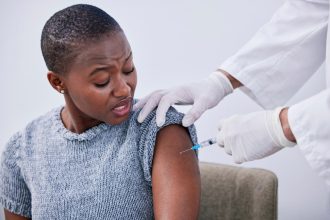
Nurses reported strong training in childhood immunisation but little on maternal vaccines, and many kept up to date through WhatsApp groups.
Women said they trusted community health promoters more than facility staff. “These are the people the community trusts,” Dr Bosire said. “What they tell them, they believe it more.”
Nyamao recommended formalising and paying them before the next vaccines arrive.
Communication has also lagged behind. Dr Joyce Nyerere said the switch from TT to Td happened with little public explanation, and most pregnant women still believe they receive the older vaccine. The transition was smooth largely because women were never asked to decide. A vaccine against a disease few mothers have heard of will not enjoy that advantage.
We believe in the free flow of information
Republish our articles for free, online or in print, under Creative Commons licence.