


Kenya has discharged five people who recovered from Bundibugyo virus disease and released 66 quarantined contacts, but the 42-day countdown to being declared Ebola-free cannot begin until the country’s remaining patients recover.
Five Kenyans who had Bundibugyo Ebola virus disease (BVD) and had been placed in quarantine went home from two Nairobi hospitals on November 3, after laboratory tests confirmed they had cleared the virus.
Two of the patients were treated at Kenyatta National Hospital and three at The Nairobi Hospital, according to a statement from the Director General for Health, Dr Patrick Amoth. Forty-six more contacts who completed their monitoring were also released from quarantine, and the Ministry said the remaining 52 will follow by November 11, 2026, once each has completed 21 days since their last exposure.
The recovery of the five patients brings Kenya closer to the 42-day countdown that will decide when its outbreak ends.
According to Dr Loice Ombajo, an Infectious Disease Specialist who heads the Infectious Diseases Unit at Kenyatta National Hospital, discharge criteria for BVD are strict.
“Once someone has no symptoms, we give it three days, then we do a test. If that first test is negative, we give it another three days, and we do another test,” Dr Ombajo said in an interview with Willow Health Media.
Kenya has confirmed nine cases and two deaths, a case fatality rate of 22.2 per cent. Two people with BVD remain in treatment, one at each hospital. The Ministry of Health says no new case has been recorded since October 19, that every case belongs to a single cluster linked to the first imported case, and that there is no community transmission.
The 46 contacts who left quarantine join 20 others released in the last week of October after completing the mandatory 21 days without symptoms.
As soon as Kenya confirmed its first case, the surveillance system and the case investigation were activated to begin tracing contacts
Kenya confirmed its first case of Bundibugyo Virus Disease on October 6 in a Kenyan man who lived in the Democratic Republic of Congo (DRC) for approximately seven years and travelled through Kampala to Kenya.
According to the World Health Organization (WHO), the man landed in Nairobi on October 3 and died on October 5. Before his infection was established, three healthcare workers managed his care in hospital, but they did not know he had Ebola.
The virus next surfaced in his family when a 39-year-old man, a close family contact, became Kenya’s second confirmed case on October 14. Two days later, a 65-year-old woman, also a close relative, became the third. The woman would later become Kenya’s second death from the virus.
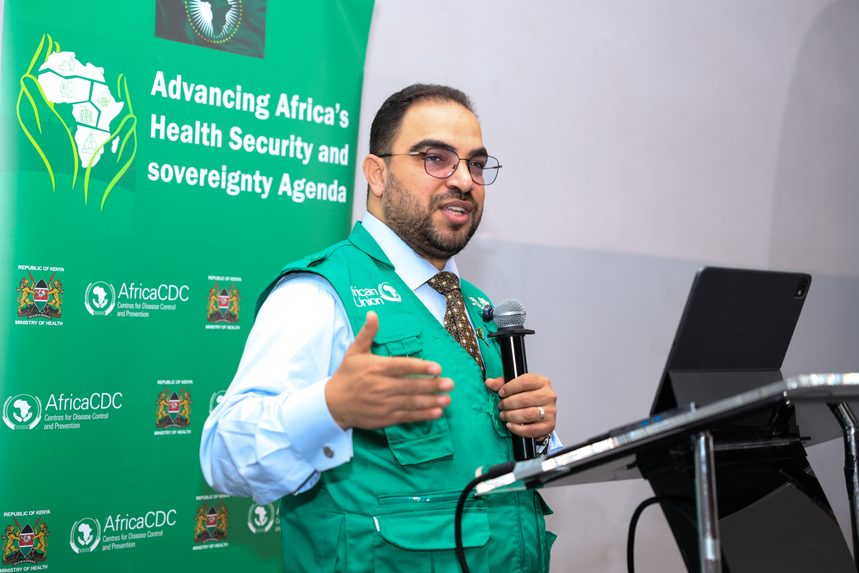
Speaking during a media workshop in Nairobi on October 14, Dr Wessam Mankoula, Director of the Centre for Disease Preparedness and Response at Africa CDC, said that as soon as Kenya confirmed its first case, the surveillance system and the case investigation were activated to identify who had been in touch with the case during this journey.
Investigators listed passengers and crew, airport staff, and the relatives who picked him up from the Jomo Kenyatta International Airport.
“Then the family members that picked him from the airport and engaged with him while they were taking him to the hospital. Those are contacts identified,” he said. The hospital, where staff treated him before anyone suspected Ebola, was the last link.
On October 8, Health Cabinet Secretary Aden Duale put the count of traced contacts at 57 and said it would keep rising. The Ministry later reported that it had identified and traced all 135, nine of them outside Kenya, and notified the countries concerned under the International Health Regulations.
Once the final patient has recovered or been laid to rest with full dignity and care, Kenya will begin its 42-day countdown
Watching every contact lets health workers move anyone who falls ill into care before they infect others. Monitoring lasts 21 days, the upper limit of the incubation period between infection and first symptoms. “For Ebola disease this period ranges from about two or three to 21 days,” Dr Ombajo explains.
Tracing did not stop every infection. Eight secondary cases followed, four among health workers and four among the first patient’s close family.
The five recoveries do not start the clock. In its statement on November 3, the Ministry said that “once our final patient has recovered or been laid to rest with full dignity and care, Kenya will begin a 42-day countdown, and the outbreak will be declared over only if no new case is recorded in that period.”
The 42 days equal two full incubation cycles, long enough for any hidden chain of transmission to surface. Under conditions set out by Dr Amoth, the countdown starts when the last confirmed patient has tested negative twice, at least 48 hours apart, and has been discharged or safely buried. No active patient may remain, and the World Health Organization (WHO) and Africa CDC must then acknowledge the declaration.

“Once we have 42 days and we have nobody, Kenya will be declared Ebola-free,” said Health Cabinet Secretary Adan Duale.
The wait carries a diplomatic cost after Saudi Arabia and Kuwait announced additional precautionary measures to limit the risks associated with the Ebola virus outbreak, including suspending travel by Saudi citizens to Kenya, halting the issuance of all types of visas to travelers from the country and banning their entry into the Kingdom.
However, Kenya’s Ministry of Health insisted the country “remains open for business, with no restrictions on travel, trade or public gatherings.”
A United Nations humanitarian fund has allocated more than US$2 million (Ksh259.8 million) to Kenya, including for enhanced surveillance at border crossing points. Unlike the Zaire strain, Bundibugyo virus has no licensed vaccine or approved specific treatment.
In the DRC, where cases have surpassed 10,000, experts see failures that Kenya’s system was built to avoid
The Ministry stressed that contacts who finish quarantine without symptoms “cannot transmit the disease and pose no risk to anyone,” and urged families, employers, neighbours and communities to “welcome them home warmly, treat them with respect, dignity and compassion and shun stigma.”

In the DRC, where cases have surpassed 10,000, Dr Mankoula sees failures that Kenya’s system was built to avoid. The first is under-listing, where responders there find far fewer than the 40 to 60 contacts per case they should expect.
“At the beginning of the outbreak, for each one case, we have an average of 10 contacts in recent weeks. We are moving toward each case having 20 to 25 contacts,” he said. “So there are some improvements, but we are still far from the 60.” The result, he warned, is that “later on, you will find some of those contacts become cases.”
The second is a misleading percentage. The DRC’s reported tracing rate of 80 per cent counts only contacts who were actually listed, not everyone who should have been. “So among the contacts that should be listed, the system is able only to trace 23 per cent, but the target is 95 per cent,” Dr Mankoula said.
He named two further problems where most deaths happen at home, with “between 65 and 70 per cent of the deaths because of Ebola happening in the community.”
As Kenya waits to be declared Ebola-free, the Ministry had urged anyone with symptoms suggestive of Ebola to seek medical evaluation immediately, by calling 719 free of charge or alerting its WhatsApp chatbot on 0700 719 719.
We believe in the free flow of information
Republish our articles for free, online or in print, under Creative Commons licence.