




Kenya is the first country in Africa to establish a semi-autonomous government agency tasked with coordinating the country’s digital health ecosystem, including the creation of standardised digital records for patients, health workers, and health facilities.
In many rural Kenyan health facilities, a weak internet signal, a single smartphone, and an overstretched nurse may increasingly determine whether a patient receives timely specialist care. As Kenya accelerates efforts to digitise primary healthcare, experts now warn that the future of digital health will depend less on flashy innovation and more on whether systems are ethical, affordable, interoperable, and built for frontline realities.
Across Africa, governments are increasingly turning to digital health tools to address longstanding weaknesses in healthcare delivery, especially in underserved rural regions where specialist doctors, diagnostic services, and referral systems remain scarce. The urgency is immense. Africa continues to carry nearly 25 per cent of the global disease burden while operating with only about three per cent of the global health workforce.

In Kenya, where healthcare services are devolved across 47 counties, the challenge is particularly visible. Patients in remote areas often travel long distances for specialist consultations; frontline healthcare workers operate with limited support, and fragmented health information systems continue to slow care delivery. Yet amid those pressures, digital health is increasingly being viewed not as a luxury but as a practical pathway toward more equitable healthcare.
That shifting reality formed the backdrop of a high-level discussion at the World Health Summit regional meeting in April, where policymakers, clinicians, researchers, and digital health experts gathered for a session titled Scaling Affordable Digital Health Platforms for Primary Care Access, hosted jointly by Aga Khan University, World Health Organization (WHO), and Project ECHO.
But beyond discussions of software and platforms, the session repeatedly returned to a more difficult question: can African countries build digital health systems that actually work in low-resource settings?
Digitisation alone does not automatically improve healthcare; instead, fragmented systems can sometimes create new burdens
For Dr Caroline Kisia, Africa Director for Project ECHO, the answer depends on whether digital systems are designed around healthcare workers and communities, rather than around technology itself.
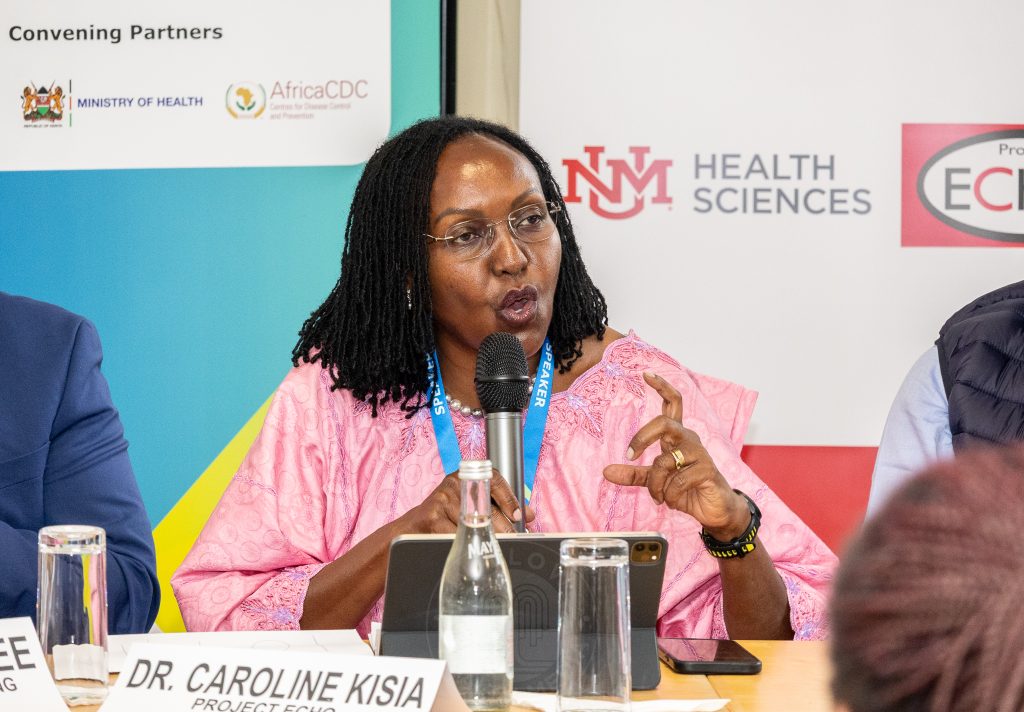
“Digital health must work for frontline providers, communities, and the realities of low-resource settings,” Dr Kisia said.
Her remarks reflected growing concern that many digital health systems across Africa are being introduced without sufficient consideration for the realities of overcrowded clinics, unreliable electricity, inconsistent internet connectivity, and already exhausted healthcare workers.
While Kenya has spent years digitising parts of its healthcare system, including electronic medical records, pharmaceutical tracking systems, laboratory reporting platforms, and community health data systems, experts at the summit warned that digitisation alone does not automatically improve healthcare. Instead, fragmented systems can sometimes create new burdens.
Representing the WHO, Hillary Kipruto challenged governments and technology developers to move beyond excitement around innovation and confront the harder issue of implementation and integration.
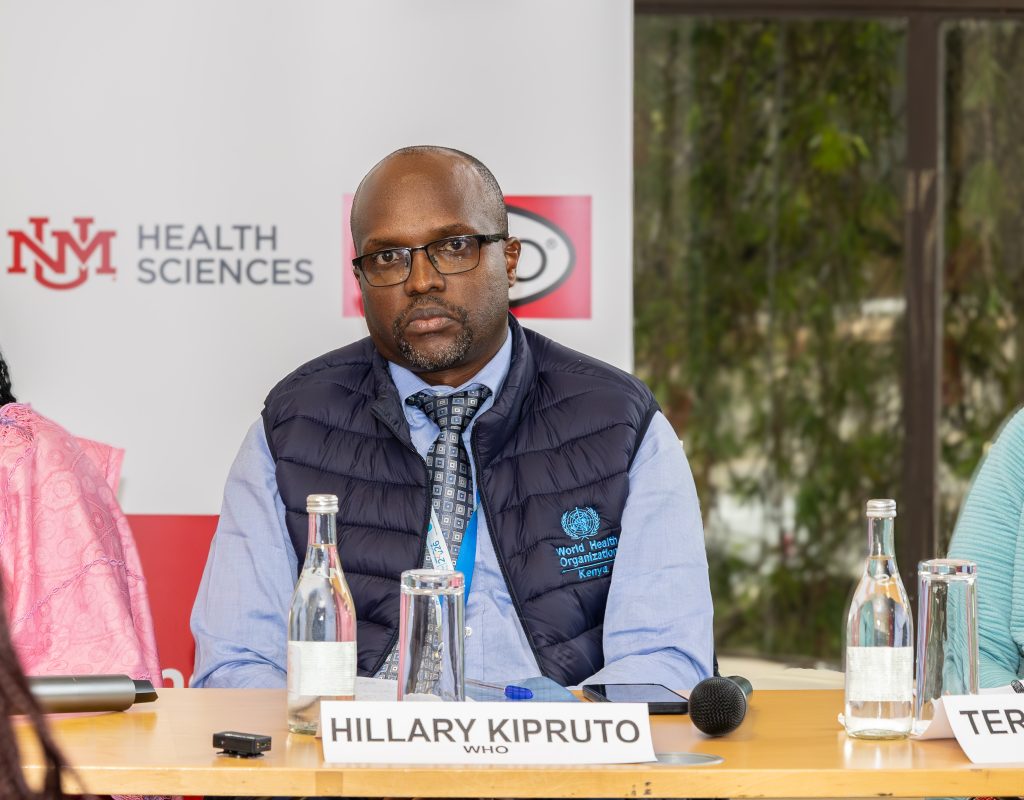
“We are no longer discussing the potential of digital health. That is absolutely clear. We know the benefits,” he said. “But the bigger question is, for these digital tools that we have implemented, how are they interconnected and interlinked together?”
Kipruto warned against what he described as “e-health or e-chaos,” a growing problem where multiple digital systems are introduced into the same health facilities but fail to communicate with one another.
In many settings, healthcare workers are forced to juggle separate platforms for patient records, laboratory requests, pharmaceutical supplies, and government reporting requirements.
If digital tools are not designed with frontline users in mind, they risk being abandoned altogether
Rather than saving time, fragmented systems often increase administrative workloads.
“In most cases, digital systems are not developed with the users,” Kipruto said, while giving the example of clinicians managing large patient volumes while being expected to spend several minutes entering data into poorly designed systems. “You develop a tool and the physician or doctor who has 100 patients to see… your tool takes 10 minutes to clock one single patient. It’s unlikely that tool would be used,” he said.
The warning reflects a broader tension increasingly emerging in African healthcare systems: technology may promise efficiency, but if digital tools are not designed with frontline users in mind, they risk being abandoned altogether.
“If you’re developing something for me, develop it with me,” Kipruto added.
The issue of interoperability has become especially important in Kenya as the country attempts to transition from fragmented donor-supported digital projects toward a coordinated national digital health system.
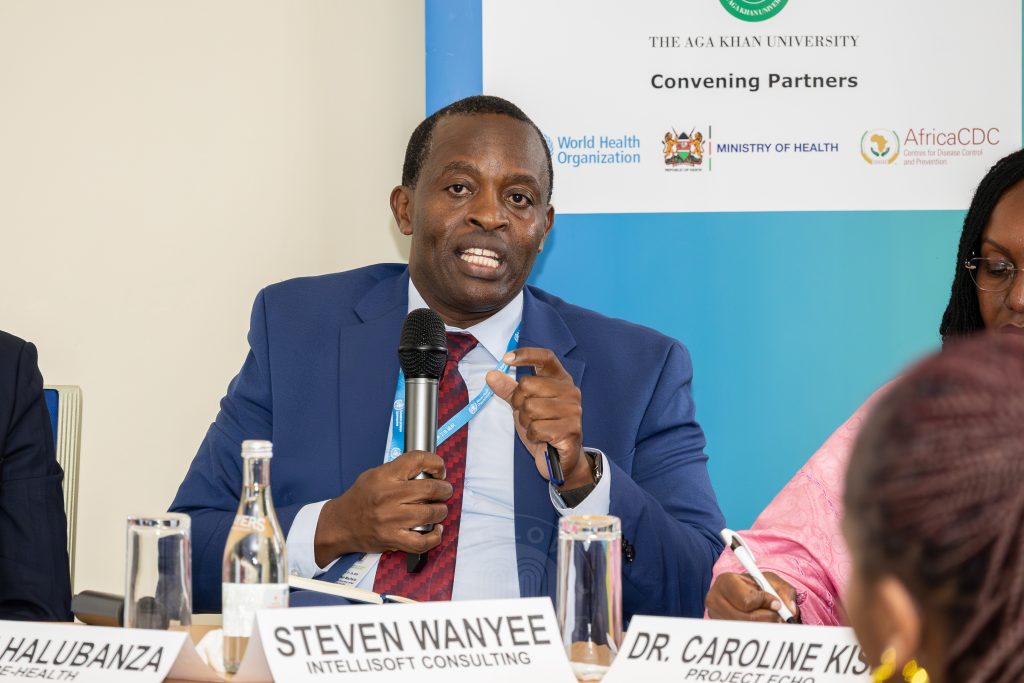
Steven Wanyee, founder of Intellisoft Consulting, said Kenya’s Digital Health Act 2023 has positioned the country among Africa’s emerging leaders in digital health governance.
“Kenya is actually the first country in Africa to have a semi-autonomous government agency specifically governing digital health,” he said.
The law established a semi-autonomous agency tasked with coordinating the country’s digital health ecosystem, including the creation of standardised digital records for patients, health workers, and health facilities. Wanyee said strong political backing played a major role in the law’s rapid passage.
“What made Kenya pass its Digital Health Act within a record time of one year was that there was a very strong push from State House,” he said.
Yet even as governments race to modernise health systems, experts warned that scalability remains one of the sector’s biggest challenges. Many digital health projects succeed during pilot phases, but struggle to expand nationally once donor funding ends or infrastructure gaps become apparent.
Project ECHO operates in more than 86 countries and has supported over eight million healthcare workers
For Wanyee, one reason is that digital health is still too often viewed narrowly as a hospital issue rather than a broader development and economic issue.
“Until we understand the value of digital health beyond health, then we’ll have a challenge of scaling,” he said.
The conversation around scalability became more grounded when speakers turned to examples already transforming healthcare delivery in underserved Kenyan counties.
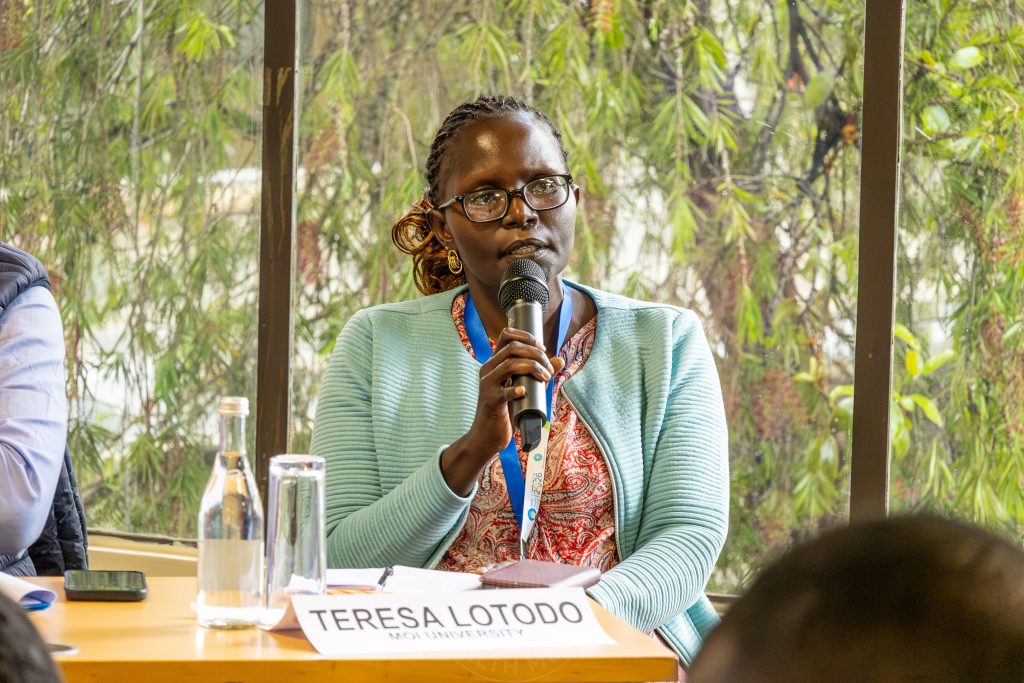
Dr Teresa Lotodo of Moi University highlighted the work of Project ECHO, a virtual tele-mentoring model connecting specialists in referral hospitals and universities with frontline healthcare workers in remote facilities across western Kenya.
Using low-cost and widely accessible platforms such as Zoom and WhatsApp, clinicians in lower-level facilities can present difficult cases to multidisciplinary specialist teams and receive real-time guidance without transferring patients unnecessarily.
“Project ECHO is a virtual tele-mentoring platform where we use affordable systems to allow sharing of knowledge from experts at academia and tertiary hospitals with healthcare workers at lower-level facilities,” Dr Lotodo explained.
The impact, she said, is already visible. She described a case in which mentorship through the platform helped a healthcare worker manage a paediatric cancer case locally, eventually contributing to the establishment of a chemotherapy unit in a previously underserved facility.
“As we speak now, that unit has been able to establish a chemotherapy unit to treat patients with cancer,” she said.

Globally, Project ECHO now operates in more than 86 countries and has supported over eight million healthcare workers. In Kenya, the initiative is being implemented through the Academic Model Providing Access to Healthcare (AMPATH) in Eldoret.
For many frontline clinicians, Dr Lotodo said, the biggest impact is psychological as much as clinical.
“The frontline healthcare worker is not feeling like they’re left out. They’re not isolated,” she said. That sense of connection could prove critical in counties where specialist shortages continue to delay diagnosis and treatment.
Still, infrastructure barriers remain significant. Brian Halubanza of AFREhealth argued that many digital health systems are designed with assumptions that simply do not reflect rural African realities.
Without strong ethical frameworks, AI systems could contribute to misinformation or deepen inequities
“The ideal user is someone who has 24 hours of electricity and 24 hours of connectivity. But we are looking at scaling these digital systems even to rural frontline workers,” he said.
In counties such as Turkana and Marsabit, where electricity and internet access can remain inconsistent, such assumptions can quickly undermine implementation efforts.
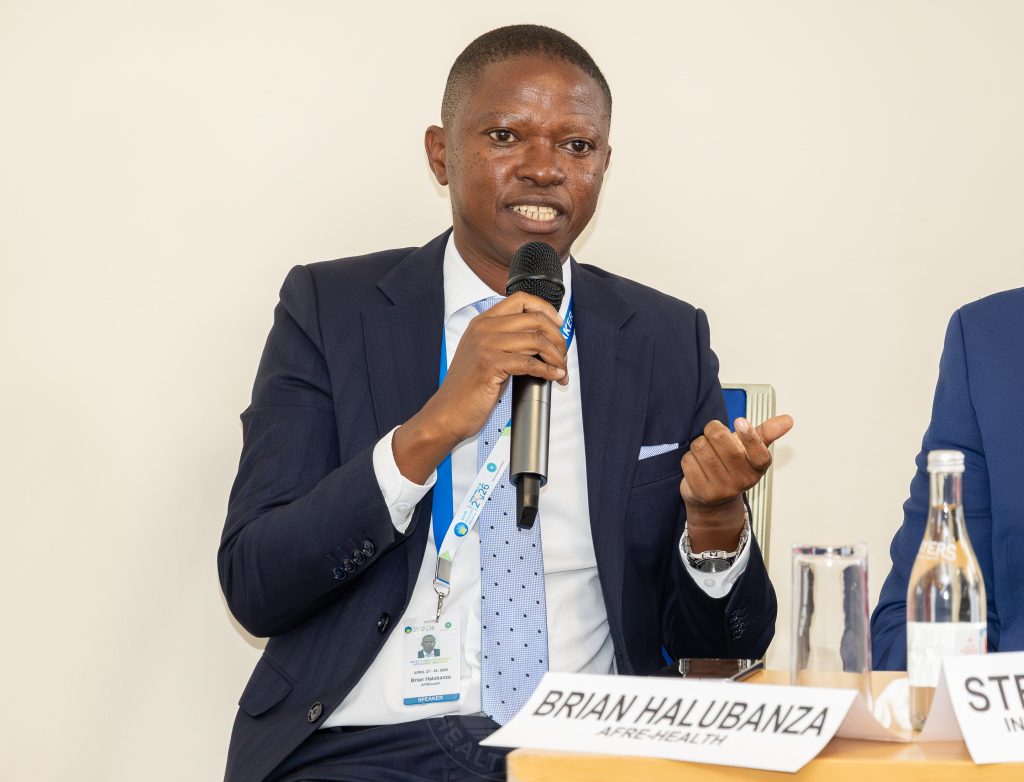
Halubanza called for “offline-first” systems capable of collecting data without internet connectivity and automatically synchronising once connections are restored. He also urged developers to prioritise mobile-based platforms since smartphones are often the most accessible tools for frontline healthcare workers.
“Most frontline workers are using mobile phones. Why don’t you create a system that can run on a mobile phone?” he asked.
He also highlighted the growing potential of Internet of Things (IoT) technologies in healthcare delivery, including sensors capable of monitoring oxygen cylinder levels and automatically alerting healthcare workers when supplies become dangerously low.
“That way… you’re able to save a life,” Halubanza said of an AI-supported pilot already underway.
As the summit discussions turned toward artificial intelligence (AI), speakers expressed cautious optimism tempered by growing ethical concerns. Kipruto acknowledged that AI is already beginning to influence diagnostics, decision support, and healthcare management systems across the world.
“I don’t think we have to fear technology. It is coming, whether you like it or not,” he said.

But he stressed that the larger issue is no longer whether AI will enter healthcare, but whether countries are prepared to govern it responsibly.
“The bigger question is how do we make sure there is responsible use of AI in health?” he asked. Experts warned that without strong ethical frameworks, AI systems could contribute to misinformation, reinforce bias, encourage unsafe self-diagnosis, or deepen inequities between well-resourced and under-resourced communities.
Halubanza noted that while younger healthcare workers are increasingly embracing AI-assisted learning and decision-making tools, fears and skepticism among older clinicians remain real.
As discussions concluded, one message remained consistent throughout the summit: the success of digital health in Kenya will depend less on sophisticated technology and more on governance, affordability, interoperability, ethics, and whether systems genuinely strengthen frontline healthcare delivery.
From virtual mentorship networks in western Kenya to new national governance structures aimed at integrating fragmented systems, Kenya is increasingly becoming both a testing ground and a case study for Africa’s digital health transition for millions of patients who continue to rely on public health facilities.
We believe in the free flow of information
Republish our articles for free, online or in print, under Creative Commons licence.
















If you’re developing something for me, develop it with me