


All 135 contacts have been traced, and no new cases were recorded on Day 17 of the response. Three more contacts are in isolation in Wajir and Eldoret as officials insist there is no community spread.
Two relatives of Kenya’s deceased Ebola index case are in isolation at Makaror Sub-County Hospital in Wajir County, Health Director-General Dr Patrick Amoth has confirmed. A third contact, who shared the index case’s flight, is being held at Moi Teaching and Referral Hospital (MTRH).
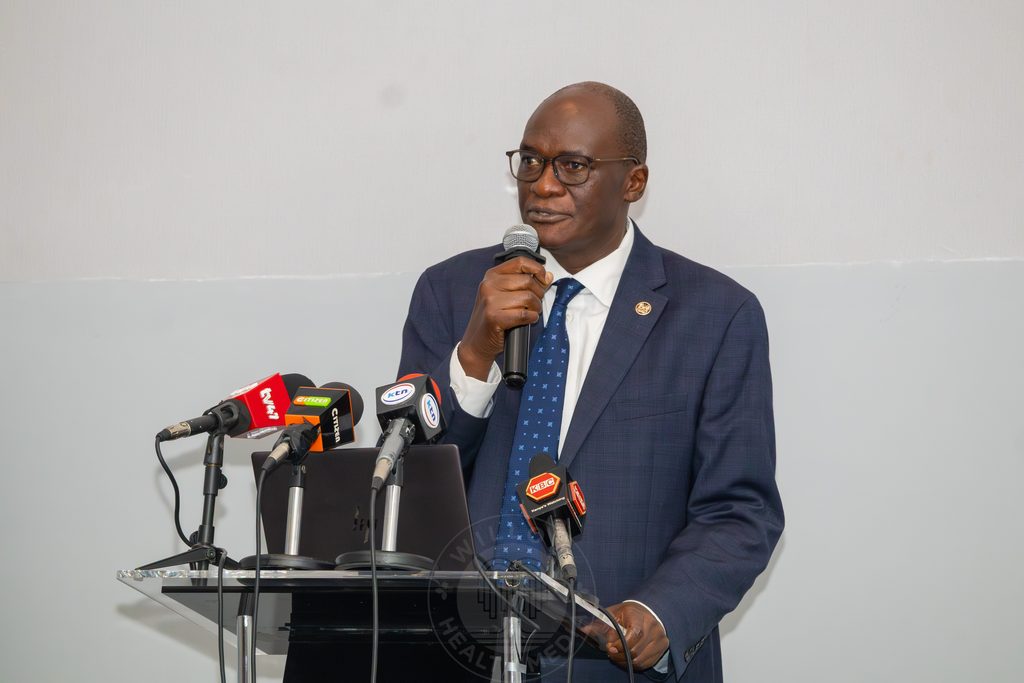
None of the three is among the nine cases. Speaking at a World Health Organization (WHO) Africa media briefing, Dr Amoth said the cluster has held at nine, with no new infections, all 135 contacts traced, and the first group of contacts set to go home on Sunday, October 25.
The eight surviving patients are stable, and Kenya has asked for about 10,000 vaccine doses for frontline health workers. But Dr Amoth admitted that one quarantine facility fell short, while WHO officials warned that border screening can miss cases.
The Ministry of Health’s position, echoed by WHO, is that every Kenyan case traces back to the index case. “All the secondary cases are people who were known contacts, already in quarantine, who had no contact with other people. That is why we say we do not have community transmission in Kenya,” said Dr Patrick Otim, WHO Africa’s programme area manager for emergency response.
Each patient had close contact with the first case between October 3 and 5, before entering quarantine, and fell ill within Ebola’s incubation period, a Ministry statement said.
‘We listed 135 contacts and we have been able to account for 100 per cent of them,’ Dr Amoth said
Dr Amoth said Turkana, all counties bordering Uganda and the counties along the northern transport corridor from Malaba to Mombasa are classified as high risk.
Kenya confirmed its first case on October 6, 2026. The patient, a Kenyan businessman working in the Democratic Republic of the Congo (DRC), moved through two Congolese provinces, likely including Tshopo, where he was probably exposed, before crossing into Uganda and flying from Entebbe to Nairobi, according to Dr Otim. He died despite treatment.
“We listed 135 contacts and we have been able to account for 100 per cent of them,” Dr Amoth said. Of these, 126 are in quarantine and nine outside Kenya have been reported to authorities in their countries. He rejected suggestions that contact tracing had failed, “because all the contacts that were listed have been seen, 100 per cent.”
The eight patients, four family members of the first case and four health workers who cared for him, are being treated at Kenyatta National Hospital and Nairobi Hospital with monoclonal antibodies.
“They are responding very well. The only thing we noted, at the time we were giving the monoclonal antibodies, is that one of the patients desaturated and needed supplemental oxygen. Otherwise we have not had any adverse reaction to the drug,” Dr Amoth said.
Vaccine recommended to protect health workers will soon be available to Kenya’s frontline staff
Kenya has requested the vaccine doses from WHO and the Africa Centres for Disease Control and Prevention (Africa CDC). Dr Otim said trials against the Bundibugyo strain are mostly in early phases, while trials in the DRC are using a vaccine licensed for the Zaire strain. “The monitoring board has not yet provided preliminary data on whether there is sufficient cross-protection,” he said. He added that the vaccine has been recommended to protect health workers and will soon be available to Kenya’s frontline staff.
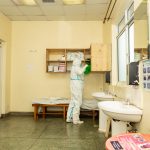
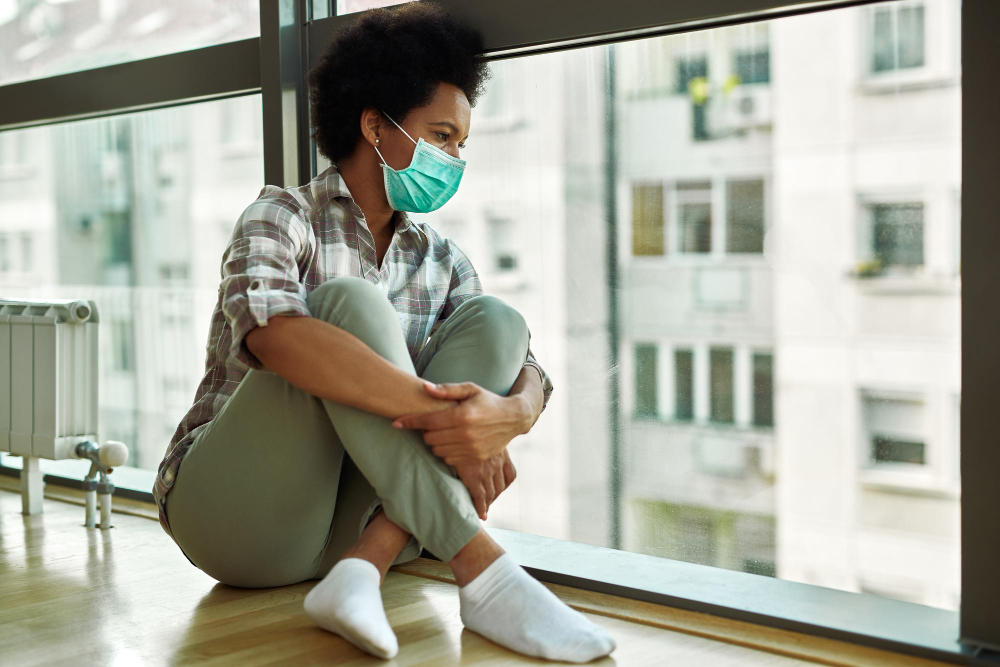
“The quarantine facilities were not designed for a disease of this nature,” Dr Amoth said. “Ideally, each individual should have their own room, completely separate from toilets and showers, and should not be able to come into contact with anyone else. Unfortunately, that is not what happened in one of our institutions.”
The government reset quarantine dates at that site to October 19, the day the last case was identified there, and installed CCTV cameras for round-the-clock monitoring. Contacts released after 21 days of monitoring “cannot pass the infection to anybody,” the Ministry said, urging neighbours and workplaces to receive them warmly.
At the border, Dr Otim said, screening relies on a declaration form, a temperature check and observation by a health worker. “These measures can miss a case, especially if someone has not declared an exposure, or did not have a high temperature, or did not look sick at that moment,” he said.
Dr Marie Roseline Belizaire, WHO Africa’s Director of Health Emergencies, pointed to a loophole. “We have seen travellers who have a fever and have taken paracetamol, so the system cannot detect the temperature,” she said. “The system works if the traveller cooperates.”
This is a moment for vigilance, not for fear. No country will be safe until all countries are prepared
Kenya has screened 709,093 travellers at points of entry and tested 461 samples since the outbreak began in May.
In Nigeria, an imported case is stable in isolation, though the source of exposure remains unknown, WHO officials said.

WHO Africa Regional Director Dr Mohamed Janabi said Ebola has spread to an eighth DRC province, with more than 9,000 confirmed cases and more than 4,000 deaths as of October 20. More than 300 health workers have been infected, 48 of whom have died. “This is a moment for vigilance, not for fear,” he said. “No country will be safe until all countries are prepared.”
The Ministry says life in Kenya continues as normal, with no restrictions on travel, trade or public gatherings. Anyone with fever, unusual tiredness, vomiting, diarrhoea or unexplained bleeding should seek help at the nearest health facility, call 719 toll-free or use the Jali WhatsApp chatbot on 0700 719 719.
“Let us stand with our patients, contacts and health workers with compassion, not stigma,” Dr Amoth said. “The end of this outbreak is within reach, and together we will get there.”
We believe in the free flow of information
Republish our articles for free, online or in print, under Creative Commons licence.