


Revital Healthcare’s rapid diagnostic kits, manufactured in Kilifi County, aim to close the gap between symptoms and diagnosis across the continent.
Roonek Vora, the Sales and Marketing Director at Revital Healthcare in Kilifi County, has a way of catching people off guard. During a visit to the factory, he asks the Willow Health Media team a simple question: when did they last test for diabetes? The room fills with giggles, an admission, really, because that is the reality in most African homes.
For Vora, testing remains a major challenge. He says many people do not seek testing when they develop symptoms. Someone with a headache may take a painkiller. Someone with a sore throat may take cold or flu medication. But the underlying cause may remain unknown. “We are not testing enough,” he says. “We are just injecting medication because we think we have a headache, we think we have flu, we think we have a sore throat, but we are not going to the hospital to check what the root cause is.”
That gap between symptom and diagnosis is what Revital Healthcare is trying to close. Its factory manufactures rapid diagnostic test kits small enough to fit in the palm of a hand and designed to answer a basic question before treatment begins: what is actually making you sick?
The facility has a production capacity of 20 million rapid diagnostic test kits every month, and Vora says the company currently produces kits for some of the continent’s major communicable diseases, including HIV, malaria and hepatitis. The portfolio also includes tests for pregnancy, dengue and syphilis, with more in development.
The stakes behind that work are considerable. According to the World Health Organization (WHO), Africa carries a disproportionate infectious-disease burden, yet diagnosis and the supply of quality-assured diagnostics have historically depended heavily on systems and products made elsewhere. Local manufacturing is being promoted as one way to make diagnostic supply more resilient and responsive.
Eleven countries in the region account for about two-thirds of global malaria cases and deaths
For malaria specifically, the WHO recommends testing before treatment, since rapid diagnostic tests can help distinguish malaria from other causes of fever, making diagnosis an important step in deciding what treatment is appropriate. The World Malaria Report 2025 estimates 282 million malaria cases and 610,000 deaths globally in 2024, with the WHO African Region carrying the greatest burden. Eleven countries in the region account for about two-thirds of global malaria cases and deaths.
Revital Healthcare’s factory is part of a much bigger push to address this. The WHO says many HIV rapid diagnostic tests have historically been manufactured far from where they are used, creating concerns around equitable and timely supply, and the organisation is now supporting efforts to expand African manufacturing capacity for quality-assured diagnostics.
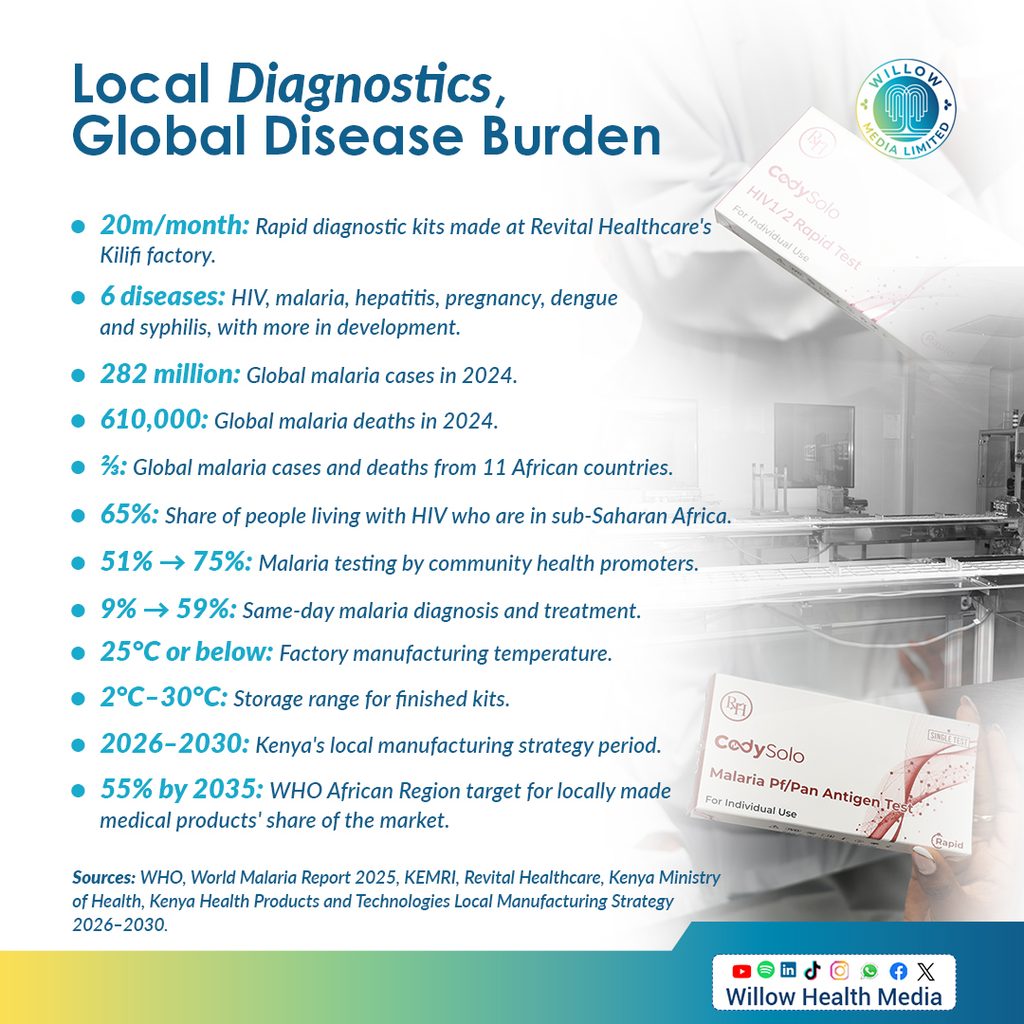
Vora’s concern about testing is reflected in wider efforts to bring diagnosis closer to communities. A 2024 Kenya Medical Research Institute (KEMRI)-reported project found that malaria testing by community health promoters rose from 51 per cent to 75 per cent, while same-day diagnosis and treatment increased from 9 per cent to 59 per cent. The consequence of low testing rates, Vora says, is that people may treat symptoms without knowing what is making them sick. “You never know, just because you have a headache or sore throat, you think it’s a viral infection or such, but you are not going to test to know whether you actually have malaria or dengue or any of these diseases that could be hurting you in the longer term.”
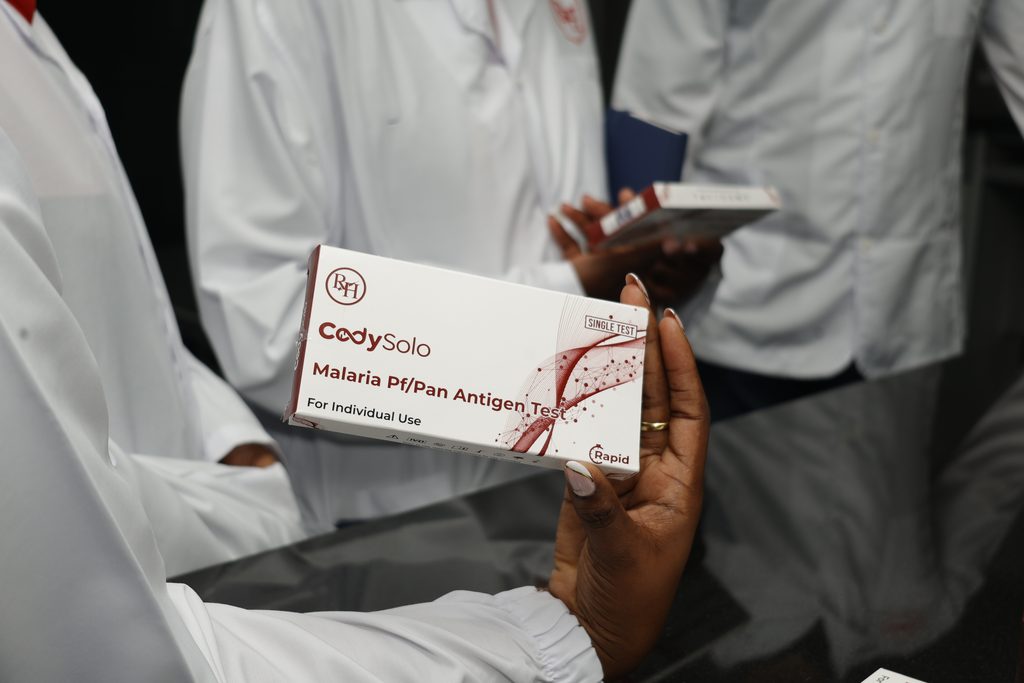
But access to testing is only part of the equation. The tests themselves have to be available. For Vora, the answer begins with more testing, and one of the products developed from this focus is Cady Solo. Unlike tests intended for use within a health facility, these are individual rapid test kits designed to be taken home. He says someone who believes they may have HIV can obtain a Cady Solo product from a pharmacy and conduct the test at home, getting a result within minutes. From there, he says, they need to take the necessary precautions.
A July 2025 WHO report titled Redefining the HIV response in Africa through local production of medicines and diagnostics notes that sub-Saharan Africa is home to almost 65 per cent of all people living with HIV globally and describes HIV testing as a critical gateway to prevention and treatment.
For malaria tests, the antigen is imported, then cultured to see how it behaves against the strain found in Africa
Before a test reaches a pharmacy, clinic or home, however, it must go through a carefully controlled manufacturing process. Inside the factory, Moses Sumbai, the Rapid Diagnostic Test Supervisor, explains that raw materials are first stored in a designated raw materials room, where they are sampled and tested according to the requirements for the market and test being produced. For malaria tests, for example, the malaria antigen is sourced from outside Kenya, then cultured to determine how it develops according to the African malaria antigen, with the aim of obtaining a stronger sample.
The research and development team develops the formulation and the criteria used to handle the antigen. That information is passed to the gold specialist, who formulates a sample using gold conjugate, which eventually becomes part of the final test device. Even before the test kits are assembled, the materials undergo further checks: the manufactured gold is tested, membranes are prepared and coated, and the coated materials are moved into a controlled environment known as the dehumidified room. “The room is maintained at a temperature of 25 degrees Celsius or below,” Sumbai says.
The temperature matters because of how the kits will eventually be stored and used. Sumbai adds that the kits can be stored between 2 and 30 degrees Celsius. Keeping the manufacturing environment at a controlled temperature helps ensure the kits remain useful even in areas where temperature regulation may not always be available, which is particularly important for rural facilities. The manufacturing process is therefore designed with the conditions in which the kits will eventually be used in mind.
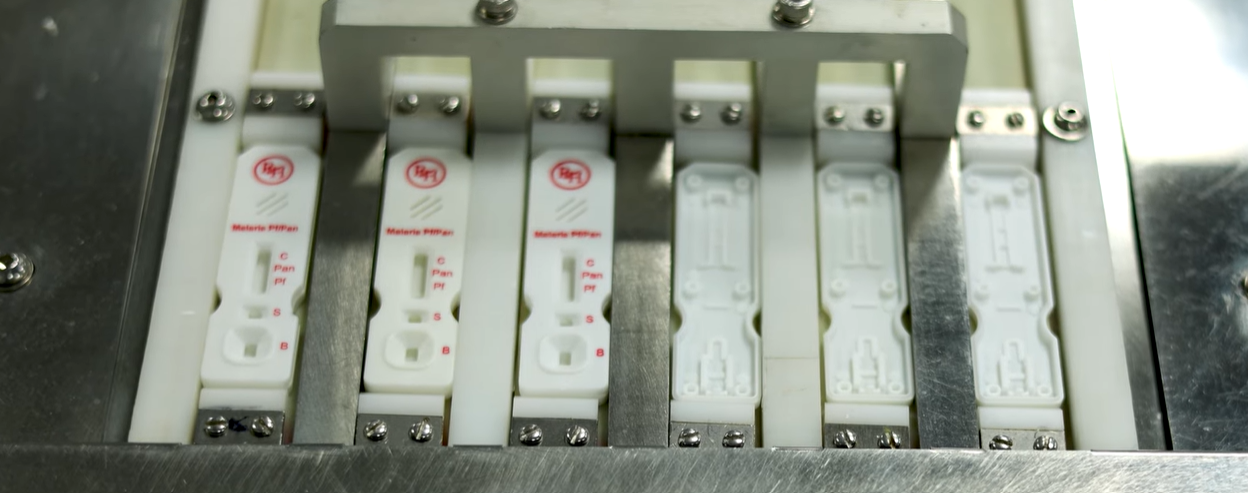
Inside the dehumidified room, the test devices are assembled. The cassettes are engraved according to the parameters for the particular test. The membrane contains the coated strip, which is fitted with the gold conjugate, along with the sample and absorbent sections. The completed strip is then placed inside the plastic test cassette. Each test is packed individually in an aluminium pouch containing silica gel, along with a dropper and test pricker, and the pouch is sealed using a heat-sealing machine. From there, the completed tests move to the final product section, where they are packed into inner boxes before being placed into outer packaging for shipment.
Throughout the process, another team is watching. The quality control team takes samples from the batches being manufactured every day. Production is done in batches, Sumbai explains: “This helps prevent contamination and allows the team to identify a problem and trace it back to a particular batch if necessary.” The WHO requires quality assurance for malaria RDTs, with prequalification based on laboratory performance, dossier review and inspection of manufacturing facilities for products procured through WHO and several international agencies.
One of the biggest challenges in manufacturing diagnostic kits locally is obtaining specialised materials for production
The push for local diagnostics is also becoming part of Kenya’s health policy. In June 2026, Kenya launched its Health Products and Technologies Local Manufacturing Strategy for 2026 to 2030, which includes diagnostics among the products targeted for greater local production.

In July 2024, the WHO African Region also adopted a framework aimed at strengthening local production of medicines, vaccines and other health technologies, with a target for locally produced medical products to reach 55 per cent of the African market by 2035, alongside other targets for regulatory capacity, technology transfer and regional procurement.
Manufacturing diagnostic kits locally is not without challenges, however. One of the biggest is obtaining the specialised materials needed for production. Sumbai says there can be shortages or a lack of serum from recognised manufacturers. “The materials can also be expensive,” he adds.
For Vora, though, the goal is bringing diagnostic manufacturing closer to the diseases affecting African populations. As the test kits eventually leave the factory, they carry only one question to answer: what are you ailing from? But that answer will only come if you open it and use it.