With so few paediatric anaesthesiologists in the country, thousands of Kenyan children face the greatest danger the instant anaesthesia begins.
September 17 marks World Patient Safety Day. This year’s global theme, “Safe care for noncommunicable diseases,” rightly turns attention to the long, chronic conditions that quietly claim the most lives worldwide. In my practice of putting children to sleep during surgery, this year’s campaign applies with equal force to a much shorter, more acute encounter between a child and a health system: the operating table.
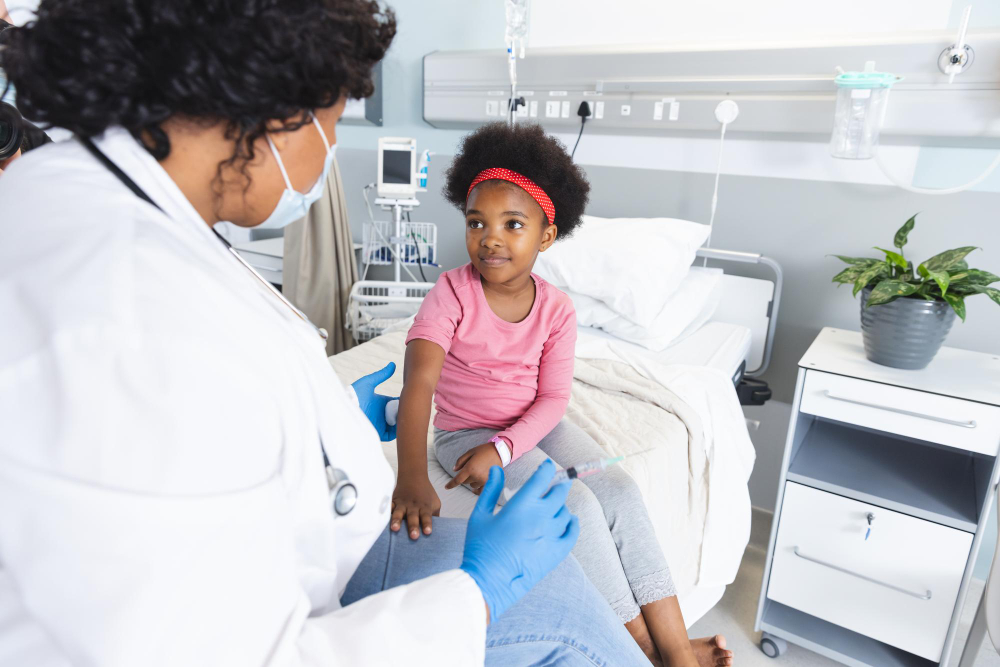
For a child born with a cleft, a clubfoot, hydrocephalus (water in the brain) or a traumatic injury, the single most dangerous moment of their treatment is often not the surgery itself, but the anaesthesia that makes it possible.

Kenya illustrates an alarming gap in paediatric anaesthesia, one that researchers have flagged in reviews of how national surgical and anaesthesia policies across the region treat children’s care, including a 2023 policy analysis in BMJ Open and a 2024 systematic review in the Journal of Pediatric Surgery. Out of the country’s roughly 52 million people, an estimated 18.5 million are children under 15, representing more than a third of the population. Kenyan clinical estimates suggest that up to 11 per cent of child patients presenting to hospital require surgery, and that about 90 per cent of these conditions are correctable if treated.
A Kenyan population-based study by Wu, Poenaru and Poley, conducted between July 2009 and March 2010 among 5,559 children from 1,909 households, found a prevalence of selected congenital surgical anomalies of 6.3 per 1,000 children, carrying a burden of 54 to 120 disability-adjusted life years (DALYs) per 1,000 children. Trauma adds further pressure: a prospective paediatric trauma registry at Shoe4Africa Children’s Hospital found that 56.2 per cent of the 425 children enrolled required an operation during their hospital stay, while a separate series at Aga Khan University Hospital, Nairobi, drawing on cases from 2016, put that figure at 71.5 per cent.
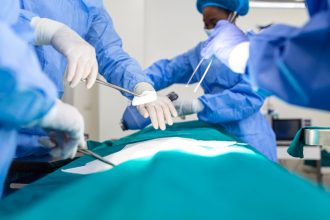
Yet Kenya currently has an estimated 20 paediatric anaesthesiologists for the entire country, according to a 2026 register by the Society of Paediatric Anaesthesiologists of Kenya (SPAK), a severe shortage that itself needs formal validation against a national registry. Set against 18.5 million children, that works out to roughly one paediatric anaesthesia specialist for every 925,000 children. This is not a workload calculation; it is a stark illustration of how thin the safety net is.
Specialist capacity is also concentrated in a handful of referral hospitals, meaning most county facilities rely on general anaesthetists whose exposure to complex paediatric and neonatal cases varies widely. Kenya’s broader surgical, anaesthesia and obstetric workforce has been estimated at 2.35 per 100,000 people, a 2022 review in BMC Surgery found, against a benchmark of 20 per 100,000 set by the Lancet Commission on Global Surgery in its landmark 2015 report.
Getting anaesthesia wrong in cleft surgery turns a routine, life-changing procedure, into a life-threatening emergency
This is not a uniquely Kenyan story. Across Sub-Saharan Africa, a shortage of trained personnel, inadequate infrastructure and limited access to basic monitoring technology combine to put millions of children undergoing surgery at unnecessary risk, regardless of how skilled the surgeon holding the scalpel may be.
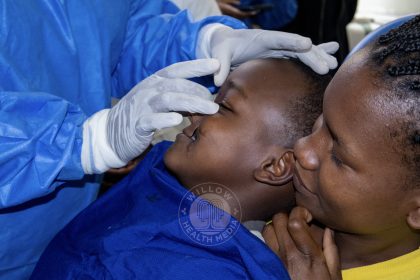
Cleft lip and palate is often framed as a “simple” condition, correctable with a single operation that costs a few hundred dollars. However, in my experience, cleft surgery is, in anaesthetic terms, one of the more demanding paediatric cases: it involves a shared, distorted airway, a young or newborn patient with a small physiological reserve, and a surgical field that sits directly on top of the breathing tube. Airway compromise and delayed bleeding are the complications anaesthesia and surgical teams most fear in these children. Get the anaesthesia wrong, and a routine, life-changing procedure can become a life-threatening emergency.
This is precisely why cleft care has become one of the sharpest global test cases for paediatric anaesthesia safety, and why Smile Train, the world’s largest cleft-focused organisation, has spent the past several years investing as heavily in anaesthesia safety as it has in surgery itself. In Kenya alone, its network of around 21 to 22 partner hospitals has provided free treatment to more than 14,000 patients since the programme began in 2002. The Smile Train model has focused on the systems that make each of those operations safe, not just available.
Three interventions stand out. The first is capnography. A capnograph is a device that monitors the carbon dioxide a patient exhales under anaesthesia. Without it, it is like flying blind through a patient’s airway. It is considered standard of care in wealthy countries because it is often the earliest warning sign that a child’s airway has become obstructed or that ventilation has failed, sometimes minutes before a pulse oximeter would show a drop in oxygen.
There is a shortage of providers confident and competent in paediatric anaesthesia
Yet it has historically been unavailable in most low- and middle-income hospitals, largely because commercial devices are too expensive, too fragile, or unsuited to paediatric use. Since 2020, the Smile Train-Lifebox Safe Surgery and Anaesthesia Initiative has worked to close that gap, developing and field-testing an affordable, durable capnograph built for low-resource operating theatres and paediatric patients. Roll-outs are already under way, pairing each new device with hands-on training for the anaesthesia providers who will use it. The two organisations are advocating at the global level for capnography to be adopted as a requirement in every operating theatre.
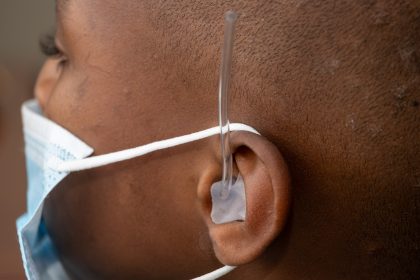
Second is investment in training the anaesthesia workforce, not just the surgeons. Smile Train Africa runs a suite of structured courses aimed squarely at the bottleneck identified above: the shortage of providers confident and competent in paediatric anaesthesia. Its “Safe Anaesthesia Delivers Smiles” course is a four-day programme for anaesthesia providers of varying seniority who deliver anaesthesia for cleft surgery; its curriculum has been recognised by international anaesthesia bodies as a training standard for cleft anaesthesia in low- and middle-income countries, and has been translated into French and Portuguese to extend its reach across the continent.
A companion “Safe Paediatrics” course refreshes both physician and non-physician anaesthetists on airway management, fluid resuscitation, and paediatric life support. Alongside The ELMA Foundation and Vanderbilt University Medical Center, Smile Train has also launched the Paediatric Anaesthesia Training in Africa fellowship, a one-year, WFSA-endorsed programme now running at institutions in Zambia, Nigeria and Uganda, designed to grow a home-grown specialist workforce rather than one dependent on visiting missions.
Third is building the infrastructure around the operating table. Smile Train has invested heavily in supporting over 100 paediatric operating rooms with stand-alone solar theatres that keep a child “breathing” even in unpredictable power outages.
Kenya should double the specialist paediatric anaesthesia workforce from 20 in three to five years
Safety in the operating room rests on systemic investment that determines whether a child survives their surgery. Smile Train’s model offers a template for exactly this kind of investment. It will not, on its own, close the gap between 20 paediatric anaesthesiologists and the workforce Kenya’s children actually need. However, it demonstrates what closing that gap looks like in practice: capnographs in operating rooms, fellows completing year-long training programmes, and trained anaesthesia providers in local and under-resourced communities.
Health financing and patient safety systems share the same underlying truth as financial ones: resilience is built long before a crisis hits, through investment in institutions, standards and human capacity.
Kenya should look to expand the specialist paediatric anaesthesia workforce from roughly 20 toward at least 40 within three to five years; establish regional paediatric surgical hubs with proper anaesthesia, recovery and critical-care support; strengthen the skills of the non-specialist providers who deliver most paediatric anaesthesia in practice; and make perioperative safety, from monitoring and trained staff to appropriate equipment and a referral pathway, a non-negotiable national standard, not an aspiration reserved for referral hospitals in Nairobi, as recent policy reviews of the region have urged.
Every child who needs surgery deserves not only access to an operating table, but the assurance that the anaesthesia keeping them safely asleep through it has been delivered by a trained provider, monitored by equipment built for their small bodies, and backed by a system designed to catch trouble before it becomes tragedy.
Dr Emma Mutio is a Paediatric Anaesthesiologist and the Financial Secretary, Pan African Association of Cleft Lip and Palate (PAACLIP).
Sources: Wimmer S, Truche P, Guadagno E, et al. Assessing the inclusion of children’s surgical care in National Surgical, Obstetric and Anaesthesia Plans: a policy content analysis. BMJ Open. 2023;13:e051248.
Hyman GY, Obayagbona KI, Mugwe R, Makasa EM. The Need for Children’s Surgical Care Prioritisation in National Surgical Care Policies: A Systematic Review of National Surgical Obstetric and Anaesthetic Plans (NSOAPs) in Sub-Saharan Africa. Journal of Pediatric Surgery. 2024;59(2):299–304.
Wu VK, Poenaru D, Poley MJ. Population-based survey of congenital surgical anomalies in Kenya, conducted July 2009–March 2010 (5,559 children, 1,909 households).
Shoe4Africa Children’s Hospital paediatric trauma registry (425 children enrolled).
Aga Khan University Hospital, Nairobi, paediatric trauma series, 2016 cases.
Kamath A, et al. A Narrative Review of Kenya’s Surgical Capacity Using the Lancet Commission on Global Surgery’s Indicator Framework. BMC Surgery. 2022.
Meara JG, Leather AJM, Hagander L, et al. Global Surgery 2030: Evidence and solutions for achieving health, welfare, and economic development. The Lancet. 2015;386(9993):569–624.
Society of Paediatric Anaesthesiologists of Kenya (SPAK). 2026 SPAK Register of Paediatric Anaesthesiologists in Kenya. Nairobi: SPAK; 2026.