


Kenya’s past vaccination drives, from polio to Covid-19, were repeatedly slowed down by hesitancy, misinformation and resistance, a dangerous pattern experts warn could prove far deadlier if Ebola strikes.
For decades, vaccines have been among the most powerful tools in public health, helping eliminate or control diseases that once killed millions. Yet in Kenya, vaccine hesitancy and resistance have repeatedly weakened disease control efforts, from polio to Covid-19.

As East Africa faces renewed Ebola threats, scientists are warning that public acceptance of vaccines could be the difference between rapid containment and deadly spread. That warning is especially urgent as the Democratic Republic of Congo battles the Bundibugyo Ebola outbreak and Kenya remains on high alert due to its porous borders and busy regional transport corridors.
During a webinar on June 10, 2026 titled Demystifying the Ebola Virus: Myths vs Facts, Kenyan scientists and infectious disease experts outlined the country’s preparedness and the growing race to develop vaccines against one of the world’s deadliest diseases. Although Ebola Virus Disease (EVD) still carries high fatality rates, experts say it is no longer the mysterious threat it was decades ago.
Prof Omu Anzala, a virologist and senior research scientist at the KAVI-Institute of Clinical Research at the University of Nairobi, says decades of research have transformed understanding of the virus, its transmission and how outbreaks can be contained.
The virus was first identified in 1976 near the Ebola River in what is now the Democratic Republic of Congo. Since then, scientists have identified six Ebola species.
“The first one identified was Ebola Zaire. We also have Ebola Sudan, Bundibugyo, Tai Forest, Reston and Bombali,” Prof Anzala explained.
Not all cause disease in humans, but their continued emergence highlights why vaccine development remains critical. Kenya’s own surveillance has already detected the Bombali strain in bats in Taita Taveta, Busia and Bungoma.
Misinformation about transmission often fuels fear, stigma and resistance to public health interventions, including vaccination
“Through the research work we’ve been doing in Kenya and One Health, we have actually identified Bombali virus in various parts of Taita, Bungoma as well as in Busia,” said Prof Anzala.
The discovery reinforces a key scientific reality: Ebola outbreaks begin with animal-to-human spillovers.
“Initial infection is always a spillover from an animal to a human,” he said.
Once inside human populations, Ebola spreads through direct contact with infected bodily fluids, not through the air; a distinction experts say remains widely misunderstood.
“As of now, what we know is that Ebola is transmitted through contact,” Prof Anzala said.
That matters because misinformation about transmission often fuels fear, stigma and resistance to public health interventions, including vaccination.
“Between 1976 and now, there has been no documented human-to-human airborne transmission in any Ebola outbreak,” he said.
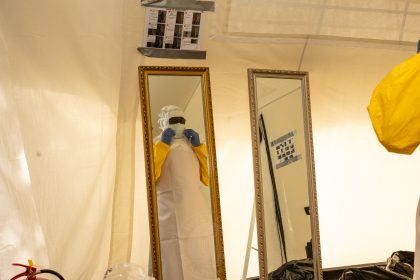
Still, experts caution that viruses mutate constantly. While there is no evidence yet of airborne evolution, mutations raise concern over future strains that could become more transmissible, harder to detect, or resistant to existing vaccines and therapies. That possibility makes vaccine innovation urgent.
Kenya’s vulnerability remains high. Dr Loice Ombajo, an infectious disease specialist and co-director of the Centre for Epidemiological Modelling and Analysis at the University of Nairobi, says the country’s strategic location makes imported cases highly likely.
“I wish we had good news of saying we’re not vulnerable, but the truth is our level of vulnerability is fairly high,” she said.
Ring vaccination works by vaccinating an infected person’s close contacts, and then the contacts of those contacts
Thousands of travellers and truck drivers move through Kenya’s borders daily. A single missed infection could quickly trigger widespread exposure.
“If you miss that at the border, the amount of contact then increases quite exponentially,” Dr Ombajo warned.

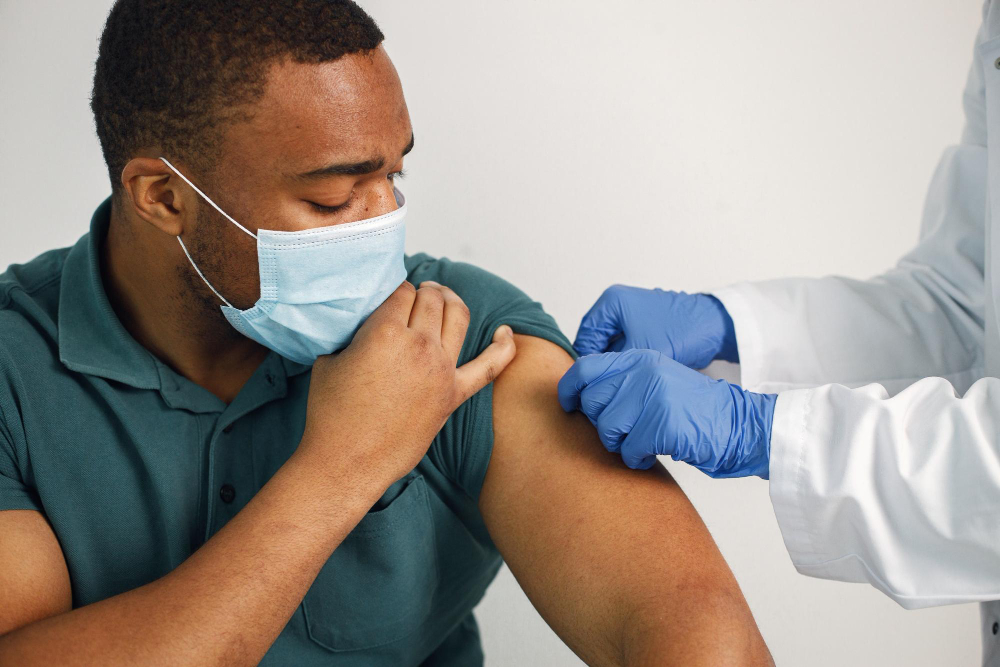
This is where vaccines, especially ring vaccination, could become Kenya’s strongest defence. Ring vaccination works by vaccinating an infected person’s close contacts, and then the contacts of those contacts, effectively building a protective buffer around the virus. It was this strategy that helped contain Ebola outbreaks in West and Central Africa.
“Once you get a contact, you get a contact of contacts, and then you use this vaccine because it induces an immune response very quickly,” Prof Anzala explained.
Currently, two licensed Ebola vaccines exist, both targeting the Zaire strain. The first is a recombinant vaccine used during outbreaks because it generates immunity quickly. The second uses a prime-boost model for longer-term protection, particularly for frontline health workers.
“It is actually recommended for frontline healthcare workers because it takes a bit of time,” Prof Anzala said.
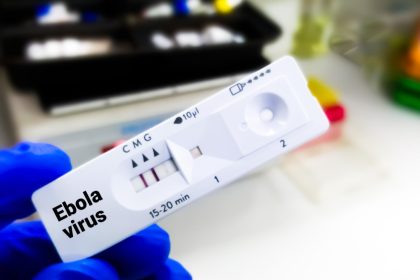
But the current Bundibugyo outbreak has exposed a major gap whereby existing vaccines offer little or no direct protection against this species, accelerating the race for new vaccines.
Prof Anzala says at least three vaccine candidates targeting Bundibugyo are now in development. One is being developed by Moderna using mRNA technology. Another comes from the University of Oxford using its ChAdOx platform. A third is being developed by the International AIDS Vaccine Initiative using a vesicular stomatitis virus platform.
“We have at least three products that should be getting into phase one clinical trials for the Bundibugyo strain,” Prof Anzala said.
For Kenya, this could be significant. If approved, a Bundibugyo-specific vaccine would allow health officials to deploy ring vaccination immediately around imported cases, potentially stopping outbreaks before they spread widely.
But vaccine access alone will not be enough. Kenya’s long history of hesitancy, driven by misinformation, distrust and political narratives, remains a major risk.

During Covid-19, false claims about vaccines slowed uptake and cost lives. Experts fear similar resistance during an Ebola outbreak could prove even deadlier, given Ebola’s speed and fatality. The consequences go beyond individual protection. Low vaccine acceptance weakens herd immunity, increases transmission chains and makes containment far harder.
Prof Revathi Gunturu, Head of Diagnostic Microbiology at Aga Khan University Hospital, says another challenge is diagnosis.
“The patient symptoms present like many infectious diseases we see routinely,” she said.
Early Ebola symptoms often resemble malaria, typhoid and other viral illnesses. This makes travel history and exposure tracing critical.
“It is not possible clinically to make a diagnosis unless there is a very clear history of exposure or travel,” she said.
The weakest links remain local health facilities, where isolation spaces are limited and infection prevention systems are often underdeveloped
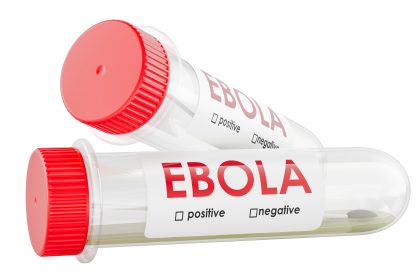
Testing remains essential. Kenya currently has four designated Ebola testing laboratories: the National Public Health Laboratory, KEMRI Nairobi, KEMRI Kisumu and a mobile laboratory in Busia.
“Our laboratories are fully capable of making a quick diagnosis,” Prof Gunturu said.
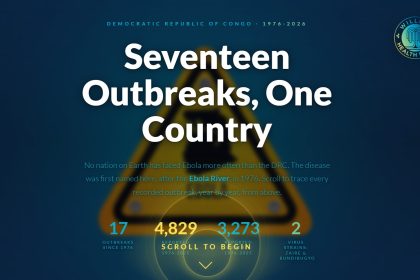
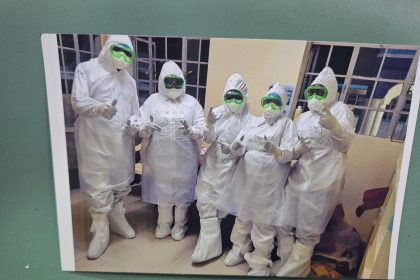
But experts say testing alone cannot stop outbreaks. The weakest links remain local health facilities, where isolation spaces are limited, and infection prevention systems are often underdeveloped.
“Are we able to triage this patient, isolate them and collect samples safely?” Prof Gunturu asked.
This gap matters because delays in isolation create opportunities for spread before vaccines can even be deployed. Experts say Kenya must now invest in practical readiness, including stronger border surveillance, better clinician training, community education and rapid-response systems.
“It does not have to be a dedicated infectious disease unit,” Dr Ombajo noted. “What matters is preventing contact with other patients and staff.”
Beyond vaccines, experts stress the importance of hand hygiene, safe burials, early reporting and public cooperation. Community trust, they say, remains central as fear and stigma often drive patients underground, delaying treatment and increasing transmission.

“How much Ebola spreads is very dependent on how communities behave,” Dr Ombajo said.
Scientists are now pursuing what may be the most ambitious breakthrough yet: a universal pan-filovirus vaccine capable of protecting against all six Ebola species.
“The critical question we are asking ourselves is whether we can get a pan-filovirus vaccine,” Prof Anzala said.
If successful, it could fundamentally change Africa’s outbreak preparedness. For Kenya, the lesson is clear: vaccines save lives, but only when people trust them. As new Ebola vaccines move closer to approval, the country has a chance to prepare not just its laboratories and hospitals, but its communities too.
In a region where outbreaks remain a constant threat, vaccine acceptance may be Kenya’s strongest shield, and Africa’s best hope for building lasting herd immunity against one of the world’s most dangerous viruses.
We believe in the free flow of information
Republish our articles for free, online or in print, under Creative Commons licence.