

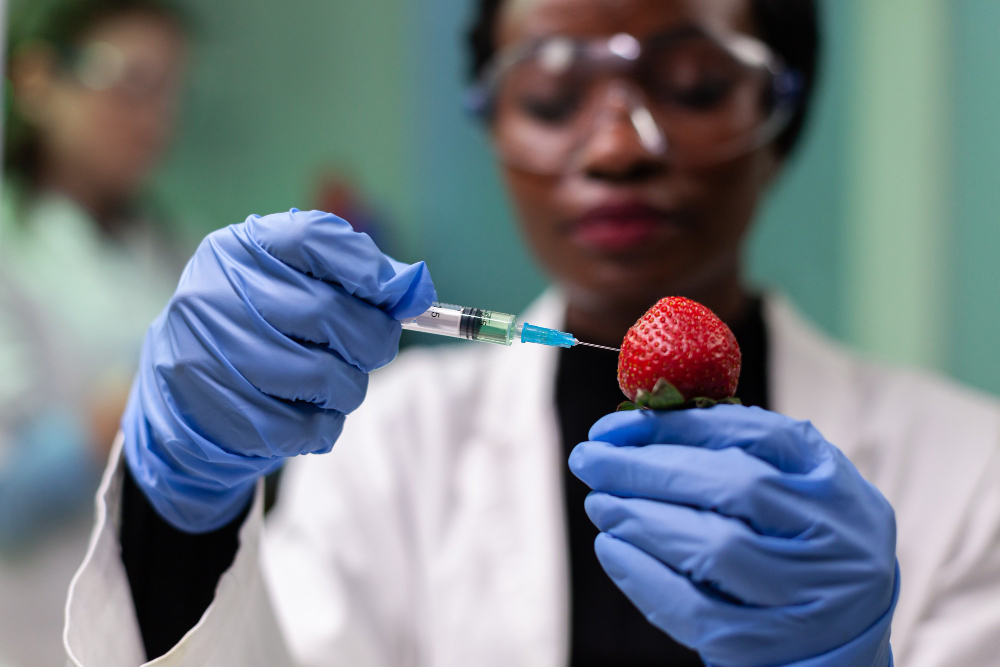

Farmers mix antibiotics into chicken feed to prevent disease, but consumers end up eating the drugs- and developing resistance.
Dr John Kariuki vividly recalls the painful fall in his bathroom five years ago that hurt his hip joint. An X-ray missed the fracture, and a clinician misread the results. “He misdiagnosed and gave me painkillers and muscle relaxants and sent me home,” recalls Dr Kariuki, a veterinary with the Ministry of Agriculture.
The pain persisted for ten days. He requested a CT-Scan for a second opinion, which revealed a complete fracture of his right hip joint – with no bleeding or wound at the injury site.
“Surgery was recommended to put in internal co-optations, an artificial hip joint, and using plates and screws, they would attach the hip joint to an almost normal position,” he told Willow Health Media.
During his month-long hospitalisation, medics diagnosed him with septicaemia, a blood infection. Discharged on quinolone-class antibiotics, the pain lingered, and the surgical wound wouldn’t heal. As a veterinarian with expertise in antimicrobial resistance, he suspected his infection might be a case of it. Testing confirmed his fears – his septicaemia was resistant to all but one antibiotic.
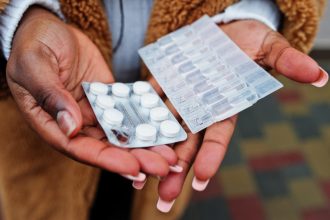
Dr Kariuki’s was a classic case of antimicrobial resistance (AMR) – which occurs when bacteria and other germs evolve to survive the medicines designed to kill them. AMR develops when antibiotics are misused: wrong dose, wrong duration, or used when not needed. Some bacteria survive, grow resistant, multiply, and spread.
In Kenya, seven in ten disease-causing bacteria are now resistant to antibiotics, a crisis killing thousands annually
“It is a very dangerous way of dealing with the diseases because if you don’t take the full dose, you expose the pathogen to low doses of the antibiotic, which provokes the emergence of further resistance,” said Prof Samuel Kariuki, Continental Lead, Africa, Eastern Africa Director at DNDi and Africa Lead for Global Antibiotic Research & Development Partnership (GARDP).
The scale of the problem across East Africa is sobering. A 2019 study found Tanzania had the most AMR deaths in the region – 13,000 – followed by Kenya at 8,540 and Uganda at 7,110. When deaths where AMR was a contributing factor are included, Tanzania recorded 54,000 and Kenya 34,000.
In Kenya, seven in ten disease-causing bacteria are now resistant to antibiotics, a crisis killing thousands annually and threatening to make common infections untreatable. The culprit is widespread antibiotic misuse in both humans and animals, compounded by inadequate funding. In 2021 alone, drug-resistant germs directly killed about 6,670 Kenyans and contributed to nearly 28,500 deaths, according to Kenya Medical Research Institute (KEMRI) data.

The economic toll is equally alarming. One study estimated the global direct healthcare costs of AMR at $66 billion per year or 0.7 per cent of global health expenditure. “The median cost of treating a resistant infection per hospital admission varies significantly, ranging from $100–$30,000 (Ksh12,933- Ksh3.8 million)depending on a country’s income level and the type of infection,” the study found.
The problem runs deep in Kenya’s agricultural sector. About half of the antibiotics used in people – including penicillin and tetracycline – are also used in animals. Dr Maina Ngotho, a lecturer at Jomo Kenyatta University of Agriculture and Technology (JKUAT), has spent two years studying AMR in livestock in Nyeri County. His findings are alarming: seven in every ten disease-causing bacteria are resistant to antibiotics.
When farmers skip waiting periods before consuming milk from treated animals, antibiotic residues accumulate in the human body
The problem begins with farmers using antibiotics without professional guidance, buying drugs over the counter without prescriptions. Some even mix antibiotics into chicken feed as a preventive measure, meaning consumers ingest these drugs through animal products.

“The use of antimicrobials is very high in the sense that people can buy control drugs over the counter as it is uncontrolled,” Dr Ngotho said. “Now it is becoming very clear that widespread use without professional guidance is now impacting badly on the health of livestock.”
When farmers skip waiting periods before consuming milk from treated animals, antibiotic residues accumulate in the human body. “The constant accumulation of the residues in humans and in the products meant for human consumption is then how the transfer happens. When humans then use the same antibiotic, they have already developed an inability to deal with the disease,” Dr Ngotho explained.
He noted that easy access to antibiotics through agrovets – without veterinary consultation – is a key driver. “So, you find that there is a lot of leeway for farmers to access antibiotics from the agrovets without consulting.”
Experts are responding with the One Health Approach – a strategy backed by WHO, FAO, and the UN Environment Programme (UNEP) that recognises human, animal, and environmental health as inseparable. In 2024, WHO reaffirmed that fighting AMR requires this approach because “resistant organisms can spread quickly through healthcare facilities, animals, food and the environment, making the treatment of certain infections in people and animals more challenging, and increasing the risk of disease spread, severe illness and death.”
When cholera broke out in Tana River and western Kenya, oral vaccines reduced cases within a month
Kenya’s response is anchored in a National Action Plan led by the National Antimicrobial Stewardship Interagency Committee (NASIC), drawing expertise from both the health and agriculture ministries.

“It is resistance carried by pathogens, and 70 per cent of these pathogens are zoonotic, meaning that they have an origin in livestock or animals,” Prof Kariuki noted. “That is why it is important that the One Health approach does not only deal with antimicrobial resistance but also deals with the pathogens themselves.”
Vaccines are part of the solution. When cholera broke out in Tana River and western Kenya, oral vaccines delivered through the Ministry of Health dramatically reduced cases within a month, Prof Kariuki said.
But NASIC faces a crippling funding gap. A 2025 report estimates it needs Ksh2.035 billion ($13.69 million) to deliver the 2023–2027 multisectoral national action plan – yet limited domestic and donor funding remains one of its biggest obstacles. Funding comes from the Ministry of Health, county governments, and development partners including the Fleming Fund, USAID, WHO, and CDC. The National Research Fund recently received Ksh489.5 million for the Africa AMR-STOP project targeting environmental antimicrobial resistance.
AMR should help us to understand linkage between humans, the environment and animals in health
Meanwhile, a study conducted at Kenyatta National Hospital’s Critical Care Unit found high antibiotic prescription rates driven by incorrect choice and duration of use, confirming the problem cuts across both human and animal health.
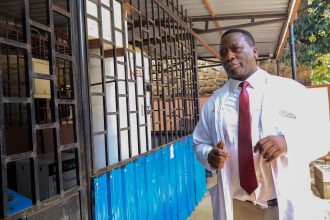
Kenya has several laws governing antibiotic use, including the Pharmacy and Poisons Act, the Food, Drugs and Chemical Substances Act, the Public Health Act, and the Animal Diseases Act. Under the Pharmacy and Poisons Act, illegally selling antibiotics can attract a jail term of up to three years, a fine of Ksh1 million, or both. Yet enforcement remains weak.
Dr Ngotho remains optimistic. “If AMR does nothing else, it helps us to understand the linkage between humans, the environment and animals in terms of their health,” he said. “The medic and the vet must be keen, and that way we reduce the intensity of these antibiotics and therefore the seepage into the environment becomes less.”
Dr Kariuki, now a member of the WHO Taskforce on AMR Survivors, calls for responsible antibiotic use and greater donor investment in new drug research. His message to funders is pointed: “I must remind them that they are also vulnerable. They should not wait until one of them who holds the key to the funds gets this kind of experience.”
We believe in the free flow of information
Republish our articles for free, online or in print, under Creative Commons licence.