


For decades the continent consumed what others produced. A billion-dollar facility in South Africa and Kenya’s entry into mRNA manufacturing are changing that calculus.
Africa consumes the world’s vaccines but produces less than one per cent of them, according to the World Health Organisation (WHO). That is now changing. A landmark investment in South Africa and Kenya’s entry into a global mRNA manufacturing programme mark a turning point in the continent’s long struggle for health sovereignty.
In South Africa, Biovac has secured the largest single investment in African vaccine manufacturing in recent memory – a financing package of over €75 million (Ksh11.38 billion) from the European Investment Bank Group and a $20 million (Ksh2.58 billion) senior loan from the International Finance Corporation – to build Africa’s first end-to-end multi-vaccine manufacturing facility in Cape Town. In Kenya, the government has joined a WHO-led programme to produce mRNA vaccines locally, with the first trial batch targeted for release by the end of 2027. Together, the two developments signal a decisive shift in how Africa intends to protect its people.
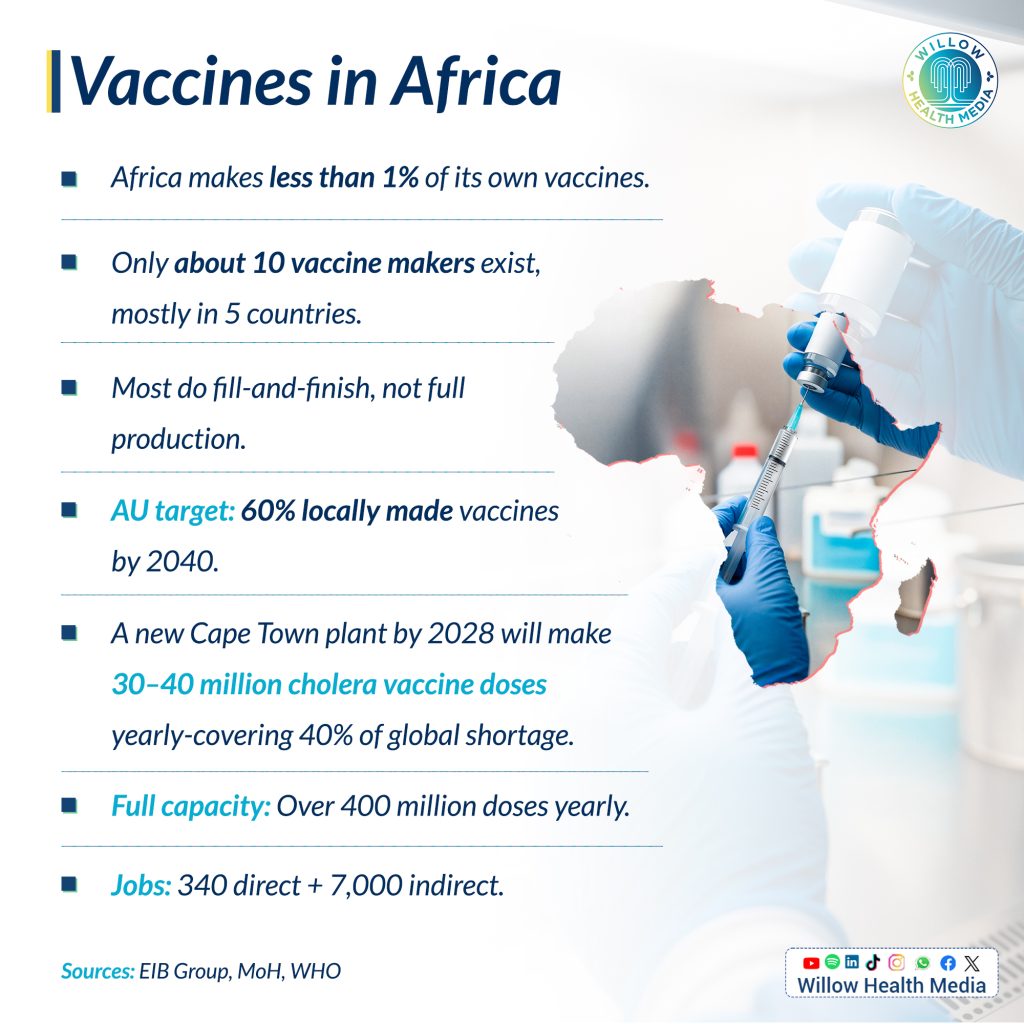
The backdrop to both moves is stark. Africa has fewer than ten vaccine manufacturers, concentrated in just five countries: Egypt, Morocco, Senegal, South Africa, and Tunisia. Most operate only at the final stages of production, handling packaging, labelling, and occasionally fill-and-finish processes, with very little upstream manufacturing taking place.
The continent does, however, have about 80 sterile injectables facilities, which present a significant opportunity for expanding vaccine production, given that vials remain the dominant dosage form across Africa. This reality defined African health security for decades, and the COVID-19 pandemic turned it into a crisis. As wealthy nations raced to secure supplies, many African countries waited years for doses that arrived too late.
It is precisely that experience that is now driving action. In South Africa, the new Biovac greenfield facility in Cape Town will, upon its completion in 2028, become Africa’s first end-to-end multi-vaccine manufacturing site. End-to-end is a significant distinction.
Biovac will carry out the entire production process domestically, removing a critical global supply disruptions
Most vaccine manufacturing on the continent has historically relied on importing the active pharmaceutical ingredient, the biologically active core of a vaccine, and performing only the final steps locally. Biovac’s new facility will carry out the entire production process domestically, removing a critical dependency that has left the continent exposed to global supply disruptions.
The financing behind the project reflects the scale of ambition. The European Investment Bank Group is providing €75 million in quasi-equity, long-term flexible capital designed to support growth while sharing risk. The International Finance Corporation (IFC) has arranged a $20 million senior loan, with further financing still being mobilised. The investment is backed by the European Commission through its Human Development Accelerator guarantee programme, implemented in partnership with the Gates Foundation, and forms part of the EU’s Global Gateway strategy.
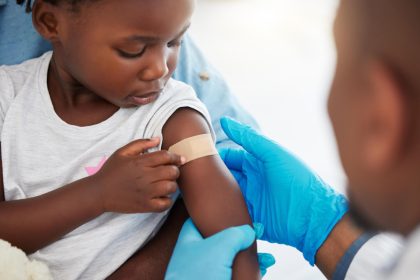
Nadia Calviño, President of the European Investment Bank, left little doubt about the scale of the moment. “With this project, alongside our partners, we are making history,” she said. “This will save lives: protecting millions of children from serious illnesses, and equipping scientists and health workers to safeguard their own communities.”
The facility will begin production with the oral cholera vaccine, a formulation that is chronically undersupplied globally. At initial capacity, the site will produce 30 to 40 million doses annually, addressing roughly 40 per cent of the worldwide shortage in this vaccine alone. From there, production will expand to include vaccines against polio, pneumonia, and meningitis, diseases that continue to kill children across the region in preventable numbers. At full capacity, the facility will produce more than 400 million doses of multiple vaccines annually.
Beyond the doses themselves, the project carries a significant economic dimension. The facility is expected to create more than 340 skilled jobs directly, and over 7,000 additional jobs indirectly. Around half the manufacturing equipment will be sourced from European suppliers, reflecting a partnership model built on mutual benefit rather than simple aid.
The facility will produce 40 million vaccines a year, cut 40% of the global cholera supply gap, create over 340 skilled jobs
According to EU Commissioner for International Partnerships Jozef Síkela: “We are using our guarantee under the Human Development Accelerator to unlock private and multilateral investment in a facility that will produce up to 40 million vaccine doses a year, address 40 per cent of the global cholera supply gap and create more than 340 skilled jobs. That is health sovereignty combined with real development impact.”

Morena Makhoana, Biovac’s Chief Executive Officer, framed the investment as the realisation of a long-held vision. “Expanding local vaccine development and end-to-end manufacturing on African soil for global supply has always been Biovac’s vision, and this funding enables us to accelerate it,” she said.
“The new facility will ensure a reliable supply of life-saving vaccines for Africa and expand our role in building skills, advancing technology transfer and driving vaccine innovation that will benefit generations to come.”
While South Africa builds production capacity at scale, Kenya is pursuing a parallel path, acquiring not just the equipment to manufacture vaccines but the underlying scientific knowledge to develop them.
In February 2026, Kenya officially joined the WHO and Medicines Patent Pool mRNA Technology Transfer Project, a programme conceived in direct response to the inequities the COVID-19 pandemic exposed. Kenya is one of six African nations chosen to participate.
The urgency behind Kenya’s push is rooted in lived experience. “The COVID-19 pandemic exposed our vulnerabilities, highlighting the necessity for Africa to develop its own manufacturing,” said Dr Ouma Oluga, Principal Secretary for Medical Services.
“Investing in local manufacturing not only strengthens our health systems but also creates jobs and stimulates economic growth.”
Through the programme, the Kenya BioVax Institute will receive comprehensive training covering the full production process, from research and development through to large-scale manufacturing. The Institute’s facility in Embakasi is undergoing infrastructure upgrades to support the work, and the Kenya Medical Research Institute will serve as a key scientific partner.
Kenya BioVax Institute’s first phase of vaccine manufacturing has been completed
Kenya has also achieved WHO Maturity Level 3, a regulatory benchmark that positions the country as a credible pharmaceutical manufacturing hub and opens pathways for its future products to be accepted by international procurement agencies.
Health Cabinet Secretary Aden Duale, visiting the Kenya BioVax Institute in January 2026, confirmed that the first phase of the country’s vaccine manufacturing facility has been completed, with the second phase, involving advanced fill-and-finish systems and critical equipment installation, now underway.
The first trial batch of locally manufactured vaccines is targeted for release by the end of 2027. The Institute is also set to receive support through the World Bank’s Regional Health Emergency Preparedness, Response, and Resilience programme.
Crucially, the mRNA platform Kenya is acquiring is not a single-purpose tool. It can be applied to diseases that have long burdened the region, including malaria, tuberculosis, and outbreak-prone infections such as Rift Valley fever.
Producing own vaccines means protecting people without depending on external supply chains
In the event of a new health emergency, the same platform can be rapidly repurposed, cutting the time between a threat emerging and a response being available. “When a country can produce its own vaccines, it can protect its own people without depending on external supply chains that may not always be reliable or accessible,” said Dr Edwin Kojo Ogara, WHO Kenya’s technical lead for essential drugs and medicines. “Kenya’s entry into this programme is an important step toward building that capacity.”

Both developments sit within a continental framework. The Biovac project is formally aligned with the African Union’s Vision 2040, which sets a target of producing 60 per cent of vaccines consumed on the continent locally. The Gates Foundation’s Kalpana Kochhar noted that expanding vaccine access and advancing health equity remain urgent priorities. “This announcement, which enhances the continent’s ability to produce its own vaccines, shows how targeted partnerships can help strengthen health systems and address persistent gaps in access.”
Ethiopia’s Tafara, IFC Regional Vice President for Africa, said building local manufacturing capacity is both a development imperative and a strategic investment in resilience. “This innovative financing demonstrates how multilateral development banks can work together to unlock transformative investments and lay the foundations for a sustainable vaccine manufacturing industry in Africa.”