



As publishers confront AI’s disruptive power, African newsrooms are proving that distinctive, on-the-ground journalism remains impossible to automate.
The world’s most powerful media executives gathered this week on France’s sun-drenched Mediterranean coast with urgency in their eyes and a single word on their lips: artificial intelligence. At the 77th WAN-IFRA World News Media Congress, at the historic Palais du Pharo overlooking the glittering port of Marseille, publishers, editors and journalists from more than 60 countries confronted the most disruptive force to hit their profession since the internet.

The mood was part defiance, part anxiety. Artificial intelligence, the consensus held, is both an extraordinary editorial tool and an existential commercial threat. The question at the heart of the three-day congress from June 1, 2026, was not whether AI would transform the news industry, but whether that transformation would leave journalism standing. Or bending to the wind of change.
Opening the congress on Monday, New York Times Chairman and Publisher A.G. Sulzberger did not mince words. He accused AI companies of committing “brazen theft of intellectual property” on an “unprecedented scale,” describing a technology industry that had effectively “strip-mined” publishers’ websites without permission or compensation. “The hijacking of the public square,” he told the assembled delegates, “Is made possible by the original sin that animates their AI products.”
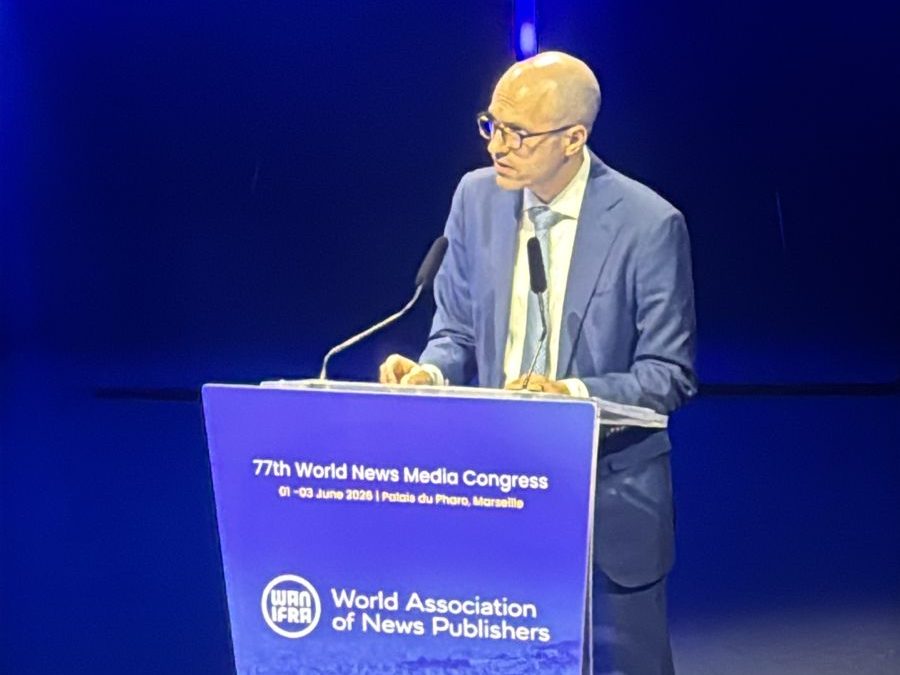
In his keynote address titled AI, Journalism and the Uncertain Future of the Public Square, Sulzberger indicted AI models, which are mostly built from four ingredients: talent, computing infrastructure, energy and data. While the first three are paid for, ‘data’ that simplify flatters theft through AI companies, making creative work sound like a commodity that’s snatched for free. “Tech giants strip-mine news websites without permission or compensation,” he said. “They repackage these stolen goods as their own, siphoning off the audiences and revenue that otherwise would go to the news organisations that created this work.”
Invest in journalism of unmistakable quality algorithms cannot replicate or replace it
The numbers Sultzberger cited were eye-watering. AI companies have combined valuations of $11 trillion (Ksh1.4 quadrillion), more than thrice the GDP of France. The New York Times, by contrast, spent more than $2 billion (Ksh259bn) in 2025 alone, producing nearly half a million pieces of journalism, including articles, photographs, videos and podcasts. To defend that work, the paper has so far spent more than $20 million suing AI companies, which “Are doubtless aware,” Sulzberger noted drily, “most news organisations lack the resources to go to court to enforce their rights.”
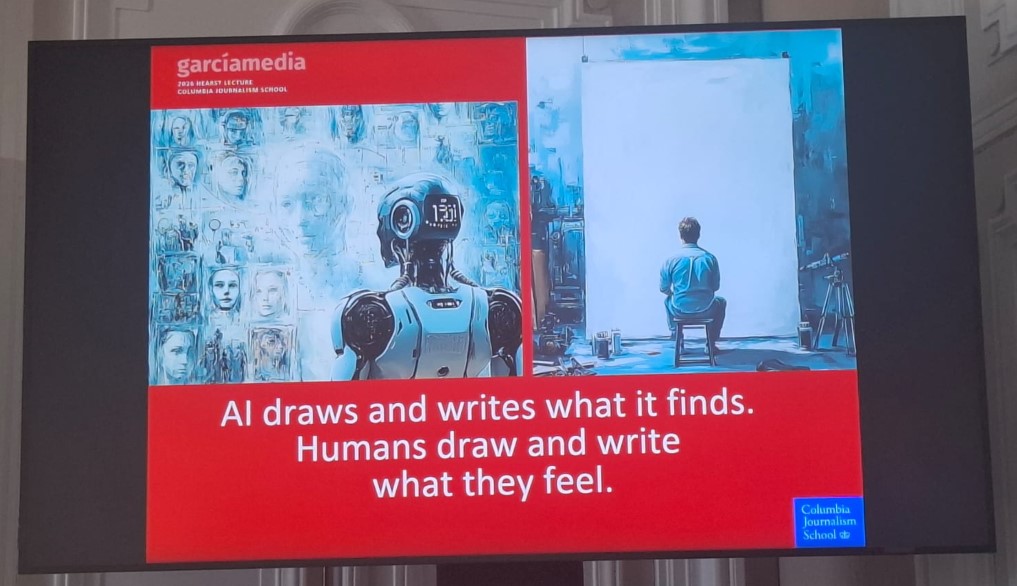
Sulzberger thus urged publishers to enforce their rights via licensing, litigation and legislation, considering “Our profession has been too quiet, too passive, and too fragmented in the face of abuses by the companies leading the AI revolution,” he said. “We cannot allow AI cheerleaders to dominate the public conversation without interjecting to argue for the importance of ensuring a sustainable future for original journalism.” The message was clear: silence is not neutrality, it is surrender.
Second, he urged publishers to invest in journalism of such unmistakable quality that algorithms cannot replicate or replace it. “You’ll need journalism so distinctive, it has its own gravity,” he said. “The heart of that is original reporting.” It was a challenge to the entire industry to stop competing on volume and start competing on irreplaceability.
Third, and perhaps most pointedly, Sulzberger warned against repeating the naivety of the internet era. When digital disruption first arrived, many news publishers – “including for a while The Times” – went along with the sentiment that “information wants to be free.” “We cannot afford to be as naive this time,” he said. “Even if things are feeling fine now, remember that these early swells herald an approaching tsunami.”
Shrinking revenues, regulatory pressure, rapid rise of AI-driven content are major threats
The challenges facing publishers in Europe and North America are real and large. Now imagine how African media houses are navigating similar AI disruption, but with a fraction of the resources and almost none of the legal infrastructure available to the New York Times?
The inaugural Africa Editors Congress, held in Nairobi in February 2026, fingered shrinking revenues, regulatory pressure, and the rapid rise of AI-driven content as major threats, while the Media Council of Kenya has called for AI tools that reflect African realities rather than imposing external assumptions on the face of AI-generated deep-fake videos, exposing newsrooms that lacked the tools and training to respond.
There was, however, a silver lining in what African media houses nursing the vagaries of digital disruption can learn from hybrid newsrooms: AI handling volume and speed, humans handling judgment, accountability, and the kind of on-the-ground reporting that no algorithm can replicate.
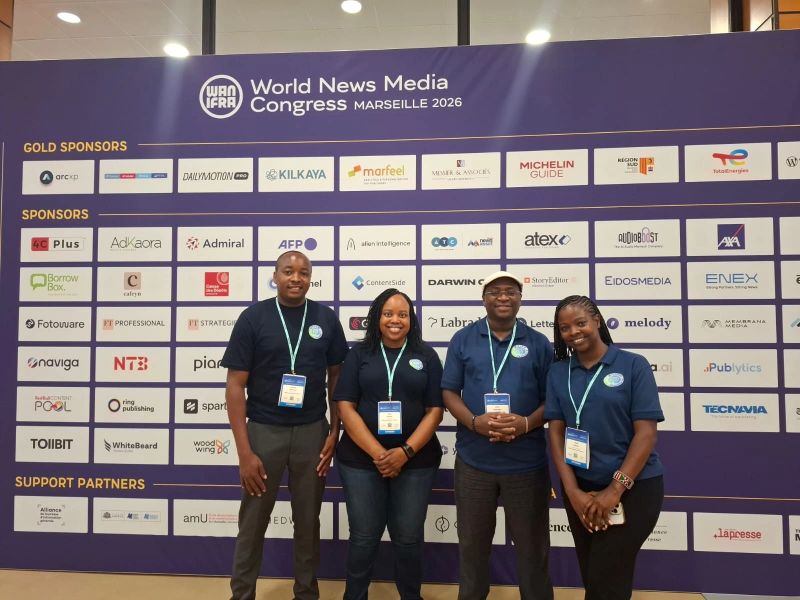
Willow Health Media Gold in Best Emerging News Provider from Africa

Original journalism that roots stories which AI can hardly duplicate was what won Willow Health Media Gold in Best Emerging News Provider from Africa and another Gold for Best Data Visualisation for the story, Vanishing Lifelines: How will Kenya’s healthcare survive without US funding. That was besides silver and bronze for Willow Explainers.
In the words of the jury: “Willow fills a genuinely critical gap of dedicated, credible health journalism in a region where health misinformation causes real harm. For a newsroom barely a year old, operating with limited resources in Kenya, the traction is strong.”
Willow’s entries were judged among over 800 from 78 countries, and in the parting shot from Sulzberger: “Information is valuable. Journalism is valuable,” he told the delegates. “We cannot watch as AI companies attempt to permanently dismantle the rights that give us control over the work we create.”