

A new nuclear medicine treatment called Lutetium-177 PSMA therapy is giving Kenyan cancer patients renewed hope. But at over Ksh1 million per cycle, it remains out of reach for most.
There is a new way to treat cancer that is helping some Kenyans. Cancer is a sickness where bad cells grow inside the body and cause harm. For a long time, treating cancer was very hard. But now, some hospitals in Kenya are offering a new kind of medicine that works differently.
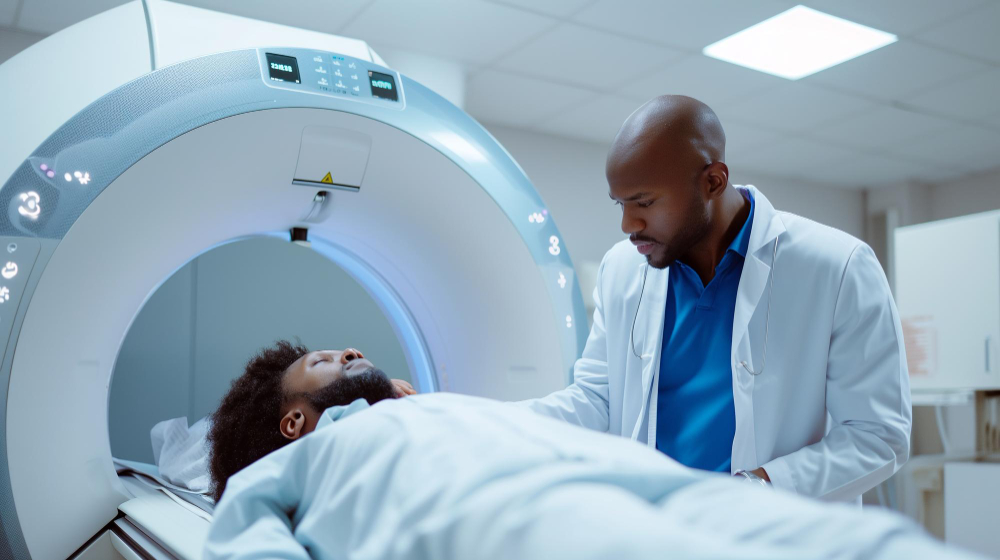
This medicine is called Lutetium-177 PSMA therapy. It uses what doctors call nuclear medicine. It is like a smart bullet. It goes straight to the bad cells and kills them without hurting the rest of the body. Patients receive it in the hospital. After a few days, most of the medicine leaves the body safely.
Two men have already received this treatment at a public hospital in Nairobi. One arrived in a wheelchair and could not walk. After treatment, he is now walking on his own. Another man had cancer that had spread to his bones and lungs. Today, his pain is gone, and he feels strong again.
The medicine costs over one million shillings for one round. The government is still deciding whether to help pay for it. For now, only a few people have received it with help from donors. Doctors believe that if more people know about it, many more Kenyans will one day receive this treatment close to home.
What is This Treatment?
- A new way to treat prostate cancer (a sickness that affects men).
- It uses a tiny amount of radioactive medicine (like a very small amount of energy) that goes straight to the cancer and kills it.
- It does not harm the rest of the body as other treatments do.
What Happened to the Patients?
Moses
- He arrived for his first treatment in a wheelchair.
- Now he can walk on his own.
- His cancer numbers dropped from 425 to 3.45 in just a few months.
- His daughter says, “I have my dad back.”
Who Got the Treatment?
- 26 people asked to receive it.
- Only 2 people were chosen because the treatment is very strict and not for everyone.
Where Did It Happen?
- At Kenyatta University Teaching and Referral Hospital (KUTRRH) in Nairobi.
- It was the first public hospital in Kenya to offer this treatment.
How Much Does It Cost?
- One cycle (one round of treatment) costs over Ksh1 million.
- The government health insurance (SHA) does not yet pay for it.
- A hospital official said if the government pays more than 60%, most Kenyans could afford the rest.
Who Paid for the First Two Patients?
- A group called Oncidium Foundation donated the medicine.
- IAEA (International Atomic Energy Agency) trained the Kenyan doctors.
Is It Safe?
- The medicine stays in the body for a short time.
- After treatment, patients are told to:
Stay one metre away from others for 5 days.
Sleep alone.
Use their own cup and plate.
Stay away from pregnant women and small children for one week.
Flush the toilet twice and wash your hands well.
- Side effects can happen, such as:
Tiredness
Dry mouth
Possible kidney problems
- Doctors watch patients closely for the rest of their lives to make sure they stay well.
Who Decides If the Government Will Pay?
- A group of experts reviews new treatments.
- They look at:
Does it work?
Is it fair for all Kenyans?
Can the government afford it?
- The next decision will be made by October 2026
What Is the Problem Now?
- The treatment is very expensive because the raw materials come from outside Kenya.
- Many patients do not know about it or do not understand how it works.
- Without good information, people may be afraid to try it.
What About Other Cancer Treatments?
- In the past, a breast cancer medicine called Herceptin was also very expensive.
- At first, it cost Ksh120,000 per dose. Patients needed up to 18 doses.
- Today, the government helps pay for it, and many women can get it in public hospitals.
Doctors hope the same will happen with this new prostate cancer treatment.
Why Does This Matter for Kenyan Men?
- Most men with prostate cancer in Kenya are already very sick by the time they go to the hospital (stage 3 or 4).
- Prostate cancer is more aggressive in men of African descent.
- There is a real need for treatments that work.
Sources: KUTRRH, IAEA, AKUH, SHA, KENCO
We believe in the free flow of information
Republish our articles for free, online or in print, under Creative Commons licence.