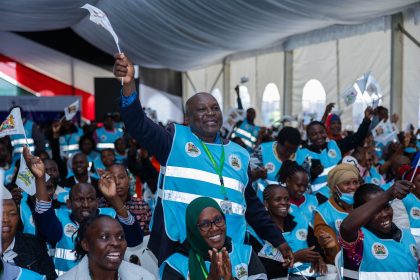




A nationwide strike by 7,800 unpaid health workers reopens a decades-old fight over broken agreements, and one expert says the real fault line runs deeper, into how doctors are trained.
Brian Oduor leaned on the rails deep in thought, near the laboratory area at Mama Lucy Hospital in Nairobi’s Eastlands, where more patients sat waiting. His daughter, born at the hospital, had been sick, and he had been advised that she be tested for sickle cell disease. Oduor had been at the hospital since 9am for the tests, and by 3pm he was yet to get the results. For him, the six-hour wait with no end in sight was too much, but what pained him more was watching an eight-month-old baby die as its parents waited for results of their own.
Oduor and that grieving family are among the quiet casualties of a nationwide strike by health workers that has dragged into its second week, reviving a cycle of industrial action that has repeatedly disrupted care in public facilities across Kenya.

The strike, called on July 20, 2026, by the Health Unions Caucus, demands the permanent employment of 7,800 health workers on pensionable terms, drawing in nearly every cadre of health worker and paralysing operations countrywide.
The human cost is not confined to individual stories witnessed at the bedside. A retrospective study published in BMC Health Services Research, comparing women pregnant during Kenya’s 2017 health worker strikes with a control group pregnant the following year, found that those pregnant during the strikes were less likely to receive WHO-recommended maternal and child health services.
Separately, a 2022 study published in the Journal of Health Economics by Willa Friedman and Anthony Keats, analysing Demographic and Health Survey data, found that children born during hospital strikes in Kenya faced a significantly higher probability of neonatal death, a finding replicated using data from two Nairobi informal settlements – underscoring how quickly gaps in staffing can turn into loss of life for the most vulnerable patients.
While medical services are not at their optimum, some medics report to work as some ‘have an attachment to their patients’
At Mama Lucy Hospital, the signs of a working facility are visible even mid-strike. On a hot Wednesday midday in early August, about 50 patients queued for service at the three registration booths near the entrance, while health workers in neatly pressed and starched scrubs, some with stethoscopes, walked the corridors between offices and consultation rooms. Dr Nehemiah Langat, the hospital’s Medical Superintendent, downplayed the strike’s impact, saying it was under control.
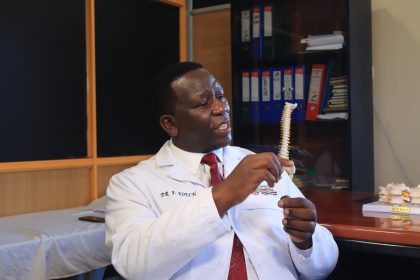
While services are not at their optimum, he said, some staff are reporting to work because some “have an attachment to their patients.” He estimated the hospital was working at 80 per cent capacity, with locum staff, whom he said have all along been working at the hospital, filling gaps rather than being freshly hired because of the strike.
Dr Langat said the renal unit had been hit hardest, leaving the few staff who remained overworked, though he added: “But our renal machines are all working, so there is nothing to worry about.” He noted that health workers at Mama Lucy face the same challenges seen nationally. “If the government addresses these issues once and for all, it will really help to focus on delivering health services. Last year, we had many strikes,” he said.
The strike is being led by unions including the Kenya National Union of Medical Laboratory Officers, the Kenya Union of Clinical Officers (KUCO), the Kenya Environment Health and Public Health Practitioners Union (KEHPHPU) and the Kenya National Union of Nutritionists and Dietitians (KUNAD), among others. At its core is a demand that county governments absorb the 7,800 workers on permanent and pensionable terms, a dispute that has already paralysed operations in public health facilities countrywide.
For a country where health worker strikes have become, in the words of union officials, “a thing of normalcy,” the current stand-off follows a familiar pattern: workers walk out, a return-to-work formula is signed, and then the agreement is left unimplemented until the next strike forces the issue back onto the table.
In 2017, Kenya experienced 150 days of health workers’ strike, the longest on record before dispute was resolved
Geoffrey Gibore, General Secretary of the Kenya Union of Clinical Officers, argues that this cycle stems from government inaction rather than any lack of goodwill at the negotiating table. “We go on strike, we agree, sign a return-to-work formula, which provides a clear matrix on how to implement all the issues that you have been fighting about. So unfortunately, after that, the employer negates their responsibility to implement,” he said.
That pattern is not new. In 2017, Kenya experienced its longest health worker strike on record, when nurses stayed off duty for 150 days before the dispute was resolved on November 2, 2017, with an agreement on a Ksh10,000 increment in nursing service allowance and a Ksh15,000 uniform allowance, both to be paid in three tranches. Doctors, meanwhile, staged a 100-day strike that same year, which ended on March 2, 2017, after they secured a significant rise in allowances, including the conversion of the Emergency Call Allowance into a standardised Doctors Allowance, along with a new Medical Risk Allowance.

Both strikes, Gibore notes, were ultimately rooted in the same failure: the non-implementation of a 2013 collective bargaining agreement (CBA) signed by the national government, which county governments never honoured. Nearly a decade later, he says, doctors are still waiting on a CBA that is seven years old. “We need a centralised management for the human resource to cure some of these issues so that we negotiate once; if the execution of the CBA was done once, like the way the ministry did the signature, it didn’t cover everyone,” he said.
The frustration, he adds, extends beyond doctors. Some counties have moved to implement agreements on Universal Health Coverage (UHC) staff meant to be absorbed permanently, while others have signed but not implemented, and some have not signed at all. “That discriminative aspect whereby the CBA goes through the entire governance structure needs to be corrected, and it needs to be corrected by centralising the management of the health human resource,” Gibore said.
Other countries offer routes out of the strike-and-settle cycle. IntraHealth International, a non-governmental organisation that works with governments to strengthen health workforce performance, has proposed work councils as an alternative. In a policy brief on averting health worker strikes in Kenya, the organisation recommended establishing councils “to cultivate harmonious employer-employee/union relations for continuity in service delivery at the county level,” offering “formal consultative and dialogue platforms between the county departments of health and health sector union leaders.”
South Africa’s Public Health and Social Development Sectoral Bargaining Council (PHSDSBC) deals with negotiations
The concept has already been tested with some success: Kiambu, Nyeri, Kisumu, Kisii and Nairobi counties used work councils to negotiate early duty resumption with nurses during the January 2019 strike, while counties without such structures, including Laikipia, Kirinyaga, Taita Taveta, Tana River and Vihiga, struggled to contain the same industrial action.
South Africa offers a model further along this path. Its Public Health and Social Development Sectoral Bargaining Council (PHSDSBC) serves as the main forum for negotiations between the state and health worker unions, providing a structured space to resolve disputes over wages, benefits and working conditions before they escalate into strikes, the same principle behind IntraHealth’s proposed work councils.
Health worker strikes also occur in developed countries, but are typically resolved faster through strong collective bargaining and direct national government involvement. The UK, France, Germany, New Zealand and the US have all seen doctors or nurses strike, yet disputes are managed within predictable legal frameworks.
The UK, for instance, requires minimum service levels during NHS strikes to keep emergency ambulance and other time-critical care running. Kenya could borrow from this: a legally binding minimum service framework for emergency and maternal care, centralised rather than county-by-county negotiations, and collective bargaining agreements that are honoured once signed.
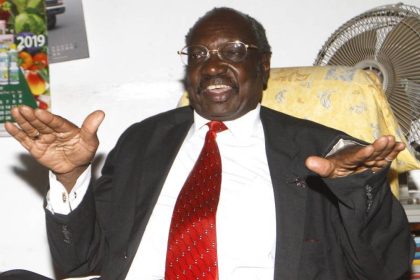
Beyond broken agreements, Prof Khama Rogo, an expert on public health systems, argues that some of Kenya’s recurring doctors’ strikes trace back to a deeper, structural confusion rooted in how postgraduate medical training is organised. Speaking to Willow Health Media in an earlier interview, Prof Rogo explained that Kenya once relied on a postgraduate fellowship arrangement with the UK, which could not absorb all the medical graduates the country was producing.
Moi Teaching and Referral Hospital (MTRH) trains and deploys postgraduate students leaving counties short of medical expertise
The solution at the time was to train Master of Medicine (M.Med) students at Kenyatta National Hospital (KNH), a straightforward arrangement when the University of Nairobi was the only institution producing doctors. Over time, however, self-sponsored students swelled the numbers, and the arrival of devolution complicated matters further: doctors employed by county governments began enrolling for postgraduate training while technically working at KNH, without being its employees.

Moi Teaching and Referral Hospital (MTRH) has faced a similar dynamic, training and deploying postgraduate students in ways that leave counties short of the medical expertise they need. “Who is supposed to promote them? KNH? The county governments? Or the Ministry of Health?” Prof Rogo asked, pointing to this confusion as one of the underlying causes of Kenya’s recurring doctors’ strikes.
Prof Rogo’s proposed fix is administrative rather than financial: decentralise postgraduate training to county hospital-based colleges. Doing so, he argues, would give counties doctors on the ground instead of leaving hundreds concentrated and underused at KNH and MTRH, two national referral hospitals already stretched thin. He links this to a wider systemic failure of indexing within the health workforce, where no one tracks how many medics are in training or when they are due to graduate, a gap that also feeds confusion over internship postings and pay.
As the current strike continues, with no clear timeline for resolution, both diagnoses, broken agreements and structural confusion in training- point to the same reality: without credible enforcement mechanisms and clearer administrative accountability, Kenya’s health sector is likely to keep returning to the cycle of walkouts that has defined it for nearly a decade. For patients like Brian Oduor, still waiting on results that could tell him whether his daughter has sickle cell disease, that cycle is measured not in policy timelines but in hours spent leaning against a hospital rail, watching others lose what he fears losing himself.
We believe in the free flow of information
Republish our articles for free, online or in print, under Creative Commons licence.