


Men are often left out of health programmes designed around women and children. One solution is taking healthcare beyond clinics to where men live, work, play and gather- stadiums, gyms, barbershops, political forums.
When John Gikonyo learned of his impending kidney failure, he was fortunate to have time for a preemptive transplant, sparing him a life on dialysis. The experience led him to found the Renal Patients Society of Kenya, where he now advocates for better care for people with chronic disease.
Most men, he says, do not get that head start. They tend to present with advanced disease and a poor prognosis, a trajectory usually blamed on poor health-seeking behaviour. However, few ask whether the health system itself shares the responsibility.
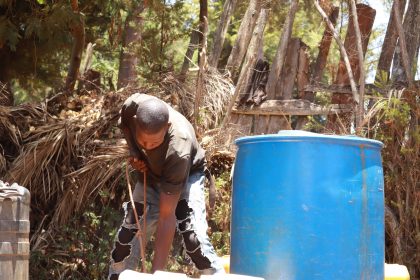
That question runs through Tony’s story (he sought to conceal his surname). He was diagnosed with tuberculosis and faced stigma for taking his medication in front of others. Like many Kenyan men, he turned to the chemist before he turned to the hospital. “It’s not easy for us to come to the hospital unless the sickness has persisted,” he told researchers in a March 16, 2026 study done in Kenya ahead of World TB Day.
Other men also shared their experiences during the study titled A National Community Rights and Gender Assessment, under the Leaving No-One Behind: Transforming Gendered Pathways to Health programme. Daniel W’Obukosia, an editor, noted that a man will service his car at a garage while seriously unwell himself.
Kipkorir Ruto reckons that men avoid hospitals because a diagnosis frightens them more than the illness itself. Mutugi Njue, on his part, pointed to uncomfortable procedures, such as prostate checks, as a deterrent. Gloria Makokha, another respondent, observed that men are mostly afraid of drugs and injections.
He relied on painkillers for a persistent headache, but died from a blood clot in the brain
The cost of that avoidance can be severe. Sylvia Mandila lost a friend who relied on painkillers for a persistent headache instead of seeking proper care. He died from a blood clot in the brain.
These are not isolated stories. They reflect a pattern researchers and clinicians have observed for years: men are the least likely to seek care early, yet the most likely to be missed by a health system that was never quite built for them.
The study, by researchers under the LIGHT Consortium, Ministry of Health and National TB Programme, and the Respiratory Society of Kenya (ReSOK), examined how social, legal and gender-related factors shape access to TB services. It found that men are more biologically susceptible to TB, more likely to delay care, less likely to finish treatment, and more likely to be overlooked altogether.
Statistics don’t make matters easier for men’s health. Globally, women outlive men by roughly five years. Female life expectancy stands at 75.7 years compared with 70.6 for men, and even after accounting for illness and disability, women retain a 2.2-year advantage in healthy life expectancy, according to data from the World Health Organization (WHO). This reflects persistently high male mortality from chronic diseases such as diabetes and heart disease, as well as COVID-19, injury and violence.
Pneumonia, cancer and cardiovascular disease were leading causes of male death in 2024
Kenya mirrors the trend. The 2026 Kenya Economic Survey notes that male deaths made up 56.1 per cent of all deaths in 2025, against 43.9 per cent for women, across every age group. Pneumonia, cancer and cardiovascular disease were the leading causes of male death in 2024.
Rosemary Bowen, a senior manager at the Kenya National Bureau of Statistics (KNBS), has tracked the trend for years. “There has been a consistency in male deaths exceeding female deaths,” she says, noting that between 2020 and 2024 the ratio climbed from 126 to 131 male deaths for every 100 female deaths.
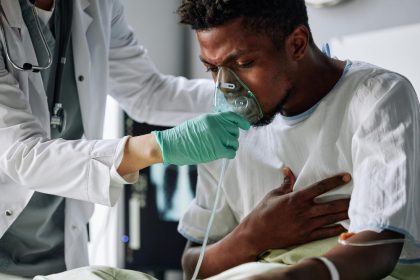
The gap is usually explained in one of two ways: testosterone predisposes men to chronic disease, or men simply behave recklessly and delay care until it is too late. Research complicates both ideas. It is unusually low testosterone, not normal levels, that raises disease risk. And contrary to popular belief, men value good health and would welcome care if the barriers they face were addressed.
“There’s a kind of fatalism about men’s health. We now have the evidence to show that you can make changes. But there’s a baked-in belief that you can’t,” says Peter Baker, director of Global Action for Men’s Health.
Kenya’s Universal Health Coverage Policy 2020-2030 promises access to essential services for all, without financial hardship. Yet it makes no explicit mention of men’s health, beyond encouraging men to support their partners’ access to reproductive care, despite long-standing evidence that men face distinct health risks.
Men value good health, but felt constrained by financial pressure, work obligations
Sharon Mokua, a research scientist at KEMRI’s Centre for Public Health Research, interviewed men aged 20 to 60 across 12 counties. Her findings challenge the idea that men simply refuse care. Many wanted it and valued good health, she found, but felt constrained by financial pressure, work obligations and bias within the health system, all at once. That combination, she says, makes them appear indifferent when they are not.
Clinic hours compound the problem. Men in informal work, such as construction and the jua kali sector, often have to choose between earning an income and seeking treatment, since most facilities open only after their working day has begun.
One clinic in Mathare responded by shifting its TB clinic hours to between 6am and 7am and deploying Community Health Promoters (CHPs) to deliver medication to patients’ homes, cutting hospital visits to once every two weeks. It also engaged local pharmacists, who refer men showing TB symptoms for free X-rays. Loss to follow-up fell from between 20 and 35 per cent to just five per cent.
Dr Immaculate Kathure of the Ministry of Health believes women could be an underused lever in changing men’s behaviour, recalling how explaining the value of family planning to husbands once helped shift attitudes that had limited their wives’ choices.
Baker sees the same pattern beyond Kenya. He notes that clinic hours, posters and leaflets often fail to reflect how men actually think about their health, reinforcing the very norms that keep them away.
Healthcare professionals see male patients as not needing much support
Dr Mohammed Yasin, a medical officer, points to unconscious bias among health workers themselves. “There are unconscious biases even among healthcare professionals where they see male patients as not needing much support,” he says, adding that this leads to shorter consultations and less thorough investigation, while men who express pain are often viewed as weak and bothersome.

Yet he insists most men are keen to know their blood pressure, blood sugar and other basic markers, given the chance. “People will be surprised to find out that most men are actually interested in knowing their blood pressure, blood sugar and other health metrics,” he adds.
Despite holding senior roles across government, men remain largely absent from health policy, a gap often justified by the argument that stretched resources should prioritise women, who have historically faced greater social and economic disadvantage.
Dr Rosebella Iseme, a clinical epidemiologist, cautions that Kenya’s data itself is incomplete, drawn from surveys and census estimates rather than a system that tracks every death and its cause. Without that, she says, it is difficult to know precisely where to intervene.
Professor Joackim Osur, a Professor of Sexual and Reproductive Health, believes a Men’s Health Department within the Ministry would help. “The structures determine where you put the money,” he says, arguing that the health system should stop waiting for men to walk into hospitals and instead reach them in football stadiums, sports clubs, barbershops and political forums.
Kenya’s Primary Health Care strategy barely mentions men, while women, children are tracked in detail
Dr Patrick Amoth, Director General of Health at the Ministry of Health, disagrees that this represents a gap. “Kenya’s health policies adopt a life-course approach, integrating men’s health within the Kenya Health Policy, the Primary Health Care Strategy, the Non-Communicable Diseases Strategy, and the Mental Health Action Plan,” he says, adding that the priority is an integrated system serving all Kenyans equitably, rather than parallel programmes for specific groups.
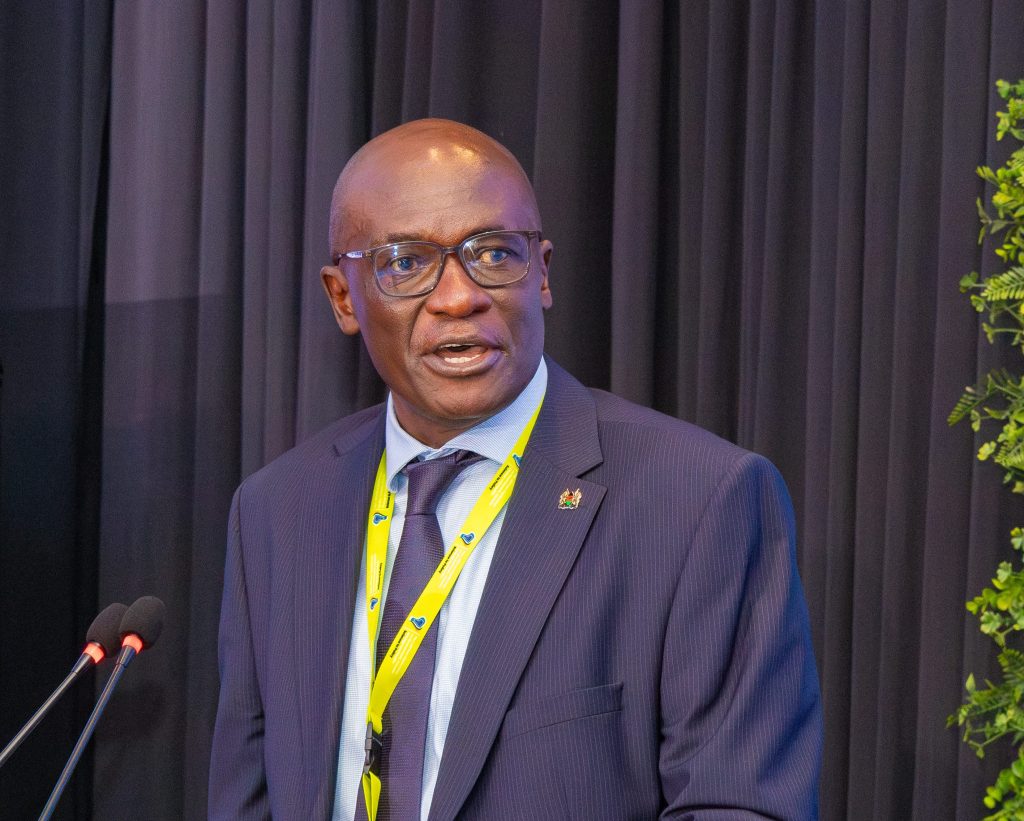
He points to the shift already under way through Primary Health Care, Primary Care Networks and Community Health Promoters. “Our objective is to move beyond a facility-based model to one that actively reaches people within their communities and places of work,” he adds.
Yet Kenya’s Primary Health Care strategy barely mentions men, while women and children are tracked in detail through antenatal visits, immunisation and cancer screening. Men appear only in passing references to general messaging, not in dedicated targets or budgets.
Ireland has community-based men’s health services, Australia has Men’s Sheds
Other countries offer lessons. In Brazil, men who accompany partners to antenatal visits now receive care themselves. Ireland has seen a rise in community-based men’s health services, while Australia’s Men’s Sheds, informal spaces where men gather to build and talk, have long served a similar purpose. In each case, tailoring services to how men actually engage led to higher screening and outreach numbers.

The Ministry sees one unified system as the fairest approach. Critics argue that treating everyone identically is not equity when one group carries a different risk profile, and the data increasingly supports that view.
Whether Kenya acts on it, through screening targets, workplace outreach or better tracking of how men use health services, remains to be seen. For John Gikonyo, real change begins earlier, in how boys are raised. “If we start attacking from that level, maybe there can be a breakthrough in encouraging men to express emotion, and to say when they are in pain or in need,” he says. “Otherwise, we are socialised to hide. And the hiding is not just in health.”