


Methanol is an industrial chemical found in products such as antifreeze, paint thinners and cleaning fluids. Rogue brewers add it to alcohol to create a stronger kick, with potentially deadly consequences.
She did not hear the officers come in. Inside modest premises in Nairobi’s Jericho estate, a woman was hunched over a makeshift mixing station on the afternoon of August 27, pouring liquid from an unmarked container into bottles bearing the labels of well-known spirits, when a multi-agency team walked through the door.

By the time they left, three people were under arrest and 315 assorted alcoholic beverages, along with fake Kenya Revenue Authority (KRA) excise stamps and empty bottles set aside for refilling, had been seized. Some of the confiscated products bore Tanzanian excise stamps, pointing to a cross-border counterfeiting trail.
It is a small, almost domestic scene that captures the reality of an industry now supplying six in every ten drinks poured in Kenya.
The raid, led by NACADA alongside KRA, the Kenya Bureau of Standards (KEBS) and police, came a day after a similar operation in Eastleigh netted 868 more counterfeit and uncustomed drinks.
Selling fake liquor is not business, but attempted murder—NACADA boss, Dr Anthony Omerikwa
Elsewhere this year, agents found the trade’s uglier extremes in Murang’a County, where officers dismantled a counterfeiting hub built inside an ordinary residential house, complete with drums of industrial ethanol standing in for fermentation vats and food colouring used to mimic genuine brands. “This is not a business,” quipped NACADA boss Dr Anthony Omerikwa. “It is attempted murder.”
Counterfeiters rarely bother making their own bottles. It is cheaper to recycle genuine ones, collected by scavenging networks from dumpsites, upmarket lounges and back alleys, washed under unhygienic conditions and refilled with cheap mixtures of industrial ethanol, tap water, artificial sweeteners and other additives.
Criminals fit fake digital excise stamps, often printed on ordinary paper with low-quality printers, and target budget and mid-tier vodka and gin brands whose high demand lets fakes blend in easily.
The scale is considerable. In January 2026, officers intercepted 1,525 cartons of suspected counterfeit gin in Eldoret valued at about Ksh7.6 million, an operation that reflects how these goods move from backstreet mixing rooms into rural retail shops and urban bars where drinkers cannot tell the difference until it is too late.
The crackdowns are landing against a grim backdrop. In February 2024, at least 13 people died, and dozens more were hospitalised, some permanently blinded, after drinking illicit brew in Kirinyaga County; the toll later climbed as more victims succumbed. The tragedy remains the case Kenyans most associate with the crisis. Euromonitor’s 2025 survey found 27 per cent of consumers named death as a direct consequence of illicit alcohol, while 61 per cent cited bodily harm.
UK added Kenya to list of countries carrying methanol-poisoning travel warning
The danger has drawn international attention. In October 2025, the UK’s Foreign, Commonwealth and Development Office added Kenya to a growing list of countries carrying a methanol-poisoning travel warning, citing a global rise in serious illness and deaths among travellers who drank tainted spirits. Australia issued a similar caution to its citizens in Kenya.
In August 2026, Rwanda temporarily pulled 52 alcoholic products, including five Kenyan brands, from its shelves pending safety checks, though KEBS said all five later passed inspection.

The human toll goes well beyond fraud and tax evasion. Fake liquor’s dangers come chiefly from methanol contamination, with heavy metal contamination in some brews adding to the risk.
Methanol, an industrial solvent used in antifreeze, paint thinners and window-cleaning fluid, is colourless, odourless and tastes almost identical to ordinary ethanol. Rogue brewers add it because it is cheap and gives a sharper kick. Once swallowed, the body converts methanol into formaldehyde and then formic acid, compounds that act, in effect, like embalming fluid inside the body.
Victims typically feel fine at first. Within 12 to 48 hours, symptoms strike: dizziness, nausea and vomiting that mimic ordinary drunkenness, followed by abdominal pain, confusion, laboured breathing and vision that blurs before failing into permanent blindness or death.
Long-term drinkers of illicit brews can suffer physical deformities, organ failure
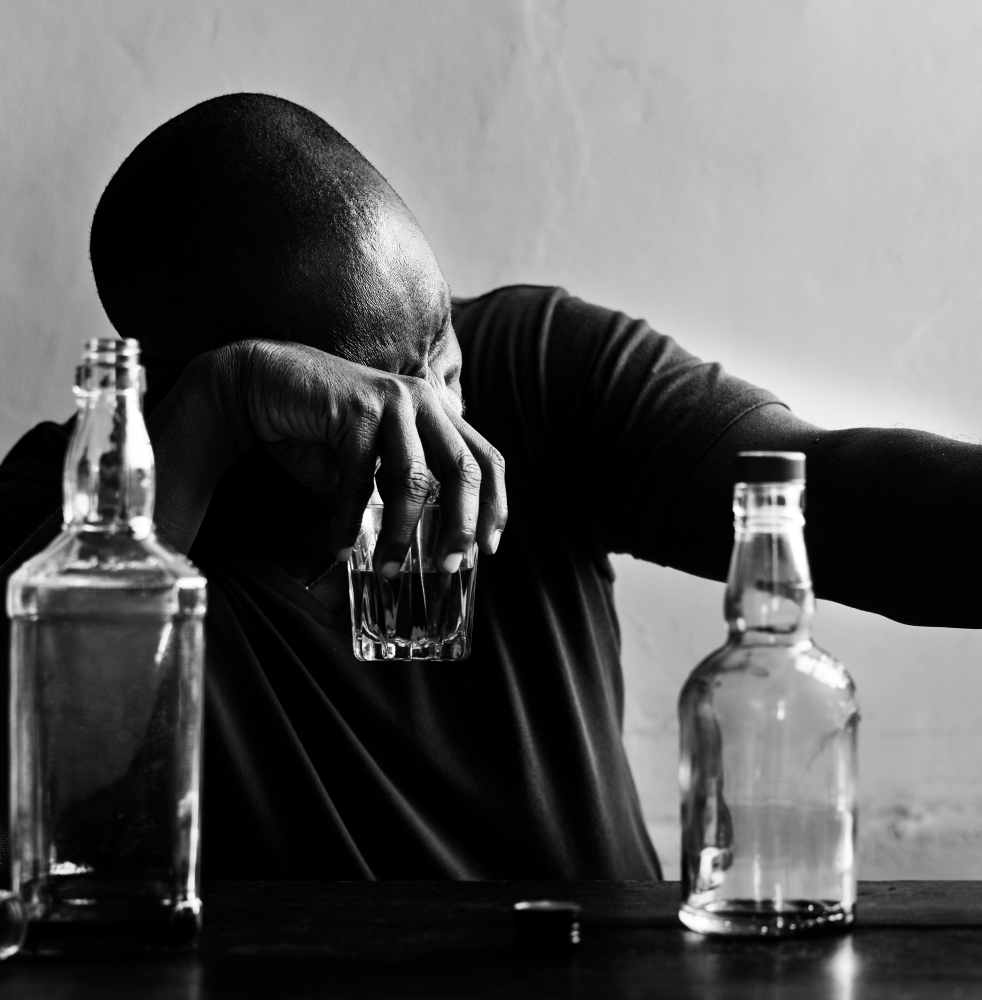
Families across Central, Rift Valley and Western Kenya have told of loved ones who went out for a casual drink with friends and came home in a body bag or woke up unable to see.
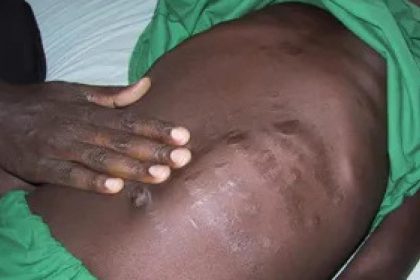
Survivors of chronic exposure are not spared either. Long-term drinkers of illicit brews can suffer serious physiological decline, physical deformities, and organ failure that strip them of their livelihoods and dignity, leaving families to carry the financial and emotional weight of caring for a breadwinner reduced to lifelong medical dependency. It is this slow, grinding damage, as much as the sudden deaths, that makes the illicit alcohol trade a public health emergency and not merely a regulatory headache.

The market thrives at the intersection of tax policy and poverty. Heavy excise duty pushes up the price of legal, factory-sealed liquor, pushing cash-strapped drinkers toward cheaper, unregulated alternatives. In informal settlements and rural areas, brewing or distributing fake alcohol offers quick money to people with few other options.
Rogue traders often bribe their way past local authorities and run mobile backyard operations that can be packed up and moved within hours of a tip-off, making sustained enforcement difficult.
Kenya’s legal alcohol industry is an important source of government revenue. The Kenya Economic Survey 2025 shows that beer, wine and spirits generated billions of shillings in excise taxes, with the wider alcohol industry contributing significantly to tax collections, according to KNBS. Euromonitor’s 2025 study estimates that counterfeit alcohol alone costs the government about Ksh14.5 billion in lost taxes each year, while the wider illicit trade results in much larger losses still.
Derived from Malawi’s Chichewa language, ‘Kalondola’ refers to an act of ‘following, tracking or tracing’
Kenya is not alone in this fight. Uganda and Tanzania have both rolled out digital tax stamps on alcohol, tobacco and other high-risk goods since 2019, encrypted labels that let regulators and consumers verify a product’s authenticity by scanning it.

Malawi’s newer ‘Kalondola’ stamping system follows the same model. Kalondola is the Malawi Revenue Authority’s (MRA) name for its digital excise tax stamp programme. Derived from the Chichewa language, it refers to an act of ‘following, tracking or tracing.’
Kenya pioneered a version of this for cigarettes: its Excisable Goods Management System (EGMS) helped cut the illicit cigarette market from 15 per cent in 2003 to five per cent by 2016, according to the African Tax Administration Forum, though experts caution that stamps alone do not work without sustained enforcement, licensing controls and border surveillance.
Internationally, most jurisdictions rely on denaturing, deliberately poisoning or bittering industrial ethanol so it cannot be diverted for drinking. The European Union mandates a “Eurodenaturant” blend of isopropyl alcohol, methyl ethyl ketone and the intensely bitter compound denatonium benzoate; the United States requires similar bittering agents in products such as antifreeze.
Simple habits can save lives: checking bottle cap is not loose, digital stamp is not pixelated or torn
Officials and industry groups say no single measure will fix this. It will take government, communities and the corporate sector working together: multi-agency raids paired with tighter tracking of industrial ethanol from the point of import, stronger controls on bottle recycling, and economic alternatives, such as micro-loans, vocational training and addiction support, for the young people the trade often recruits.

Consumers are the first line of defence. Simple habits can save lives: checking that a bottle cap is not loose, that a digital stamp is not pixelated or torn, and avoiding pre-mixed cocktails from unverified vendors or suspiciously cheap unbranded spirits in unmarked containers. Communities also need to destigmatise reporting. If a neighbour is quietly packaging liquids in a residential flat, telling NACADA’s toll-free line, 1192, could protect the whole street from tragedy.
Every bottle of counterfeit alcohol sold steals a life, ruins a family and strains the healthcare system a little further. Aggressive crackdowns, tighter supply-chain controls and an alert public, working together, are what will keep a night out a celebration of life, rather than a brush with death.
Dr Madeline Iseren is a pharmacist and commentator on topical medical and health issues.