

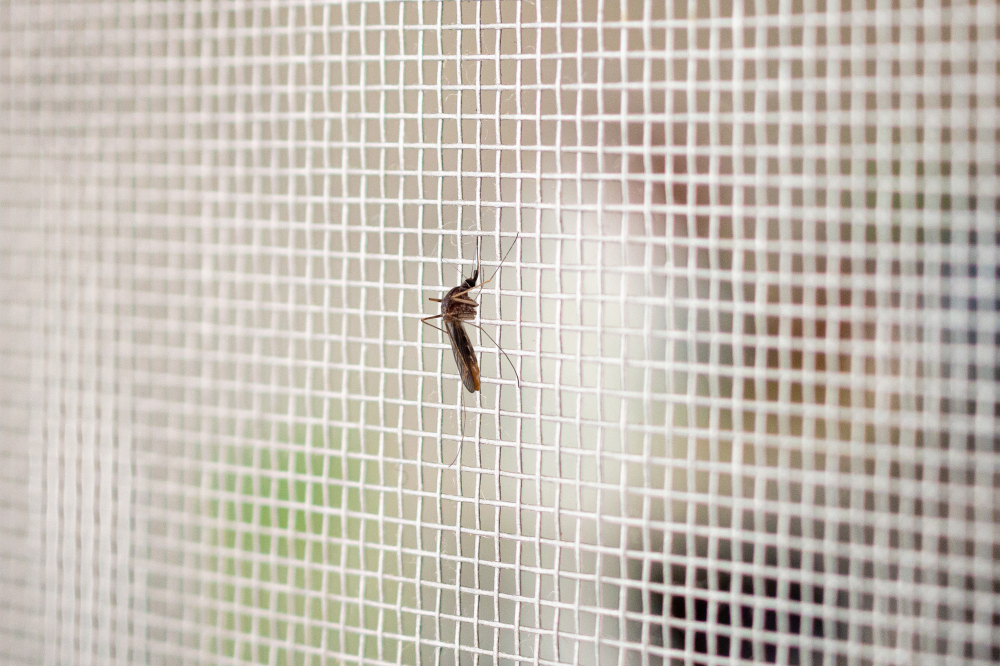

Kenya has begun handing out almost 10.8 million mosquito nets, including in six coastal counties. But an invasive mosquito that breeds in household water tanks is spreading along coastal roads, and nets alone may not stop it.
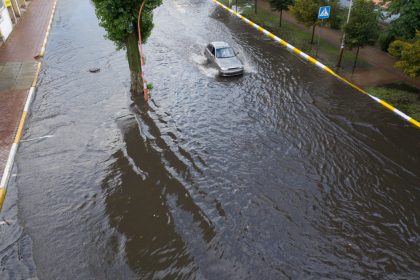
Elizabeth Bahati was asleep at home in Kiembeni, Mombasa County, when rainwater began pouring into her home at about 3 a.m. in October this year. By morning, almost every part of her household routine had been upended.
It was not the first time. In 2022, floods forced families in her neighbourhood from their homes, and Bahati, then a member of a local committee, helped move people to a church in Kisauni for shelter.
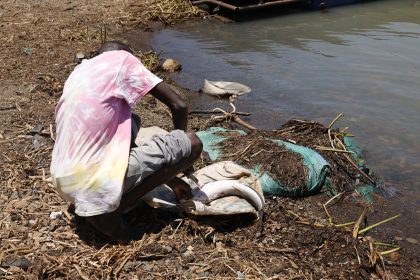
“I was part of the committee and mobilised people to go to a church in Kisauni. However, as you can imagine, people were many. Even things like mosquito nets: some had been affected by water; others did not have them, so they were at risk of malaria,” she recalls. Her own family sheltered with a friend whose house stood on higher ground.
Six weeks after the October rains, the kind of protection Bahati’s neighbours went without is on its way. On Thursday, the Ministry of Health launched its 2026-2027 national mass campaign to distribute almost 10.8 million insecticide-treated nets to households in 18 high-burden counties and 99 sub-counties. Mombasa is on the list, alongside Kilifi, Kwale, Lamu, Tana River and Taita Taveta.
But the Coast is also where Kenya’s malaria fight is changing shape. Along the roads the new nets will travel, researchers have detected Anopheles stephensi, an invasive mosquito that breeds in water tanks and containers rather than the swamps and puddles that malaria control has long targeted.
Nets remain the first line of defence. The question scientists and malaria officials are now asking is what else the Coast needs alongside them, and whether the window to act is already open.
In areas where mosquitoes no longer die from the insecticides used in older nets, households will receive dual active ingredient nets
The campaign arrives as net coverage has slipped. The 2025-26 Kenya Mini Demographic and Health Survey found that 41 per cent of households own at least one insecticide-treated net, down from 54 per cent in 2022. Only 42 per cent of children under five and 39 per cent of pregnant women had slept under one the night before the survey.
“Communities are urged to participate in the exercise, collect their allocated nets, and sleep under them every night, throughout the year,” said Mary Muthoni Muriuki, Principal Secretary for Public Health and Professional Standards, at the launch in Sirisia, Bungoma County.
In areas where mosquitoes no longer die from the insecticides used in older nets, households will receive dual active ingredient nets, treated with two insecticides that work in different ways. The World Health Organization (WHO) recommended these nets in March 2023. The ministry says allocation is guided by population, transmission patterns and insecticide-resistance profiles, and that a digital platform, Digimal KE, will verify households and track distribution in real time.
The drive builds on real gains. Under the Kenya Malaria Strategy 2023-2027, confirmed malaria cases fell by 34 per cent, from 5.54 million in 2023 to 3.64 million in the latest reported year, and incidence among children under five dropped from 194 to 119 cases per 1,000. The strategy aims to cut incidence by 80 per cent and deaths by 90 per cent from 2023 levels by 2027/28.
“Malaria continues to claim far too many lives across Africa, particularly among young children and pregnant women,” said Prof Mohamed Janabi, WHO Regional Director for Africa, who described Kenya’s effort as commendable. “Sustained investment in integrated malaria control measures, supported by innovation and strong partnerships, is essential to reducing the burden of disease and saving lives.”
The national strategy describes the Coast as a zone of stable, year-round transmission and calls for high-burden coastal counties to be targeted with intensified prevention, including mass net distribution and indoor residual spraying.
The data showed new detection clusters along coastal transport corridors in Tana River, Kilifi and Lamu
“When you go to a place that has a lot of mosquitoes, and you’re in a car, chances are as you get into the car, the mosquitoes will also come in with you,” said Dr Eric Ochomo, a medical entomologist and head of entomology at the Kenya Medical Research Institute’s (KEMRI) Centre for Global Health Research. “When you drive, you also move with the mosquitoes. So, we actually literally move the mosquitoes.”
He described how An. stephensi may be spreading across Kenya. The country first confirmed the mosquito in 2022, in the north. Later surveillance found it in more counties, mostly along major transport routes, and a 2025 study identified it in seven of 18 counties surveyed.
Ochomo traced several routes of expansion. From Turkana, detections have been recorded in areas including Elgeyo Marakwet. Another chain runs from Marsabit through Isiolo, Wajir and Garissa. From Garissa, he points south.
“There’s a major road from Garissa that goes through Hola, all the way to Kilifi,” he said. “Along that road, we’ve now seen multiple spots of invasion.”
The latest findings come from longitudinal surveillance under the AnoSTEP Afrika program. According to the team’s preprint, which has not yet been peer-reviewed, 61 Community Health Promoters collected more than 9,000 habitat samples across 21 counties between July 2025 and March 2026.
The data showed new detection clusters along coastal transport corridors in Tana River, Kilifi and Lamu. Genetic analysis and the geographic pattern support the idea that vehicles carry the mosquito, though the researchers caution that the exact route taken by each new population cannot be established from road patterns alone.
Kenya is not the first African country to face this. An. stephensi, native to South Asia and the Arabian Peninsula, was first detected in Africa in Djibouti in 2012. WHO has linked its arrival to a surge in Djibouti’s malaria cases, from 27 in 2012 to more than 73,000 in 2020. It has since been reported in Ethiopia, Sudan, Somalia, Nigeria and Ghana, and in 2022 WHO launched an initiative urging countries to stop its spread.
Tanks deeper than 50 centimetres were among the mosquito’s favoured habitats, as were tanks near animal shelters
What makes An. stephensi different is where it lives. Kenya’s familiar malaria vectors breed mainly in natural water bodies. An. stephensi thrives in artificial containers: water tanks, drums, discarded plastic and old tyres holding rainwater.
The preprint found a strong association with water-storage tanks, which were linked to nearly three times the odds of finding its larvae. Tanks deeper than 50 centimetres were among the mosquito’s favoured habitats, as were tanks near animal shelters, and the pattern held in both rural and urban settings.
That matters on the Coast, where unreliable piped supply leaves many households storing water in large tanks and containers. It also means the mosquito can exploit both extremes of the weather. During drought, families store more water, while after heavy rain, other mosquito populations multiply as water collects in the open.
Bed nets protect people sleeping indoors at night. Studies in the Horn of Africa have found An. stephensi also feeding outdoors and on livestock, behaviour that nets were never designed to counter.
Ochomo noted that Mombasa and the wider Coast already sustain transmission by several malaria vectors. The arrival of another, able to use habitats that conventional programs do not routinely prioritise, could make prevention more complicated. His message is that prevention should not wait for cases to rise, and should start with sensitising communities to stop mosquitoes multiplying around their homes.
Anopheles densities can rise around four to eight weeks after rainfall, a period in which health teams can strengthen prevention and surveillance
While entomologists track the mosquito, the National Malaria Control Programme (NMCP) is trying to spot the conditions that come before an outbreak.
At a national webinar on August 25 on preventing malaria epidemics linked to El Niño and the Indian Ocean Dipole, Dr Abubakar Badawy of NMCP explained how climate information is meant to complement routine surveillance. His presentation reported that 19 counties had been oriented in 2026 on applying climate data through the Kenya Health Information System (KHIS), with health facilities exceeding malaria thresholds identified for follow-up.

Edith Ramaita, an entomologist with the programme, explained why timing matters. Her presentation indicated that Anopheles densities can rise around four to eight weeks after rainfall, a period in which health teams can strengthen prevention and surveillance before cases rise.
The Kenya Meteorological Department’s August outlook forecast warmer-than-average temperatures for the season, with higher probabilities over Kwale, Mombasa, Kilifi, Lamu and parts of Tana River, Taita Taveta and Garissa.
Counted from the rains that flooded Bahati’s home on October 10, that four-to-eight-week window runs from early November into early December. It is the same stretch in which the new nets are due to reach coastal households.
Community Health Promoters inspect water-holding habitats, collect larvae and send them for identification
Some of the tools to close the gap already exist, and several cost little. The first is early detection. Because the AnoSTEP Afrika network samples the same community sites repeatedly and confirms specimens in the laboratory using molecular methods, Ochomo said new detections can be identified more promptly.
Community Health Promoters inspect water-holding habitats, collect larvae and send them for identification, separating An. stephensi from look-alike species that the naked eye would miss. The challenge now is making sure what they find leads to timely action by households, county health teams and the national programme.

The second is climate-informed surveillance. The threshold alerts that Badawy described give county teams a reason to move before a spike shows up in clinics, rather than after.
The third is in every compound, and Ochomo’s advice is practical.
“If you have water and you’re storing it in a container in your house, cover that tank and cover it in a way that mosquitoes can’t come in,” he says.
Even a small gap can let them through, he warned. Overflow pipes should be fitted with mesh that keeps mosquitoes out while letting excess water drain. He urges residents to dispose of waste properly, remove or manage discarded containers and tyres that collect water, and keep drainage channels clear.
When floods force families into crowded shelters, nets get left behind, soaked or shared too thinly
Where water-holding sites cannot be removed, appropriately selected larvicides, products that kill mosquito larvae, may be an option under public-health guidance. He also recommended keeping mosquitoes out of indoor spaces and using repellents where available.

And the nets still count. Ochomo was clear that households should keep sleeping under them every night. An invasive mosquito does not make the campaign less necessary; it makes it one layer of protection among several.
Bahati’s experience points to one more layer of emergency planning. When floods force families into crowded shelters, nets get left behind, soaked or shared too thinly. Keeping malaria protection in place during displacement is part of flood preparedness, not an afterthought to it.
For the Coast, the coming weeks will show whether these pieces connect: nets hung over beds, tanks covered, surveillance data acted on, and shelters stocked before the next flood rather than after it. For Bahati, preparedness has a simple meaning. When the water comes in again, her family and her neighbours should be able to reach safety without losing the protection that keeps malaria away.
We believe in the free flow of information
Republish our articles for free, online or in print, under Creative Commons licence.