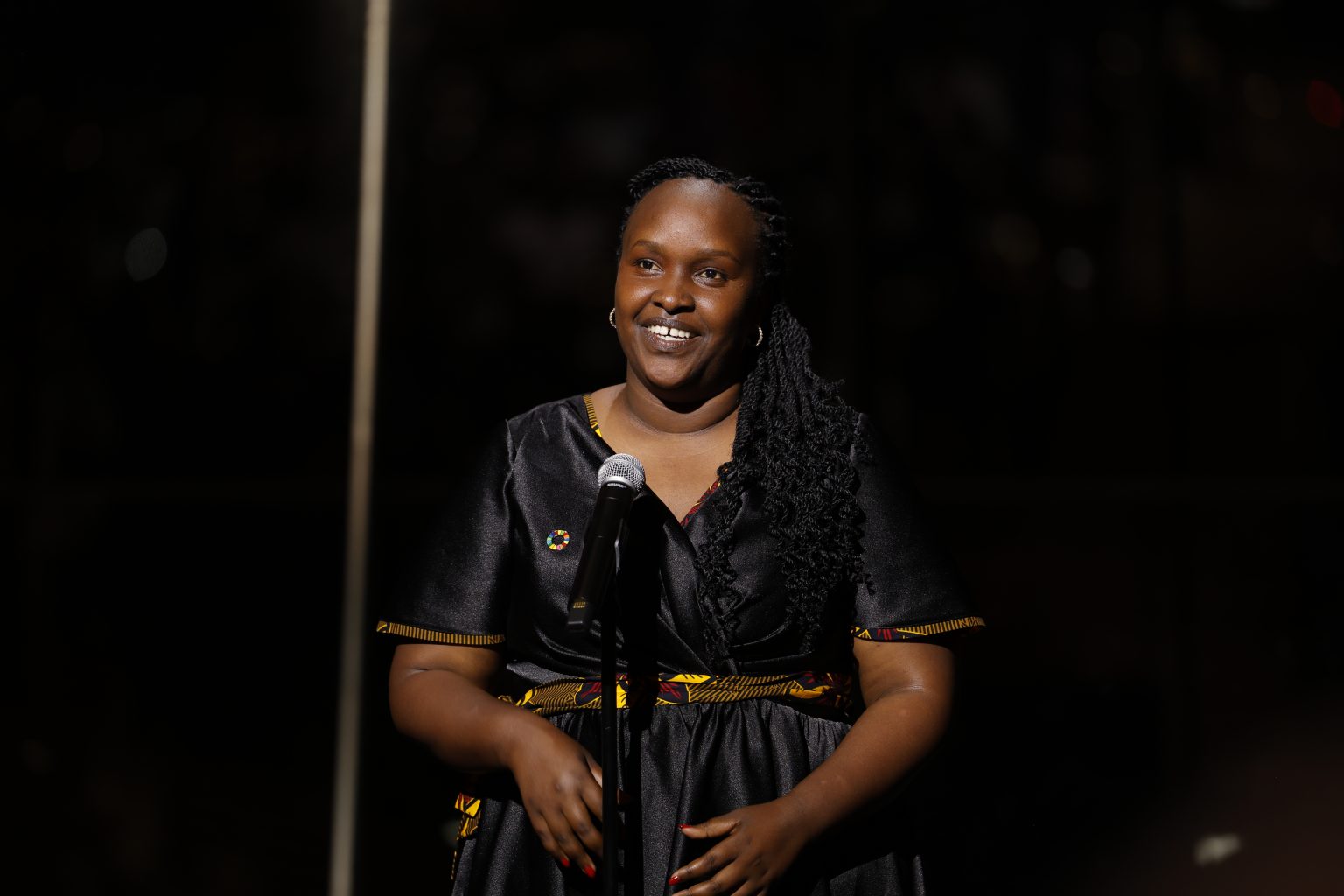
One patient record helped Dr Ange Thaina Ndizeye save a mother’s life. She believes AI can help save many more across Africa.
On her first day working in a maternity unit in Rwanda, Dr Ange Thaina Ndizeye met a pregnant woman who complained of extreme tiredness and feeling unusually heavy. At the time, the woman appeared medically stable. She returned two months later in an ambulance, weak and bleeding.
As health workers rushed to stabilise her, Dr Ndizeye needed to know her medical history. The information she had entered into an electronic medical record during the earlier visit helped the team understand the patient and respond quickly.
For Dr Ndizeye, now an adviser to Rwanda’s Minister of Health, the experience showed that digital technology is not simply about computers, electronic records or modern hospitals. It can directly affect the quality and speed of care a patient receives.
AI could help health systems predict complications before they become emergencies, understand why mothers are dying
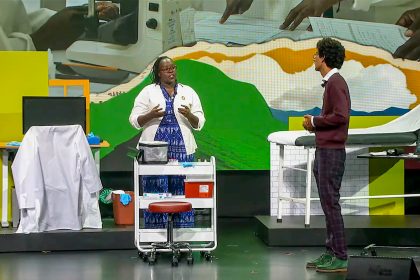
That lesson now shapes her belief in the potential of artificial intelligence (AI) to improve maternal and child health. Speaking at the 2026 Goalkeepers event in New York, she argued that AI could help health systems predict complications before they become emergencies, understand why mothers are dying, and ease the documentation burden on health workers so they can spend more time with patients.
“It is not about the technology or the infrastructure you put in place, but how that technology supports you to make an impact on the outcome of your patients,” she said.

The promise, however, comes with conditions. AI must complement health workers rather than replace them. It must reach underserved communities rather than deepen existing inequalities. And it cannot work without skilled staff, equipment and functioning referral systems.
The stakes are high. Preventable deaths during pregnancy and childbirth remain a major global health challenge. According to the latest estimates from the World Health Organization (WHO) and other UN agencies, about 260,000 women died during pregnancy or childbirth in 2023. That is more than 700 deaths daily, or one maternal death about every two minutes. Although global maternal mortality has fallen by about 40 per cent since 2000, progress has slowed.
Sub-Saharan Africa bears the heaviest burden, accounting for about 70 per cent of global maternal deaths in 2023, or roughly 182,000 deaths. The crisis extends to children. An estimated 4.9 million children died before their fifth birthday in 2024, including about 2.3 million newborns. Sub-Saharan Africa accounted for 58 per cent of all under-five deaths.
These figures point to the need not only for more health workers and facilities, but also for better ways of using the information health systems already generate.
We can use analytics to understand whether mothers are mostly dying at night or during the day
Dr Ndizeye believes one of AI’s biggest opportunities lies in using data to identify risks early. As a doctor, she said, waiting until a patient develops a serious complication can be too late. Health systems should instead use data and analytics to identify patients who may be at risk. “How do we use AI to predict?” she asked. “How do we use analytics to understand where our money is going? Why are our mothers dying? Do they die mostly at night or during the day?”
Such analysis could help health authorities spot patterns in maternal deaths and complications and target interventions where they are most needed. Digital systems could also help health workers identify women who need closer monitoring, flag concerning patterns in patient records, support clinical decision-making, and retrieve relevant information more quickly.
The Gates Foundation’s 2026 Goalkeepers Report, Make This Matter: AI, Equity, and the Choice We Can’t Delay, names healthcare as one of the areas where AI could accelerate progress. The foundation plans to invest US$1 billion over 2 years to expand access to AI, with 40 per cent earmarked for healthcare, including AI applications in diagnostics, clinical decision-making, maternal and newborn care, and the development of medicines and vaccines.
AI could also relieve one of the less visible pressures on health workers: the time spent documenting information. Dr Ndizeye says health professionals can spend significant amounts of time typing up patient details.
With AI-powered transcription, a health worker could record a consultation and have it transcribed and summarised, rather than spending several minutes typing it. “That’s why technology, digitisation of data, help you analyse all of this,” she said.
Technology must reach beyond well-resourced hospitals to frontline health workers and women in underserved communities
She sees this as a way to restore the human side of care. “AI is helping us transcribe, and allow us more time to be human, to connect, to look at the person in the eye,” she said.
But she is clear that AI should support health workers, not replace them. “In my view, it’s here to support us, to complement the beauty of humanity, the weaknesses of humanity,” she said, referring to limitations such as forgetting information or being unable to analyse large amounts of data quickly.

The bigger question is who stands to gain. The Goalkeepers Report warns that without deliberate action, AI could deepen existing inequalities. More than 90 per cent of the data used to train early large language models came from English-language sources, potentially leaving many communities poorly represented.
The report calls for AI tools that work in the languages people speak, are built around the contexts where they will be used, and give communities and health workers a say in how their data is managed and protected.
For maternal health, this means technology must reach beyond well-resourced hospitals to frontline health workers and women in underserved communities.
A new initiative in Nigeria by the Gates Foundation and MTN Group Foundation illustrates this approach. By 2030, the Nigeria Maternal Health Multiplier aims to help 500,000 women access maternal health guidance, equip 5,000 frontline health workers with tools to identify complications early and support 500 health facilities. Its tools include AI-enabled, phone-based decision support for health workers and mothers.
AI can’t end maternal and child deaths on its own. Hospitals must still have skilled health workers, equipment, ICU
Still, Dr Ndizeye insists AI cannot end maternal and child deaths on its own. Hospitals must still have skilled health workers, equipment, intensive care units, surgeons and functioning referral systems. “It’s a whole ecosystem at the end of the day,” she said.

The task, therefore, is to ensure AI is safe, evidence-based, affordable, locally relevant and built into health systems that already work.
For millions of women and children, its value may ultimately be measured not by how sophisticated it appears, but by whether it helps a health worker recognise danger earlier, find the right information faster or spend more time with the patient.
As Dr Ndizeye learnt on her first day in the maternity unit, the smallest piece of information can become critical when every second counts.