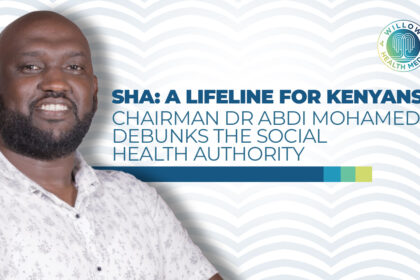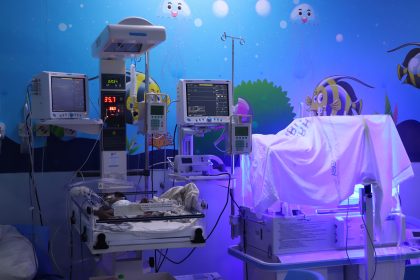

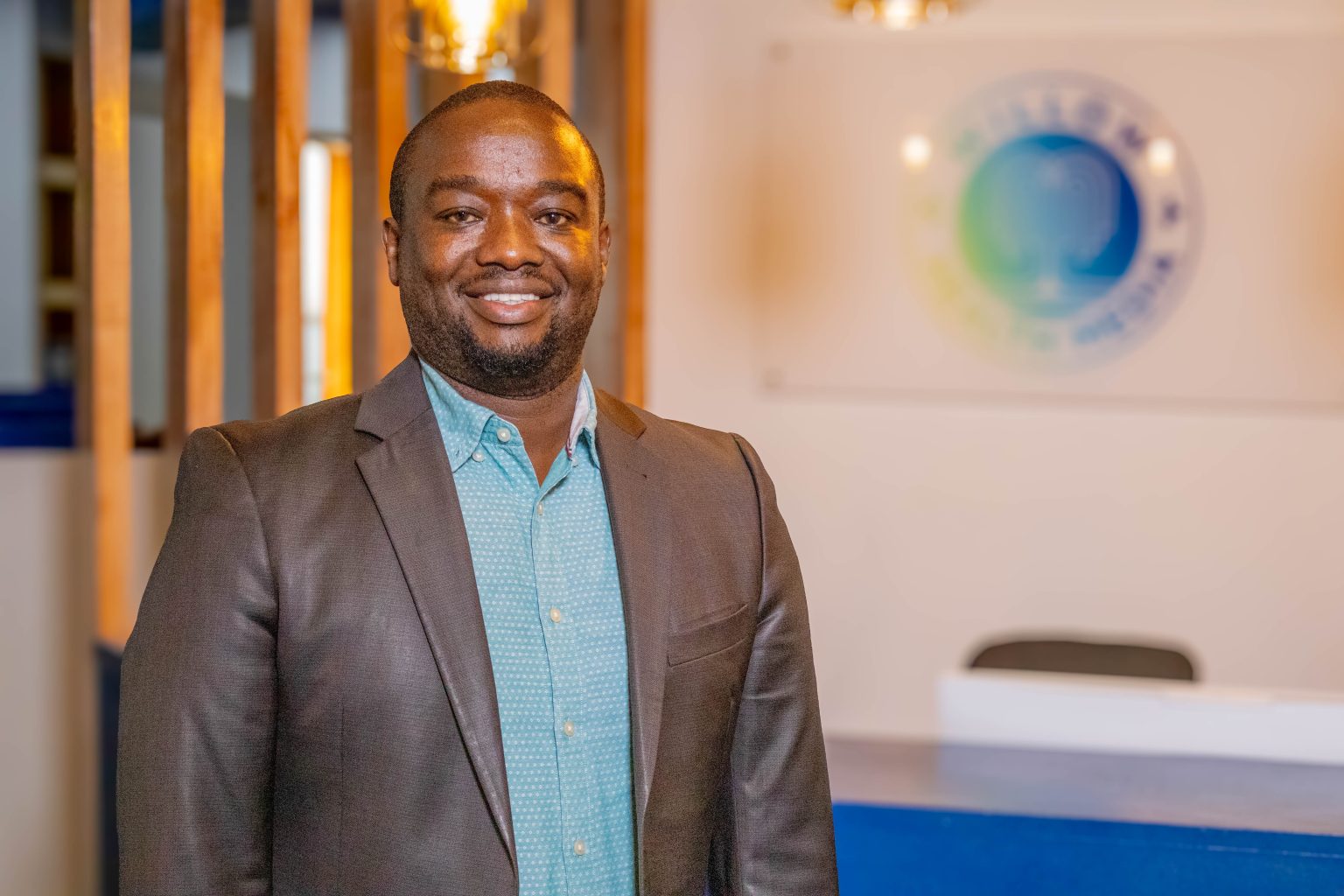

Dr Daniel Mwai, the Presidential Advisor on health, says reforms are built to last, not delivered overnight. He cites the ICU funding, which has already grown sevenfold since SHA’s launch.
Kenya’s Social Health Authority (SHA) reforms are being built gradually rather than delivered overnight, the Presidential Advisor on Health, Dr Daniel Mwai, has said, defending the phased expansion of the scheme’s benefits package against mounting criticism over implementation delays.
Speaking to Willow Health Media, Dr Mwai, who serves in the Executive Office of the President, set out the government’s thinking on why SHA’s benefits are being widened incrementally rather than all at once. He argued that this reflects how successful health systems evolve elsewhere in the world. “Health is progressive,” he said. “Countries that have made much progress in the healthcare sector have built it over years, with a light foundation, and they continue adding over time. The benefit that SHA gives for services, in terms of entitlement, will also grow.”
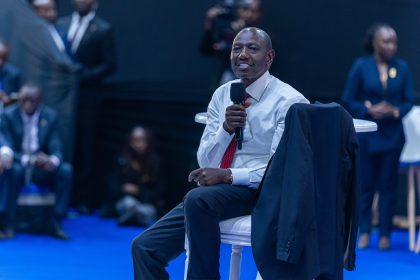
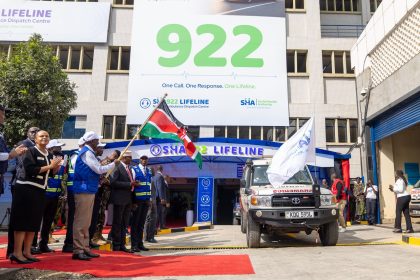
His comments come as SHA’s rollout continues nationwide, with enrolment now above 32.3 million, according to SHA Chief Executive Officer Dr Mercy Mwangangi. The scheme, which replaced the National Health Insurance Fund (NHIF), operates through three funds: the Primary Healthcare Fund (PHC), the Social Health Insurance Fund (SHIF) and the Emergency, Chronic and Critical Illness Fund (ECCIF). Together, these funds form the architecture through which Kenyans are meant to access everything from routine outpatient care to emergency and catastrophic treatment.
For Dr Mwai, the most significant shift under the current administration is a constitutional principle that provides for emergency care as an entitlement. “This president has done a very serious thing,” he said. “He has provided every Kenyan a right to access emergency services. We have never had this in this country, ever since independence.”
SHA began by paying KSh4,000. Now they are paying KSh28,000 per day for ICU. That is progressive
He pointed to intensive care as a concrete example of what that shift means in practice. “When you look at ICU, we used to have nothing, and SHA was not paying anything. I say SHA began by paying KSh4,000. Now they are paying KSh28,000 per day. That is progressive. That is growth.”
Dr Mwai framed this trajectory as one that scales with the authority’s own fiscal capacity, rather than being fixed at a set level indefinitely. “As SHA’s ability to collect resources and mobilise more improves, benefits will actually increase,” he said. “We will head towards a level where it will be optimum, where you walk in and walk out of hospital without having to pay anything. That is where we are going. It is doable. We have come a long way.”
Much of Dr Mwai’s framing rested on leadership rather than legislation alone. He credited what he described as sustained presidential commitment for laying groundwork he believes will outlast the current term. “The remaining things are through the leadership of a president who is very committed to seeing Kenyans’ health improve, have no financial strain, and have improved access,” he said. “I believe we will be able to achieve it. He has laid the right foundation, and we have started seeing the benefits.”
He went further, predicting that the healthcare system Kenyans encounter by the end of the president’s second term would be unrecognisable from the one that existed before the reforms began. “By the time we are finishing his second term, people will look at the Kenyan healthcare system and not know it,” he said.
Kenya’s improved healthcare systems milestones have not been seen in very many places in the world
He also issued a challenge to sceptics, inviting comparison with other countries attempting similar transitions. “Talk to people outside who are trying to change and improve their healthcare systems,” he said. “Ask them about the success of Kenya. Ask them about the milestones done here. It has not been seen in very many places in the world. What determination can do, what political goodwill can do, what a team that is willing to see real change can do.”

Dr Mwai’s remarks echo a broader pattern of international engagement around Kenya’s reform agenda. The Kenya Health Summit, held at the Kenyatta International Convention Centre (KICC) under the theme “Reforms Delivered, Health as a Right”, drew more than 5,000 delegates, including national and county government officials, Parliament, development partners and civil society. The scale of the gathering itself signalled how central SHA has become to Kenya’s broader health policy conversation.
The World Health Organization (WHO) used the occasion to reaffirm its backing for Kenya’s Universal Health Coverage (UHC) push. Speaking at the summit, WHO Representative to Kenya Dr Neema Kimambo described the reforms as evidence of what sustained leadership can produce. “Kenya’s health reforms are a model of what sustained political leadership can achieve,” she said. “WHO remains committed to standing alongside the Ministry of Health as a technical partner in strengthening the health system for every Kenyan.”
WHO’s support is formalised through the Country Cooperation Strategy for Kenya 2024-2030, and extends to areas including local pharmaceutical manufacturing, epidemic preparedness, and efforts to raise Kenya’s medicines regulator to Global Benchmarking Tool Maturity Level 3. Health Cabinet Secretary Aden Duale has separately held repeated engagements with WHO officials this year, positioning the SHA rollout, built on the Taifa Care Model, as central to Kenya’s case for global health leadership.
SHA teething problems are being refined rather than abandoning the entire scheme
The optimism from government quarters has not gone unchallenged. SHA’s expansion has faced persistent implementation difficulties, including complaints from facilities over delayed reimbursements and disputes over the scope of covered services. These frictions have played out publicly, with hospitals and clinics airing grievances over how promptly, and how fully, they are being paid for services already rendered under the scheme.

Deputy President Prof Kithure Kindiki has previously acknowledged these teething problems while insisting the scheme is being refined rather than abandoned, telling critics that limits would be raised progressively “so that it covers all medical costs to free our people from harambees to pay hospital bills.”
Dr Mwai’s remarks did not dwell on these frictions, focusing instead on the direction of travel. His argument, in essence, is that judged against Kenya’s own starting point, a health system with no legal right to emergency care and an ICU benefit of zero, the current numbers represent meaningful movement, even if the destination of walking out of hospital without a bill remains some distance away.