


A $50 million (Ksh6.5 billion) pilot is already running in three Kenyan counties, yet the technology behind it was never built with an African patient in mind. Experts say having African data is not enough. AI also needs to understand African diseases, languages and hospitals to truly work.
Africa risks being left behind in the global race to develop artificial intelligence (AI), with the technology likely to reach wealthier nations first unless the continent builds the capacity to shape it on its own terms, experts have warned.
The warning was delivered by Bill Gates in Rwanda in July 2026. “If we let things take their normal course, AI, like all advanced tools, will be in the rich countries,” he said. Around him was the optimism that usually follows a new technology, but his words pointed to an older pattern: innovations arrive first where money, infrastructure and expertise are concentrated, while countries with some of the greatest needs are left waiting for them to become affordable, accessible and useful.

The danger, according to Gates, is not simply that Africa could be late to AI. It is that a continent carrying some of the world’s heaviest health burdens could once again receive an important technology after it has already been shaped elsewhere. “The most overloaded healthcare workforce in the world, of course, is here in Africa,” he said.
That burden is stark. The African Region has only 46 per cent of the health workers it needs, with an estimated 943,000 trained health workers unemployed as of 2024 and a needs-based shortage projected at 5.85 million by 2030, according to the World Health Organization (WHO) in 2026. In 2024, there were an estimated 282 million malaria cases and 610,000 deaths globally, with the WHO African Region accounting for 94 per cent of cases and 95 per cent of deaths. About three-quarters of those deaths occurred among children under five, according to the World Malaria Report 2025.
The less glamorous parts of healthcare as equally important: appointment scheduling, digitising records, chronic disease monitoring
Artificial intelligence cannot solve these problems by itself, but it could provide another layer of capacity. Dr Elizabeth Mutua, an AI developer and lecturer at Dedan Kimathi University, argues that the most useful question is not whether machines can replace health workers, but what they can allow those workers to do better. “AI doesn’t have to replace healthcare workers to create value. The right question is, where can AI give a healthcare worker ‘superpowers’?” she says.
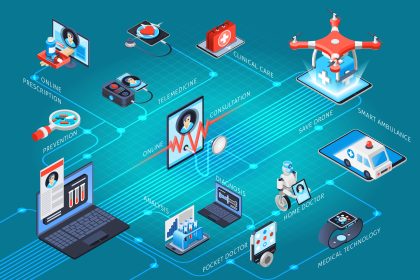
Those opportunities range from reducing repetitive documentation and supporting triage to helping with screening, diagnostics, referrals and patient information. Mutua sees the less glamorous parts of healthcare as equally important, including appointment scheduling, patient registration, queues, digitising records, inventory management and chronic disease monitoring. These tasks lack the drama of a diagnostic breakthrough, but they consume enormous amounts of time that could otherwise go towards direct patient care.
The argument is already moving from possibility to deployment. In January 2026, OpenAI and the Gates Foundation committed $50 million (Ksh 6.5 billion) in funding, technology and technical support to Horizon 1000, an initiative aiming to strengthen primary healthcare in one thousand African clinics and surrounding communities by 2028, beginning in Rwanda.
Kenya is now part of that experiment, with about 300 facilities expected to participate across Murang’a, Mombasa and Bungoma. The counties are entering with unique needs: Murang’a is building on its digital health and telemedicine systems, Mombasa is focusing on surveillance and unified patient records, while Bungoma is looking at maternal and neonatal care, including point-of-care ultrasound. That difference matters because it illustrates what African AI may need to look like in practice. The technology cannot simply arrive as a finished product and assume that every health system has the same problem.

Kenya is already testing AI against specific health needs. In 2025, 80 portable AI-powered digital X-ray units were deployed across 43 counties to support tuberculosis screening, giving health workers another way to identify possible abnormalities and determine which patients may need further testing.
For Dr Elizabeth Wanja Mutura, a clinical and radiation oncologist at Garissa Regional Cancer Centre, that is where AI belongs: alongside the clinician, not in place of one. “For me, AI is a tool that can be used to enhance my clinical practice,” she says.
Information fed into AI systems should be standardised, credible and evidence-based
She sees AI’s ability to analyse large amounts of information as particularly useful for studying trends, understanding outcomes, informing research and strengthening clinical guidelines. But the technology still depends on the person using it. “AI needs the human to be able to utilise it,” Dr Mutura says.
That human role also determines whether a technology is actually accepted. If health workers and communities do not understand a system or do not see how it improves care, simply introducing it does not guarantee that it will be used. Dr Mutura argues that universities, health institutions and technology developers have a responsibility to ensure that the information fed into AI systems is standardised, credible and evidence-based. Otherwise, the technology risks producing sophisticated answers from poor information. That concern becomes especially important when the data does not adequately represent the people who will eventually use the system.

The question, therefore, is not simply whether an algorithm works. It is who it works for, where it fails, and who carries the consequences when it does. It is also why calling something African AI simply because it was trained on African data may be too narrow. Dr Mercy Muange, a pharmacist, AI expert and founder of Enver Digital Consulting, puts the distinction plainly: “African AI should not just mean African data.” For Muange, African context includes the diseases that place the greatest burden on communities, the medicines available and their affordability, shortages of health workers, connectivity, interoperability and local languages.
Africa is approaching this technological shift from an uneven digital base. Internet use in Africa remained the lowest of any region, at 38 per cent of the population as of 2024, with 57 per cent of urban residents online compared with only 23 per cent in rural areas, according to the International Telecommunication Union. An advanced AI system is of little use to a facility without reliable electricity, connectivity, digital records, computing capacity or people trained to use and evaluate it.
Introducing AI after it has benefited wealthier nations would deepen our global health inequalities
Philip Maina, an AI trainer at This is Digital, says Africa cannot afford to wait until AI has already transformed wealthier countries. “Introducing AI only after it has benefited wealthier nations would deepen our global health inequalities and make us more dependent on Western countries,” he says.
Maina does not argue that Africa must build every model from scratch. Existing technologies can be adapted to local needs. “We can load our local languages, our context, our problem,” he says. That adaptation, he adds, requires foundations: infrastructure in terms of connectivity, electricity, computing capacity, and the systems required to develop AI. His prescription is straightforward: build the infrastructure, train models using African people and data, then put guardrails around their use. “Let’s put up those guardrails so that we can be able to implement them in health, in finance, and so on and so forth,” he says.

Kenya’s own AI policy debate shows why that capacity is becoming urgent. A 2026 survey by the Health Innovation and Learning Network for Africa, involving 22 health sector professionals, found that 64 per cent were already using AI tools regularly or occasionally. At the same time, 68 per cent said patients lacked adequate information or recourse when AI contributes to clinical decisions, while 68 per cent opposed treating all healthcare AI as automatically high risk and preferred a more proportionate approach to regulation. The same proportion said Kenya’s 2026 AI Bill had the right intentions but needed significant revision.
The challenge, then, is not whether Africa should adopt AI, but how to do so without turning adoption into another form of dependency. Africa needs the capacity to define its own health problems, generate and govern representative data, adapt technologies, validate them against African populations, understand when they fail, and regulate their use. It also needs African researchers, clinicians, engineers and communities at the table before the technology reaches the patient. Mutua puts that question directly: “Who is at the table when we are designing these AI solutions?”
Gates’s warning in Rwanda was ultimately about timing. Africa can wait for technologies to mature elsewhere and then buy them, or it can help shape them while the technology is still being developed. “We will have to take the data and the learning that is only here and imbue that into the system,” he said.
The question is whether Africa will merely use what it has learned from others or have enough capacity to teach them something about Africa that nobody else can.