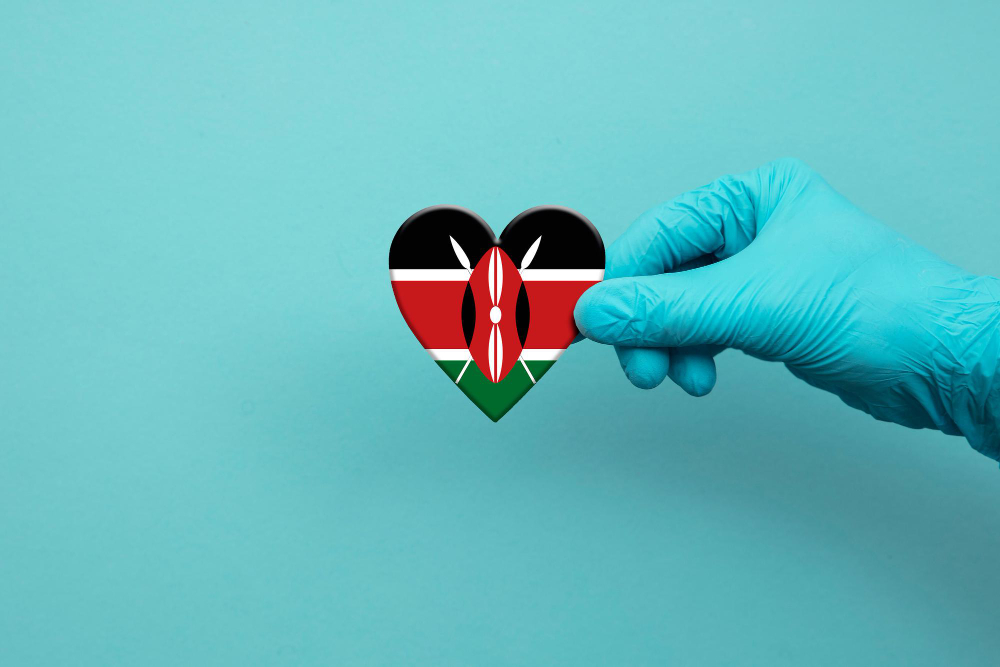

Four years into reform, Dr Ouma Oluga says financing, workforce and local manufacturing are replacing donor money pillar by pillar.
Kenya’s health system has long relied on donor money to keep it running, funding disease programmes, filling staffing gaps and propping up a budget that has never quite covered the need. That support is now pulling out, one funder at a time, and the Ministry of Health is racing to replace it with reform rather than replacement funding.
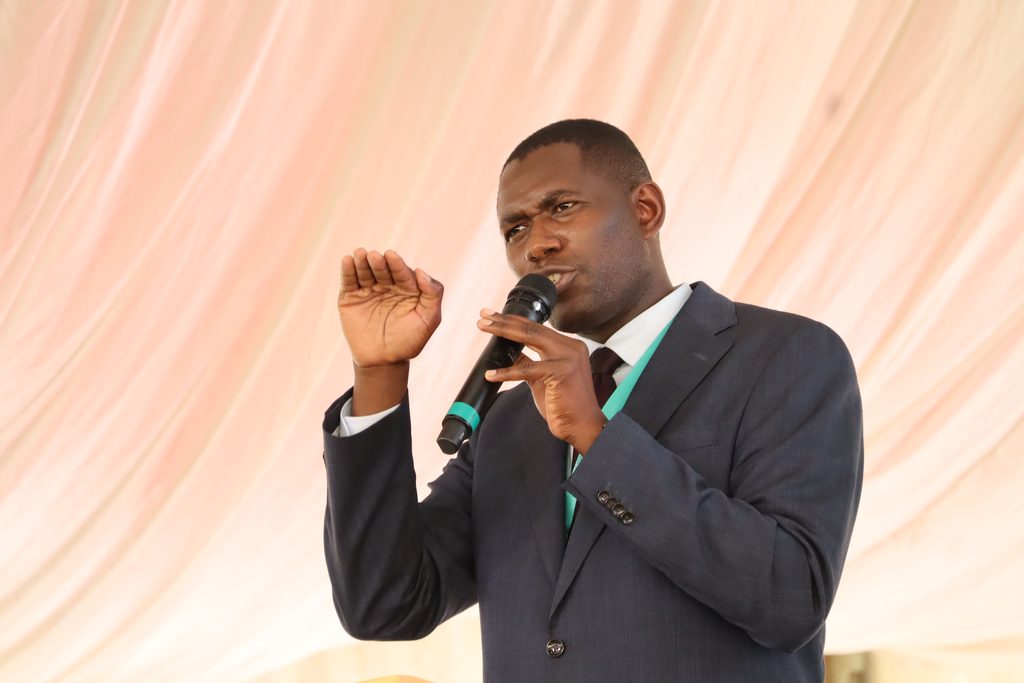
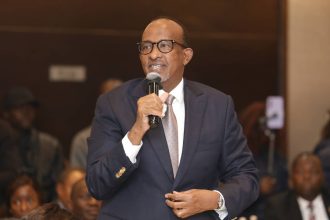
At the centre of that effort is Dr Ouma Oluga, Principal Secretary for the State Department for Medical Services, who argues the government has found a way to turn the crisis into an opportunity: cutting out the middlemen in the drug supply chain and using the savings to fund a national insurance scheme’s most expensive promises.
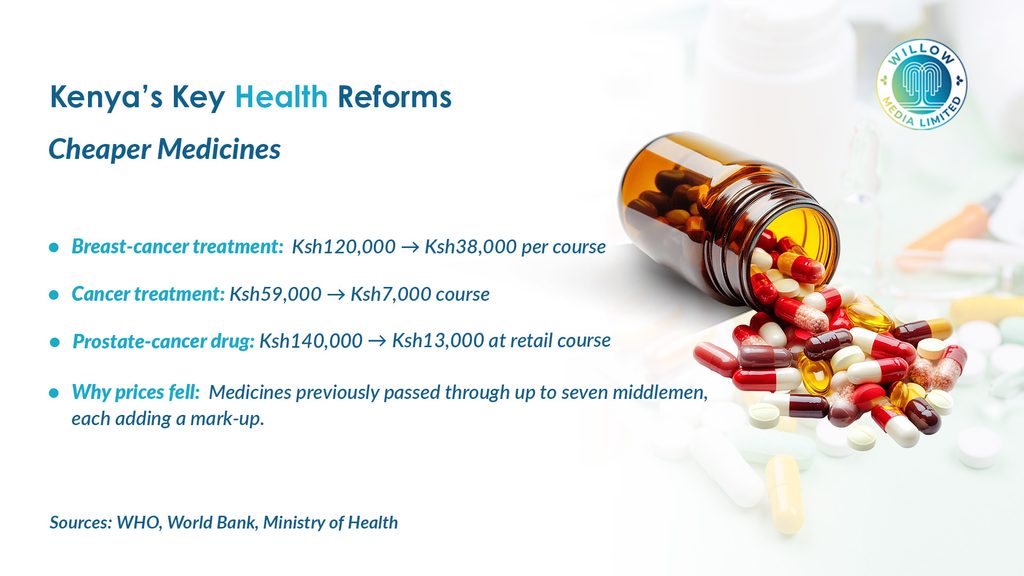
The numbers Dr Oluga cites are striking. Breast-cancer treatment that once cost KSh120,000 a course now costs KSh38,000. Another treatment fell from KSh59,000 to KSh7,000. A prostate-cancer drug that retails at KSh140,000 can now be had for KSh13,000. Before these deals, he says, a drug could pass through as many as seven mark-ups: importers, distributors, wholesalers and medical representatives, before it reached a patient.
“Cut out the middlemen, negotiate straight with manufacturers, route everything through the Kenya Medical Supplies Authority (KEMSA), and the savings are large enough to fund a national insurance scheme’s most expensive promises,” Dr Oluga said.
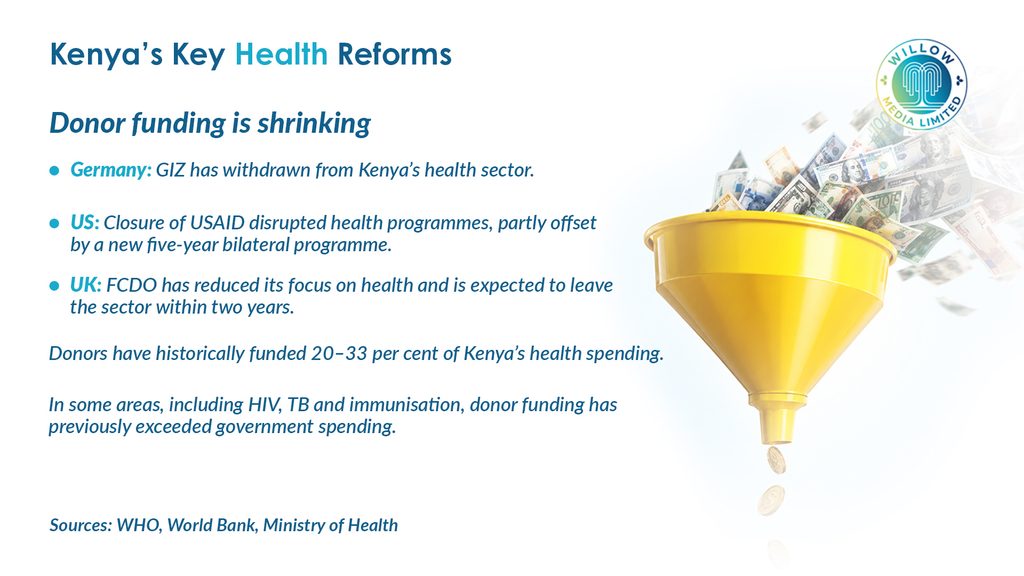
The urgency behind that strategy comes from the pace at which donor support is disappearing. “Germany, which was giving money to Kenya through the German Agency for International Cooperation (GIZ), pulled out of the health care sector,” Dr Oluga said, pointing also to the disruption caused by the United States’ stop-work order, partially offset by a new bilateral programme that nonetheless runs for only five years, and to the United Kingdom’s Foreign, Commonwealth and Development Office (FCDO), which has deprioritised health and expects to exit the sector within two years.
Kenya needs to promote health, prevent people from falling ill, restore health when illness strikes
Dr Oluga says Kenya’s health infrastructure needs to do three things to navigate these pressures: promote the health of the population, prevent people from falling ill in the first place, and restore health when illness or injury strikes.
Achieving all three, he argues, rests on two foundations: protecting citizens from financial ruin when they fall sick, and extending not just lifespan but “health span”, years lived free of preventable death, whether from maternal complications, neonatal causes or otherwise.
To deliver on that vision, the Ministry of Health has organised its reform programme around four pillars: health financing, the health workforce, health products and technologies, and digitisation. Together, they tell the story of a health system trying to wean itself off donor dependency while re-engineering how medicines reach patients.
For decades, a substantial share of Kenya’s health budget has come from external donors, historically estimated at somewhere between a fifth and a third of total health expenditure, depending on the year and the methodology used, according to World Health Organization and World Bank health-financing data.
Research on Kenya’s health financing has long shown a system historically reliant on out-of-pocket payments and external aid, with domestic public financing only overtaking out-of-pocket spending as the largest source of health expenditure within the past decade.
Analysts tracking official development assistance have noted that, for years, donor spending on Kenyan health exceeded domestic government spending, particularly in disease programmes such as HIV, tuberculosis and immunisation, where external funders have contributed several times more than government for every shilling spent locally.
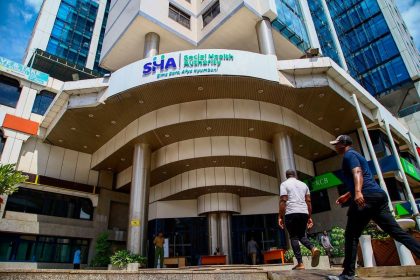
It is against this backdrop that Dr Oluga frames the Social Health Authority (SHA), Kenya’s restructured national health insurance scheme, which replaced the National Hospital Insurance Fund, as “a do or die” undertaking. Funded through a Primary Health Care Fund financed by taxation, alongside a dedicated facility for catastrophic illnesses such as cancer and dialysis, SHA is designed to shield even employed, middle-income Kenyans from bills that would otherwise impoverish them. Dr Oluga cites dialysis, which can cost a patient roughly KSh1.2 million a year, as a case in point.
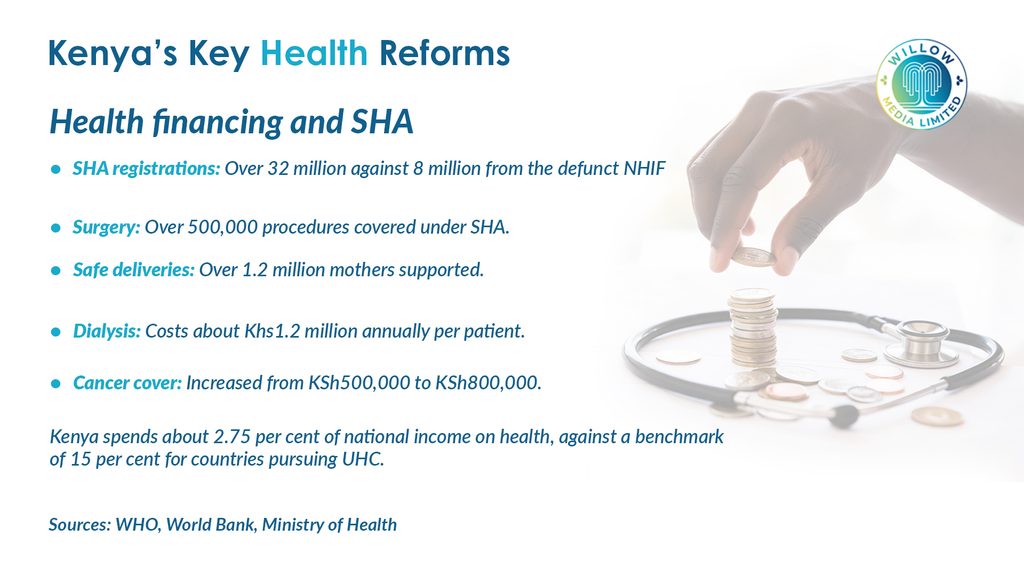
SHA has registered 32.3 million Kenyans against eight million beneficiaries under the defunct NHIF
More than 31 million Kenyans have registered with SHA, according to the Ministry (President William Ruto has separately cited a figure of 32.3 million registrants), compared with roughly eight million beneficiaries under the defunct NHIF, alongside more than 500,000 surgical procedures covered and over 1.2 million mothers supported to deliver safely.
President Ruto has acknowledged the scale of the financing challenge still ahead, noting that Kenya currently contributes around 2.75 per cent of national income to health financing, against the roughly 15 per cent contributed by countries that have achieved comprehensive universal health coverage.
The second pillar, Dr Oluga insists, is the one most easily overlooked. “You can have all the money, you can put in the building, the CT scanner, the MRI, but the healthcare worker must be able to use all of these things to treat you,” he says. “Occasionally I say that the real system is the health worker.”
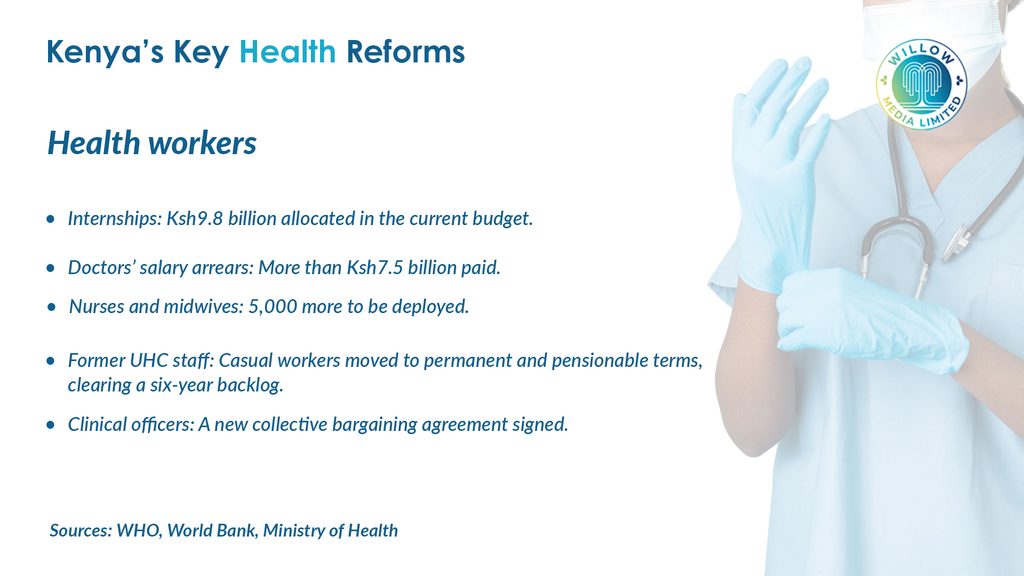
He points to a series of firsts: full internship funding of KSh9.8 billion in the current budget, described as unprecedented since independence; the conversion of previously casual Universal Health Coverage (UHC) staff, whose contracts had gone unresolved for six years, into permanent and pensionable terms; a collective bargaining agreement (CBA) signed with clinical officers; and more than KSh7.5 billion paid out in salary arrears owed to doctors. The government has also committed to deploying an additional 5,000 nurses and midwives, a move aimed squarely at reducing preventable maternal and newborn deaths linked to staffing shortages at lower-level health facilities.
Dr Oluga is careful not to overstate progress here. Settling one grievance, he acknowledges, tends to surface another: “you sign this CBA, you pay this person arrears, then the other one says, oh, even mine was not done very well.” But he frames workforce investment as a non-negotiable pillar of a functioning UHC system, however unfinished the process remains.
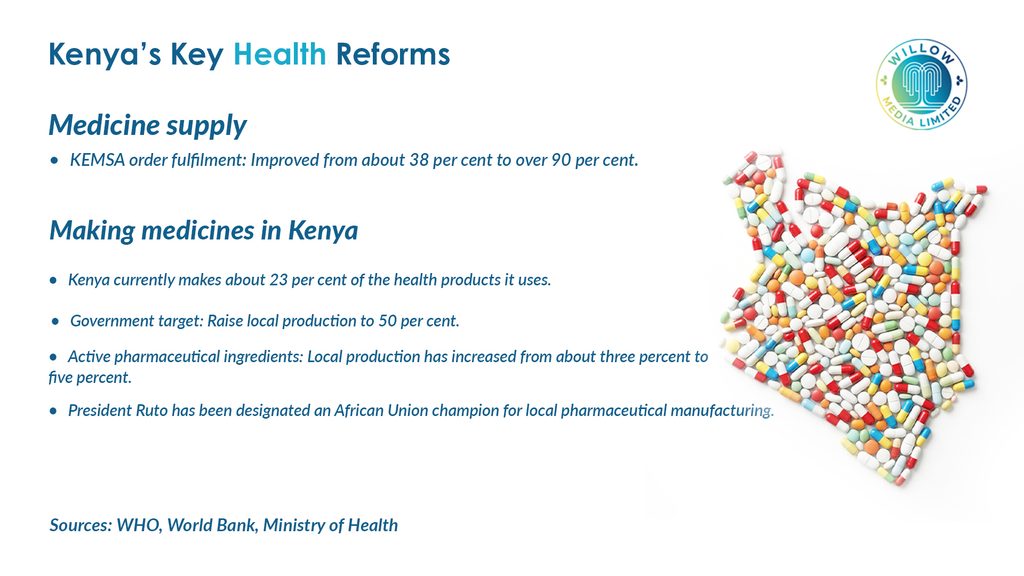
Reforms at KEMSA sit alongside the pricing story: the “order fill rate”, the proportion of medicines ordered by a hospital that KEMSA actually supplies, has risen from around 38 per cent to over 90 per cent, a figure the Ministry has publicly highlighted as one of its headline achievements.
Dr Oluga argues the pricing gains explain why the government could raise its cancer-treatment benefit from KSh500,000 to KSh800,000 under SHA and have confidence the higher figure now covers more care meaningfully.
Kenya manufactures about 23 per cent of health products against a government target of 50 per cent
This feeds directly into the government’s push for local pharmaceutical manufacturing, which Dr Oluga frames around four objectives: health sovereignty, insulation from global supply shocks such as those experienced during COVID-19 or regional conflicts disrupting shipping routes; cost reduction; supply reliability, underpinned by predictable domestic demand; and economic gain through jobs, foreign direct investment and gross domestic product (GDP) growth.
Kenya currently manufactures an estimated 23 per cent of the health products it consumes, against a government target of 50 per cent, and local production of active pharmaceutical ingredients has reportedly grown from around 3 to 5 per cent.
President Ruto has been designated the African Union’s champion for local pharmaceutical manufacturing, a mandate the Ministry is using to negotiate “advance market commitments”, guaranteed purchase volumes, drawn from digitised consumption data on drugs such as insulin and amoxicillin, intended to de-risk investment for manufacturers willing to set up plants in Kenya.
Kenya has also floated an “Africa pooled procurement mechanism”, using its Common Market for Eastern and Southern Africa (COMESA) chairmanship to extend deals negotiated locally to neighbouring markets such as Tanzania and Zambia, offering manufacturers a continental customer base rather than a single national one.
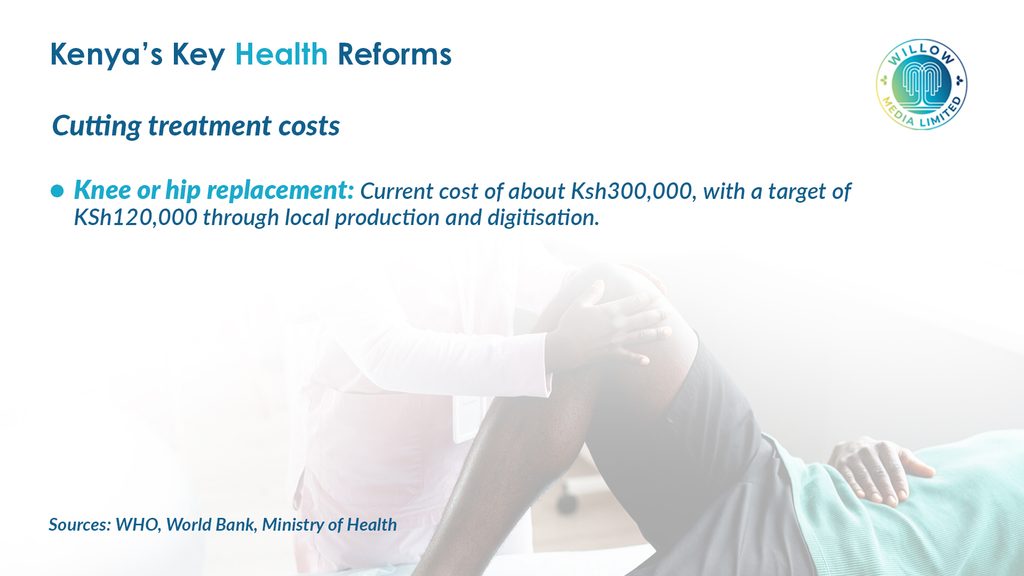
Locally assembling orthopaedic implants cuts cost of knee or hip replacement from KSh300,000 to KSh120,000
Underpinning all of this, Dr Oluga says, is digitisation, a system that now gives the Ministry visibility across public, private and faith-based facilities, covering how many hip replacements were performed, how many mothers tested positive in pregnancy, and how many patients are on dialysis or living with a transplant, updated nightly.
That data, he argues, is what allows government to negotiate confidently with manufacturers, to plan local assembly of items such as orthopaedic implants with the aim of cutting the cost of a knee or hip replacement from roughly KSh300,000 to KSh120,000, and to justify SHA’s reimbursement rates with evidence rather than assertion.
Four years into a reform programme built on financing, workforce, supply chains and data, Dr Oluga argues Kenya is trying to build, deliberately and at pace, the institutional machinery of a health system that can eventually stand on its own.
Graphics by Semion Atetwe.